Dealing with a back ache can be debilitating, but relief is often within reach. This guide offers a comprehensive approach to help you get rid of a back ache today and achieve lasting comfort. You’ll learn simple, actionable steps, from immediate pain relief techniques to long-term strategies like improving posture, strengthening your core, and making beneficial lifestyle changes, ensuring you can move freely and without pain.
There’s almost nothing worse than a nagging back ache. It can derail your day, disrupt your sleep, and make even simple tasks feel like monumental challenges. If you’re currently experiencing that all-too-familiar discomfort, you’re not alone. Back pain is one of the most common reasons people visit the doctor, and it affects millions worldwide.
The good news? Many instances of back pain, especially acute (short-term) aches, can be effectively managed and relieved right at home. This comprehensive guide is designed to empower you with the knowledge and practical steps you need to not only get rid of a back ache today but also to implement strategies for lasting relief and prevention. We’ll walk through immediate comfort measures, essential long-term habits, and crucial lifestyle adjustments, all explained in simple, easy-to-understand language. Let’s get started on your journey to a pain-free back!
Key Takeaways
- Start with Immediate Relief: Apply heat or cold therapy, consider over-the-counter pain relievers, and engage in gentle movement or stretches to quickly alleviate acute back pain.
- Prioritize Proper Posture: Consciously adjust your sitting, standing, and lifting habits. Good posture is fundamental to preventing strain and helping you get rid of a back ache long-term.
- Strengthen Your Core and Back: Regular, targeted exercises that build strength in your core and back muscles are crucial for support, stability, and preventing future back aches.
- Embrace Gentle Movement: Avoid prolonged bed rest. Instead, integrate light activities like walking and specific stretches into your daily routine to maintain flexibility and reduce stiffness.
- Evaluate Your Lifestyle: Factors like stress, sleep position, hydration, and weight can significantly impact back health. Addressing these elements contributes to comprehensive and lasting back pain relief.
- Know When to Seek Professional Help: While many back aches resolve with self-care, be aware of “red flag” symptoms (numbness, weakness, fever) that warrant immediate medical attention, or if pain persists despite home remedies.
Understanding Your Back Ache: What’s Going On?
Before we dive into solutions, it’s helpful to briefly understand why back aches happen. Most common back aches aren’t due to serious injury but rather muscle strain, ligament sprains, poor posture, or everyday wear and tear. Things like lifting heavy objects incorrectly, sitting hunched over a desk for hours, or even sleeping in an awkward position can all contribute to that familiar ache. While this guide focuses on general, non-severe back pain, it’s always important to pay attention to your body and seek professional help if symptoms are severe or persistent.
Step 1: Immediate Relief Strategies – Get Rid of a Back Ache Today
When your back is screaming, the first thing you want is quick relief. These steps are designed to calm the acute pain and inflammation so you can start moving towards recovery.
Visual guide about How to get rid of a back ache today for lasting relief
Image source: i.pinimg.com
1.1 Apply Heat or Cold Therapy
This is often your first line of defense, and it’s incredibly effective for muscle aches and stiffness.
- Cold Therapy (First 48-72 hours): If your back ache is new, caused by a recent injury, or feels inflamed, cold can help reduce swelling and numb the pain.
- How to: Wrap an ice pack, a bag of frozen peas, or a cold gel pack in a thin towel. Apply to the affected area for 15-20 minutes at a time, several times a day. Avoid placing ice directly on your skin.
- Heat Therapy (After 72 hours or for chronic stiffness): Once the initial inflammation has subsided, or if your back ache is more chronic and feels stiff, heat can relax tense muscles and improve blood flow.
- How to: Use a heating pad, a warm compress, or take a warm bath or shower. Apply for 15-20 minutes, or longer in a bath, ensuring the heat is comfortable and not scalding.
Practical Tip: Many people find alternating between hot and cold therapy can be very beneficial for stubborn aches. Start with cold to reduce inflammation, then switch to heat to relax muscles.
1.2 Consider Over-the-Counter (OTC) Pain Relievers
For temporary relief, OTC medications can be very helpful in managing pain and inflammation, allowing you to move more freely and engage in gentle activities.
- NSAIDs (Non-Steroidal Anti-Inflammatory Drugs): Ibuprofen (Advil, Motrin) or naproxen (Aleve) can reduce both pain and inflammation.
- Acetaminophen (Tylenol): This primarily helps with pain relief, without the anti-inflammatory properties of NSAIDs.
Important Note: Always read and follow the dosage instructions on the label. Consult your doctor or pharmacist if you have underlying health conditions or are taking other medications.
1.3 Engage in Gentle Movement and Stretching
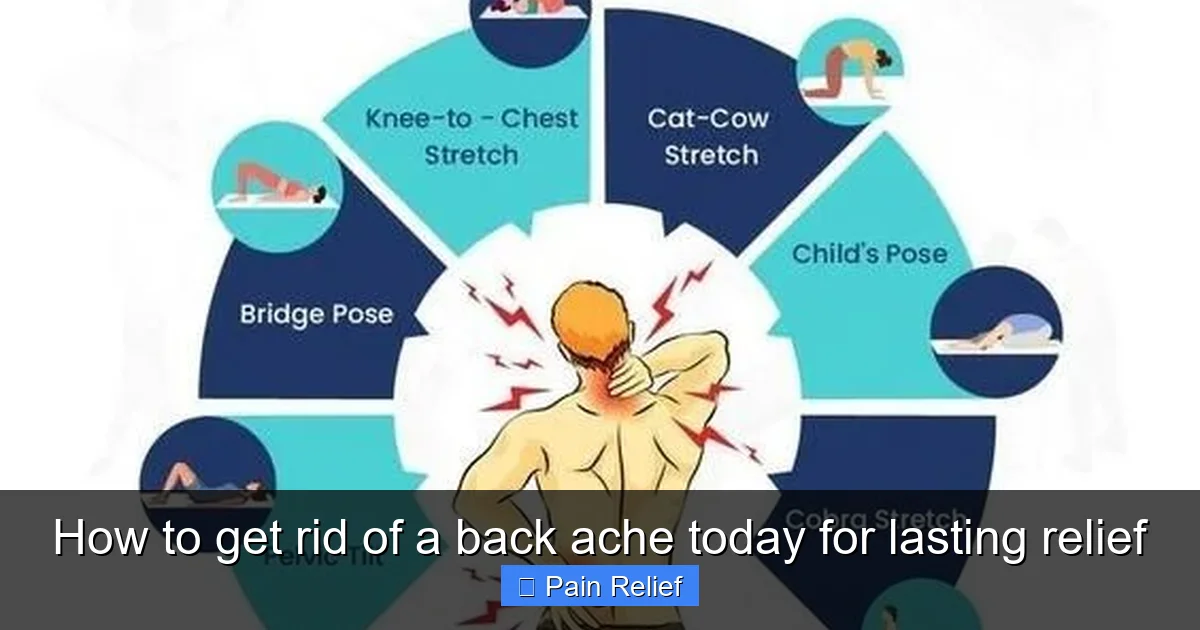
While it might seem counterintuitive to move when you’re in pain, prolonged bed rest can actually worsen back aches by stiffening muscles. Gentle movement helps improve blood flow, reduce stiffness, and slowly regain flexibility. This is a critical step to help you get rid of a back ache.
- Knee-to-Chest Stretch:
- How to: Lie on your back with knees bent and feet flat. Gently bring one knee towards your chest, holding it with your hands. Hold for 20-30 seconds. Repeat 2-3 times per leg.
- Cat-Cow Stretch:
- How to: Start on your hands and knees. Inhale, arch your back, and lift your head (Cow pose). Exhale, round your spine, and tuck your chin to your chest (Cat pose). Repeat 5-10 times, flowing gently with your breath.
- Pelvic Tilts:
- How to: Lie on your back with knees bent, feet flat. Flatten your lower back against the floor by tightening your abdominal muscles and slightly tilting your pelvis upwards. Hold for 5-10 seconds, then release. Repeat 8-12 times.
- Gentle Walking: Even a short, slow walk (5-10 minutes) on a flat surface can do wonders for stiffness and circulation.
Listen to Your Body: Only stretch to the point of mild tension, not pain. If a stretch causes increased pain, stop immediately.
1.4 Optimize Your Sleeping Position
The way you sleep can significantly impact your back. An improper sleeping position can exacerbate or even cause a back ache.
- Side Sleepers: Place a pillow between your knees to keep your hips, pelvis, and spine aligned.
- Back Sleepers: Place a small pillow under your knees to maintain the natural curve of your lower back.
- Stomach Sleepers: This position is generally not recommended as it strains the neck and lower back. If you must sleep on your stomach, place a thin pillow under your pelvis to reduce strain.
Check Your Mattress: An old, sagging mattress offers poor support. Consider if it’s time for an upgrade (usually every 7-10 years).
Step 2: Posture and Ergonomics – Daily Habits for Lasting Relief
Once you’ve managed the acute pain, it’s time to focus on preventing its return. Poor posture and ergonomics are common culprits for recurring back aches.
Visual guide about How to get rid of a back ache today for lasting relief
Image source: verywellhealth.com
2.1 Master Proper Sitting Posture
Many of us spend hours sitting, whether at a desk, in a car, or on the couch. Good sitting posture is vital to prevent strain on your spine and help you get rid of a back ache for good.
- At Your Desk:
- Sit with your back against the chair, feet flat on the floor (or on a footrest).
- Keep your knees at hip level or slightly below.
- Your computer screen should be at eye level, about an arm’s length away.
- Ensure your elbows are bent at a 90-degree angle when typing.
- Take frequent breaks (every 30-60 minutes) to stand, stretch, and move around.
- In Your Car: Adjust your seat so your knees are slightly bent and your back is supported. Use a lumbar pillow if your car seat doesn’t provide adequate lower back support.
Remember the “S” Curve: Your spine has natural curves. A good sitting posture maintains these curves, rather than flattening or over-arching them.
2.2 Practice Good Standing Posture
Even when standing, your posture matters.
- Distribute your weight evenly on both feet.
- Keep your shoulders relaxed and pulled slightly back.
- Engage your core muscles slightly to support your lower back.
- Avoid locking your knees.
Footwear Matters: Wear supportive, low-heeled shoes. High heels can alter your spinal alignment and contribute to back pain.
2.3 Learn Correct Lifting Techniques
Improper lifting is a prime way to injure your back and invite a new back ache.
- Lift with Your Legs: Bend at your knees and hips, not your waist. Keep your back straight, engage your core, and hold the object close to your body.
- Avoid Twisting: If you need to turn, move your feet and pivot your entire body, rather than twisting your torso.
- Assess the Load: If an object is too heavy, get help. There’s no shame in asking for assistance to prevent injury.
Step 3: Strengthening and Flexibility – Long-Term Prevention
To truly keep back aches at bay, you need a strong and flexible core and back. These exercises support your spine and improve your body’s resilience.
Visual guide about How to get rid of a back ache today for lasting relief
Image source: down-my.img.susercontent.com
3.1 Strengthen Your Core Muscles
Your “core” isn’t just your abs; it’s a group of muscles that stabilize your trunk and protect your spine. A strong core is fundamental to help you get rid of a back ache permanently.
- Plank:
- How to: Start in a push-up position, then lower onto your forearms. Keep your body in a straight line from head to heels. Hold for 20-60 seconds, engaging your abdominal muscles.
- Bird-Dog:
- How to: Start on your hands and knees. Slowly extend one arm forward and the opposite leg straight back, keeping your back flat and hips level. Hold briefly, then return to start. Alternate sides. Repeat 8-12 times per side.
- Glute Bridges:
- How to: Lie on your back with knees bent, feet flat. Lift your hips off the floor until your body forms a straight line from shoulders to knees. Squeeze your glutes. Hold briefly, then lower slowly. Repeat 10-15 times.
Consistency is Key: Aim for 3-5 times a week for core exercises. Start with fewer repetitions and gradually increase as your strength improves.
3.2 Improve Back Flexibility and Mobility
Stretching isn’t just for immediate relief; it’s vital for maintaining range of motion and preventing stiffness that can lead to back aches.
- Spinal Twists (Gentle):
- How to: Lie on your back, arms out to the sides. Keep knees bent, feet flat. Gently let your knees fall to one side, keeping your shoulders on the floor. Hold for 30 seconds, then switch sides.
- Child’s Pose:
- How to: Kneel on the floor, big toes touching. Spread your knees wide. Lean forward, resting your torso between your thighs. Extend arms forward or rest them alongside your body. Breathe deeply. Hold for 30-60 seconds.
- Hamstring Stretches: Tight hamstrings can pull on your pelvis and contribute to lower back pain.
- How to: Lie on your back and lift one leg straight up. Loop a towel around your foot and gently pull your leg towards you until you feel a stretch in the back of your thigh. Hold for 30 seconds per leg.
Warm-Up First: Always do a light warm-up (like walking) before stretching to make your muscles more pliable.
Step 4: Lifestyle Adjustments – A Holistic Approach to Back Health
Your overall health and daily habits play a huge role in your back’s well-being. Addressing these factors can significantly help you get rid of a back ache and keep it away.
4.1 Maintain a Healthy Weight
Excess body weight, especially around the midsection, puts extra strain on your lower back. Losing even a few pounds can significantly reduce the load on your spine and discs.
- Focus on a balanced diet rich in fruits, vegetables, lean proteins, and whole grains.
- Combine with regular physical activity (as tolerated) to create a calorie deficit.
4.2 Stay Hydrated
Believe it or not, hydration affects your spinal discs. Your intervertebral discs are largely made of water and act as shock absorbers. Staying well-hydrated helps them remain supple and functional.
- Aim for 8 glasses of water (around 2 liters) per day, more if you’re active or in a hot climate.
4.3 Manage Stress Effectively
Stress often manifests as physical tension, especially in the neck and back muscles. Chronic stress can lead to muscle spasms and increased perception of pain.
- Practice relaxation techniques like deep breathing, meditation, or yoga.
- Engage in hobbies or activities you enjoy to unwind.
- Ensure you’re getting adequate, restful sleep.
4.4 Quit Smoking
Smoking reduces blood flow to the spinal discs, which can accelerate their degeneration and impede healing. It also increases the risk of osteoporosis, which can weaken vertebrae.
- If you smoke, seeking support to quit is one of the best things you can do for your overall health, including your back.
4.5 Regular Physical Activity
Beyond targeted stretches and core work, general physical activity keeps your body strong, flexible, and promotes good circulation. This is paramount to keeping a back ache from returning.
- Aim for at least 30 minutes of moderate-intensity exercise most days of the week.
- Activities like swimming, cycling, and brisk walking are excellent low-impact options.
Step 5: When to Seek Professional Help
While many back aches resolve with self-care, it’s crucial to know when to consult a healthcare professional. Don’t hesitate if you experience any of the following:
5.1 Red Flag Symptoms
These symptoms could indicate a more serious underlying condition that requires immediate medical attention.
- Sudden, severe back pain after an injury (e.g., a fall, car accident).
- Pain accompanied by numbness, tingling, or weakness in one or both legs.
- Loss of bowel or bladder control.
- Unexplained weight loss.
- Fever or chills along with back pain.
- Pain that awakens you from sleep or doesn’t improve with rest.
5.2 Persistent or Worsening Pain
If your back ache doesn’t improve after a few days of self-care, or if it worsens, it’s time to see a doctor. They can diagnose the cause and recommend appropriate treatments, which might include:
- Physical Therapy: A physical therapist can create a personalized exercise program to strengthen your back and core, improve flexibility, and teach you proper body mechanics.
- Chiropractic Care: Chiropractors focus on spinal adjustments to improve alignment and function.
- Medications: Your doctor might prescribe stronger pain relievers, muscle relaxants, or anti-inflammatory drugs.
- Injections: In some cases, steroid injections might be used to reduce inflammation around nerves.
- Surgery: This is usually a last resort for severe cases that haven’t responded to other treatments.
Troubleshooting: What If My Back Ache Isn’t Going Away?
It can be frustrating when you’re trying everything to get rid of a back ache, but it persists. Here are some troubleshooting tips:
- Re-evaluate Your Posture: Are you truly maintaining good posture throughout the day, even when tired or distracted? Small, unconscious slumps can accumulate.
- Consistency is Key: Are you consistently doing your stretches and exercises? Sporadic efforts won’t yield lasting results.
- Vary Your Movement: If you’re stuck in a routine, try incorporating new forms of gentle movement. Sometimes a different angle or activity can target previously unstretched muscles.
- Check Your Environment: Is your office chair truly ergonomic? Is your sleeping setup still supportive? Small environmental factors can contribute.
- Consider Hidden Stressors: Are there high levels of unmanaged stress in your life? This often manifests as physical tension.
- Don’t Push Through Pain: If an exercise or stretch causes sharp pain, stop. You might be doing it incorrectly or it might not be appropriate for your specific condition right now.
- Seek a Second Opinion: If you’ve seen one professional and aren’t getting results, consider consulting another type of specialist (e.g., if you’ve only seen a GP, consider a physical therapist or chiropractor).
Conclusion: Your Path to a Pain-Free Back
Learning how to get rid of a back ache and keep it away is a journey that involves a combination of immediate relief strategies and long-term commitment to healthy habits. By consistently applying heat/cold, engaging in gentle movement, correcting your posture, strengthening your core, and making thoughtful lifestyle adjustments, you’re building a strong foundation for a pain-free life.
Remember, your body is resilient, and with the right care, you can overcome back pain. Be patient with yourself, listen to your body, and don’t hesitate to seek professional guidance when needed. You have the power to take control of your back health and enjoy the freedom that comes with lasting relief. Start today, and step confidently towards a future without back ache holding you back!
🎥 Related Video: 3 SIMPLE Exercises For Lower Back Pain Relief! (Strengthen Your Spine)
📺 Tone and Tighten
CHECK OUT THE FULL VIDEO HERE: https://youtu.be/pGZ5BgmJnHg One of the best ways to eliminate and prevent lower back …