Experiencing a lower back ache can be debilitating, but relief is often within reach. This guide offers practical, easy-to-follow steps to help you effectively fix a lower back ache using gentle exercises, improved posture, and everyday strategies. Learn how to alleviate discomfort and reclaim your comfort, starting today, and empower yourself to manage and prevent future pain.
Relieve Pain How To Fix A Lower Back Ache Effectively Now
Welcome! If you’re reading this, chances are you’re familiar with the unwelcome guest that is a lower back ache. It’s that nagging, often sharp, pain that makes everyday tasks feel like monumental challenges. You’re not alone; lower back pain is one of the most common reasons people seek medical care and miss work worldwide. But here’s the good news: for many, a lower back ache can be effectively managed, reduced, and even fixed with practical, at-home strategies.
This comprehensive guide is designed to empower you with the knowledge and actionable steps you need to take control of your lower back pain. We’ll walk you through immediate relief tactics, gentle exercises, crucial posture adjustments, and long-term preventative measures. Our goal is to help you understand how to fix a lower back ache, improve your quality of life, and prevent future discomfort. Ready to start feeling better? Let’s dive in!
Key Takeaways
- Embrace Gentle Movement: Resting completely can sometimes worsen lower back pain. Engaging in light activity and gentle stretches is crucial for circulation, flexibility, and overall relief.
- Master Your Posture: Correct posture, whether standing, sitting, or sleeping, significantly reduces strain on your lower back. Prioritize ergonomic setups and mindful body mechanics.
- Utilize Heat and Cold Therapy: Alternating or choosing between heat and cold applications can provide immediate relief by reducing inflammation and muscle stiffness, helping to fix a lower back ache.
- Strengthen Your Core: A strong core acts as a natural corset for your spine. Incorporate gentle core-strengthening exercises to provide better support and prevent future aches.
- Make Lifestyle Adjustments: Maintaining a healthy weight, staying hydrated, managing stress, and wearing supportive footwear are all vital components of long-term lower back health.
- Listen to Your Body: Always perform exercises and movements within a pain-free range. If an activity causes sharp or increasing pain, stop immediately and reassess.
- Know When to Seek Professional Help: While many back aches can be managed at home, be aware of red flag symptoms (like numbness, weakness, or fever) that warrant immediate medical attention.
Step 1: Immediate Relief Strategies for Your Lower Back Ache
When pain strikes, your first thought is often, “How can I make this stop NOW?” These strategies are your first line of defense to calm the immediate discomfort and start on the path to fixing a lower back ache.
Apply Heat or Cold Therapy
This classic approach is effective because heat and cold affect your muscles and nerves differently. Understanding which one to use and when is key.
- Cold Therapy (First 48-72 hours): If your back ache is sudden or due to a recent injury, applying cold can help reduce inflammation and numb the area, easing sharp pain.
- How to do it: Use an ice pack, a bag of frozen peas, or a cold gel pack wrapped in a thin towel. Apply for 15-20 minutes at a time, several times a day.
- Tip: Never apply ice directly to your skin, as it can cause frostbite.
- Heat Therapy (After 72 hours, or for chronic pain): Once the initial inflammation has subsided (or if your pain is chronic and stiff), heat can relax tense muscles, improve blood flow, and soothe sore tissues.
- How to do it: Use a heating pad on a low setting, a warm bath, or a hot water bottle. Apply for 15-20 minutes, or longer for a warm bath.
- Tip: Be careful not to fall asleep with a heating pad, as it can cause burns.
Gentle Movement and Active Rest
While complete bed rest used to be recommended, current research suggests that staying lightly active is far more beneficial for a lower back ache. Movement helps prevent stiffness, improves circulation, and can speed up recovery.
- Short Walks: Go for short, gentle walks on a flat surface. Start with 5-10 minutes and gradually increase as tolerated.
- Light Stretching: Perform very gentle, easy stretches. Don’t force anything that causes sharp pain. (We’ll cover specific stretches in the next section).
- Active Rest: Instead of lying completely still, try changing positions frequently. Lie on your back with knees bent and a pillow under your knees, or lie on your side with a pillow between your knees.
- Tip: Avoid prolonged sitting or standing in one position, as this can exacerbate pain.
Over-the-Counter Pain Relievers
For temporary relief, over-the-counter (OTC) medications can be helpful. Always read the label and follow dosage instructions.
- NSAIDs (Non-Steroidal Anti-Inflammatory Drugs): Medications like ibuprofen (Advil, Motrin) or naproxen (Aleve) can reduce both pain and inflammation.
- Acetaminophen (Tylenol): This targets pain relief but does not reduce inflammation.
- Caution: Consult your doctor or pharmacist if you have pre-existing conditions (like kidney disease, stomach ulcers) or are taking other medications, as OTC pain relievers might not be suitable.
Step 2: Gentle Exercises and Stretches to Fix a Lower Back Ache
Once the initial acute pain has settled, incorporating gentle exercises and stretches is paramount. They help improve flexibility, strengthen supporting muscles, and restore range of motion. Remember, *gentle* is the operative word; never push into pain.

Visual guide about Relieve Pain How To Fix A Lower Back Ache Effectively Now
Image source: nourishmovelove.com
Pelvic Tilts
This gentle exercise is fantastic for mobilizing your lower back and strengthening your abdominal muscles, which support your spine. It’s one of the first steps many physical therapists recommend to fix a lower back ache.
- How to do it: Lie on your back with your knees bent and feet flat on the floor, hip-width apart. Keep your arms relaxed at your sides. Flatten your lower back against the floor by tightening your abdominal muscles and gently tilting your pelvis upward. Imagine you’re trying to press your belly button towards your spine. Hold this position for 5-10 seconds, breathing normally. Release and return to the starting position, allowing a slight arch in your lower back. Repeat 10-15 times.
- Tip: Don’t force the movement. It should feel like a gentle rock.
Knee-to-Chest Stretch
This stretch gently elongates the muscles in your lower back and glutes, providing excellent relief for tension.
- How to do it: Lie on your back with your knees bent and feet flat. Slowly bring one knee towards your chest, grasping it with both hands. Gently pull your knee closer until you feel a comfortable stretch in your lower back. Hold for 20-30 seconds. Release slowly. Repeat with the other leg. You can also do this with both knees simultaneously if comfortable. Do 2-3 repetitions per leg.
- Tip: Keep your head and neck relaxed on the floor.
Cat-Cow Stretch
A yoga staple, the cat-cow stretch promotes spinal mobility and gently massages the back muscles, making it a great way to relieve and fix a lower back ache.
- How to do it: Start on your hands and knees, with your hands directly under your shoulders and knees under your hips. Inhale as you drop your belly towards the floor, lift your head and tailbone towards the ceiling (Cow position). Exhale as you round your spine towards the ceiling, tucking your chin to your chest and tailbone down (Cat position). Flow smoothly between these two positions for 10-15 repetitions.
- Tip: Coordinate your breath with the movement for maximum benefit.
Child’s Pose (Balasana)
A restorative and calming stretch that decompresses the spine and gently stretches the back, hips, and thighs.
- How to do it: Start on your hands and knees. Bring your big toes to touch, and spread your knees wide. Sink your hips back towards your heels. Extend your arms forward on the mat, resting your forehead on the floor. You can also rest your arms alongside your body, palms up. Hold for 30 seconds to several minutes, breathing deeply.
- Tip: If your hips don’t reach your heels comfortably, place a pillow or folded blanket between them.
Piriformis Stretch
The piriformis muscle, deep in your glutes, can sometimes contribute to lower back or sciatic-like pain when tight.
- How to do it: Lie on your back with knees bent and feet flat. Cross one ankle over the opposite knee, forming a “figure-four” shape. Gently grasp the thigh of the leg on the floor and pull it towards your chest. You should feel a stretch in your glute/hip of the crossed leg. Hold for 20-30 seconds. Repeat on the other side. Do 2-3 repetitions per side.
- Tip: Keep your lower back pressed gently into the floor.
Always remember: Consistency is more important than intensity. Perform these stretches daily, or at least several times a week, to effectively manage and fix a lower back ache. Stop immediately if you feel sharp or increasing pain.
Step 3: Improve Your Posture and Ergonomics
Poor posture is a silent enemy of your lower back. Over time, it puts undue stress on your spinal discs, ligaments, and muscles. Correcting your posture is a powerful, long-term strategy to relieve and prevent lower back pain.
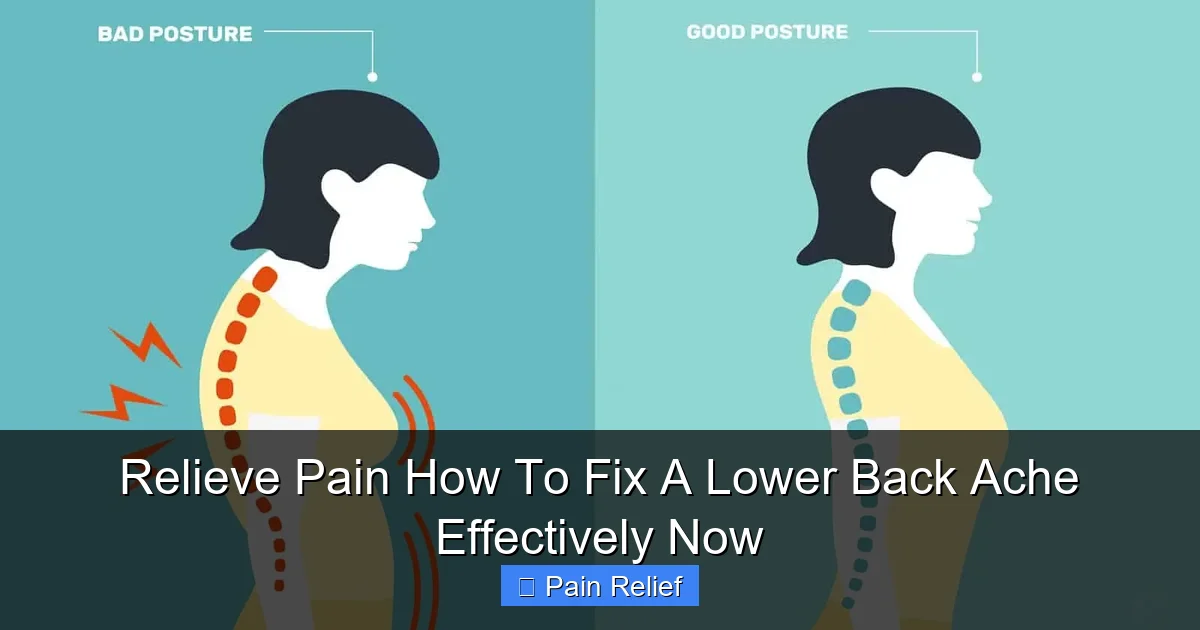
Visual guide about Relieve Pain How To Fix A Lower Back Ache Effectively Now
Image source: cdn.powerofpositivity.com
Standing Posture
- How to do it: Stand tall with your weight evenly distributed on both feet. Keep your shoulders relaxed and back. Pull your belly button gently towards your spine (engaging your core). Your ears, shoulders, and hips should form a relatively straight line. Avoid locking your knees.
- Tip: If you stand for long periods, shift your weight from foot to foot or use a small footstool to elevate one foot at a time.
Sitting Posture
Many of us spend hours sitting, making this a critical area for improvement to fix a lower back ache.
- How to do it: Sit with your feet flat on the floor or a footrest, knees at a 90-degree angle. Your back should be supported by the chair’s backrest, or use a lumbar support pillow to maintain the natural curve of your lower back. Keep your shoulders relaxed and elbows close to your body when typing.
- Ergonomic Setup: Ensure your computer monitor is at eye level. Your keyboard and mouse should be within easy reach to prevent slouching or reaching.
- Tip: Take frequent breaks! Stand up, stretch, and walk around every 30-60 minutes, even if just for a minute or two. This is vital for back health.
Lifting Objects Correctly
Improper lifting is a common cause of sudden lower back pain.
- How to do it: Before lifting, stand close to the object. Bend at your knees, not your waist, keeping your back straight. Engage your core muscles. Lift with your legs, keeping the object close to your body. Avoid twisting your body while lifting.
- Tip: If an object is too heavy, don’t try to lift it alone. Get help or use appropriate equipment.
Sleeping Posture
How you sleep can significantly impact your lower back. An unsupportive mattress or awkward sleeping position can contribute to pain.
- On your back: Place a pillow under your knees to maintain the natural curve of your lower back.
- On your side: Place a pillow between your knees to keep your hips, pelvis, and spine aligned.
- On your stomach: This position is generally not recommended as it flattens the natural curve of your lower back and can strain your neck. If you must sleep on your stomach, place a thin pillow under your lower abdomen to reduce strain.
- Mattress and Pillows: Ensure your mattress provides adequate support – not too soft, not too firm. Your pillow should support the natural curve of your neck.
- Tip: Replace old, sagging mattresses every 7-10 years.
Step 4: Strengthen Your Core and Back Muscles
Your core muscles (abdominals, back muscles, and glutes) act as a natural corset, providing stability and support for your spine. Strengthening them is a long-term strategy to prevent and effectively fix a lower back ache.

Visual guide about Relieve Pain How To Fix A Lower Back Ache Effectively Now
Image source: cdn.powerofpositivity.com
Why Core Strength Matters
When your core is weak, other muscles (like your lower back muscles) have to work harder, leading to fatigue and pain. A strong core helps distribute stress more evenly, protecting your spine.
Basic Core Exercises (Once Pain Subsides)
Start with these gentle exercises once your acute pain has diminished and you can perform them without discomfort.
- Bird-Dog:
- How to do it: Start on your hands and knees. Engage your core. Slowly extend your right arm straight forward and your left leg straight back, keeping your back flat and hips level. Hold for 5-10 seconds, then slowly return. Repeat on the other side. Do 8-10 repetitions per side.
- Tip: Imagine balancing a cup of water on your lower back to ensure you’re not arching or rounding.
- Modified Plank:
- How to do it: Start on your forearms and knees (instead of feet). Keep your body in a straight line from your head to your knees. Engage your core, preventing your hips from sagging or rising too high. Hold for 20-30 seconds, then rest. Repeat 2-3 times.
- Tip: As you get stronger, you can progress to a full plank on your toes.
Remember to consult with a physical therapist or healthcare provider if you’re unsure about starting a new exercise program, especially when trying to fix a lower back ache.
Step 5: Lifestyle Adjustments for Long-Term Relief and Prevention
Beyond immediate fixes and targeted exercises, certain lifestyle choices play a significant role in your back health.
Stay Hydrated
Your spinal discs are largely made of water. Staying well-hydrated helps these discs remain plump and flexible, providing better cushioning for your vertebrae. Drink plenty of water throughout the day.
Maintain a Healthy Weight
Excess body weight, particularly around the abdomen, places additional strain on your lower back. Losing even a small amount of weight can significantly reduce pressure and help to fix a lower back ache.
Manage Stress
Stress often manifests as physical tension, and many people hold stress in their neck, shoulders, and lower back. Incorporate stress-reducing activities into your daily routine:
- Deep breathing exercises
- Meditation or mindfulness
- Yoga or Tai Chi
- Spending time in nature
- Adequate sleep (7-9 hours per night)
Wear Supportive Footwear
Your feet are the foundation of your body. Unsupportive shoes can alter your gait and spinal alignment, contributing to lower back pain. Choose comfortable, well-cushioned shoes, and avoid high heels for prolonged periods.
Step 6: When to Seek Professional Help
While many lower back aches respond well to home care, it’s crucial to recognize when your symptoms might indicate a more serious underlying issue that requires professional medical attention. Don’t hesitate to seek help if:
Red Flag Symptoms Appear
Contact your doctor immediately if you experience:
- Severe pain after a fall or injury.
- New or worsening numbness, tingling, or weakness in your legs.
- Loss of bowel or bladder control.
- Fever, chills, or unexplained weight loss accompanying back pain.
- Pain that wakes you up at night or is constant and unrelenting.
- Pain radiating down one or both legs, especially below the knee, possibly indicating sciatica.
Persistent or Worsening Pain
If your lower back ache doesn’t improve after a few weeks of consistent home care, or if it worsens despite your best efforts, it’s time to consult a healthcare professional. This could be your primary care physician, a physical therapist, a chiropractor, or an orthopedic specialist.
A professional can provide an accurate diagnosis, recommend specific treatments (such as prescription medication, advanced physical therapy, injections), or rule out more serious conditions. They can also offer personalized advice on how to continue to fix a lower back ache with a tailored plan.
Conclusion
A lower back ache can be incredibly frustrating, but you have many tools at your disposal to find relief and improve your long-term back health. By consistently applying the strategies outlined in this guide – from immediate pain relief and gentle exercises to posture correction and healthy lifestyle choices – you can significantly reduce discomfort and work towards completely fixing a lower back ache.
Remember, patience and consistency are your allies. Listen to your body, be proactive in your self-care, and don’t hesitate to seek professional guidance when needed. Your journey to a stronger, pain-free back starts now. You have the power to relieve pain and effectively fix a lower back ache!
🎥 Related Video: Instantly Fix Lower Back Pain #Shorts
📺 SpineCare Decompression and Chiropractic Center
Dr. Rowe shows one of his personal favorite exercises, the scorpion cobra. This exercise takes two popular yoga poses and …