Understanding back pain from standing is crucial for maintaining a healthy lifestyle. This guide explores the common causes and offers practical solutions to alleviate discomfort and improve your quality of life.
Key Takeaways
- Point 1: Prolonged standing can lead to muscle fatigue and strain on the spine, causing back pain.
- Point 2: Poor posture while standing is a significant contributor to back pain.
- Point 3: Supportive footwear can help reduce the impact of standing on your back.
- Point 4: Regular breaks and movement are crucial for preventing back pain from standing.
- Point 5: Strengthening core muscles can provide better support for your back.
- Point 6: Stretching and flexibility exercises can alleviate tension and improve posture.
- Point 7: Consulting a healthcare professional is important if back pain persists.
Understanding Back Pain From Standing Causes and Solutions
Back pain from standing is an all-too-common issue, especially for those who spend long hours on their feet. Whether you work in retail, healthcare, or any job that requires extended periods of standing, understanding the causes and solutions to this discomfort is essential. In this guide, you’ll learn about the various reasons behind back pain associated with standing and how to find relief.
What Causes Back Pain From Standing?
To effectively address back pain from standing, it’s important to understand the various causes. Here are some common culprits:

Visual guide about Understanding Back Pain From Standing Causes and Solutions
Image source: physiomed.ca
1. Prolonged Standing
Standing for long periods can cause muscle fatigue. Your back muscles work tirelessly to support your body, leading to strain and discomfort.
2. Poor Posture
Slouching or leaning to one side while standing can misalign your spine. Over time, this poor posture can lead to chronic back pain.
3. Inadequate Footwear
Wearing unsupportive shoes can exacerbate back pain. Shoes without proper arch support or cushioning can lead to misalignment and discomfort.
4. Weak Core Muscles
Your core muscles play a vital role in supporting your spine. If these muscles are weak, it can lead to increased pressure on your back, causing pain.
5. Lack of Movement
Staying static for too long can contribute to tightness and stiffness in your muscles and joints. A lack of movement can worsen back pain.
How to Alleviate Back Pain From Standing
Now that we’ve covered the causes, let’s explore actionable solutions to alleviate back pain from standing.
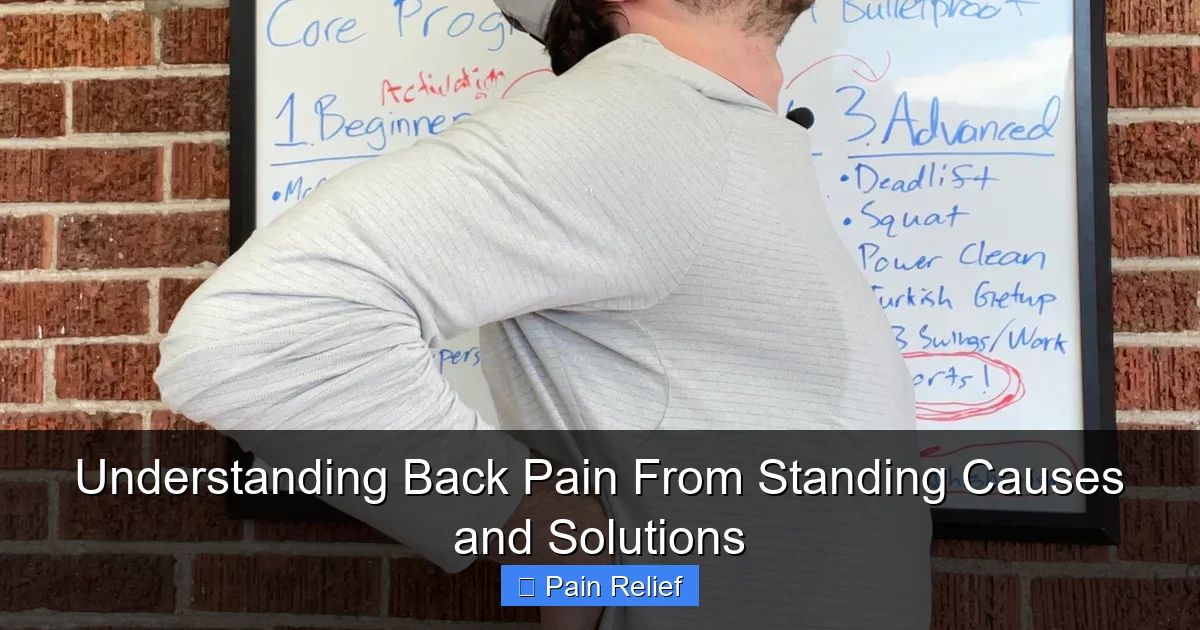
Visual guide about Understanding Back Pain From Standing Causes and Solutions
Image source: backmusclesolutions.com
1. Invest in Supportive Footwear
Choosing the right shoes is a game-changer. Look for footwear that provides:
- Arch support: This helps distribute weight evenly.
- Cushioning: Adequate cushioning reduces shock to your spine.
- Stability: A stable shoe helps maintain proper posture.
Consider visiting a specialty store to find shoes suited for your needs.
2. Practice Good Posture
Maintaining proper posture is essential for back health. Here are some tips:
- Stand tall: Keep your shoulders back and your head aligned with your spine.
- Distribute weight: Shift your weight from one foot to another periodically.
- Use a footrest: If possible, use a footrest to alternate your foot position.
3. Take Regular Breaks
Incorporate short breaks into your routine. Here’s how:
- Set a timer: Use a timer to remind you to take a break every 30-60 minutes.
- Stretch: Use this time to stretch your back, legs, and shoulders.
- Walk around: Take a short walk to promote circulation and relieve tension.
4. Strengthen Your Core
A strong core supports your spine and helps prevent pain. Consider these exercises:
- Planks: Hold a plank position to engage your core muscles.
- Bridges: Strengthen your glutes and lower back with bridge exercises.
- Pilates or yoga: Both practices focus on core strength and stability.
5. Incorporate Stretching and Flexibility Exercises
Stretching can alleviate tightness in your back. Here are some effective stretches:
- Cat-Cow Stretch: This yoga pose helps increase flexibility in your spine.
- Child’s Pose: A gentle stretch that relaxes the back.
- Standing Hamstring Stretch: Helps relieve tension in the back of your legs and lower back.
6. Consider Professional Help
If back pain persists, it may be time to consult a healthcare professional. Options include:
- Physical therapy: A physical therapist can create a tailored exercise program.
- Chiropractic care: Chiropractors can help realign your spine and improve posture.
- Massage therapy: Regular massages can relieve muscle tension and promote relaxation.
Troubleshooting Common Issues
If you’re following the above steps but still experiencing pain, consider these troubleshooting tips:
- Re-evaluate your footwear: Ensure your shoes are appropriate for your activities.
- Check your workspace: Make sure your standing area is ergonomically friendly.
- Monitor your posture: Use mirrors or ask for feedback from colleagues to ensure you’re standing correctly.
Conclusion
Back pain from standing doesn’t have to be a way of life. By understanding the causes and implementing effective solutions, you can significantly reduce discomfort. Remember to invest in supportive footwear, practice good posture, take regular breaks, strengthen your core, and consult professionals if needed. Your back will thank you!
🎥 Related Video: Low Back Pain Causes (and 7 Worrying Signs)
📺 DocUnlock
The first 1000 people to use the link or my code ‘docunlock’ will get a 1 month free trial of Skillshare: https://skl.sh/docunlock05221 …