A practical guide for tight muscles, stiff backs, and better recovery
If you are wondering about massage before or after chiropractor care, you are probably dealing with stiffness, back pain, neck tension, or sore muscles that will not fully calm down.
I’m Ethan Carter, and I’ve spent years testing massage tools, recovery products, and pain relief methods. I focus on simple, practical advice that helps people feel better and recover faster at home. In this guide, I’ll show you when massage makes sense before a chiropractor, when it works better after, and how to use home massage tools safely.
Quick Answer: Should You Get a Massage Before or After Chiropractor Care?
Quick answer: For most tight muscles, having a gentle massage before a chiropractor visit is often the better choice because it can relax the soft tissue and may help the adjustment feel easier. A massage after seeing a chiropractor can also be helpful when your goal is to relieve soreness, reduce stress, and support recovery.
The best choice depends on your body, your pain level, and the type of massage. Light massage before care is often useful for stiffness. Gentle massage after care may help you relax and recover.
Chiropractic adjustments focus on controlled force to spinal joints, with the goal of improving spinal motion and movement, according to the Mayo Clinic guide to chiropractic adjustment. Massage therapy may help ease muscle tension, stress, and discomfort, according to Mayo Clinic’s massage therapy overview.
In this guide, we will explore whether you should get a massage before or after chiropractor visits. Understand the benefits of each approach and how they can work together for optimal health.
Key Takeaways
- Point 1: Massages before chiropractic adjustments can help relax muscles and improve flexibility.
- Point 2: Getting a massage after a chiropractic visit can enhance relaxation and help retain alignment.
- Point 3: The choice depends on individual needs, preferences, and specific conditions.
- Point 4: Combining both treatments can lead to better overall results.
- Point 5: Consult with both your massage therapist and chiropractor for personalized advice.
- Point 6: Always communicate your health history and goals to your practitioners.
What Does Massage Before or After Chiropractor Mean?
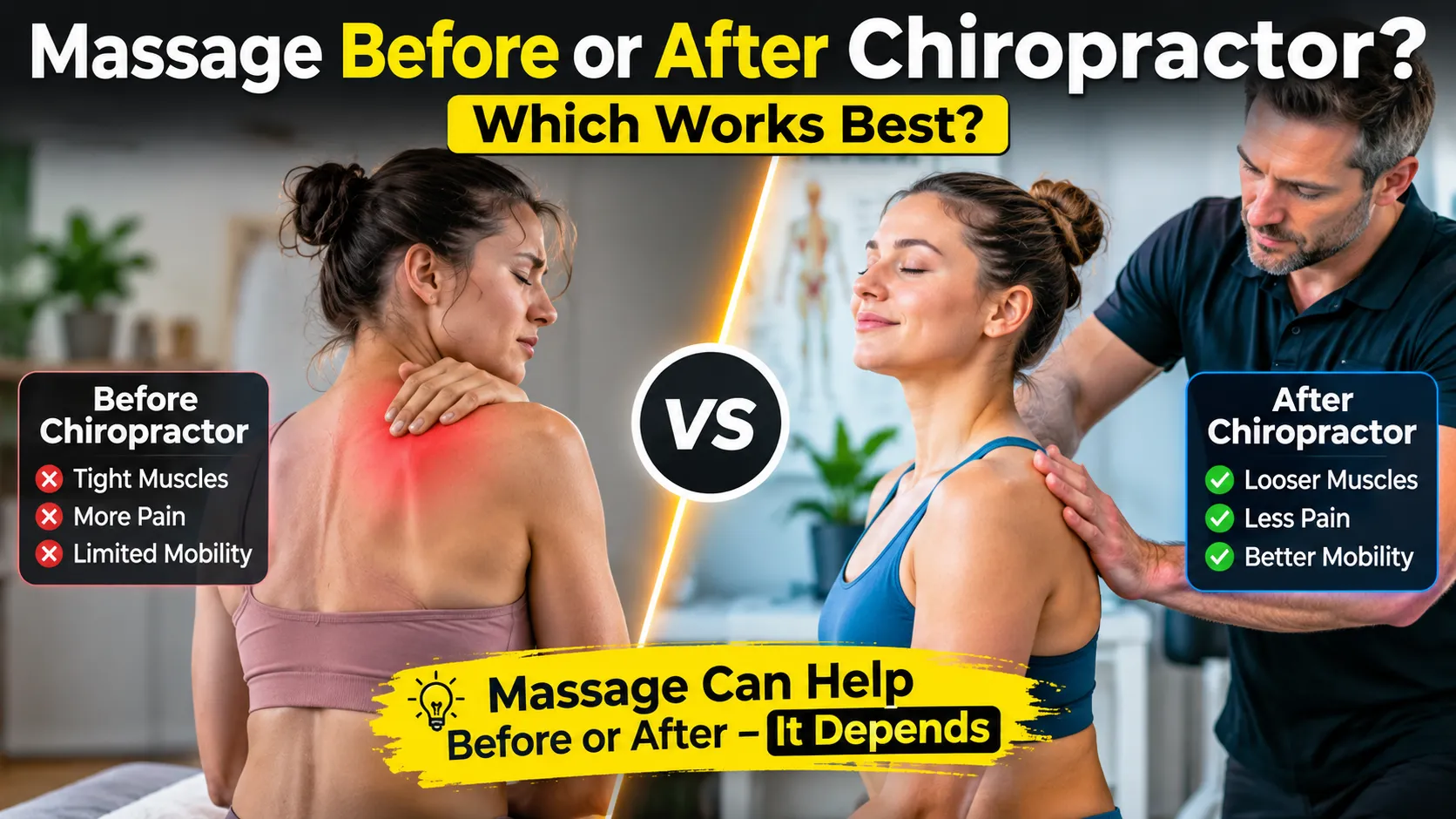
Getting a massage before or after chiropractor care means using massage therapy, self massage, or massage tools around the same time as a chiropractic visit.
The goal is not to force your body into feeling better. The goal is to reduce muscle tension, improve comfort, and support normal movement.
Why Timing Matters for Tight Muscles and Stiff Joints
Your joints and muscles work together. If your back, neck, hips, or shoulders are very tight, your body may guard the area. That guarding can make movement feel limited.
A gentle massage before your appointment may calm tense muscles. This can be useful if you sit at a desk all day, sleep in a stiff position, or carry stress in your shoulders.
A massage after your appointment may feel better if your muscles are sore, tired, or sensitive. Many people prefer this for relaxation at night or recovery after exercise.
How Massage and Chiropractic Care Work Together
Massage works mainly on soft tissue. This includes muscles, fascia, and tender trigger point areas. Chiropractic care focuses more on joint movement and alignment patterns.
That is why they can pair well for some people. Massage may help the soft tissue feel less guarded. Chiropractic care may help the joints move better. Cleveland Clinic notes that chiropractic adjustments may be used for symptoms that affect the musculoskeletal system, including neck pain, lower back pain, sciatica, stiff muscles, and joint pain. You can read more from Cleveland Clinic’s chiropractic adjustment guide.
Massage is good at
- Relaxing tight muscles
- Supporting blood flow
- Reducing stress-related tension
- Helping sore areas feel less guarded
Chiropractic care is good at
- Working on joint movement
- Addressing spine-related stiffness
- Supporting range of motion
- Helping with some back and neck discomfort
How Massage Affects Your Body Before and After an Adjustment
Massage does not “fix” your spine. It works on the soft tissue around your joints. That matters because tight muscles can make your body feel stiff, guarded, and harder to move.
Muscle Tension, Fascia, and Trigger Points Explained
Muscle tension is the tight, pulling feeling you notice after sitting too long, sleeping poorly, or training hard. Fascia is connective tissue around muscles. Trigger points are tender spots that may feel like knots.
Massage can help these areas feel less tense. A massage therapist may use Swedish massage, sports massage, trigger point therapy, or myofascial-style work. At home, you might use a foam roller, tennis ball, massage gun, neck massager, or heated back massager.
Circulation, Soreness, and Range of Motion
Massage often feels helpful because it warms the tissue, supports circulation, and helps you relax. When your muscles feel less tight, simple movements may feel easier. You may notice this when turning your neck, bending forward, reaching overhead, or standing after a long workday.
Why Some People Feel Sore After Both Treatments
Some soreness can happen after a massage, a chiropractic adjustment, or both. This may feel like post-workout soreness. It should not feel sharp, electric, or progressively worse.
Note
If you are new to massage and chiropractic care, start gently. You can always increase pressure later, but it is harder to calm down an irritated area after doing too much.
Step-by-Step Guide: How to Plan Massage Around a Chiropractor Visit
The best plan is simple. Decide your goal first, then choose the timing and pressure level that matches it.
Step 1: Know Your Main Goal
Pick the main problem. Are you trying to loosen tight muscles before care, reduce soreness after care, sleep better, or support post-workout recovery?
Step 2: Choose the Right Massage Pressure
Use light to moderate pressure first. Deep pressure can feel good, but it may leave you sore. Before a chiropractor visit, gentle work is usually the safer starting point.
Step 3: Time Your Massage Properly
Match timing to your goal. For stiffness, try massage before. For soreness or relaxation, try massage after. If you are sensitive, leave several hours or one day between sessions.
Step 4: Use Gentle Home Care Afterward
Keep your routine calm. Walking, light stretching, heat therapy, and gentle self massage may support comfort after your visit.
Step 5: Track How Your Body Responds
Notice the next 24 to 48 hours. If you feel better, repeat the same timing. If you feel sore or drained, reduce pressure or separate the sessions.
Benefits and Best Uses: When Massage Before Chiropractor Works Best
A massage before chiropractor care may be best when your muscles feel tight, stiff, or guarded. This is common with desk work, stress, hard workouts, or poor sleep positions.
Best for Desk Job Pain and Bad Posture
If you sit all day, your upper back, neck, hip flexors, and low back may feel locked up. A gentle massage before care may help you arrive less tense.
Best for Muscle Tightness Before an Adjustment
If your back muscles feel like they are bracing, massage can help soften that protective tension. Many people find this helpful before a chiropractic visit.
Best for Stress-Related Shoulder and Neck Tension
Stress often shows up in the shoulders, jaw, and neck. A calming Swedish massage, light trigger point work, or a warm neck massager may help you feel more relaxed before your appointment.
Tip
Before chiropractor care, think “loosen,” not “crush.” The goal is to calm muscle tension, not create deep soreness.
Benefits and Best Uses: When Massage After Chiropractor Works Best
Massage after chiropractor care may work best when you want recovery support, mild soreness relief, or a calmer nervous system before sleep.
Best for Soreness and Relaxation
If you feel mild soreness after your visit, gentle massage can feel soothing. Keep the pressure light. Avoid aggressive deep tissue work on sensitive areas.
Best for Post-Workout Recovery
If you train, run, lift, or play sports, massage after a chiropractor visit may help your muscles feel less tight. Many athletes use massage tools for warmups, cooldowns, and recovery days.
Best for Gentle Recovery Support at Home
For home care, I prefer simple tools: a tennis ball for the upper back, a foam roller for large muscle groups, a heating pad for stiffness, and a massage gun on low setting for large muscles.
Common Problems and Fixes After Massage and Chiropractic Care
Most issues usually come from applying too much pressure, doing too much too quickly, or overlooking warning signs. Here is a simple troubleshooting table.
Symptom vs Solution Table
When to Slow Down or Ask for Help
Slow down if soreness lasts more than a couple of days, if pain becomes sharp, or if you notice numbness, weakness, dizziness, or swelling. These are not signs to push through.
Common Massage and Chiropractor Mistakes to Avoid
I see the same mistakes often. Most are easy to avoid once you understand pressure, timing, and body signals.
Using Too Much Pressure Too Soon
More pressure does not always mean better results. Deep tissue massage before a chiropractor visit may leave some people sore and sensitive.
Massaging Directly Over the Spine
Massage tools should work on muscles, not bones. Avoid pressing a massage gun, tennis ball, or handheld massager directly into the spine, front of the neck, joints, or bruised areas.
Ignoring Sharp Pain or Numbness
Massage should not create sharp, burning, electric, or shooting pain. If it does, stop. Pain that travels down the arm or leg deserves professional attention.
Warning
Avoid massage and massage tools over open wounds, major swelling, suspected blood clots, new injuries, unexplained numbness, or areas with severe pain. Ask a qualified professional first if you are unsure.

Safety Tips and Best Practices
Massage and chiropractic care can feel helpful, but they still need common sense. A safe routine should feel calming, not aggressive.
Who Should Be Extra Careful
Be extra careful if you have osteoporosis, severe arthritis, nerve symptoms, recent surgery, major injury, unexplained pain, cancer treatment, blood clot risk, or a condition that affects your bones, blood, or nerves.
This does not mean massage is always off-limits. It means you should get personal guidance before using deep pressure or combining treatments.
How to Use Massage Tools Safely
- Start with the lowest pressure or speed.
- Use massage guns only on large muscle areas.
- Keep sessions short, around 30 to 90 seconds per area.
- Avoid direct pressure on the spine, throat, joints, and bruises.
- Stop if pain feels sharp, hot, electric, or worsening.
- Drink water and move gently afterward.
When Not to Combine Massage and Chiropractic Care
Do not combine both on the same day if your body already feels irritated, inflamed, or highly sensitive. In that case, space them out and keep the massage very light.
Tool and Product Recommendations for Home Relief
You do not need a room full of expensive tools. A few simple products can support your home routine between massage and chiropractic visits.
Best Massage Tools to Use Around Chiropractic Care
For most people, I like tools that are easy to control. That means adjustable pressure, soft heat, and gentle settings.
Adjustable Massage Gun for Large Muscles
A massage gun can be useful for glutes, quads, hamstrings, calves, and upper back muscles when used gently and away from the spine.
Heated Neck and Back Massager
A heated massager may help with desk-job neck tension, shoulder tightness, and mild stiffness after a long day.
Foam Roller for Mobility Work
A foam roller is a simple option for thighs, calves, hips, and upper back mobility when you want broad pressure instead of a pinpoint tool.
Product Comparison Table
Massage Before vs After Chiropractor: Full Comparison
Both can work. The better choice depends on your goal. Here is the simple comparison I use when planning my own recovery routine.
Technique Comparison Table
Best Choice by Pain Type and Lifestyle
Frequently Asked Questions
Should I get a massage before or after chiropractor care?
For most people, a gentle massage before a chiropractor visit is helpful because it relaxes tight muscles and may make the adjustment feel easier. A massage after can also work well if your goal is soreness relief and relaxation.
How long before a chiropractor should I get a massage?
A light or moderate massage 30 minutes to 24 hours before your appointment is usually practical. Avoid very deep pressure right before care unless your chiropractor or massage therapist says it is appropriate for you.
Is it normal to feel sore after a chiropractic adjustment and massage?
Mild soreness can happen, especially if tight muscles, trigger points, or stiff joints were worked on. It should feel like workout soreness, not sharp or worsening pain.
Can I use a massage gun after seeing a chiropractor?
You can use a massage gun gently on large muscle areas if you feel comfortable, but avoid the spine, neck bones, bruised areas, and high pressure. Start with the lowest setting and keep sessions short.
What type of massage is best before a chiropractor?
Swedish massage, light sports massage, gentle trigger point work, and myofascial-style massage are common choices. The best option is the one that relaxes tight muscles without leaving you overly sore.
Who should avoid massage around chiropractic care?
People with severe pain, recent injury, unexplained numbness, fever, blood clot concerns, open wounds, major swelling, or certain medical conditions should get professional guidance before massage or chiropractic care.
Should You Get a Massage Before or After Chiropractor Visits?
When it comes to maintaining your health, the available options can sometimes feel overwhelming. One common question many people have is whether they should get a massage before or after visiting a chiropractor. In this guide, we’ll explore the benefits of both approaches, helping you make an informed decision about what may work best for your body. Let’s take a closer look at how massage and chiropractic care can complement one another.
Understanding Massage and Chiropractic Care
Massage therapy and chiropractic care are both effective treatments for pain relief and overall wellness. Massage therapy focuses on manipulating soft tissues in the body, which can help relieve tension, improve circulation, and promote relaxation. Chiropractic care, on the other hand, primarily deals with the diagnosis and treatment of musculoskeletal disorders, particularly spinal alignment.

Visual guide about Should You Get a Massage Before or After Chiropractor Visits
Image source: i.ytimg.com
Benefits of Getting a Massage Before a Chiropractic Visit
Getting a massage before your chiropractic appointment can be beneficial in several ways:

Visual guide about Should You Get a Massage Before or After Chiropractor Visits
Image source: substackcdn.com
- Muscle Relaxation: A pre-chiropractic massage can help relax tight muscles, making it easier for the chiropractor to perform adjustments.
- Improved Flexibility: Massage can help increase your range of motion, allowing for more effective adjustments.
- Pain Relief: If you’re experiencing soreness or discomfort, a massage can alleviate some of that pain prior to your adjustment.
How to Prepare for a Massage Before Chiropractic Care
Follow these steps to ensure you get the most out of your massage:
- Communicate: Let your massage therapist know about any specific areas of concern.
- Stay Hydrated: Drink plenty of water before your massage to help with muscle recovery.
- Arrive Early: Give yourself time to relax and mentally prepare for your session.
Benefits of Getting a Massage After a Chiropractic Visit
Many people also find value in receiving a massage after their chiropractic treatment. Here’s why:
- Enhanced Relaxation: A massage post-adjustment can help you relax and enjoy the benefits of chiropractic care.
- Increased Circulation: Massage can improve blood flow to the areas adjusted by the chiropractor, promoting healing.
- Muscle Recovery: It can help ease any soreness you may feel after adjustments.
How to Get the Most from a Post-Chiropractic Massage
To maximize the benefits of your post-chiropractic massage, consider these tips:
- Schedule Wisely: Book your massage shortly after your chiropractic appointment for optimal results.
- Discuss Your Experience: Inform your massage therapist about the adjustments you received.
- Listen to Your Body: Pay attention to how your body feels after each session and communicate any discomfort.
Choosing Between Massage Before or After Chiropractic Care
Deciding whether to get a massage before or after your chiropractic visit depends on your individual needs and circumstances. Here are some considerations:
- Your Body’s Response: Pay attention to how your body feels. Some may prefer relaxation before an adjustment, while others may feel better having a massage afterwards.
- Your Chiropractic Goals: If your primary goal is to address tightness or muscle tension, a pre-visit massage may be beneficial. If you’re looking to enhance recovery and relaxation, opt for a post-visit massage.
- Consult Professionals: It’s always a good idea to discuss your preferences with both your chiropractor and massage therapist. They can provide tailored advice based on your health history and treatment goals.
Combining Massage and Chiropractic Care
For optimal results, many individuals choose to incorporate both massage and chiropractic care into their wellness routines. Here are some practical tips:
- Frequency: Consider alternating between the two therapies. For example, you could schedule a massage one week and a chiropractic visit the next.
- Listen to Your Body: Regularly assess how your body responds to each treatment. Adjust your schedule accordingly.
- Holistic Approach: Remember that both forms of therapy can work together to promote overall wellness. Incorporate other healthy habits, such as stretching and exercise, into your routine.
Troubleshooting Common Concerns
Some individuals may have concerns about combining massage and chiropractic care. Here are a few common issues and solutions:
- Feeling Sore: If you feel sore after a chiropractic adjustment or massage, give your body time to adjust. Rest and hydrate.
- Unsure Which to Choose: If you’re uncertain whether to schedule a massage before or after, consider trying both options to see what feels best for you.
- Timing Issues: If your schedule is tight, consider shorter sessions of both therapies to fit your routine.
Conclusion
Deciding whether to get a massage before or after a chiropractor visit ultimately depends on your personal preferences and individual health needs. Both treatments can complement each other well, potentially promoting greater relaxation, reduced discomfort, and improved wellness. Whether you choose to relax beforehand or unwind afterward, the key is to listen to your body and consult with your healthcare providers. By doing so, you can develop a personalized approach that supports your journey toward better health.
🎥 Related Video: Should I see a massage therapist or chiropractor | Chiropractor San Francisco
📺 ProActiveSF
Should I see a massage therapist or chiropractor | Chiropractor San Francisco Whether a shoulder issue or low back complaint …