
By Ryan Mitchell
Last updated: October 27, 2026
Quick Answer: Practice one slow breathing technique daily for a week before your flight, choose a seat that feels safer to you, limit caffeine and alcohol on travel day, bring simple grounding tools, and use planned distraction once onboard. Anxiety is common and usually peaks before takeoff—many people feel more steady once the plane is in the air.
What you’ll find here
Flight anxiety is the body’s normal alarm system responding to unfamiliar sensations, loss of control, and uncertainty. This guide focuses on practical preparation, in-flight tools, and realistic expectations so you can move through the experience with more steadiness. It is not medical advice. If anxiety feels intense or interferes with travel, talk with a qualified clinician.
Key Takeaways
- Rehearse one breathing pattern ahead of time so it is available when nerves rise.
- Seat choice, early arrival, and a small calm kit give you more control before boarding.
- During turbulence or takeoff, longer exhales and 5-4-3-2-1 grounding often help more than fighting the feeling.
- Products such as noise-reducing headphones or a supportive neck pillow may support comfort for some travelers; they are tools, not cures.
Why Flying Feels So Unsettling
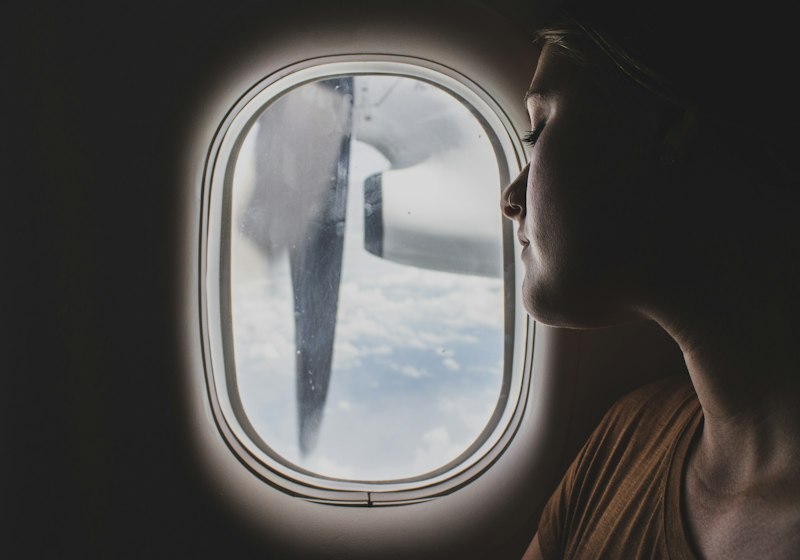
Many people feel uneasy about flying even when they know planes are statistically very safe. The body reacts to closed space, unfamiliar sounds, the feeling of movement without control, and the fact that you cannot leave. Anticipatory anxiety—the worry in the days or hours before the flight—is often stronger than the actual time in the air.
Turbulence, engine pitch changes, and cabin announcements can all trigger a surge of adrenaline. Labeling the sensation as “discomfort, not danger” is a useful first step. You do not have to eliminate every nervous feeling to fly more comfortably.
Preparation in the Week Before You Fly
Small daily practices make in-flight tools more effective because the nervous system already knows the pattern.
7-Day Calm Prep Timeline
Days 1–3
Practice 4–6 minutes of slow breathing twice a day. Choose one method and stick with it.
Days 4–5
Review seat map, download offline entertainment, pack a small calm kit, and check expected weather or turbulence notes if available.
Day 6–Travel Day
Skip or reduce caffeine and alcohol. Arrive early. Use the same breathing pattern at the gate.
Breathing Methods Worth Rehearsing
Longer exhales help activate the body’s calmer response. Pick one and practice when you are already relatively steady.
| Method | How to do it | Best for |
|---|---|---|
| Box breathing | Inhale 4, hold 4, exhale 4, hold 4 | Steadying before boarding |
| 4-7-8 | Inhale 4, hold 7, exhale 8 | Stronger settling when nerves spike |
| Physiological sigh | Two short inhales through nose, long slow exhale through mouth | Quick reset during bumps |
| Extended exhale | Any comfortable inhale, then exhale 1–2 counts longer | Simple option if counting feels hard |
Stop if you feel lightheaded. These are comfort tools, not medical treatment.
Practical Choices on Travel Day
Seat Strategy and Arrival
Over the wing often feels the least motion. Aisle seats allow easier movement and a clearer exit path. Window seats give a horizon to focus on. There is no single correct answer—choose what reduces your specific worry.
Arriving early reduces rushing, which itself raises heart rate. Once at the gate, a few rounds of your practiced breathing can set a calmer baseline before boarding.
Travel-Day Calm Kit Checklist
☐ Water bottle (empty through security)
☐ Noise-reducing headphones or earplugs
☐ Downloaded offline music, podcast, or show
☐ Small fidget or smooth object to hold
☐ Mint, gum, or familiar snack
☐ Light layer or soft neck support
What to Limit
| Item | Why it can increase tension | Gentler alternative |
|---|---|---|
| Caffeine | Can raise heart rate and amplify jittery feelings | Water, herbal tea if available |
| Alcohol | May temporarily blunt nerves then increase anxiety later | Stay hydrated; use breathing instead |
| Heavy news or crash videos | Feeds the brain worst-case images | Light, familiar entertainment |
Tools and Techniques Once You Are Onboard
Grounding When Anxiety Spikes
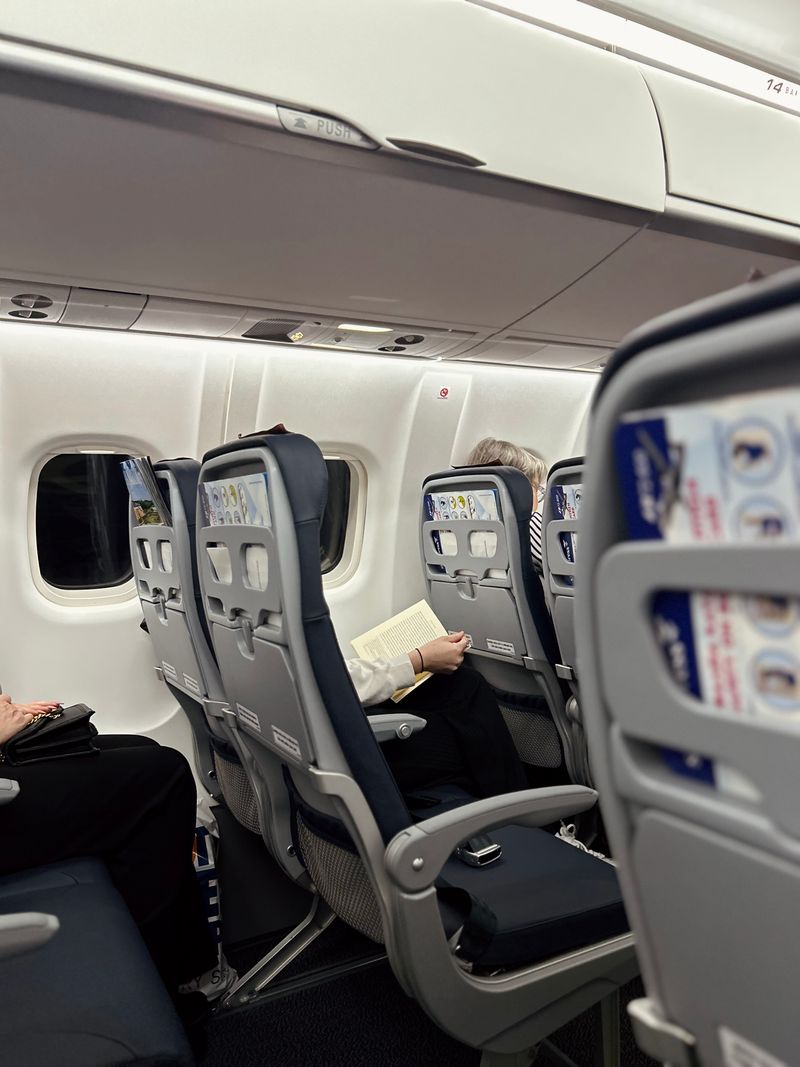
The 5-4-3-2-1 technique brings attention back to the present moment:
- 5 things you can see
- 4 things you can touch
- 3 things you can hear
- 2 things you can smell
- 1 thing you can taste
You can also press your feet firmly into the floor, feel the armrest under your hands, or hold a cool water bottle against your wrists. Panic sensations usually rise and fall within a few minutes when you stop fighting them.
In-Flight Decision Path
Takeoff or turbulence feels intense? → Seat belt on → Longer exhales → Name the feeling (“this is anxiety, not danger”) → Tell a crew member if you need support.
Mind keeps looping? → Start your offline show or playlist immediately → Use a fidget object → Shift posture slightly every 20–30 minutes.
Still struggling? → Ask a flight attendant for a brief check-in; many are experienced with nervous passengers and can offer practical reassurance.
Common Flight Moments and Helpful Responses
| Moment | What often helps | What to avoid |
|---|---|---|
| Boarding | Headphones ready, three slow breaths before sitting | Scrolling worst-case stories |
| Takeoff | Longer exhales, fixed visual point, planned music | Holding breath or gripping tightly without releasing |
| Turbulence | Belt fastened, name it as normal air movement, grounding | Imagining catastrophic outcomes |
| Mid-flight restlessness | Short stretch of shoulders/neck if safe, walk if permitted | Staying frozen in one tense posture for hours |
Comfort Items Some Travelers Find Useful
No product removes anxiety, but certain items can reduce sensory load or give the hands and mind something steady to do. Check current details and fit before buying. These are general product types, not medical devices.
| Product type | How it may support calm | Who may want to skip or check first |
|---|---|---|
| Noise-reducing headphones | Less engine drone and cabin noise can lower sensory overload | Those who need to hear announcements clearly; test awareness mode |
| Memory-foam travel neck pillow | Physical support may reduce neck tension that feeds overall unease | People with neck or cervical concerns—confirm comfort |
| Small fidget or smooth stone | Gives restless hands a simple, private task | Anyone who finds objects distracting rather than grounding |
| Light eye mask or soft scarf | Reduces visual stimulation when desired | Those who prefer to see the cabin and horizon |
Where to look
You can browse current options for noise-cancelling headphones for travel, a memory foam travel neck pillow, or a simple fidget item for adults. Always check the latest product details, battery life, size, and return policy yourself.
Suitable-use vs. caution notes
Often helpful
Practiced breathing, planned distraction, early arrival, telling the crew you feel nervous, limiting stimulants.
Check with a clinician first
Strong anxiety that leads to avoidance of necessary travel, history of panic disorder, pregnancy-related concerns, or any plan involving medication.
Mistakes That Often Make Anxiety Worse
| Common approach | Why it can backfire | More useful alternative |
|---|---|---|
| Trying to force zero anxiety | Creates extra pressure and self-criticism | Aim for “I can ride this wave” |
| Avoiding all information about flying | Leaves the mind free to invent threats | Learn basic, accurate facts about normal sounds and turbulence |
| Waiting until takeoff to try breathing | Unrehearsed techniques feel awkward under stress | Practice daily for several days beforehand |
| Using alcohol as the main strategy | Can increase later anxiety and disrupt sleep | Hydration + practiced tools + distraction |
Illustrative comfort meter (not research data)
How many people report these tools feel useful (general observation, not a study):
Practiced breathing
Noise reduction + offline audio
Seat choice + early arrival
Telling the crew
Safety Note
This article offers general wellness information, not diagnosis or treatment. If you experience severe panic, chest pain, dizziness that feels medical, or anxiety that keeps you from necessary travel, contact a qualified healthcare professional. Pregnant readers or anyone with a heart, breathing, or mental-health condition should discuss strategies and any products with their clinician before relying on them.
Frequently Asked Questions
Does turbulence mean the plane is in danger?
Turbulence is common and modern aircraft are built to handle it. The sensation can feel intense, but it is usually just the plane moving through uneven air. Knowing this fact can reduce the catastrophizing that often fuels anxiety.
Should I tell the flight attendants I am nervous?
Yes, if it feels helpful. Crew members regularly support nervous passengers and can check in, answer questions, or simply acknowledge that you are okay. Many people find the brief human connection calming.
Are noise-cancelling headphones worth packing?
For many travelers, yes. Reducing constant engine noise lowers one major source of sensory stress and makes calming audio more effective. Keep awareness mode available for announcements if your model offers it.
What if breathing exercises make me feel more anxious?
Some people find focused breathing intensifies awareness of their body. In that case, shift to external grounding (5-4-3-2-1), a simple physical task with the hands, or planned distraction. There is no single method that works for everyone.
Can I use these tips if I am pregnant?
Gentle breathing, early arrival, and comfort items are often reasonable, but check with your prenatal provider, especially regarding any products, essential oils, or strong physical techniques. Individual medical guidance always comes first.
Will one good flight fix my fear forever?
Usually not. Each successful flight can build evidence that you can cope, but lasting change often comes from repeated practice and, for stronger fear, professional support such as cognitive-behavioral or exposure-based approaches.
Final Thoughts
Reducing anxiety while flying is less about eliminating every nervous sensation and more about giving yourself reliable tools: rehearsed breathing, a thoughtful seat and timing plan, planned attention, and a few simple comfort items if they suit you. The goal is to move through the flight with greater steadiness, not perfect calm.
Practice one technique before you need it, treat turbulence and takeoff as expected rather than catastrophic, and speak with a healthcare professional if fear is intense or limiting. Safe, gradual steps are usually more sustainable than forcing yourself through extreme discomfort without support.

