
By Ryan Mitchell · Wellness & Relaxation
Quick Answer: The best wellness lifestyle books are readable, practical, and honest about limits. Choose by your goal (calmer routines, better habits, or slower living), pick a format you will actually finish, and skip books that promise cures or tell you to stop medical care.
Walk into any bookstore and the wellness shelf feels endless. Habit guides, mindfulness classics, slow-living essays, and journals all compete for attention. Finding the best wellness lifestyle books for you takes a little method, not just a pretty cover. This guide gives you that method, plus three easy starter picks you can check today.
Please note: This article is for general educational information only. It does not diagnose, treat, cure, or prevent any condition. It does not replace advice from a licensed healthcare professional. Readers should seek professional help for severe, worsening, unusual, or persistent symptoms.
What to Look For in the Best Wellness Lifestyle Books
Start with the basics before you scan any bestseller list. A book only helps if you finish it and can use one idea from it. In a daily routine, I usually notice that a book sticks when it asks for one small action, not a total life overhaul. These four criteria keep your choice practical.
Clear, usable ideas
Look for chapters that end with something you can try, like a small habit or a reflection question. If you cannot name one takeaway after a chapter, the book may be too abstract for you.
Honest, careful claims
Good authors explain what an idea may help with and admit its limits. Be careful with books that promise fast transformation or guaranteed results.
Author background and sources
Check whether the author explains their experience and points to sources. A famous name is not the same as a medical credential, so keep expectations realistic.
Reading style fit
Short chapters suit busy days. Story-driven books suit people who like context. Pick the pace that matches your real evenings, not your ideal ones.
Choose a book if it passes at least three of these four checks after a sample chapter. Avoid it if the claims feel exaggerated, even when the cover is calm and lovely. You can always return to it later.
Here is a typical routine priority for what to weigh first when you shop.
Typical routine priority: what to weigh first
Treat these bars as a practical guide, not research data. If a book scores well on the top two, it is usually worth a sample chapter.
Match Your Goal to the Right Book Type

Wellness is a wide word, and your goal decides which shelf to browse first.
Reader Goal and Book Fit Table
Swipe left/right to see the full table →
| Your goal | Book style to try | Why it may fit |
|---|---|---|
| Feel calmer day to day | Mindfulness or meditation guides | May support a simple, steady attention practice |
| Build better habits | Habit and routine books | Can break big changes into small repeatable steps |
| Slow down and reset priorities | Slow-living or time-focused essays | May help you rethink busyness and rest |
| Reflect and stay consistent | Guided journals or workbooks | Can make reflection a written daily routine |
Note: A book can offer ideas and a fresh viewpoint, but it cannot assess your personal health. Treat any advice as general inspiration.
Mindfulness books: Choose these if you want a gentle way to slow down and notice the day. Avoid them if you dislike reflective writing and would rather have concrete steps.
Habit books: Choose these if you like clear systems and small experiments. Avoid them if lists and tracking tend to feel like pressure instead of support.
Slow-living and time books: Choose these if you feel constantly busy and want a fresh view on priorities. Avoid them if you need a step-by-step plan more than big-picture ideas.
Journals and workbooks: Choose these if you enjoy writing and active practice. Avoid them if an unfinished page would make you feel behind.
If your goal is unclear, begin with whichever description above felt most appealing. Interest usually helps follow-through more than any ranking.
Print, E-Book, Audiobook, or Workbook?
Format changes how often you actually read, so compare your options before you buy.
Book Format Comparison Table
Swipe left/right to see the full table →
| Format | Best for | Watch out for |
|---|---|---|
| Print book | Evening wind-down away from screens | Bulkier to carry on trips |
| E-book | Travel, highlighting, and quick sampling | Screen glare and easy distraction |
| Audiobook | Walks, commutes, and chores | Hard to pause for reflection |
| Workbook or journal | Active practice and daily tracking | Needs steady time to complete |
If you already spend most of your day on a screen, a print book may feel more restful. If your schedule is packed, audio can turn idle minutes into reading time. Whichever you pick, the best format is the one you will actually finish.
Which Book Fits Your Situation Table
Your daily setting matters as much as the book’s topic.
Swipe left/right to see the full table →
| Your situation | Prioritize | Format idea |
|---|---|---|
| Busy parent with little free time | Short chapters and quick wins | Audiobook during chores |
| Remote worker glued to a screen | Screen-free wind-down | Print book before bed |
| Student with a heavy workload | Light, low-pressure reading | E-book in small sessions |
| Someone who loves writing | Active reflection | Guided journal |
A Simple 5-Step Way to Shortlist Your Next Read
Follow these steps before you add anything to your cart.
1
Name one goal, such as calmer evenings or steadier habits.
2
Read the sample chapter or table of contents first.
3
Check the author’s background and whether the claims sound careful.
4
Pick a format that fits your real schedule.
5
Start with one book and finish it before buying another.
For step two, try a three-page test. Read three pages from the middle of the book. If the tone feels calm and the ideas feel usable, it is a good sign. If you feel lectured or confused, move on.
Three Easy Starter Picks to Consider
These three titles often appear on lists of the best wellness lifestyle books, and each suits a different goal. They are general-interest reads, not medical guides.
This article may contain affiliate links. If you buy through these links, we may earn a small commission at no extra cost to you. We only mention products that fit the topic and do not replace professional medical advice.
Wherever You Go, There You Are by Jon Kabat-Zinn
A classic introduction to mindfulness with short chapters that may support a calmer, more present daily routine.
Best for: calmer evenings
Atomic Habits by James Clear
A practical guide to building small routines that can help with consistency and follow-through.
Best for: small habit changes
Four Thousand Weeks by Oliver Burkeman
A thoughtful look at time and busyness that may help you rethink what deserves your attention.
Best for: feeling overbooked
How to pick among these three: choose Wherever You Go, There You Are if you want a quiet, reflective read. Choose Atomic Habits if you like practical systems. Choose Four Thousand Weeks if constant busyness is your main frustration. Avoid buying all three at once; one is plenty to start.
These picks were chosen for broad appeal, readable style, and a general-interest focus. They are not ranked, and no book here is a substitute for professional guidance. Your ideal pick may be a different title entirely.
Mistakes to Avoid When Choosing a Wellness Book
Most regrets come from a few common slips. Here is a realistic example: someone buys a 500-page habit book, stalls at chapter two, and decides they are bad at habits. A shorter title may have kept the routine alive.
Mistake vs Better Choice Table
Swipe left/right to see the full table →
| Common mistake | Better choice |
|---|---|
| Buying only by bestseller rank | Read a sample and check fit with your goal |
| Starting with a huge, dense book | Start with a short, easy one |
| Expecting one book to change everything | Aim for one small habit from each book |
| Treating advice as medical orders | Use books as support and ask a professional about health concerns |
Claims to Trust and Claims to Question
Wording tells you a lot about an author’s care.
Swipe left/right to see the full table →
| Wording you see | What it suggests | Your move |
|---|---|---|
| “May support” or “some people find” | Careful, honest tone | Read on |
| Sources and limits are named | Transparent writing | Good sign |
| “Guaranteed cure” or “fix in days” | Overpromising | Skip the book |
| “Stop your medication” | Unsafe advice | Ignore it; ask a licensed professional |
Warning: Be careful with any book that sells diet, supplement, or detox plans under a wellness label. Never stop or change prescribed medication because of a book. Ask a licensed professional first.
Use this quick path whenever a book gives health-related advice.
Practical guide: should I follow this advice?
This is a practical guide, not a medical tool. When in doubt, a quick check with a licensed professional is the safest move.
How to Read Reviews Without Being Misled
Reviews can help, but they can also mislead. Five-star praise can reflect the author’s fame, while one-star reviews sometimes complain about shipping. The middle ratings usually say more. Look for reviewers who describe how they used the book, such as which chapter helped or what felt too long. Also check the publication date, because older classics and newer releases serve different readers. Finally, compare two or three books on your shortlist side by side, then sample the one that remains.
Pro Tips for Getting More From Your Reading
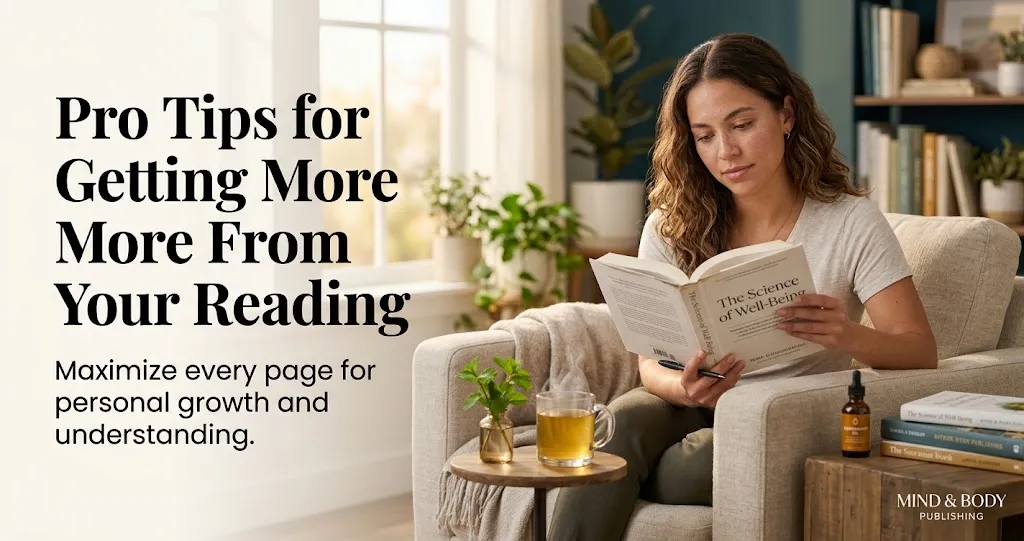
Even the best wellness lifestyle books only work when they fit your real life. Keep the book where you will see it, set a small daily window, and give yourself permission to skip a chapter that does not help.
Tip: Read for ten minutes at the same time each day, such as after dinner. Write down one idea you will try tomorrow. Small and steady usually beats long and rare.
Pair reading with a calm cue. A cup of tea, a lamp, or a favorite chair can signal that it is time to slow down. Keep your phone in another room so notifications do not pull you out of the page.
This split panel sums up what tends to work and what tends to backfire.
Do’s and Don’ts
Do
✓ Read a sample first
✓ Note one takeaway per session
✓ Share a favorite with a friend
Don’t
✗ Buy five books at once
✗ Treat ideas as medical orders
✗ Force yourself through a book you dislike
Notice that every item on the don’t side adds pressure. A calm reading habit works best when it stays light.
If You Stall Halfway
Stalling is normal. Do not treat it as failure. Reread your goal, switch to the audiobook version, or move to a shorter title. If a book keeps making you feel worse, put it down and choose something lighter.
This general guide shows one easy way to pace your first month, not a promise of results.
General guide: your first reading month
Adjust the pace freely. Finishing slowly is still finishing.
When a Book Is Not Enough: Talking With a Professional
When to contact a professional
A book can support your routine, but it cannot assess your health. Contact a licensed healthcare professional if you notice ongoing low mood, heavy anxiety, trouble sleeping, or feelings that get in the way of work, school, or relationships. Seek urgent medical help if you feel unsafe or have thoughts of harming yourself. In the US, you can call or text 988 to reach the Suicide & Crisis Lifeline.
For general background on mindfulness, see the NIH National Center for Complementary and Integrative Health. To find mental health care, visit the National Institute of Mental Health guide.
Frequently Asked Questions
What are the best wellness lifestyle books for beginners?
Start with short, practical titles that focus on one goal, like mindfulness or habits. Wherever You Go, There You Are and Atomic Habits are common starting points.
Can wellness books replace therapy or medical care?
No. Books can offer general ideas, but they cannot diagnose or treat anything. Talk with a licensed professional about any health concern.
Are audiobooks as good as print for wellness reading?
Both can work well. Choose the one you will finish; many people like audio for walks and print for quiet evenings.
How many wellness books should I read at once?
One at a time is usually enough. That gives you space to try a few ideas before moving on.
How can I tell if a wellness book is trustworthy?
Look for careful wording, named sources, and honest limits. Be wary of guarantees, miracle claims, or advice to stop medication.
Are workbooks and journals worth buying?
They may suit you if you enjoy active reflection. Skip them if they would turn into another source of pressure.
How long should I read each day?
Even ten minutes can build a steady routine. Adjust the time to your schedule and energy.
Final Thoughts
The best wellness lifestyle books are the ones you finish and actually use. Start with one goal, sample before you buy, and treat every book as gentle inspiration rather than medical guidance. If symptoms or worries feel severe, worsening, unusual, or persistent, talk with a licensed professional. Come back to this guide when you are ready to choose your next read.
Author
-

Hi, I’m Ryan Mitchell, a wellness and relaxation writer at RemedyTip.com, where I focus on helping readers better understand stress management, relaxation techniques, mindfulness, sleep improvement, and everyday wellness habits. I have developed a strong knowledge of the Wellness & Relaxation field through sustained learning, in-depth research, and a continued commitment to exploring practical approaches to well-being.
My work focuses on researching wellness topics, examining available evidence, and turning complex information into clear, accessible, and actionable guidance. I’m continually exploring new findings, relaxation practices, and lifestyle strategies to help readers make informed decisions about their daily wellness routines. At RemedyTip.com, my goal is to share trustworthy, research-informed content that encourages healthier habits, greater relaxation, and a more balanced lifestyle.

