
By Ryan Mitchell
Quick Answer: Wellness massage at home works best as a short, gentle routine. Warm up, use light-to-moderate pressure on large muscle areas, avoid bones, joints, and sore spots, and stop if anything feels sharp or numb. Ten to twenty minutes, a few times a week, is a realistic starting point.
Hands-on self-care does not need a spa budget. This guide shows how to build a calm, repeatable wellness massage at home routine, including the tools worth having, the mistakes that cause irritation, and the signs that a licensed professional is the better choice.
Please read first: This article is for general educational information only. It does not diagnose, treat, cure, or prevent any condition. It does not replace advice from a licensed healthcare professional. Readers should seek professional help for severe, worsening, unusual, or persistent symptoms.
Why Home Massage Feels Good (and What It Can’t Do)
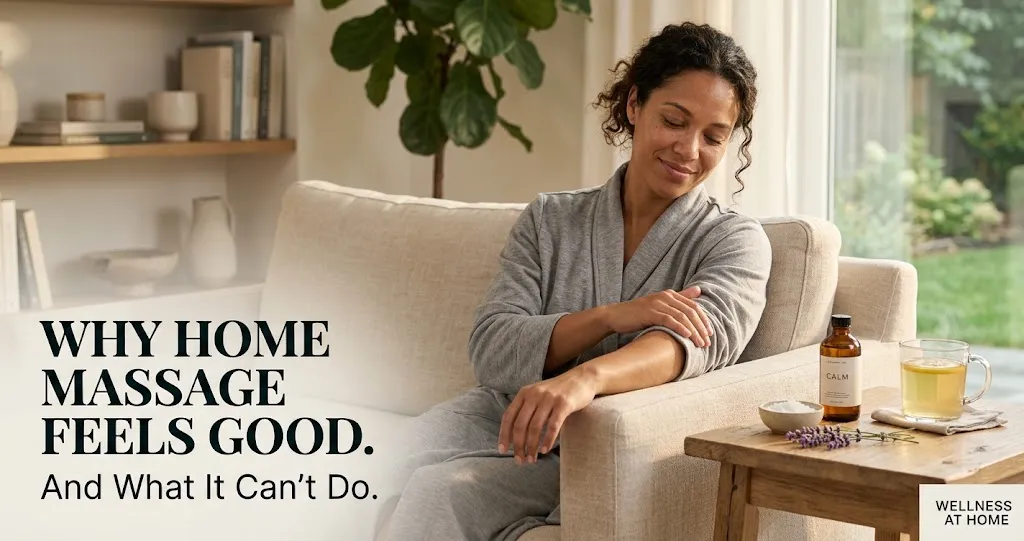
Long hours at a desk, on a phone, or behind a wheel leave many people with tight shoulders, a stiff neck, and tired hands or feet. Massage-style touch may help you feel more relaxed and may ease the feeling of muscle tension for a while. Many people also value the quiet pause it creates in a busy day.
Be realistic, though. Home massage is a comfort habit, not a treatment, and results vary from person to person. Trusted health sources describe massage as generally safe for most healthy adults, with extra caution for some conditions. For background, see the Mayo Clinic massage overview and the NCCIH massage guide.
Everyday Triggers Behind Tight Muscles
These four habits are common sources of everyday tightness.
Long sitting
Staying in one position for hours keeps the neck, hips, and lower back working without a break. Short movement breaks plus gentle massage can help you feel looser.
Stress and shallow breathing
When you feel tense, shoulders often creep upward without you noticing. Slow breathing during massage may help you spot and release that habit.
Repetitive tasks
Typing, scrolling, and gripping tools can leave forearms and hands tired. Light strokes may feel soothing after a long day.
Little movement or sleep
Skipped stretching and short nights can make the body feel stiff and sore. A calm evening routine may help you wind down.
Step-by-Step Wellness Massage at Home Routine
Follow these six steps for a session of about 15 minutes. Adjust pressure to what feels comfortable, never painful.
1
2
3
4
5
6
Your Routine at a Glance
Here is the same routine as a quick visual, with typical timing.
2 min
→
2 min
→
4 min
→
5 min
→
2 min
Total time is about 15 minutes. Shorten any stage on busy days, but keep the warm-up and cool-down.
Where to Spend Your Time
This bar guide shows typical routine priority for beginners. It is a practical guide, not scientific data.
Start with the areas that feel tightest from daily habits. Go lighter on the neck and lower back, and never press hard on the spine or the front of the throat.
Simple Techniques by Body Area
Use these starter moves with light pressure and slow breathing.
Neck and shoulders
Sit tall and use your opposite hand to knead the top of the shoulder in slow circles. Avoid pressing the front or sides of the throat.
Hands and forearms
Rest your forearm on a table and stroke from wrist toward elbow with your thumb. Finish by gently pulling each finger.
Feet and calves
Roll a ball under the arch for a minute each side while seated. Stroke the calf upward with open palms, and skip any swollen or painful area.
Hips and upper back
Place a ball between your back and a wall and lean in lightly. Move slowly and keep it off the spine itself.
Tools That Fit Your Routine
You can start with only your hands. Add simple tools once you know what pressure feels comfortable.
Tool Fit Table
Swipe left/right to see the full table →
| Tool | Best for | Pressure | Watch out for |
|---|---|---|---|
| Your hands | Shoulders, arms, feet | Light to medium | Tired fingers in long sessions |
| Massage ball | Upper back, feet, hips | Medium | Never on bone, spine, or joints |
| Foam roller | Thighs, calves, upper back | Medium to firm | Skip sore or injured spots |
| Oil or lotion | Smoother, comfortable strokes | Light | Patch test first; stop if skin itches |
Common Mistakes and Better Choices
Most discomfort after home massage traces back to a few avoidable habits.
Mistake vs Better Choice
Swipe left/right to see the full table →
| Common mistake | Better choice | Why it matters |
|---|---|---|
| Pressing as hard as possible | Use light to medium pressure | Hard pressure can leave muscles sore or bruised |
| Rolling over bones or joints | Stay on soft muscle tissue | Bones and joints are easily irritated |
| Working through a sore, injured spot | Rest it and ask a professional | Massage may not suit a fresh injury |
| Skipping the warm-up | Breathe, move, or warm up first | Relaxed muscles respond more comfortably |
| Very long sessions | Keep it to 10 to 20 minutes | More time is not always better |
Note: Good home massage feels like relief, not effort. If you need to grit your teeth, ease off. A soft, steady touch is usually more helpful than force.
Comfortable Sensations vs Stop Signals
Learn your body’s signals before you add more pressure.
Comfortable signs
- Dull, warm pressure
- Muscles feel softer
- Breathing stays easy
- Feels better afterward
Stop signals
- Sharp or burning pain
- Tingling or numbness
- Dizziness or nausea
- New bruising or swelling
If you notice any stop signal, ease off or stop completely. Mild tenderness that fades quickly is common, but pain that lingers deserves attention.
Warning: Check with a healthcare professional before starting home massage if you are pregnant, take blood thinners, or have a clotting condition, osteoporosis, cancer, nerve problems, inflamed or fragile skin, or a recent injury. Never massage swollen, hot, red, or painful calf areas.
Troubleshooting Your Home Routine
If your wellness massage at home routine is not working for you, check these common issues first.
It feels sore afterward. Pressure was probably too firm or the session too long. Cut both in half next time and use open palms instead of tools for a week.
I can’t relax. Dim the lights, silence notifications, and add slow breathing for the first two minutes. Tension often eases when your attention settles.
I never have time. Try a two-minute shoulder and hand reset after lunch or before bed. Short, regular sessions are easier to keep than long, rare ones.
Oil makes my skin itch. Stop using it, rinse the area, and try an unscented option on a small patch first. Contact a professional if redness or swelling spreads.
How Often and How Long to Massage at Home
Use these ranges as a general guide, not a rule. Your comfort and schedule matter most.
Timing Guide
Swipe left/right to see the full table →
| Situation | Session length | How often | Focus |
|---|---|---|---|
| New to home massage | 5 to 10 minutes | 2 to 3 times a week | Hands, shoulders |
| Quick desk reset | 2 to 5 minutes | Once or twice on workdays | Forearms, shoulders |
| Evening wind-down | 10 to 20 minutes | A few evenings a week | Feet, calves, shoulders |
| Tool-based session | 5 to 10 minutes | Up to a few times a week | Thighs, upper back |
Pro Tips for Better Results
Tip: Pair your routine with something you already do, like turning off the TV or brushing your teeth. A fixed cue helps the habit stick.
- Warm your hands first so strokes feel smoother.
- Use slow, even strokes instead of quick, jabby ones.
- Hold a tender spot gently for a few breaths rather than digging in.
- Drink water and stretch lightly afterward.
When Home Massage Isn’t Enough
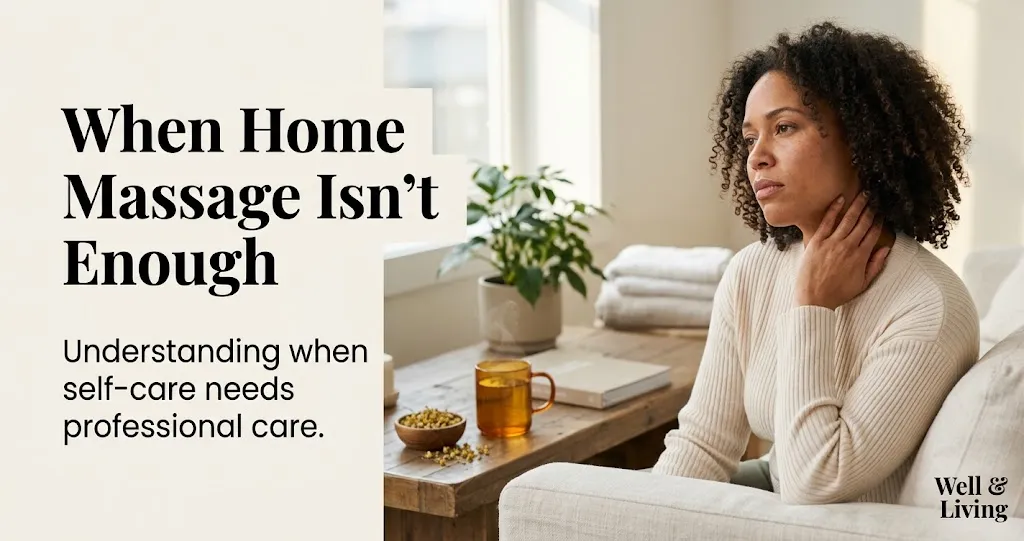
If tightness keeps returning after two to three weeks of gentle, regular practice, the cause may be something other than everyday tension. Posture, workstation setup, sleep, stress, and health factors can all play a role. A licensed massage therapist, physical therapist, or doctor can look at the whole picture and suggest a safe plan.
Self-Care vs Seeking Help
Swipe left/right to see the full table →
| Situation | Reasonable self-care | Seek help |
|---|---|---|
| Mild tightness after a long day | Gentle massage, movement, rest | If it persists for weeks |
| Soreness after a new routine | Lower pressure, shorter sessions | If pain worsens or lingers |
| Tingling or numbness | Stop massaging the area | Contact a professional promptly |
| Swelling, warmth, or fever | Do not massage | Seek medical care |
| Chest pain, weakness, or loss of bladder or bowel control | Do not self-treat | Seek urgent medical help |
Quick Safety Decision Path
Use this simple path whenever something feels off during or after a session.
When in doubt, pause and ask. A quick check-in with a professional is always reasonable.
When to contact a professional: Reach out to a doctor, physical therapist, or licensed massage therapist if pain is severe, worsening, or unusual, if it follows a fall or injury, if you feel numbness or weakness, or if tightness has not improved after a few weeks. Seek urgent medical help for chest pain or sudden severe symptoms.
Starter Tools That May Support Your Routine
These simple tools can make wellness massage at home easier to start and easier to keep up.
This article may contain affiliate links. If you buy through these links, we may earn a small commission at no extra cost to you. We only mention products that fit the topic and do not replace professional medical advice.
Massage Ball Set
A small, firm ball that may help you reach the upper back, hips, and feet with controlled pressure.
Soft-to-Medium Foam Roller
May support comfort in the thighs, calves, and upper back, and can make a short routine feel more consistent.
Unscented Body Massage Oil
May help your hands glide smoothly during self-massage. Patch test first and skip it if your skin is sensitive.
Frequently Asked Questions
Is wellness massage at home safe for beginners?
It is generally considered safe for most healthy adults when pressure stays light and you avoid sore or injured areas. Check with a professional first if you have a health condition or are pregnant.
How long should a home massage session last?
Most people do well with 10 to 20 minutes. Shorter sessions of a few minutes are fine on busy days.
Can I do self-massage every day?
Gentle sessions can often be done daily if they feel comfortable. If an area feels sore, give it a rest day.
What can I use if I don’t have special tools?
Your hands, a tennis ball, and a towel are enough to start. Add other tools only if they feel comfortable.
Should I use oil or lotion?
It is optional. If you try one, patch test on a small area first and choose unscented options if your skin is sensitive.
Is it normal to feel sore after a massage?
Mild tenderness for a day can happen, especially at first. Lower the pressure next time, and speak with a professional if pain is sharp or lasts.
When should I stop and see a professional?
Stop if you feel sharp pain, numbness, tingling, swelling, or dizziness. Seek professional or urgent help if symptoms are severe, worsening, or unusual.
Final Thoughts
A good wellness massage at home routine is short, gentle, and consistent. Start with light pressure, use simple tools, and listen to every signal your body gives you. Home massage may support relaxation, but it does not replace care. If symptoms are severe, worsening, unusual, persistent, or not improving, please talk with a licensed healthcare professional.
Author
-

Hi, I’m Ryan Mitchell, a wellness and relaxation writer at RemedyTip.com, where I focus on helping readers better understand stress management, relaxation techniques, mindfulness, sleep improvement, and everyday wellness habits. I have developed a strong knowledge of the Wellness & Relaxation field through sustained learning, in-depth research, and a continued commitment to exploring practical approaches to well-being.
My work focuses on researching wellness topics, examining available evidence, and turning complex information into clear, accessible, and actionable guidance. I’m continually exploring new findings, relaxation practices, and lifestyle strategies to help readers make informed decisions about their daily wellness routines. At RemedyTip.com, my goal is to share trustworthy, research-informed content that encourages healthier habits, greater relaxation, and a more balanced lifestyle.

