
By Ryan Mitchell | Wellness & Relaxation
Quick Answer: To create a mindfulness space at home, choose a quiet corner, remove unnecessary clutter, add comfortable seating, use gentle lighting, and keep a few simple items nearby. You do not need a separate room or expensive equipment. A small, consistent space can make it easier to pause, breathe, meditate, journal, or enjoy a few quiet moments each day.
Your personal pause
Make Room for a Little More Calm
A mindfulness space is a small area where you can slow down, pay attention to the present, and take a break from everyday distractions. It might be a cushion beside a window, a comfortable chair in your bedroom, or a quiet corner of your living room.
The goal is not to create a perfect-looking room. It is to create a place that feels welcoming, practical, and easy to use, even on busy days.
Soft lighting
Simple routines
Any budget
Trust and safety note
This article is for general educational information only. It does not diagnose, treat, cure, or prevent any condition. It does not replace advice from a licensed healthcare professional. Readers should seek professional help for severe, worsening, unusual, or persistent symptoms.
Why Create a Dedicated Mindfulness Space?
Daily life often involves notifications, conversations, household responsibilities, and constant demands for attention. Finding a few uninterrupted minutes can feel difficult when every part of your home has a different purpose.
A dedicated area gives you a simple reminder to pause. When you return to the same corner for breathing exercises, meditation, or quiet reflection, the space becomes associated with that routine. This can make it easier to begin without spending time deciding where to go or what to do.
Mindfulness means paying attention to the present moment with openness rather than immediately judging every thought or feeling. You can practice while sitting quietly, noticing your breathing, listening to everyday sounds, or writing down your thoughts.
Your environment can support this practice, but it does not have to be perfect. Some people prefer silence, while others feel more comfortable with gentle background sounds. Some enjoy plants and natural light; others prefer a simple, uncluttered corner.
Note: Start with what you already have
A folded blanket, an ordinary chair, and a clear surface may be all you need. Try the space before buying accessories so you can discover which changes genuinely make it more comfortable for you.
How to Create a Mindfulness Space Step by Step
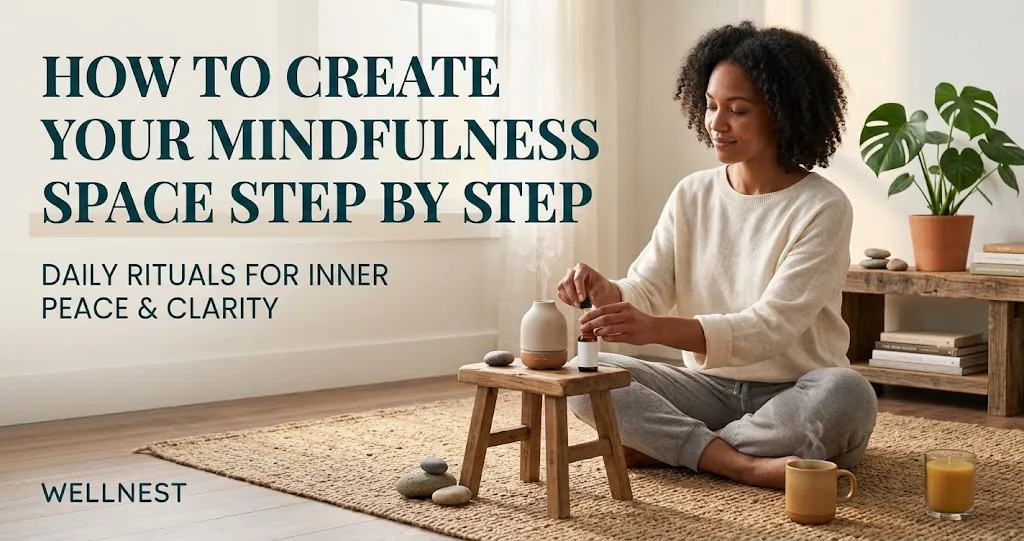
How to Create a Mindfulness Space Step by Step
You can build a useful retreat in an afternoon or improve it gradually over several days. Focus on the essentials first, then add personal touches only when they serve a purpose.
1
Choose a Suitable Location
Look for a place where you can sit or stand comfortably without blocking a doorway or interfering with daily activities. A bedroom corner, a spot near a window, or an unused section of the living room may work well. If privacy is limited, choose a predictable time when the area is less busy.
2
Clear Away Visual Clutter
Remove unrelated papers, laundry, unused objects, and distracting decorations from the immediate area. You do not need to organize your entire home. A clean section of floor, a small table, or a single chair can create enough separation between your usual activities and your mindfulness routine.
3
Make Seating Comfortable
Choose a chair, floor cushion, or folded blanket that supports a relaxed position. Keep your back reasonably supported and your feet or legs comfortable. You should not have to tolerate pain to practice mindfulness. Adjust your posture or change positions whenever needed.
4
Adjust Lighting and Sound
Use daylight when it feels comfortable, or choose a lamp with gentle illumination. Reduce avoidable noise by silencing notifications or closing a door when practical. If silence feels uncomfortable, try quiet instrumental music or natural sounds at a low volume.
5
Add One or Two Meaningful Objects
Consider a journal, a small plant, a meaningful photograph, or a cushion. Choose objects that help you feel settled rather than items that create more cleaning or maintenance. Leave enough open space for comfortable movement and easy access.
6
Choose a Simple Daily Practice
Decide what you will do when you enter the space. You might spend a few minutes noticing your breathing, writing a short journal entry, or listening to nearby sounds. Start with a manageable amount of time and adjust it according to your comfort and schedule.
This approach keeps the project practical. Once the basics work, you can make small adjustments based on how the area feels during actual use.
A Simple Mindfulness Setup Flow
Use this sequence to create your first version without overthinking every detail.
Find a place you can return to easily.
Remove distractions and unnecessary items.
Arrange seating, lighting, and sound.
Try a simple activity and adjust as needed.
A practical setup guide, not a required or scientifically ranked sequence.
Following these steps gives you a starting point, not a strict set of rules. If a chair works better than a cushion, use the chair. If background music distracts you, remove it.
Choose the Right Tools for Your Space
Useful accessories should solve a real problem, such as uncomfortable seating, poor lighting, or difficulty keeping track of your thoughts. Start with basic household items and buy something only if it improves your experience.
Mindfulness Space Essentials: What Do You Need?
This table compares common items by their purpose and practical alternatives.
Swipe left/right to see the full table →
| Item | Main purpose | Low-cost alternative |
|---|---|---|
| Chair or cushion | Comfortable sitting | Existing household chair |
| Small lamp | Adjustable illumination | Comfortable daylight |
| Notebook and pen | Reflection and journaling | Reusable paper |
| Timer | Keep practice manageable | Clock or simple watch |
| Plant or personal object | Personal meaning | A favorite photograph |
None of these items is essential for everyone. If you already have a comfortable place to sit and enough light, you can begin without purchasing anything.
Create a Comfortable Sensory Environment
Different people respond differently to light, sound, colors, and textures. Consider your preferences rather than assuming one particular style is best for mindfulness.
Swipe left/right to see the full table →
| Element | Try this | Adjust if |
|---|---|---|
| Lighting | Soft lamp or daylight | Light feels harsh |
| Sound | Quiet or gentle audio | Sounds compete for attention |
| Texture | Soft, washable fabrics | Material feels irritating |
| Colors | Muted or favorite colors | Decor feels distracting |
Use the table as a starting point. A visually simple room may feel comfortable to one person, while another may prefer a few familiar objects that make the space feel personal.
Design Your Space Around Your Daily Life
A useful setup should fit the room you have, the people you live with, and the amount of time you can realistically set aside. A large, dedicated room is not a requirement.
Find the Best Setup for Your Home
Compare these practical arrangements to decide which one suits your circumstances.
Space-Fit Dashboard
Small bedroom
Use a folding cushion, a clear wall corner, and a small basket for accessories. Put everything away when you need the floor space.
Shared living room
Choose a chair near a quiet wall and use a small portable container to keep your items together. Practice when household activity is lower.
Home office
Move away from the work screen when possible. Use a separate chair position or a brief break at the end of a work session.
Outdoor corner
Try a safe balcony or garden seat if weather, privacy, and accessibility allow. Avoid locations exposed to unsafe temperatures or other hazards.
Practical options based on space and daily needs, not a ranking of effectiveness.
The best arrangement is one you can use without rearranging your home every day. If you share a room, a portable setup may be more useful than permanent decorations.
Build a Space on a Budget
It is easy to assume that a mindfulness area requires special furniture, designer decorations, or costly accessories. In reality, most of the essential functions can be met with things you already own.
Swipe left/right to see the full table →
| Budget level | Setup | Best starting point |
|---|---|---|
| No spending | Existing chair, clear floor, paper | Build the habit first |
| Small budget | Cushion, lamp, storage basket | Address a real comfort issue |
| Flexible budget | Adjustable lighting, preferred seating | Improve comfort and convenience |
| Shared household | Portable kit in a small bag | Keep the area easy to restore |
Set a spending limit before shopping. If a proposed purchase does not solve a clear problem, wait until you have used the space for a while before deciding whether you need it.
Tip: Keep your essentials together
Place a journal, pen, and any small items you use regularly in one basket or drawer. This makes setup easier and helps prevent your mindfulness area from becoming another place where clutter collects.
Mistakes to Avoid When Setting Up Your Space
A mindfulness corner can become less useful if you spend more time maintaining it than actually using it. Focus on comfort, simplicity, and realistic expectations.
Common Setup Problems and Better Choices
Use this comparison to identify changes that could make your space more practical.
Swipe left/right to see the full table →
| Common mistake | Better choice | Why it helps |
|---|---|---|
| Buying everything at once | Begin with household items | Avoids unnecessary spending |
| Adding too many decorations | Keep only meaningful objects | Reduces visual distractions |
| Using uncomfortable seating | Adjust support and posture | Makes the space easier to use |
| Expecting perfect silence | Accept ordinary background sounds | Makes practice more realistic |
| Waiting for the perfect mood | Try a brief, flexible practice | Removes unnecessary pressure |
Remember that the room itself is not the practice. A beautiful space can be enjoyable, but its appearance does not determine how mindful or successful you are during a session.
Warning: Avoid creating pressure
Do not treat mindfulness as a task you must perform perfectly. If sitting quietly feels uncomfortable, try walking slowly, noticing ordinary sounds, or writing in a journal instead. If a practice makes you feel significantly distressed, pause and choose another activity or seek appropriate support.
Make Mindfulness Part of Your Routine

Once your area is ready, decide when you are most likely to use it. Some people prefer a few quiet minutes after waking up, while others find an evening pause more convenient. You can also use the space during a natural break between activities.
Choose a reminder that fits your existing schedule. For example, you might sit in your designated corner after making your morning tea or spend a few moments there before preparing for bed. Linking a new activity to a familiar event can make it easier to remember.
A Flexible Daily Practice
There is no universal duration or schedule that everyone must follow. Use this example as a practical guide and adjust the timing to suit your needs.
Routine Priority Guide
Make the position comfortable enough to use.
Keep the area simple to reach and restore.
Reduce interruptions where practical.
Add only what you enjoy.
Illustrative practical priorities, not measured scientific scores.
This guide emphasizes the basic features that make a space usable. You can skip decorative extras entirely and still build a meaningful routine.
What If the Space Does Not Feel Right?
It may take some experimentation to discover which setup suits you. Instead of redesigning everything, change one feature at a time and notice whether the experience becomes more comfortable.
Troubleshooting Decision Path
Is the space physically uncomfortable?
Adjust your seat, support, temperature, or position before continuing.
Are sounds or notifications distracting?
Silence alerts, choose a quieter time, or try a different location.
Does the routine feel too demanding?
Choose a simpler activity, reduce the time, or try another mindfulness method.
Does the activity cause significant distress?
Stop that practice, consider another approach, and seek suitable professional support if distress persists or affects daily life.
There is no need to force yourself to use a particular technique simply because you designed a special corner for it. Mindfulness can be adapted to your comfort, preferences, and circumstances.
When to Seek Additional Support
A mindfulness space can provide a setting for reflection and everyday relaxation, but it is not a substitute for professional care when you need it. You do not have to manage every difficulty through personal routines alone.
When to contact a professional
Consider talking with a qualified healthcare or mental health professional if persistent stress, anxiety, low mood, sleep difficulties, or distress interferes with your daily activities or relationships.
Seek urgent medical or mental health support when symptoms are severe or you feel unable to stay safe. Mindfulness should complement appropriate support, not delay it.
It is also fine to seek guidance if you are unsure which mindfulness practices suit your needs. A qualified professional can help you explore appropriate options and identify whether additional support would be useful.
Frequently Asked Questions
1. How much space do I need for mindfulness?
A small corner is enough for many activities. You mainly need a comfortable position and enough room to use the space safely.
2. What should I put in a mindfulness room?
Start with comfortable seating, suitable lighting, and perhaps a notebook or meaningful object. Add other items only if they make the space more useful to you.
3. What colors are best for a mindfulness space?
Choose colors you personally find comfortable, such as muted greens, soft blues, warm neutrals, or your favorite shades. No single color is necessary for mindfulness.
4. Can I create a mindfulness space on a tight budget?
Yes. Use a chair or cushion you already own, clear a small area, and use natural light when comfortable. You can begin without buying special products.
5. Should my mindfulness space be completely silent?
No. Choose the sound level that helps you focus comfortably. Quiet music, natural sounds, or ordinary background noise may be acceptable if they do not distract you.
6. How often should I use my mindfulness space?
Choose a schedule that fits your daily life, whether that means a brief pause each day or occasional quiet reflection. Consistency is a personal choice, not a requirement to follow a rigid schedule.
7. What if meditation makes me uncomfortable?
Pause and try a different activity, such as gentle movement, journaling, or noticing your surroundings. If discomfort or distress continues, consider speaking with a qualified professional.
Final Thoughts
Learning how to create a mindfulness space starts with a few simple choices: find a suitable corner, make it comfortable, reduce avoidable distractions, and choose an activity that fits your routine. You can build a welcoming environment without a separate room, expensive decorations, or a complicated schedule.
Begin with what you have and adjust the space as you learn what works for you. Let it be a flexible place to pause rather than another task to complete perfectly.
If ongoing emotional distress or other symptoms are severe, persistent, unusual, or worsening, seek appropriate professional support rather than relying on mindfulness alone.
Author
-

Hi, I’m Ryan Mitchell, a wellness and relaxation writer at RemedyTip.com, where I focus on helping readers better understand stress management, relaxation techniques, mindfulness, sleep improvement, and everyday wellness habits. I have developed a strong knowledge of the Wellness & Relaxation field through sustained learning, in-depth research, and a continued commitment to exploring practical approaches to well-being.
My work focuses on researching wellness topics, examining available evidence, and turning complex information into clear, accessible, and actionable guidance. I’m continually exploring new findings, relaxation practices, and lifestyle strategies to help readers make informed decisions about their daily wellness routines. At RemedyTip.com, my goal is to share trustworthy, research-informed content that encourages healthier habits, greater relaxation, and a more balanced lifestyle.

