
By Ryan Mitchell • Wellness & Relaxation
Quick Answer: Yoga can be a form of mindfulness when you pay attention to your breathing, body sensations, movements, and thoughts in the present moment. Yoga combines physical postures, breathing techniques, and sometimes meditation. Mindfulness is the quality of awareness you bring to those activities. You can practice yoga mindfully, but yoga does not automatically involve mindfulness.
Move gently. Breathe naturally. Notice the present.
Yoga offers an opportunity to connect physical movement with awareness. Instead of rushing through poses or judging your performance, you can notice how your body feels, follow your breath, and return your attention to the moment whenever your mind wanders. This approach can make a yoga session feel less like a workout to complete and more like a mindful practice.
Health and safety note
This article is for general educational information only. It does not diagnose, treat, cure, or prevent any condition. It does not replace advice from a licensed healthcare professional. Readers should seek professional help for severe, worsening, unusual, or persistent symptoms.
What Is the Connection Between Yoga and Mindfulness?
Yoga is a practice that can combine physical postures, breathing exercises, concentration, and meditation. Its approaches vary, from gentle stretching to more physically demanding sequences. Some traditions also include ethical principles and deeper contemplative practices.
Mindfulness means paying attention to present-moment experiences with openness and without immediately judging them. You might notice your breathing, feel your feet against the floor, or recognize that your mind has wandered without criticizing yourself.
These practices overlap because yoga gives you many things to notice. You can pay attention to the movement of your arms, the feeling of your feet on the mat, the rhythm of your breath, and your response to a challenging posture. When you deliberately bring awareness to these experiences, the movement becomes an opportunity to practice mindfulness.
However, the two terms are not interchangeable. Someone may practice yoga mainly for flexibility, strength, or physical activity. Another person may practice mindfulness while sitting quietly, walking, eating, or doing everyday tasks without performing any yoga poses.
Yoga vs. mindfulness: What is different?
The following comparison explains what each practice emphasizes and how they can work together.
Swipe left/right to see the full table →
| Aspect | Yoga | Mindfulness |
|---|---|---|
| Main focus | Movement, posture, breath, awareness | Present-moment attention |
| Typical setting | Mat, class, or home | Anywhere, with or without movement |
| Physical activity | Often included | Optional |
| Example | Noticing your breath during a pose | Noticing your breath while sitting |
How Does Mindfulness Work During Yoga?
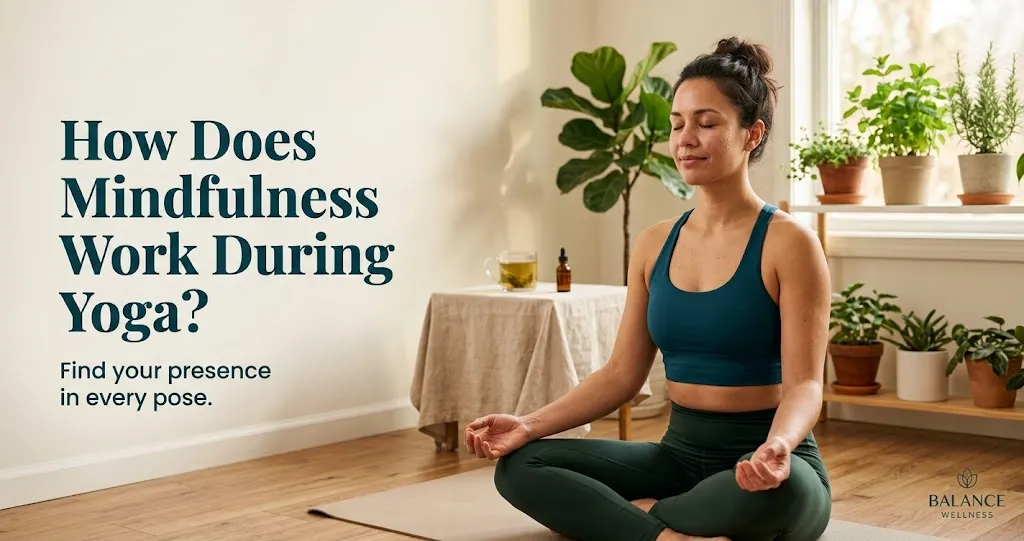
Mindful yoga involves directing attention toward what is happening while you practice rather than performing each movement automatically. You do not need to stop thinking or achieve a perfectly quiet mind. The goal is to notice your experience and gently return your attention when it drifts.
For example, during a standing pose, you might notice pressure beneath your feet, the position of your shoulders, and the movement of your breath. If you start thinking about school, work, or tomorrow’s plans, you recognize the distraction and return to the sensations of the pose.
This repeated process of noticing and redirecting attention is central to mindfulness. It can also encourage a more thoughtful response to physical discomfort. Rather than forcing yourself into a deeper stretch, you can recognize your limits and adjust the posture.
The mindful yoga attention cycle
1. Notice
Feel your body and observe your breath.
2. Recognize
Notice thoughts or distractions.
3. Return
Gently bring attention back to the pose.
4. Adjust
Choose a comfortable, safe movement.
This is a practical guide, not a test you must pass. Each time you notice your attention wandering, you have another opportunity to practice awareness.
Potential Benefits of Practicing Yoga Mindfully
Combining yoga with present-moment awareness may support several aspects of everyday well-being. Individual experiences vary, and results depend on the type of practice, consistency, personal circumstances, and overall health.
Greater body awareness
Paying attention to posture, balance, and muscle sensations may help you recognize what feels comfortable. You can use this information to modify movements rather than push beyond your limits.
A pause from daily demands
A deliberate practice creates time to step away from screens, tasks, and competing demands. Some people find this pause calming, although it does not remove the causes of stress.
Focused attention
Returning attention to your breathing or movements gives you a practical way to practice noticing distractions. The aim is not to eliminate every thought but to choose where to direct your attention.
Gentle movement
Depending on the style, yoga can include stretching, balance work, and movement. Mindfulness may help you notice when a posture needs to be simplified or when you need a break.
Benefits and limitations at a glance
Mindful movement can be useful, but it is important to distinguish a possible benefit from a guaranteed outcome.
Swipe left/right to see the full table →
| Possible benefit | What it may offer | Important limit |
|---|---|---|
| Relaxation | A calming pause | Stress may remain |
| Body awareness | More attention to movement | Awareness is not a diagnosis |
| Attention practice | Repeated focus and redirection | Distractions are normal |
| Physical activity | Movement suited to your level | Not every pose suits everyone |
Keep expectations realistic
You do not need to feel calm, flexible, or focused throughout a session for the practice to be worthwhile. If yoga or mindfulness consistently makes you feel more distressed, stop or modify the practice and consider discussing your experience with a qualified professional.
How to Start a Mindful Yoga Practice
You can begin without complicated equipment or advanced poses. Choose a comfortable space, allow enough room to move, and focus on simple movements that suit your current ability.
A beginner-friendly practice flow
1
Arrive
Sit or stand comfortably and notice the support beneath you.
2
Notice breathing
Observe a few natural breaths without forcing them to become deeper.
3
Move gently
Choose easy movements, such as shoulder rolls or comfortable seated stretches.
4
Return attention
When your thoughts wander, notice and gently return to the movement.
5
Finish mindfully
Pause and notice how you feel without expecting a particular result.
Start with a short session that feels manageable. You can extend it if the practice feels comfortable, but there is no required duration that works for everyone.
Choosing a yoga style that fits your needs
Different styles offer different levels of movement and structure. The best starting point is one that feels accessible and matches your comfort level.
Swipe left/right to see the full table →
| Style | General emphasis | What to consider |
|---|---|---|
| Gentle yoga | Accessible, slower movement | Useful starting option for many beginners |
| Restorative yoga | Supported, relaxed postures | Props can improve comfort |
| Hatha yoga | Postures and breathing | Class pace varies by instructor |
| Vinyasa yoga | Flowing movement and transitions | May feel demanding for some beginners |
These descriptions are general, not guarantees about every class. Ask the instructor about pace, modifications, and experience requirements before joining.
Common Mistakes and Better Choices
Mindfulness is not about performing every posture perfectly. Certain habits can distract from awareness or make a session less comfortable. A few simple adjustments can help you practice with more care.
Swipe left/right to see the full table →
| Common mistake | Better choice | Why it helps |
|---|---|---|
| Chasing perfect poses | Use comfortable modifications | Keeps attention on your own experience |
| Forcing deep breaths | Let breathing remain comfortable | Avoids unnecessary strain |
| Criticizing distractions | Notice and redirect gently | Makes practice less judgmental |
| Ignoring pain | Stop or modify the posture | Respects physical limits |
A practical mindful-practice priority guide
Comfort and safety
Present-moment awareness
Consistency that fits your life
Advanced poses and flexibility goals
Illustrative practical priorities, not scientific measurements or a ranking of proven outcomes.
Practicing Safely and Knowing Your Limits
Yoga is not risk-free, and mindfulness does not make a physically unsuitable movement safe. Choose a level appropriate for your ability, move gradually, and use a qualified instructor when you need guidance with technique or modifications.
Keep your movements within a comfortable range. Avoid forcing a joint into position, competing with other participants, or treating discomfort as proof that a pose is working. Stop if you experience sharp or increasing pain, dizziness, unusual shortness of breath, or other concerning symptoms.
Safe practice versus risky practice
Swipe left/right to see the full table →
| Safer approach | Riskier approach | Practical reason |
|---|---|---|
| Use props if helpful | Force an unsupported position | Supports balance and comfort |
| Take breaks when needed | Push through warning symptoms | Respects physical signals |
| Follow suitable instruction | Copy advanced poses blindly | Accounts for different abilities |
| Modify for your needs | Assume every pose is suitable | Individual circumstances differ |
A simple safety decision path
Before starting
Can you move comfortably, and is the practice appropriate for your needs?
Comfortable
Continue gently, make adjustments, and take breaks when needed.
Pain or concerning symptoms
Stop the activity and seek appropriate medical advice.
Important precaution
If you have an injury, a health condition that affects movement or balance, recent surgery, or concerns about a particular posture, ask a qualified healthcare professional about appropriate activity. Avoid breath-holding or intense breathing exercises if they make you feel unwell.
When to contact a professional
Seek medical advice for persistent or worsening pain, repeated dizziness, unusual breathing symptoms, or other symptoms that concern you. Severe symptoms, chest pain, fainting, or serious difficulty breathing warrant urgent medical attention. A yoga instructor can guide movement, but cannot replace medical evaluation.
How to Make Mindfulness Part of Your Routine
Routine
Building a routine is easier when you connect practice with an activity you already do. You might spend a few mindful moments before breakfast, stretch gently after sitting for a long time, or pause after a yoga session to notice how your body feels.
A flexible routine progression
Start: Awareness
Practice noticing natural breathing and body contact with the floor.
Next: Gentle movement
Add comfortable poses while noticing balance and physical sensations.
Then: Everyday awareness
Use the same approach during walking, eating, or ordinary tasks.
Maintain: Flexibility
Adjust your routine to your schedule, energy, and comfort.
This progression is a practical suggestion, not a required timeline. You can repeat a step, shorten your practice, or return to simpler movements whenever needed.
What matters most when choosing a routine?
Swipe left/right to see the full table →
| Your situation | Possible starting point | Decision rule |
|---|---|---|
| Limited time | Brief breathing awareness | Choose something manageable |
| New to yoga | Beginner or gentle class | Prioritize instruction and comfort |
| Prefer stillness | Seated mindfulness | Yoga is optional |
| Movement limitations | Adapted practice with guidance | Check suitability first |
Mindful practice: do’s and don’ts
Do
- Notice sensations without judging.
- Allow natural breathing.
- Use modifications and breaks.
- Return attention gently.
Don’t
- Force a pose to look perfect.
- Expect thoughts to disappear.
- Ignore pain or warning symptoms.
- Compare your progress with others.
Frequently Asked Questions
Is yoga considered a mindfulness practice?
Yoga can be a mindfulness practice when you deliberately notice your breathing, movements, and present-moment sensations. However, not every yoga session emphasizes mindfulness.
What is the difference between yoga and mindfulness meditation?
Yoga often combines movement, postures, and breathing with awareness. Mindfulness meditation commonly involves observing present-moment experiences while sitting, standing, or using another comfortable position.
Can beginners practice yoga mindfully?
Yes. Beginners can start with comfortable postures, natural breathing, and attention to simple body sensations. A beginner-friendly instructor can help with safe modifications.
Does mindful yoga help with stress?
It may help some people create a calming pause and pay attention to the present. Its effects vary, and it should not be considered a guaranteed solution or a substitute for appropriate mental health care.
Do I need to meditate while doing yoga?
No. You can practice mindfulness by noticing your breath, posture, and sensations during ordinary movements. Formal meditation is optional.
How long should a mindful yoga session last?
Choose a duration that fits your schedule and comfort. A brief session is a reasonable starting point, and you can adjust it according to your needs rather than following a rigid target.
Can I practice mindfulness without yoga?
Yes. You can practice mindfulness while breathing naturally, walking, eating, or completing an everyday task. Yoga is one option, not a requirement.
Final Thoughts
Yoga can become a mindfulness practice when you bring gentle, nonjudgmental awareness to movement, breathing, and body sensations. Start with comfortable movements, let distractions come and go, and choose a routine that fits your needs rather than chasing perfect poses. Mindfulness does not guarantee relaxation, and yoga is not suitable for every situation; seek professional advice if symptoms are severe, worsening, unusual, persistent, or not improving.
Author
-

Hi, I’m Ryan Mitchell, a wellness and relaxation writer at RemedyTip.com, where I focus on helping readers better understand stress management, relaxation techniques, mindfulness, sleep improvement, and everyday wellness habits. I have developed a strong knowledge of the Wellness & Relaxation field through sustained learning, in-depth research, and a continued commitment to exploring practical approaches to well-being.
My work focuses on researching wellness topics, examining available evidence, and turning complex information into clear, accessible, and actionable guidance. I’m continually exploring new findings, relaxation practices, and lifestyle strategies to help readers make informed decisions about their daily wellness routines. At RemedyTip.com, my goal is to share trustworthy, research-informed content that encourages healthier habits, greater relaxation, and a more balanced lifestyle.

