By Ryan Mitchell
Quick Answer: A sleep hygiene checklist is a set of daily habits that supports steady sleep: a consistent wake time, a dark and cool bedroom, earlier caffeine, fewer late screens, and a short wind-down. Start with two or three items, and talk with a professional if problems persist.
Good sleep rarely comes from one trick. It usually comes from small habits that repeat daily, from when you wake up to how you spend your last hour before bed. This sleep hygiene checklist keeps things practical: what to do, in what order, and what to fix first when your nights feel off.
This article is for general educational information only. It does not diagnose, treat, cure, or prevent any condition. It does not replace advice from a licensed healthcare professional. Readers should seek professional help for severe, worsening, unusual, or persistent symptoms.
Why Good Sleep Habits Slip Away
Most sleep trouble builds slowly. A late coffee, a bright phone screen, a busy mind, and a wake time that changes daily can each nudge your body clock off track. Your body likes rhythm. When light, meals, activity, and bedtime keep shifting, falling asleep can feel harder.
For example, someone who sleeps in on weekends and scrolls in bed on Sunday night may feel wide awake at 11 p.m. and groggy on Monday. The issue is often timing and environment, not willpower.
Stress and comfort matter too. A worried mind, a warm room, or a pillow that strains your neck can keep you awake even when your schedule is good. Here are the most common triggers, grouped so you can spot your own.
Long late-day naps
Late heavy meals
Alcohol near bedtime
Late nicotine
Noise and light leaks
Unsupportive pillow
Racing thoughts
Screens in bed
Pick the group where you tick the most boxes. Fixing that one first is usually more realistic than changing everything at once.
Your Sleep Hygiene Checklist, Step by Step
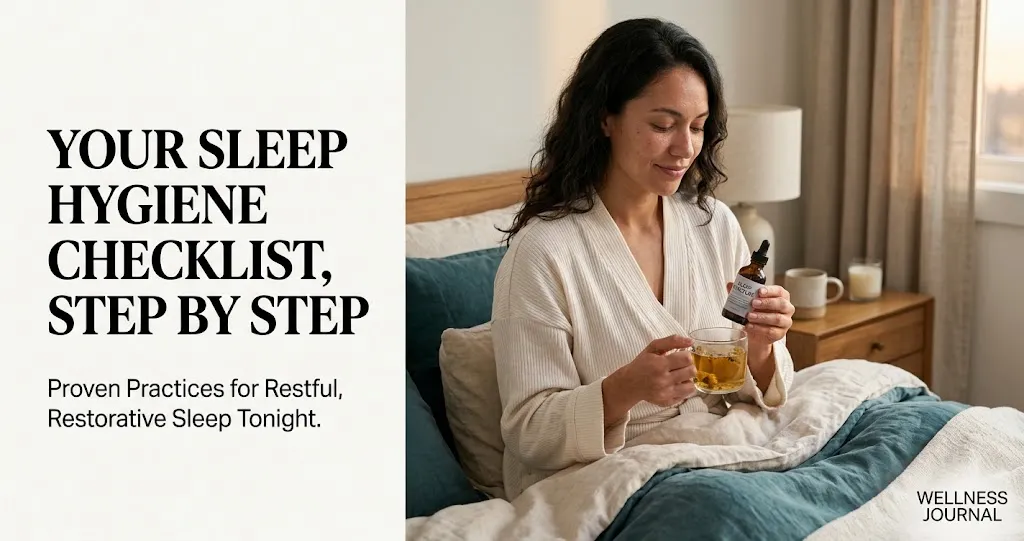
Work through these in order. Each step is small on purpose.
1
2
3
4
5
6
7
What Each Part of the Routine Covers
Bedroom
Aim for dark, quiet, and cool. Heavy curtains, a fan, or earplugs can help, and a supportive pillow may ease neck and shoulder comfort.
Daytime
Morning light and regular movement help your body tell day from night. Keep naps short and early so night sleep stays strong.
Evening
Keep the last hour calm and predictable. Dim lamps, a warm shower, light stretching, or reading on paper work for many people.
Mind
Write tomorrow’s to-do list earlier in the evening so it stays off your mind. Slow breathing can make it easier to settle.
Here is how a typical evening can flow from the kitchen to the pillow.
Last caffeine and heavy meal are done
Dim lights, put screens away
Warm shower, stretch, or read
Cool, dark, quiet room
Get up, stay quiet, return when sleepy
Use this as a flexible guide, not a strict schedule. The goal is a calm, repeatable pattern.
Simple Tools That Can Support Your Routine
You don’t need gadgets to follow a sleep hygiene checklist, but a few basics can make the habits easier.
Swipe left/right to see the full table →
| Tool | Helps with | Choose if | Skip if |
|---|---|---|---|
| Sleep mask | Stray light | Streetlights or early sun wake you | Pressure on your eyes bothers you |
| White noise machine | Sudden sounds | Traffic or neighbors disturb you | Silence relaxes you more |
| Blackout curtains | Room darkness | Your bedroom stays bright | Light is already low |
| Supportive pillow | Neck comfort | You wake up stiff | Your pillow feels comfortable |
| Paper notebook | Racing thoughts | Tasks circle in your head | Your mind is usually quiet |
Pick one or two items that solve your biggest problem. Buying everything at once rarely helps more than fixing timing.
Common Sleep Habit Mistakes and Better Choices
Swipe left/right to see the full table →
| Common mistake | Why it backfires | Better choice |
|---|---|---|
| Checking the clock all night | Adds pressure to sleep | Turn the clock away |
| Sleeping in on weekends | Shifts your body clock | Wake within an hour of usual |
| Scrolling in bed | Light and content keep you alert | Charge your phone across the room |
| Long late-day naps | Lower your sleepiness at night | Nap early, under 30 minutes |
| Alcohol as a nightcap | Can make sleep lighter later | Try a warm shower or reading |
Notice which row sounds familiar and change only that one this week.
A Simple Timing Guide for Each Habit
Swipe left/right to see the full table →
| Habit | Typical timing | Note |
|---|---|---|
| Morning light | Within an hour of waking | A short walk counts |
| Last caffeine | Early afternoon | Sensitivity varies |
| Last big meal | Two to three hours before bed | A light snack is fine if hungry |
| Screens down | 30 to 60 minutes before bed | Use dim settings if needed |
| Wind-down | Last 30 minutes | Repeat the same steps nightly |
Times are flexible. Shift everything earlier or later to match your own wake-up time.
Which Habits Usually Matter Most?
This practical guide shows typical routine priority. It is not scientific data.
If you only change two things, start with a steady wake time and earlier caffeine. Add the rest as those begin to feel easy.
Troubleshooting Common Sleep Problems
You Can’t Fall Asleep
If you are still awake after about 20 minutes, get out of bed, keep lights low, and do something quiet. Return when sleepy so your bed stays linked with rest.
You Wake Up in the Night
Avoid checking the time or your phone. Keep the room cool and try slow breathing. Late fluids, alcohol, or noise may be contributing.
You Feel Tired After a Full Night
Look at consistency first, because a changing wake time can leave you groggy. Tiredness that lasts is worth discussing with a professional.
Discomfort Wakes You
A pillow that keeps your neck in a neutral position and a mattress that feels supportive may ease nighttime comfort. Pain that wakes you often should be checked.
Your Schedule Keeps Changing
For shift work or travel, protect a consistent wind-down and keep the room dark during sleep hours. Use bright light when you need to be alert and dim light when you want to sleep.
Warning: Don’t rely on sleep aids, supplements, or alcohol to force sleep without asking a pharmacist or clinician first. They can interact with medicines and affect next-day alertness.
Pro Tips for Making the Routine Stick
Change one habit per week. A sleep hygiene checklist works best when it feels easy, not like a second job.
Track two things for two weeks: your wake time and how rested you feel. Patterns show up quickly.
Use a repeating cue, like the same lamp or quiet playlist, to tell your brain the wind-down has started.
Keep the plan visible. A short list on your nightstand or in a phone note makes the routine easy to repeat when you’re tired.
Tip: Prepare tomorrow’s clothes and to-do list before dinner. Fewer open loops at bedtime can make settling down easier.
Note: Needs vary by person. Many adults do well with seven or more hours, but judge your routine by how you feel during the day, not by a perfect score.
Quick Do’s and Don’ts
✓ Get morning light
✓ Dim lights at night
✓ Keep the room cool and dark
✗ Take long evening naps
✗ Work in bed
✗ Use alcohol to fall asleep
Keep this split in mind on tired days. Two or three of these choices usually make the biggest difference.
When Your Sleep Hygiene Checklist Isn’t Enough
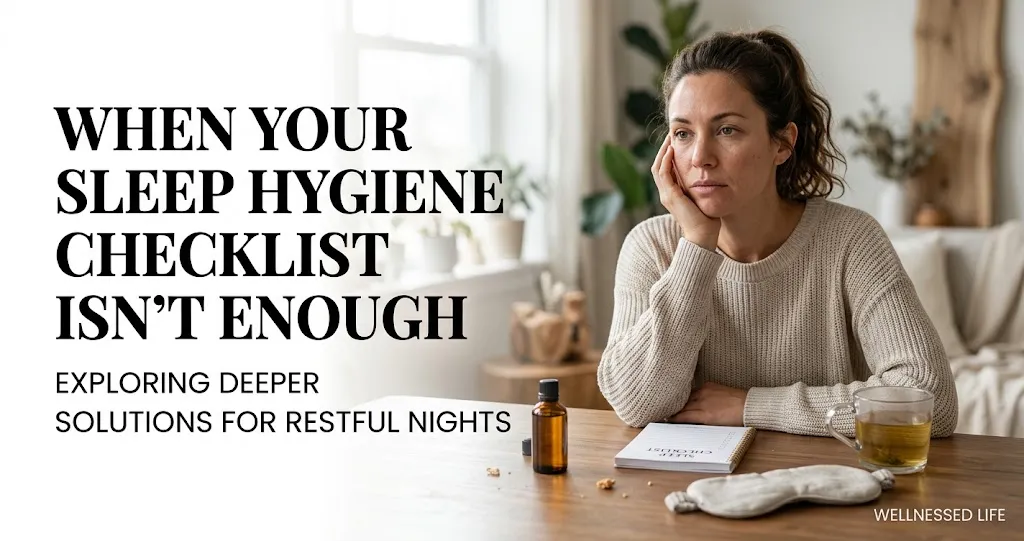
Give a consistent routine a few weeks before judging it. If sleep is still poor, the cause may not be habits, and a professional can help you sort that out.
For more background, see the CDC sleep pages, the Sleep Foundation guide to sleep hygiene, and MedlinePlus on healthy sleep.
Red-Flag Checklist
Any item here is a reason to talk with a licensed professional. Chest pain, severe pain, numbness, or weakness needs urgent medical help.
Self-Care First or Seek Help?
Swipe left/right to see the full table →
| Situation | Self-care first | Seek help |
|---|---|---|
| One restless night | Review caffeine, light, wake time | Only if it keeps happening |
| Poor sleep for several weeks | Keep a simple sleep log | Talk with a clinician |
| Daytime sleepiness | Check routine consistency | If it affects safety or work |
| Pain or breathing trouble at night | Comfort changes only | Contact a professional promptly |
If you’re unsure which column fits you, choose the cautious side and ask a professional.
When to contact a professional: Seek help if sleep trouble lasts for weeks, daytime sleepiness affects driving or work, you snore loudly with breathing pauses, or poor sleep comes with low mood or anxiety. If you have chest pain, severe pain, numbness, weakness, or trouble breathing, seek urgent medical help.
Optional Comfort Picks
This article may contain affiliate links. If you buy through these links, we may earn a small commission at no extra cost to you. We only mention products that fit the topic and do not replace professional medical advice.
Contoured Sleep Mask
May help block stray light so a dark sleep space is easier to keep.
Compact White Noise Machine
Can help cover sudden background sounds for a more consistent sleep setting.
Frequently Asked Questions
What is a sleep hygiene checklist?
It is a simple list of daily habits and bedroom settings that support regular sleep. It focuses on timing, light, caffeine, and wind-down routines.
How long do sleep habits take to work?
Some people notice changes within a couple of weeks, while others need longer. Consistency matters more than perfection.
What time should I stop caffeine?
Many people do better stopping by early afternoon. Sensitivity varies, so try an earlier cutoff if your sleep feels light.
Is it bad to use my phone before bed?
Bright, engaging screens may make winding down harder. Putting devices away 30 to 60 minutes before bed is a practical goal.
Should I nap during the day?
Short naps early in the afternoon are less likely to disrupt night sleep. Long or late naps can make bedtime harder.
What room temperature is best for sleeping?
Many people sleep better in a cool, comfortable room. Adjust bedding and clothing until you feel comfortable, not cold.
When should I see a professional about sleep?
Seek help if sleep trouble lasts for weeks, affects daytime safety, or comes with loud snoring, breathing pauses, or low mood. Seek urgent help for chest pain or severe symptoms.
Final Thoughts
A sleep hygiene checklist works best as a gentle routine, not a test. Start with a steady wake time and earlier caffeine, then add one habit at a time. If your symptoms are severe, worsening, unusual, persistent, or not improving, talk with a licensed healthcare professional.
Author
-

Hi, I’m Ryan Mitchell, a wellness and relaxation writer at RemedyTip.com, where I focus on helping readers better understand stress management, relaxation techniques, mindfulness, sleep improvement, and everyday wellness habits. I have developed a strong knowledge of the Wellness & Relaxation field through sustained learning, in-depth research, and a continued commitment to exploring practical approaches to well-being.
My work focuses on researching wellness topics, examining available evidence, and turning complex information into clear, accessible, and actionable guidance. I’m continually exploring new findings, relaxation practices, and lifestyle strategies to help readers make informed decisions about their daily wellness routines. At RemedyTip.com, my goal is to share trustworthy, research-informed content that encourages healthier habits, greater relaxation, and a more balanced lifestyle.