Written by Ryan Mitchell · Wellness & Relaxation
A More Relaxing Way to Think About Gaming
After a long school day, busy workday, or mentally tiring stretch, a familiar game can create a clear boundary between “busy” time and personal time. That does not mean every game will feel relaxing. The type of game, your mood, the people you play with, and how easily you can stop all matter.
Think of gaming as one possible leisure activity rather than a guaranteed stress treatment. Some research has found short gaming sessions can support mood or stress recovery, while other findings show that the effect varies by game and situation. :contentReference[oaicite:1]{index=1}
What Makes a Game More Relaxing?
There is no single “stress-relief genre.” A game may feel calming because it gives you a sense of control, lets you explore without pressure, encourages creativity, provides a pleasant distraction, or lets you connect with people you enjoy. Another person may find that same game boring or irritating.
A useful starting point is to notice what happens during and after play. If you finish a session feeling refreshed, pleasantly absorbed, or ready to return to your day, the game may be serving a healthy leisure role. If you finish feeling angry, overstimulated, guilty, or unable to stop, it may not be a good choice for that moment.
Research on commercial games has found potential stress and anxiety benefits across several genres and platforms, but the evidence also emphasizes that games are not interchangeable. Short sessions have sometimes been enough to produce measurable changes, so longer play is not automatically better. :contentReference[oaicite:2]{index=2}
A practical game-fit check
Before choosing a game for unwinding, ask whether it feels predictable enough to enter easily, interesting enough to hold your attention, and forgiving enough that mistakes do not become another source of pressure. Games with adjustable difficulty, peaceful exploration, creative tasks, puzzles, gentle repetition, or cooperative play can be reasonable options when those features match your preferences.
Competitive games are not automatically bad for relaxation. Competition can be enjoyable and socially rewarding. The important question is whether the competitive element helps you decompress or keeps your body and mind in a high-alert state.
Swipe left/right to see the full table →
| Feature | May fit unwinding | Potential concern |
|---|---|---|
| Low pressure | Easy pace | Too repetitive |
| Creative control | Personal expression | Can become demanding |
| Social play | Connection | Social pressure |
How to Build a Stress-Friendly Gaming Routine
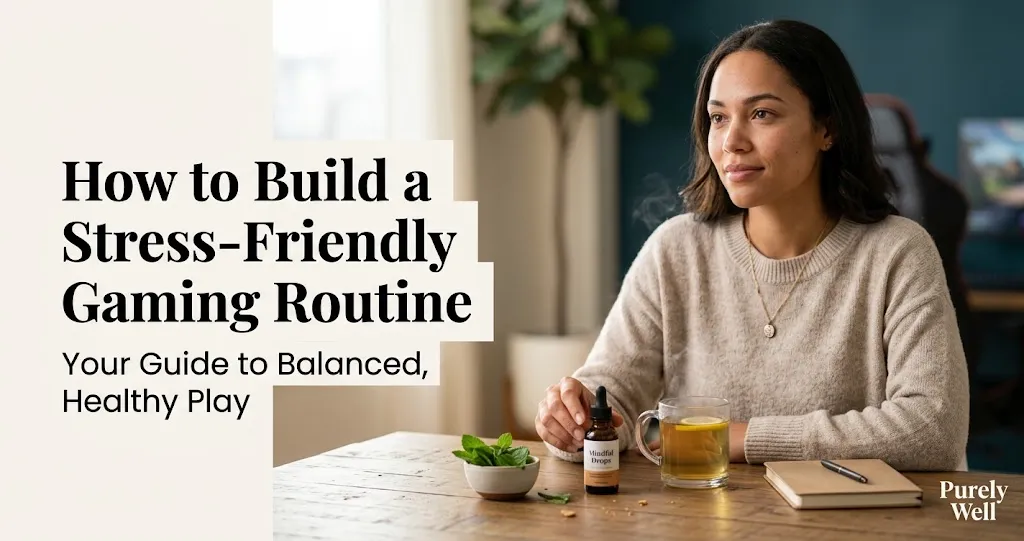
A simple routine can make gaming more restorative without turning it into another task to complete. The purpose is to create a deliberate transition into leisure, play for a reasonable period, and then make returning to everyday activities easier.
Routine flow — practical guide
Finish the demanding task before starting.
Pick a game that matches your current mood.
Stay focused on enjoyment rather than winning.
Notice whether you feel calmer or more tense.
The flow above is intentionally simple. It prevents gaming from becoming an automatic response to every uncomfortable feeling while still leaving room for ordinary entertainment.
Step 1: Create a transition
Give yourself a minute or two between a stressful activity and gaming. Put away the immediate task, get comfortable, and decide what you want from the session. “I want something enjoyable for a little while” is enough.
Step 2: Match the game to your energy
If you are mentally exhausted, a complicated competitive challenge may demand more attention than you want to give. A familiar puzzle, exploration activity, creative mode, or gentle cooperative session may be a better fit. If you feel bored rather than tense, something more engaging may help you become absorbed.
Step 3: Set a natural stopping point
Choose a stopping point before you begin when possible. It might be the end of a level, a completed in-game task, or a planned time to switch activities. A natural endpoint can make stepping away easier than deciding only when you already feel tired.
Step 4: Check the after-effect
When you stop, notice your state without judging it. Are you more settled? Did you enjoy yourself? Do you feel ready for sleep or your next responsibility? These observations help you identify which types of play actually work for you.
Which play style fits your current mood?
Game-fit dashboard — practical guide
Need quiet?
Consider familiar, slower-paced, exploratory, creative, or puzzle-focused play.
Need engagement?
Choose a challenge that feels interesting without repeatedly pushing you into frustration.
Need connection?
A cooperative session with people you trust may provide enjoyable social time.
Feeling tense?
Prefer an easy-to-stop activity rather than one built around repeated high-pressure matches.
The dashboard is a selection aid, not a scientific ranking. A 2021 systematic review found evidence across casual, action, action-adventure, augmented-reality, and exercise-oriented games, which reinforces the idea that the experience depends on more than a genre label. :contentReference[oaicite:3]{index=3}
How Long Should You Play?
There is no universal stress-relief gaming duration that works for everyone. Research has included both very short sessions and longer experimental sessions, so it is more useful to focus on your response and the role gaming plays in your day than to chase a precise number. :contentReference[oaicite:4]{index=4}
For everyday use, a short intentional session can be a reasonable starting point. If you notice that your mood improves and you can stop comfortably, the activity may be serving its intended leisure purpose. If you repeatedly lose track of responsibilities, delay sleep, or feel worse afterward, the routine needs adjustment.
Swipe left/right to see the full table →
| Timing | Useful purpose | Check |
|---|---|---|
| Brief break | Reset attention | Can you stop easily? |
| Leisure session | Enjoyment | Is it replacing essentials? |
| Late evening | Wind down | Does it delay sleep? |
Typical routine priority — practical guide
Values are a practical guide, not scientific measurements.
The priority bars emphasize an important point: a supposedly “calming” genre is less useful if it makes you frustrated or prevents you from stopping. Personal fit and routine boundaries matter.
Common Gaming Mistakes That Can Undercut Relaxation
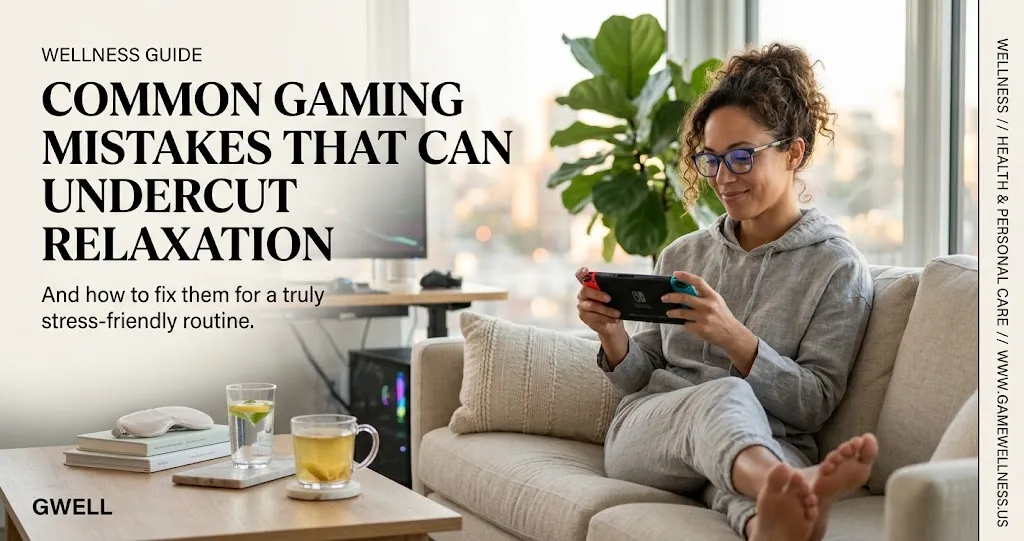
Gaming can stop feeling restorative when the activity itself becomes another source of pressure. The most useful adjustment is usually not “never play,” but changing how and why you play.
Swipe left/right to see the full table →
| Mistake | Better choice |
|---|---|
| Playing from frustration | Switch to an easier activity |
| No stopping point | Choose an endpoint first |
| Using games to avoid every problem | Use gaming alongside other coping habits |
| Ignoring how you feel afterward | Review the after-effect |
A particularly important mistake is assuming that more play automatically means more relief. One recent study found differences between non-violent and violent gameplay in self-reported stress and relaxation, illustrating why the actual experience can matter more than the simple fact that a game is being played. :contentReference[oaicite:5]{index=5}
Do’s and don’ts for stress-friendly play
Do
Choose games that genuinely feel enjoyable, use clear stopping points, and pay attention to your mood before and after play.
Don’t
Keep playing solely because you feel you should win, avoid every uncomfortable feeling through gaming, or ignore repeated negative after-effects.
This approach keeps gaming in its proper role: one leisure option among many. A walk, conversation, creative hobby, music, quiet rest, or another enjoyable activity may be a better fit on a different day.
When Gaming Is Not Enough
Video games can be enjoyable and may support short-term recovery from everyday stress, but they are not a substitute for professional care when distress is severe, persistent, or interfering with daily life. Research also does not support treating every game as equally effective for every person. :contentReference[oaicite:6]{index=6}
If gaming helps you relax but the underlying stress keeps returning, consider broadening your routine instead of increasing gaming time. Regular sleep, movement, social connection, time outdoors, enjoyable offline activities, and talking with a trusted person can all occupy different roles in a balanced routine.
Self-care vs. professional help — general decision guide
Self-care may fit
Everyday tension is temporary, you can still manage normal responsibilities, and enjoyable activities provide some relief.
Consider talking with someone
Stress keeps returning, feels difficult to manage, or begins affecting school, work, relationships, sleep, or daily functioning.
Seek prompt professional guidance
Symptoms are severe, worsening, unusual, persistent, or causing significant problems in daily life.
Urgent situation
If you feel unsafe or face an immediate health emergency, seek urgent help from local emergency services or a qualified professional.
Frequently Asked Questions
Can video games help with stress?
Some studies suggest certain games and short sessions may support stress or mood recovery, but the effect varies by game, player, and situation. :contentReference[oaicite:7]{index=7}
What types of games are good for relaxing?
There is no universal best genre. Games that feel enjoyable, manageable, and easy to stop may be better choices when your goal is to unwind.
Are short gaming sessions useful for stress relief?
Research has reported benefits after short sessions, so longer play is not necessarily required. Your own response and ability to stop comfortably are useful practical measures. :contentReference[oaicite:8]{index=8}
Can competitive games reduce stress?
They can be enjoyable for some people, but competition may also increase frustration or arousal. Choose competitive play when it feels fun rather than when it consistently leaves you more tense.
Should I use gaming every time I feel stressed?
Not necessarily. Gaming can be one leisure option, while other activities such as social connection, movement, rest, or quiet time may fit better in different situations.
What if gaming makes me feel more stressed?
Stop or change the activity and notice what is causing the tension. A different game or a non-gaming activity may be a better fit for that moment.
When should stress be discussed with a professional?
Consider professional guidance when stress is severe, worsening, unusual, persistent, or interfering with daily functioning. Gaming should not replace appropriate care.
Final Thoughts
Video games can be a pleasant way to create a mental break when the game fits your mood and the session has reasonable boundaries. The most useful choice is usually the one that leaves you feeling more settled or refreshed rather than more frustrated or overstimulated.
Use gaming as one part of a broader relaxation routine, pay attention to how you feel afterward, and seek professional help if stress becomes severe, worsening, unusual, persistent, or difficult to manage in everyday life.
Author
-

Hi, I’m Ryan Mitchell, a wellness and relaxation writer at RemedyTip.com, where I focus on helping readers better understand stress management, relaxation techniques, mindfulness, sleep improvement, and everyday wellness habits. I have developed a strong knowledge of the Wellness & Relaxation field through sustained learning, in-depth research, and a continued commitment to exploring practical approaches to well-being.
My work focuses on researching wellness topics, examining available evidence, and turning complex information into clear, accessible, and actionable guidance. I’m continually exploring new findings, relaxation practices, and lifestyle strategies to help readers make informed decisions about their daily wellness routines. At RemedyTip.com, my goal is to share trustworthy, research-informed content that encourages healthier habits, greater relaxation, and a more balanced lifestyle.