Written by Ryan Mitchell
Quick Answer: Stress relief products can cause unwanted effects when ingredients, intensity, dose, timing, or personal sensitivities are a poor fit. Skin irritation, drowsiness, headache, dizziness, stomach upset, or discomfort can occur depending on the product. Stop using a product that causes a concerning reaction and seek professional advice when symptoms are severe, persistent, or unusual.
Stress Relief Products Need a Safety Check
Stress relief products can range from simple comfort tools to topical products, supplements, wearable devices, massage tools, aromatherapy products, and other items marketed for relaxation. The fact that a product is sold for relaxation does not mean every person will tolerate it equally well.
The safest approach is to identify what type of product you are using, follow its instructions, pay attention to your response, and avoid assuming that stronger or more frequent use is automatically better.
Safety note: This article is for general educational information only. It does not diagnose, treat, cure, or prevent any condition. It does not replace advice from a licensed healthcare professional. Readers should seek professional help for severe, worsening, unusual, or persistent symptoms.
Why Side Effects Can Happen
Stress relief is a broad product category, so there is no single side-effect pattern. A massage device may cause soreness or skin discomfort from excessive pressure, while a scented product may bother someone who is sensitive to fragrance. A supplement can create a completely different set of concerns because its ingredients can affect the body more directly.
Even a product that feels relaxing at first can become uncomfortable if it is used too intensely, too often, on irritated skin, or in a way that does not match the label. Personal factors also matter. Existing health conditions, allergies, other medicines, and sensitivity to particular ingredients can change how someone responds.
The main safety variables
Think about four basic questions before continuing with a product: What is it? How is it supposed to be used? What changed after you used it? Does the reaction improve when you stop? Those questions can help separate a minor temporary annoyance from a reason to get professional advice.
Note: “Natural,” “calming,” “wellness,” or “relaxation” on a package does not automatically mean risk-free. The ingredients, intended use, instructions, and your individual circumstances matter more than the marketing language.
Common product-related reactions
The most useful first step is to match the symptom with the type of exposure. The following guide is not a diagnosis; it is a practical way to notice patterns that deserve attention.
Swipe left/right to see the full table →
| Product type | Possible issue | First safety step |
|---|---|---|
| Massage tools | Tenderness or discomfort | Reduce intensity or stop |
| Topical products | Irritation or rash | Stop and check the label |
| Aromatic products | Headache or sensitivity | Move away from exposure |
| Oral supplements | Stomach or other effects | Review ingredients and use |
This table is a screening aid rather than a way to identify the cause of a symptom. If a reaction is strong, unusual, or continues after stopping the product, professional guidance is more appropriate than repeated experimentation.
Safety Depends on the Product Category
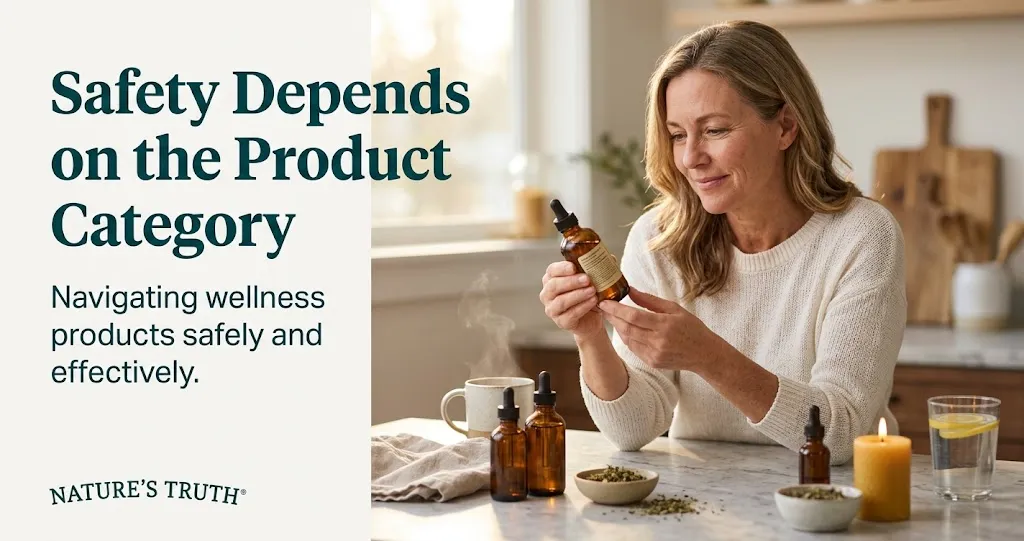
Not all stress-relief products should be evaluated in the same way. Mechanical tools require attention to pressure, duration, placement, and comfort. Topical products require attention to ingredients and skin response. Products taken by mouth require greater caution because ingredients can have effects throughout the body.
When a product contains active ingredients, reading the label becomes especially important. Check the serving or application instructions, warnings, ingredient list, and any directions about combining the product with medicines or other products.
Tip: Introduce only one new stress-relief product at a time when practical. If several new products are started together and a reaction develops, it becomes much harder to identify which change may be responsible.
Swipe left/right to see the full table →
| Situation | Safer choice | Avoid |
|---|---|---|
| First use | Follow directions | Using extra amounts |
| Mild discomfort | Pause and reassess | Pushing through |
| Skin reaction | Stop exposure | Repeated application |
| New oral product | Check ingredients | Mixing products casually |
The safer column is about reducing avoidable exposure, not guaranteeing that a product will be harmless. Personal circumstances can change what is appropriate.
A Simple Safety Decision Path
When deciding whether to continue a product, start with the response you are experiencing rather than the product’s marketing claims.
Identify what appeared after using the product.
Do not keep increasing exposure to see if the problem passes.
Review instructions before deciding whether to try it again.
Seek appropriate medical advice promptly.
This is a practical decision guide, not a diagnostic tool. If you are uncertain about the seriousness of a reaction, getting professional advice is safer than repeatedly testing the product yourself.
Typical routine priorities
A simple priority model can help keep product use sensible rather than aggressive.
These percentages are visual priority markers, not scientific measurements. The point is to give safety checks more attention than simply increasing product use.
Who Should Be More Cautious?
Some people may need more individualized advice before trying a product. This is particularly important when a product contains active ingredients, is taken by mouth, affects alertness, or is being used alongside other medicines or supplements.
Pregnancy, breastfeeding, significant medical conditions, medication use, known allergies, and previous reactions can all make a generic recommendation less appropriate. Children and older adults may also need product-specific guidance rather than an assumption that an adult product is suitable.
Swipe left/right to see the full table →
| Consideration | Why caution matters | Better next step |
|---|---|---|
| Medication use | Ingredients may interact | Ask a pharmacist or clinician |
| Known allergy | Exposure may trigger a reaction | Check ingredients carefully |
| Pregnancy | Some products may not be suitable | Ask a healthcare professional |
| Previous reaction | Repeat exposure may be unwise | Discuss alternatives |
Red Flags You Should Not Ignore
Most product discomfort does not automatically mean an emergency, but certain symptoms deserve a higher level of caution. Do not assume a severe reaction is simply part of “detoxing,” relaxation, or getting used to a product.
This dashboard is a practical warning checklist, not a complete medical assessment. Severe symptoms should receive appropriate urgent medical attention rather than another trial of the product.
Warning: Do not keep using a product simply because its label or advertisement promises relaxation. A concerning reaction is a reason to pause and reassess, not automatically a sign that the product is “working.”
Common Mistakes That Increase Risk

Many problems come from how a product is used rather than from the basic idea of stress relief itself. One common mistake is assuming that more exposure produces more benefit. Another is combining several products without considering overlapping ingredients or effects.
Ignoring the label is another avoidable problem. Instructions can specify how much to use, where to use it, how often to use it, and when to stop. A product that is comfortable for one person may still be unsuitable for another.
Swipe left/right to see the full table →
| Mistake | Better choice | Why |
|---|---|---|
| Using more than directed | Follow the label | Limits unnecessary exposure |
| Ignoring discomfort | Pause and reassess | Prevents repeated exposure |
| Combining new products | Change one thing at a time | Makes reactions easier to track |
| Trusting “natural” claims | Review ingredients | Marketing is not a safety guarantee |
When to Contact a Professional
When to contact a professional:
Seek professional advice if a reaction is severe, persistent, worsening, unusual, or difficult to explain. It is also sensible to ask a pharmacist or healthcare professional before using a product if you take medicines, have important health conditions, have a known allergy, are pregnant or breastfeeding, or are unsure whether the ingredients are appropriate for you.
For a mild problem that improves after stopping a product, you can review the label and consider whether the product is worth trying again. But repeated reactions are a reason to stop experimenting and ask for individualized guidance.
Swipe left/right to see the full table →
| Situation | Reasonable direction | Priority |
|---|---|---|
| Mild and improving | Review use and label | Monitor |
| Repeated reaction | Ask for guidance | Professional advice |
| Severe reaction | Stop and seek help | Urgent |
| Medication or health concern | Check before use | Preventive |
Safer Ways to Support Relaxation
A product does not have to be the center of a stress-management routine. Simple approaches such as slow breathing, quiet time, gentle movement, regular sleep habits, social connection, and other relaxation practices may be useful options for many people.
This matters because a product should support a broader routine rather than become the only way someone tries to manage stress. If stress is persistent or starts interfering with everyday activities, professional support may be more useful than repeatedly switching between products.
Do
- Read the full directions.
- Pay attention to your response.
- Keep track of new products.
- Ask when interactions are possible.
Don’t
- Assume natural means harmless.
- Ignore a worsening reaction.
- Increase use without checking instructions.
- Mix products casually.
This split panel is a practical routine guide. It does not establish that a product is safe for every person or every situation.
Frequently Asked Questions
Can stress relief products cause side effects?
Yes. Effects depend on the product, ingredients, method of use, and individual sensitivity. Stop and reassess if a product causes a concerning reaction.
What are common side effects of stress relief products?
Possible problems vary widely, but may include skin irritation, discomfort, headache, dizziness, drowsiness, or stomach upset depending on the product.
Are natural stress relief products always safe?
No. “Natural” describes an ingredient source, not a guarantee of safety. Ingredients can still cause reactions or interact with medicines.
Should I stop using a product if it causes discomfort?
For new or concerning discomfort, pausing the product is a sensible first safety step. Severe or persistent symptoms warrant professional advice.
Can stress relief supplements interact with medicines?
Some supplement ingredients can interact with medicines. If you take medication, ask a pharmacist or healthcare professional before adding a new supplement.
When should I seek medical help after using a stress product?
Seek appropriate medical help for severe, rapidly worsening, unusual, or persistent symptoms, especially breathing difficulty, chest pain, fainting, or a serious allergic-type reaction.
What is the safest way to try a new stress relief product?
Read the label first, follow the recommended use, introduce one new product at a time when practical, and monitor how you respond.
Final Thoughts
The safest way to approach stress relief products is to treat them as optional tools rather than automatically harmless solutions. Read the instructions, pay attention to ingredients and personal circumstances, and stop when a product causes a concerning response. If symptoms are severe, worsening, unusual, persistent, or not improving after stopping the product, seek professional help.
Author
-

Hi, I’m Ryan Mitchell, a wellness and relaxation writer at RemedyTip.com, where I focus on helping readers better understand stress management, relaxation techniques, mindfulness, sleep improvement, and everyday wellness habits. I have developed a strong knowledge of the Wellness & Relaxation field through sustained learning, in-depth research, and a continued commitment to exploring practical approaches to well-being.
My work focuses on researching wellness topics, examining available evidence, and turning complex information into clear, accessible, and actionable guidance. I’m continually exploring new findings, relaxation practices, and lifestyle strategies to help readers make informed decisions about their daily wellness routines. At RemedyTip.com, my goal is to share trustworthy, research-informed content that encourages healthier habits, greater relaxation, and a more balanced lifestyle.