Written by Ryan Mitchell
Quick Answer: How to do deep breathing for stress relief?
Sit comfortably, relax your shoulders, breathe in gently through your nose so your abdomen expands, then breathe out slowly and comfortably. Repeat for a few minutes without forcing the breath. Stop if you feel dizzy, uncomfortable, or more short of breath.
A simple pause for a busy nervous system
Stress can change the way you breathe. You may notice faster, shallower breaths or a tendency to hold your breath without realizing it. A slow, comfortable breathing routine gives you something steady to focus on while encouraging a more relaxed breathing pattern. Relaxation techniques, including deep breathing, are commonly used to help manage everyday stress. MedlinePlus explains several relaxation techniques.
The goal is not to take the biggest breath possible. Instead, think of breathing quietly, smoothly, and comfortably. This distinction matters because forcing large breaths can make some people feel lightheaded or uncomfortable.
Trust & safety note
This article is for general educational information only. It does not diagnose, treat, cure, or prevent any condition. It does not replace advice from a licensed healthcare professional. Readers should seek professional help for severe, worsening, unusual, or persistent symptoms.
Why stress can change your breathing
When you feel under pressure, your body can shift into a more alert state. Breathing may become quicker or shallower, and you may pay less attention to the rhythm of each breath. That pattern can make it harder to settle down when the stressful moment passes.
Relaxation breathing works by giving your attention a simple, repeatable task. Instead of trying to force stressful thoughts away, you notice the inhale, notice the exhale, and gradually return your attention whenever it wanders. This is one reason breathing exercises can be useful during a short break, before a stressful task, or as part of an evening wind-down.
The best starting point is usually uncomplicated. You do not need special equipment, a particular room, or an advanced breathing method. A chair, quiet corner, or comfortable place to sit is enough.
Note
There is no prize for breathing as deeply as possible. Aim for a smooth, comfortable breath rather than a huge inhale. If counting makes you tense, skip the numbers and simply slow the pace gently.
How to do deep breathing for stress relief
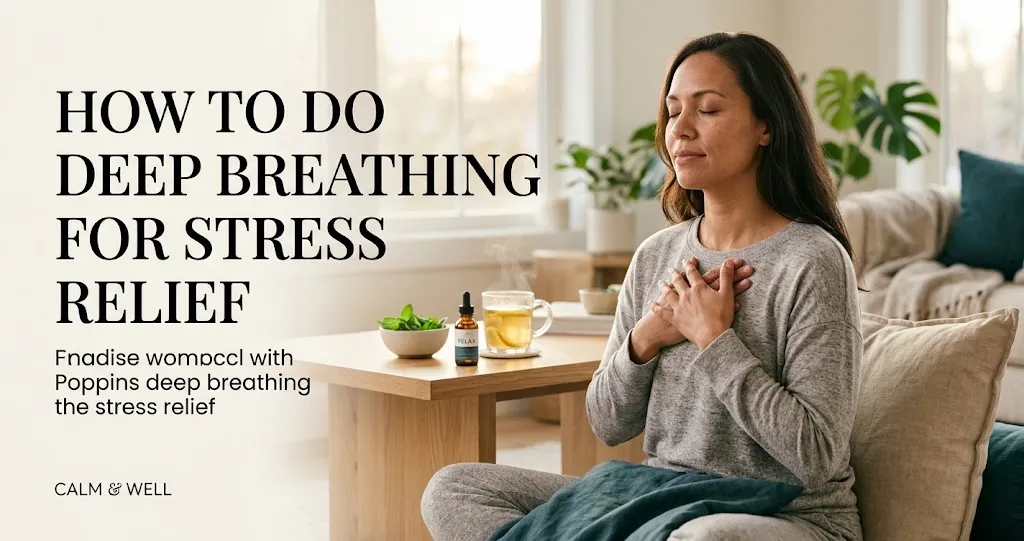
Use this beginner-friendly routine when you want a short reset. You can practice while sitting or lying comfortably, but choose a position where you feel supported and can breathe without strain.
Settle your position. Sit with your feet supported or lie down, then let your shoulders and jaw soften.
Start with an easy exhale. Let some air out naturally rather than preparing for an oversized breath.
Breathe in gently. Inhale through your nose at a comfortable pace and allow your abdomen to expand naturally.
Exhale slowly. Let the breath leave without pushing hard, making the out-breath slightly longer if that feels comfortable.
Repeat without forcing it. Continue for a few comfortable cycles, keeping your attention on the physical sensation of breathing.
Return gradually. Stop the exercise and resume normal breathing when you feel ready, then continue with your activity.
A simple visual guide to the sequence:
Relax shoulders
Gentle and easy
Slow and relaxed
A few cycles
Think of this as a practical routine, not a performance test. The comfortable rhythm you can repeat is more useful than trying to reach a particular breath size.
How long should you practice?
There is no single required duration for everyday stress management. A short practice can be easier to fit into a busy day, while a longer session may feel useful when you have more time. Start small enough that the routine feels realistic.
Swipe left/right to see the full table →
| Situation | Practical starting point | Focus |
|---|---|---|
| Busy workday | A few cycles | Slow the pace |
| Short break | 1–3 minutes | Comfort |
| Evening routine | Several minutes | Steady rhythm |
| New to breathing exercises | Start briefly | No forcing |
Use the table as a practical guide rather than a rule. If a breathing exercise makes you uncomfortable, shortening the session or returning to your normal breathing is more sensible than pushing through.
Make the routine easy to repeat
The most useful breathing routine is one you can remember. You can attach it to an existing daily event, such as sitting down before work, taking a quiet break, or beginning an evening wind-down. Practicing when you are already relatively calm may also make the sequence more familiar when stress appears.
These priorities are a practical guide, not scientific scores:
The practical message is simple: comfort and repeatability matter more than mastering a complicated pattern. If counting helps you focus, use it; if it becomes distracting, let it go.
Do you need special tools?
No. A comfortable place to sit is enough. Optional aids can support consistency, but they are not necessary for the breathing exercise itself.
Swipe left/right to see the full table →
| Tool or setting | May help with | Need it? |
|---|---|---|
| Chair | Comfortable posture | No |
| Timer | Routine consistency | Optional |
| Quiet space | Fewer distractions | Optional |
| Breathing app | Guided pacing | Optional |
Common mistakes that make breathing harder
People often make breathing exercises more complicated than they need to be. The biggest issue is usually effort: trying to pull in a very large breath, hold it for too long, or match an exact count even when the pattern feels uncomfortable.
Swipe left/right to see the full table →
| Common mistake | Better choice | Why |
|---|---|---|
| Huge inhalations | Gentle inhale | Less strain |
| Rigid counting | Comfortable rhythm | Less pressure |
| Holding too long | Skip holds | Keeps it simple |
| Ignoring discomfort | Return to normal breathing | Prioritizes safety |
Some structured methods use breath holds or specific counting patterns. Those are options, not requirements. A basic slow-breathing routine is often the better starting point if you are new to breathwork.
Warning
Stop the exercise if you become dizzy, unusually uncomfortable, or more short of breath. Do not force a breath hold or continue trying to take larger breaths to “make it work.” If breathing difficulty is new, severe, persistent, or accompanied by concerning symptoms, seek medical advice rather than assuming stress is the cause.
What to do if the exercise feels awkward
It is normal for a new breathing routine to feel unfamiliar. You may notice your breath more than usual, lose count, or find that your attention keeps returning to whatever was bothering you. None of those experiences means you are doing it incorrectly.
If you feel lightheaded
Stop the exercise and return to ordinary, comfortable breathing. Avoid repeatedly taking very large breaths, since overbreathing can contribute to lightheadedness. If this happens repeatedly or breathing symptoms are unexplained, discuss them with a healthcare professional. MedlinePlus provides information about hyperventilation.
If counting makes you anxious
Drop the numbers. Try noticing one physical cue instead, such as the abdomen gently moving during the inhale and settling during the exhale.
If your mind keeps racing
Give yourself a smaller goal: notice one inhale, one exhale, and repeat. The purpose is not to eliminate every thought; it is to practice bringing attention back to the present breath.
If nose breathing feels uncomfortable
Do not force it. Use a breathing pattern that feels natural for you, and consider discussing persistent breathing discomfort with a healthcare professional.
A practical way to decide what to adjust first:
Too much effort?
Make the inhale smaller and easier.
Too distracting?
Stop counting and follow the breath.
Uncomfortable?
Stop and return to normal breathing.
Breathing problem?
Get professional guidance.
This keeps troubleshooting focused on the routine itself rather than turning every uncomfortable sensation into a reason to push harder.
Simple ways to make the practice more useful
Practice before pressure peaks
A short routine during a calm part of the day can make the sequence familiar. Then it is easier to remember when you encounter ordinary stress.
Use a comfortable posture
You do not need a rigid “perfect” posture. Choose a supported position that lets your shoulders, neck, and jaw stay reasonably relaxed.
Let thoughts come and go
Stressful thoughts may still appear. Notice that your attention wandered, then gently return it to the next comfortable breath.
Keep the goal realistic
Breathing can be one part of stress management, not a requirement to solve every source of stress. If stress remains difficult to manage, consider other forms of support.
A simple do-and-don’t reminder:
Do
- Keep breaths gentle.
- Relax your shoulders.
- Use a repeatable rhythm.
- Stop if uncomfortable.
Don’t
- Force huge breaths.
- Compete with a timer.
- Hold your breath if it feels uncomfortable.
- Ignore unexplained breathing symptoms.
The safest routine is the one that remains gentle and comfortable. If breathing itself is difficult, focus on getting appropriate medical guidance rather than trying increasingly intense breathwork.
When breathing practice is not enough
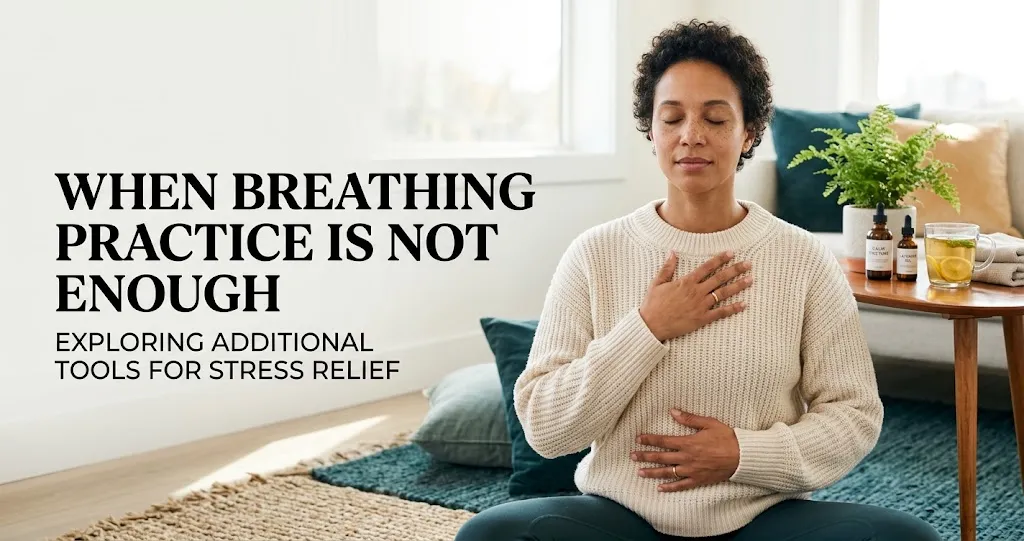
Breathing exercises can be a useful self-care skill for everyday stress, but they are not a substitute for evaluating persistent or concerning symptoms. If stress is repeatedly interfering with sleep, school, work, relationships, or daily functioning, consider talking with a qualified healthcare or mental health professional.
Likewise, do not assume new breathing difficulty is “just stress.” Shortness of breath, chest discomfort, fainting, unusual weakness, confusion, or rapidly worsening symptoms need appropriate medical attention. In an emergency, seek urgent medical help.
A practical self-care versus professional-help guide
Swipe left/right to see the full table →
| Situation | Reasonable next step | Decision |
|---|---|---|
| Ordinary daily stress | Try gentle breathing | Self-care may fit |
| Repeated stress disruption | Discuss support options | Consider professional help |
| New breathing difficulty | Get medical guidance | Do not assume stress |
| Severe or rapidly worsening symptoms | Seek urgent medical help | Prioritize safety |
Use this as a general safety decision path:
Everyday stress?
A gentle breathing routine may be a reasonable self-care option.
Comfortable breathing?
Continue gently and avoid forcing the pattern.
New or persistent breathing symptoms?
Contact a healthcare professional for appropriate guidance.
Severe or rapidly worsening symptoms?
Seek urgent medical help.
The key decision rule is simple: use breathing as a gentle stress-management skill when it feels comfortable, but do not use it to explain away significant or unexplained symptoms.
When to contact a professional
Seek professional guidance if stress is persistent or significantly affecting daily life, or if breathing problems are new, recurrent, severe, worsening, or unexplained. Seek urgent medical help for severe breathing difficulty, chest pain, fainting, confusion, or other rapidly worsening symptoms.
Frequently asked questions
How often should I practice deep breathing for stress?
There is no single required schedule. Short, comfortable practice sessions that fit naturally into your day can help you build familiarity with the routine.
Should I breathe through my nose or mouth?
For a basic relaxation routine, a gentle nasal inhale is commonly used, followed by a comfortable exhale. Do not force nasal breathing if it feels difficult.
Is a longer exhale better for stress?
Some people find a slightly longer, gentle exhale calming. It should remain comfortable; there is no need to force a specific ratio.
Why do I feel dizzy when I try deep breathing?
Taking repeated large or fast breaths can contribute to lightheadedness. Stop, return to normal breathing, and seek medical advice if dizziness is persistent, severe, or unexplained.
Can deep breathing replace professional help for stress?
No. It can be one self-care tool for everyday stress, but persistent or disruptive stress may need support from a qualified professional.
Is box breathing necessary for stress relief?
No. Box breathing is one structured option, but simple slow, comfortable breathing can be a more approachable starting point.
When should I avoid doing a breathing exercise?
Stop if the exercise causes dizziness, significant discomfort, or increased shortness of breath. New, severe, persistent, or unexplained breathing symptoms should be evaluated by a healthcare professional.
Final Thoughts
Learning how to do deep breathing for stress relief does not require a complicated technique. Start with a comfortable position, breathe gently, slow the rhythm, and practice for a short period that fits your day.
Treat breathing as one practical stress-management skill rather than a cure-all. If stress or breathing symptoms are severe, worsening, unusual, persistent, or not improving, seek guidance from a qualified healthcare professional.
Author
-

Hi, I’m Ryan Mitchell, a wellness and relaxation writer at RemedyTip.com, where I focus on helping readers better understand stress management, relaxation techniques, mindfulness, sleep improvement, and everyday wellness habits. I have developed a strong knowledge of the Wellness & Relaxation field through sustained learning, in-depth research, and a continued commitment to exploring practical approaches to well-being.
My work focuses on researching wellness topics, examining available evidence, and turning complex information into clear, accessible, and actionable guidance. I’m continually exploring new findings, relaxation practices, and lifestyle strategies to help readers make informed decisions about their daily wellness routines. At RemedyTip.com, my goal is to share trustworthy, research-informed content that encourages healthier habits, greater relaxation, and a more balanced lifestyle.