
Written by Alex Turner
Quick Answer: Use a percussion massager mainly when muscles feel tight or stiff, before activity for gentle mobility, or after activity as part of a recovery routine. Keep pressure comfortable, stay on soft muscle tissue, and avoid injured or sensitive areas. Stop if use causes sharp pain, unusual symptoms, or worsening discomfort.
A percussion massager can be useful when your goal is simple: make a tight-feeling muscle more comfortable or prepare it for movement. The key is when, where, and how you use it. More pressure or more time is not automatically better.
This guide focuses on practical timing, safer technique, body-area choices, and signs that a massage gun is not the right tool for the situation.
Safety note: This article is for general educational information only. It does not diagnose, treat, cure, or prevent any condition. It does not replace advice from a licensed healthcare professional. Readers should seek professional help for severe, worsening, unusual, or persistent symptoms.
When Is a Percussion Massager Most Useful?
A percussion massager is generally most useful when you are working with a healthy muscle that feels temporarily tight, stiff, or tired. It can fit before movement, after activity, or during a normal day when a muscle feels restricted.
Research on percussive massage is still developing. Reviews have reported possible short-term improvements in flexibility and range of motion, while findings for strength, soreness, and recovery are less consistent. That means it is better viewed as a comfort and mobility tool rather than a guaranteed recovery solution.
Timing should also match your goal. A short, gentle session before movement is different from using the device as part of a post-exercise routine. Your response matters more than chasing a particular setting or trying to make the muscle feel intensely worked.
A simple timing guide
Swipe left/right to see the full table →
| Situation | Potential role | Approach |
|---|---|---|
| Before activity | Mobility support | Brief and gentle |
| After activity | Comfort routine | Comfortable pressure |
| Rest day | Temporary stiffness | Short, light passes |
| Persistent pain | Not a self-care shortcut | Consider professional advice |
The table is a practical starting point, not a prescription for a specific duration. Research has not established one universal massage-gun schedule that works for every person or muscle.
Typical routine priority: before activity
Brief mobility preparation — practical guide
Typical routine priority: after activity
Comfort-focused recovery routine — practical guide
These bars show routine priorities, not measured effectiveness. The right choice depends on your activity, the muscle involved, and how your body responds.
How to Use One Before Exercise
Before exercise, the goal is not to exhaust or numb the muscle. Think of the device as a brief preparation tool. Use a comfortable setting over a large muscle area, then follow it with normal active movement or your warm-up.
1
Choose a healthy muscle that feels tight or needs gentle preparation.
2
Start at the lowest comfortable setting and avoid forcing pressure into the tissue.
3
Keep the device moving rather than holding it hard against one point.
4
Finish with dynamic movement that matches the activity you are about to perform.
Tip: If the massage makes a muscle feel heavy, sore, numb, or less coordinated immediately before an important activity, skip it and use your normal warm-up instead.
Why gentle matters before movement
Some studies suggest percussive massage can temporarily change range of motion and flexibility. However, research has also found inconsistent effects on performance. A systematic review concluded that massage guns may support short-term range of motion and flexibility but should not be treated as a guaranteed performance enhancer.
For that reason, avoid turning a pre-workout session into an intense massage session. The practical goal is to feel ready to move, not deeply worked over.
Using a Percussion Massager After Exercise
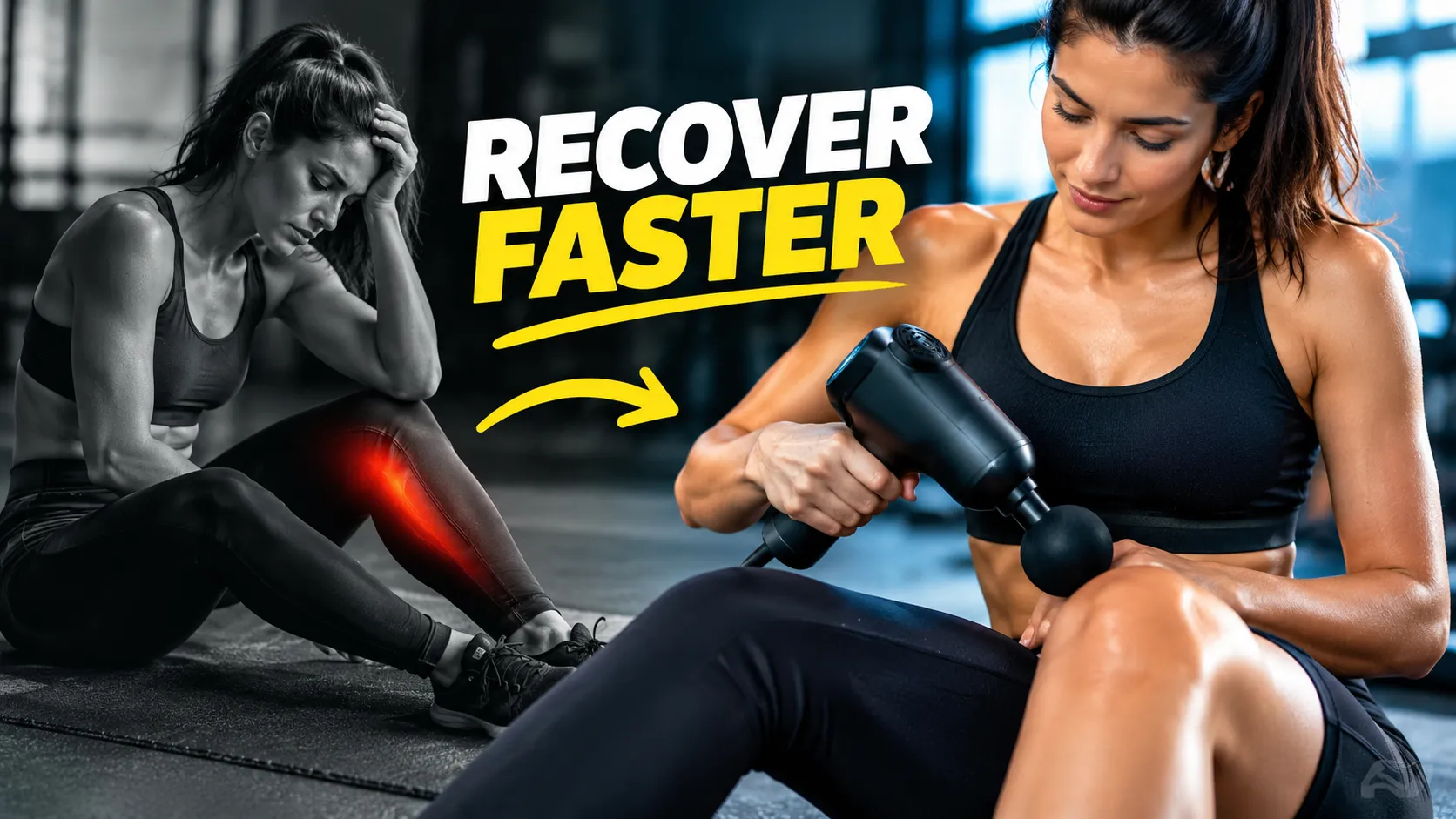
After exercise, many people use a massage gun because muscles feel tight or tired. It can be included in a broader recovery routine, but the evidence is mixed. One controlled study found little improvement in several calf recovery measures after a five-minute application immediately after strenuous exercise.
Other research has reported short-term improvements in range of motion or soreness in some settings. The variation between studies is one reason to keep expectations modest.
Safe routine versus risky routine
Swipe left/right to see the full table →
| Safer choice | Riskier choice |
|---|---|
| Comfortable pressure | Maximum pressure |
| Broad muscle area | Bony or joint area |
| Moving passes | Long stationary pressure |
| Healthy tissue | Acute injury or unexplained pain |
The safer side of the table is intentionally conservative. If you are unsure whether an area is appropriate, do not use the device there until you have checked with a qualified professional.
Which Body Areas Usually Fit?
Large, fleshy muscle groups are generally easier to target than small, bony, or highly sensitive structures. Common examples include the thighs, calves, glutes, and larger areas of the upper back. Even on these areas, pressure should remain comfortable.
Body-area fit guide
Swipe left/right to see the full table →
| Area | General fit | Practical note |
|---|---|---|
| Thighs | Often suitable | Use broad passes |
| Calves | Often suitable | Avoid sensitive spots |
| Glutes | Often suitable | Keep pressure moderate |
| Neck/front of throat | Avoid | Choose safer areas |
Warning: Do not deliberately press a percussion massager directly over the spine, joints, front or sides of the neck, bones, open wounds, or areas with unexplained swelling or significant pain. Extra caution is appropriate if you have a medical condition, recent injury, or concerns about circulation or bleeding.
Typical routine priority: choose the muscle, not the pain point
Target broad, fleshy tissue.
Stay within comfortable intensity.
Keep the device moving.
Stop if symptoms worsen.
This simple sequence helps prevent a common mistake: chasing the most painful spot with increasingly hard pressure. A percussion massager should not become a test of how much discomfort you can tolerate.
Common Mistakes That Can Backfire
Many problems come from treating a massage gun like a power tool rather than a gentle body-care device. Using a higher setting simply because it feels stronger can encourage excessive pressure or longer sessions.
Mistake versus better choice
Swipe left/right to see the full table →
| Common mistake | Better choice |
|---|---|
| Using maximum intensity | Start low and adjust gently |
| Holding one spot too long | Use moving passes |
| Massaging an injury | Get guidance first |
| Using it on every ache | Consider why symptoms persist |
Published research includes reports of potential adverse events and emphasizes that standardized dosing and safety guidance remain limited. That uncertainty is another reason to use conservative settings and avoid aggressive self-treatment.
Practical guide: when to stop
Muscle feels comfortably worked and movement remains normal.
Area becomes unusually tender, irritated, numb, or uncomfortable.
Sharp pain, weakness, significant swelling, or unusual symptoms appear.
The colors are a practical self-check, not a medical risk scale. Any concerning symptom should outweigh the desire to complete a massage routine.
When to Skip It and Get Professional Guidance
A percussion massager is not a substitute for figuring out why a symptom is happening. Be especially cautious if discomfort followed a significant injury, keeps getting worse, or does not behave like ordinary muscle tightness.
When to contact a professional
Seek professional medical guidance for severe or worsening pain, significant injury, new numbness or weakness, fever with pain, chest pain, loss of bladder or bowel control, unexplained swelling, or symptoms that are unusual or persistent. Do not use a percussion massager to delay evaluation of these warning signs.
Self-care or professional evaluation?
Swipe left/right to see the full table →
| Situation | Reasonable next step |
|---|---|
| Mild temporary stiffness | Gentle self-care may be reasonable |
| Pain after an injury | Consider professional assessment |
| Numbness or weakness | Do not massage the symptom away |
| Persistent or worsening symptoms | Seek professional guidance |
The important distinction is not whether a massage gun can make an area feel different for a few minutes. It is whether using it is appropriate for the situation in the first place.
Safety decision path — practical guide
A gentle session may fit.
Pause and consider professional guidance.
Skip the device and seek appropriate care.
Look beyond temporary massage relief.
This decision path keeps the tool in its proper role: a possible comfort aid for suitable situations, not a way to diagnose or manage unexplained symptoms.
A Simple Routine for Everyday Use
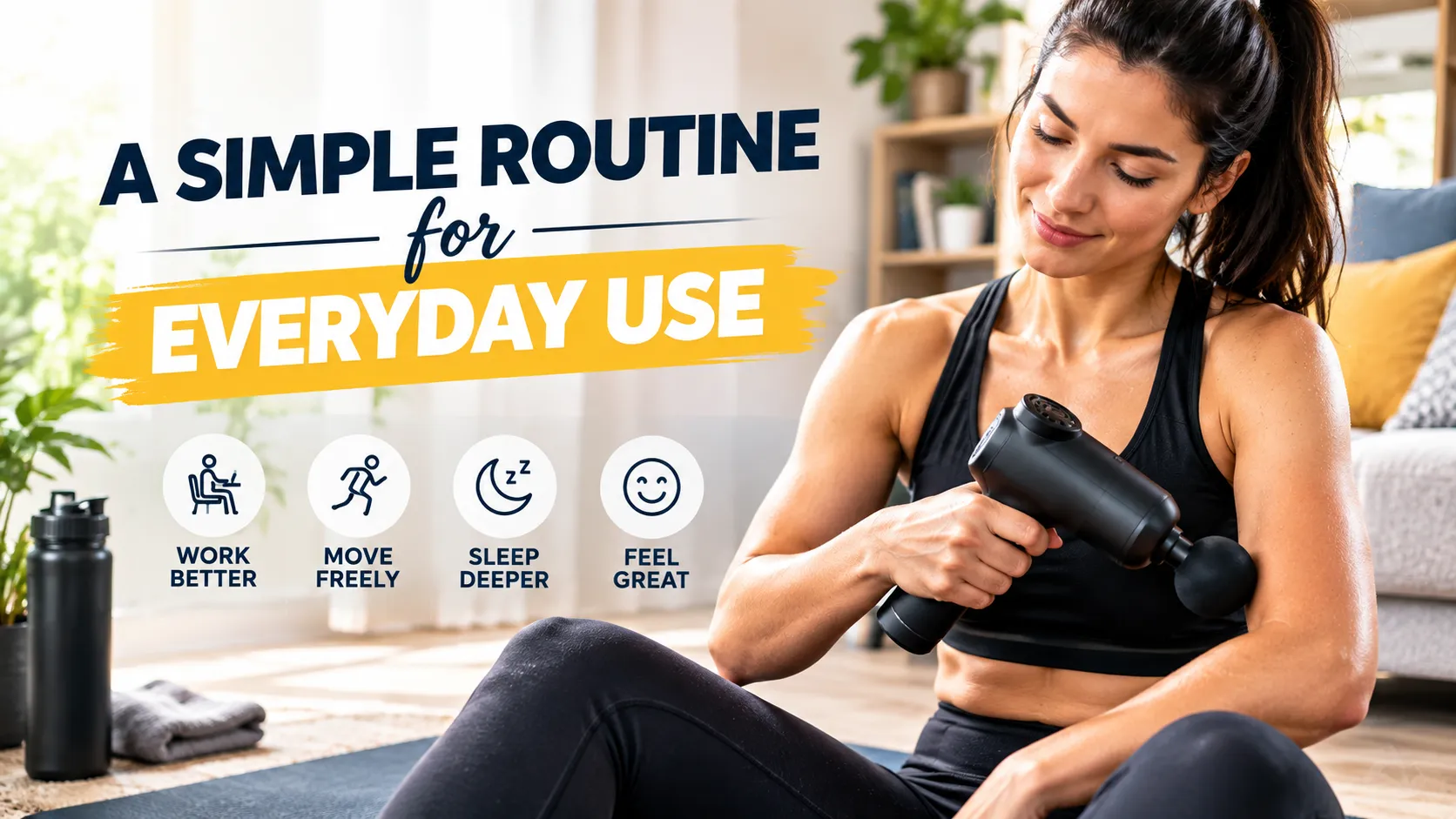
If you are using a percussion massager for ordinary muscle tightness, keep the routine simple. Pick one or two appropriate muscle groups, use comfortable pressure, keep the device moving, and reassess how you feel afterward.
You do not need to chase soreness to make a session worthwhile. A useful routine should leave you able to move normally and should not create new pain, numbness, or unusual tenderness.
A practical routine checklist
Use it on an appropriate muscle rather than a joint, bone, spine, or sensitive structure.
Begin with a low setting and increase only if the sensation remains comfortable.
Use controlled passes rather than repeatedly hammering one tender spot.
Stop if the area becomes more painful or produces unusual symptoms.
Typical routine flow
The flow is intentionally short. A percussion massager works best as one part of a larger routine that can also include normal movement, rest, hydration, sleep, and activity management.
What the Research Says About Timing
Current evidence does not support one universal answer for exactly when everyone should use a massage gun. A systematic review found possible short-term benefits for range of motion, flexibility, and some recovery-related outcomes, but also noted limited evidence and substantial variation in devices, settings, and protocols.
Another controlled study found that five minutes of massage-gun use immediately after strenuous calf exercise had little effect on several physical recovery measures. More recent research continues to explore whether different durations and protocols produce different results.
The practical takeaway is straightforward: use the device according to your immediate goal, keep the intensity reasonable, and do not interpret temporary comfort as proof that an underlying problem has been fixed.
Frequently Asked Questions
When to use a percussion massager before a workout?
It can be used briefly before activity when the goal is gentle mobility or preparation. Keep pressure comfortable and follow it with normal dynamic movement.
Can I use a percussion massager after exercise?
It can be part of a recovery routine for some people, especially when muscles feel tight. Evidence for immediate post-exercise recovery is mixed, so avoid expecting guaranteed results.
How long should I use a percussion massager?
There is no single duration that applies to everyone. Keep sessions conservative, avoid prolonged pressure on one spot, and follow your device’s instructions.
Where should I avoid using a percussion massager?
Avoid the spine, joints, bones, front or sides of the neck, open wounds, and areas with unexplained swelling or significant pain. Do not use it over an acute injury without appropriate guidance.
Should a percussion massager hurt?
It should not be used as a test of pain tolerance. Sharp pain, numbness, unusual discomfort, or worsening symptoms are reasons to stop.
Can I use one on a sore muscle?
Mild post-activity muscle soreness may be approached cautiously, but intense, unexplained, worsening, or injury-related pain should not simply be massaged through.
When should I ask a professional before using one?
Ask a qualified healthcare professional if you have a significant injury, persistent or worsening symptoms, unusual swelling, numbness, weakness, or another condition that makes massage or vibration a concern.
Final Thoughts
The best time to use a percussion massager depends on the goal: gentle preparation before movement, or comfortable muscle-focused care afterward. Use it conservatively, stay on appropriate soft tissue, and pay attention to how your body responds.
If pain is severe, worsening, unusual, persistent, associated with injury, numbness, weakness, fever, chest pain, or loss of bladder or bowel control, skip the massage gun and seek professional medical guidance.
Author
-

I’m Alex Turner, a massage product reviewer and wellness writer at RemedyTip. I specialize in researching, evaluating, and comparing massage and recovery products to help readers make informed purchasing decisions. My focus is on practical, evidence-informed product guidance covering muscle recovery, relaxation, everyday comfort, and wellness.
I take a research-driven approach to every product I review. I examine product specifications, features, materials, performance claims, user feedback, durability, comfort, ease of use, and overall value. When appropriate, I also consult trusted industry and health-related sources to verify important information and provide readers with a more complete and balanced view.
I cover a wide range of products, including massage guns, handheld massagers, neck and shoulder massagers, foot massagers, massage chairs, foam rollers, and other recovery tools. Rather than focusing only on marketing claims, I look at how products compare in real-world use and who they are actually suitable for. I also consider different budgets, use cases, and user needs when making recommendations.
At RemedyTip, I’m committed to accuracy, transparency, and unbiased product information. I clearly distinguish between manufacturer claims, available evidence, and my own product analysis so readers can understand the basis of each recommendation. I continuously research new products, technologies, and developments in the massage and recovery space to keep my content current and useful.
My goal is simple: to provide trustworthy, easy-to-understand information that helps readers choose massage and recovery products with greater confidence.

