Written by Alex Turner
Quick Answer: Are percussion massagers safe?
For many healthy adults, percussion massagers can be used safely when they are used gently on appropriate muscle tissue. Avoid bones, the front of the neck, open wounds, swollen areas, and areas of suspected blood clots. People with certain medical conditions, recent injuries, surgery, or implanted devices should ask a healthcare professional before use.
Using Percussion Massage With More Confidence
Percussion massagers, often called massage guns, deliver repeated mechanical pressure through a small attachment. They are commonly used over large muscle groups before or after activity or as part of a personal comfort routine. The key safety issue is not simply whether the device vibrates; it is where, how hard, and how long it is used.
Important health information
This article is for general educational information only. It does not diagnose, treat, cure, or prevent any condition. It does not replace advice from a licensed healthcare professional. Readers should seek professional help for severe, worsening, unusual, or persistent symptoms.
What a Percussion Massager Actually Does
A percussion massager uses rapid, repeated movements against soft tissue. Unlike a simple vibrating device, a massage gun usually combines vibration with a moving attachment that applies rhythmic pressure. People commonly use these tools over muscles that feel tight after exercise or during a regular self-massage routine.
The main safety principle is simple: the attachment should generally work over muscle rather than directly over bones, joints, or sensitive structures. Cleveland Clinic guidance for massage-gun use also recommends starting at a low intensity, moving slowly, avoiding extra downward pressure, and limiting time on each muscle group. :contentReference[oaicite:0]{index=0}
Note
A stronger setting is not automatically a safer or more effective setting. If an attachment creates sharp pain, unusual numbness, significant bruising, or a worsening sensation, stop using it on that area rather than increasing pressure.
Who Should Be More Cautious?
For a healthy adult using a percussion massager over ordinary muscle tissue, gentle use may fit into a personal wellness routine. However, extra caution is appropriate when a person has a condition or circumstance that could make pressure, bruising, vibration, or tissue irritation more concerning.
Massage guidance from Cleveland Clinic advises discussing massage with a healthcare provider in situations including blood-thinning medication, blood clots in the leg, osteoporosis or spine disorders, implanted or attached medical devices, acute injury, recent surgery, and certain high-risk pregnancies. A percussion massager is not identical to hands-on massage, so those cautions should not be treated as a complete device-specific checklist, but they are useful reasons to seek individualized advice. :contentReference[oaicite:1]{index=1}
Situations That Deserve Extra Caution
Swipe left/right to see the full table →
| Situation | Why to pause | Safer next step |
|---|---|---|
| Blood-thinning medicine | Greater bruising concern | Ask your clinician first |
| Known blood clot | Direct pressure may be inappropriate | Do not self-treat the area |
| Recent injury or surgery | Healing tissue may need protection | Get individualized guidance |
| Osteoporosis or spine disorder | Bone injury may be a concern | Ask a healthcare professional |
| Implanted device | Device and location matter | Check with the treating team |
These examples are reasons for caution, not a diagnosis or a universal ban. Your healthcare professional can consider the specific condition, body area, device, and current treatment plan.
A Practical Safety Path Before You Start

Before switching on the device, think about the body area and your current health situation. If you are unsure whether a particular area is appropriate, choosing not to use the device there until you receive professional guidance is the safer decision.
Safety decision path
Yes → continue. No or unsure → pause and get guidance.
Yes → avoid the area and seek appropriate advice.
Yes → ask your healthcare professional first.
Use low intensity, light contact, and a short session.
This path is a practical screening tool, not a substitute for medical assessment. It is especially important not to use a massage gun simply because a painful area seems like a muscle.
Where Is It Usually Safer to Use One?
Large, accessible muscle groups are generally easier to target than areas containing prominent bones, joints, or delicate structures. Common examples include the thighs, calves, glutes, and other substantial muscle areas. The device should move over muscle tissue rather than being pressed directly into a hard bony point.
For the neck and spine, extra caution is important. Cleveland Clinic specifically advises keeping a massage gun on muscles rather than bones and avoiding bony areas such as the nape of the neck. :contentReference[oaicite:2]{index=2}
Body Area Guide
Swipe left/right to see the full table →
| Area | General approach | Main caution |
|---|---|---|
| Thighs | Stay on muscle | Avoid painful pressure |
| Calves | Use gentle movement | Avoid if clot is suspected |
| Glutes | Target broad muscle | Stop for nerve-like symptoms |
| Upper back | Work beside the spine | Do not hit the spine |
| Front of neck | Choose another area | Avoid direct percussion |
Warning
Do not use a percussion massager directly over the spine, joints, prominent bones, open wounds, irritated skin, or an area that is acutely swollen or unusually painful. Avoid using it to “push through” pain.
Safer Use vs Riskier Use
Technique matters as much as the device itself. A common mistake is pressing harder because the sensation feels intense. Instead, start with the lowest comfortable setting and let the attachment make contact without forcing it into the tissue. Cleveland Clinic similarly recommends low intensity for beginners, slow movement, minimal added pressure, and short periods on an individual muscle group. :contentReference[oaicite:3]{index=3}
Safer Routine vs Riskier Routine
Swipe left/right to see the full table →
| Safer choice | Riskier choice |
|---|---|
| Start on low intensity | Start at maximum power |
| Use light contact | Push hard into muscle |
| Move gradually | Hold forcefully on one spot |
| Stop if symptoms worsen | Continue despite sharp pain |
| Follow device instructions | Ignore warnings or limits |
Tip
Treat the device as a gentle massage tool, not a deep-impact tool. If you have to brace yourself or tense the surrounding muscles because the pressure feels too strong, reduce the intensity or move to another area.
How Long Should You Use It?
There is no single duration that is appropriate for every person, device, and body area. As a practical starting point, short sessions are preferable to prolonged pressure on one location. Cleveland Clinic guidance suggests limiting massage-gun use to a couple of minutes or less on an individual muscle group, with another Cleveland Clinic article describing very short initial exposure and gradual adjustment based on tolerance. :contentReference[oaicite:4]{index=4}
Simple Timing Guide
Swipe left/right to see the full table →
| Situation | Practical approach | Stop when |
|---|---|---|
| First use | Very short and gentle | Discomfort rises |
| Normal muscle routine | Brief passes over muscle | Area becomes painful |
| Post-exercise | Short recovery-focused use | Symptoms worsen |
| Sensitive area | Consider avoiding it | Any unusual sensation |
Warning Signs You Should Not Ignore
Normal massage can feel noticeable, but the goal should not be to create significant pain or injury. Stop using the device if you develop sharp pain, increasing swelling, unusual numbness or tingling, marked bruising, weakness, or symptoms that continue after you stop.
Red-flag checklist
Stop rather than increasing pressure.
Do not continue percussion over the area.
Pause and seek appropriate medical guidance.
Stop and discuss repeated bruising with a professional.
Seek urgent medical attention.
Seek urgent medical assessment.
The last two symptoms are not routine massage reactions. They can signal a medical emergency and should not be managed with a massage gun.
Common Safety Mistakes
Most avoidable problems come from treating a percussion massager like a tool that should hurt to work. Another common mistake is assuming that every painful area is simply a tight muscle. A new or unexplained symptom deserves more thought before applying repeated mechanical pressure.
Mistake vs Better Choice
Swipe left/right to see the full table →
| Common mistake | Better choice |
|---|---|
| Using maximum intensity | Begin low and adjust gently |
| Percussing bone | Stay on surrounding muscle |
| Holding on a painful spot | Move away or stop |
| Ignoring a new symptom | Consider professional evaluation |
| Using it over a known clot | Avoid the area and follow medical advice |
A Simple Risk Check Before Each Session
Safety is easier when you make the same quick check every time. Think about your current symptoms, the exact body area, and whether anything has changed since you last used the device.
Typical routine priority — practical guide
These percentages are a practical routine-priority guide, not scientific measurements.
The most important check is whether the body area is appropriate. If you have a new medical issue, recent procedure, unexplained swelling, or a condition that could make pressure unsafe, pause before using the device.
When to Contact a Professional
When to contact a professional
Talk with a licensed healthcare professional before using a percussion massager if you have a known blood clot, take blood-thinning medication, have osteoporosis or a spine disorder, have an implanted or attached medical device, recently had surgery or an acute injury, or have another condition that makes pressure or vibration a concern. Seek urgent medical help for chest pain, trouble breathing, new severe weakness, loss of bladder or bowel control, or other severe or rapidly worsening symptoms.
A professional can also help when you repeatedly need a massage gun because the same painful area keeps returning. The goal is not to identify a diagnosis yourself; it is to make sure self-massage is appropriate for your situation.
Self-Care or Professional Guidance?
Swipe left/right to see the full table →
| Situation | General direction | Reason |
|---|---|---|
| Healthy muscle, no concerning symptoms | Gentle self-use may fit | Lower concern when used correctly |
| New unexplained pain | Consider evaluation first | Cause is unclear |
| Recent surgery or acute injury | Ask your care team | Healing status matters |
| Severe or worsening symptoms | Seek medical help | Self-massage is not the right first step |
The Bottom Line on Percussion Massager Safety
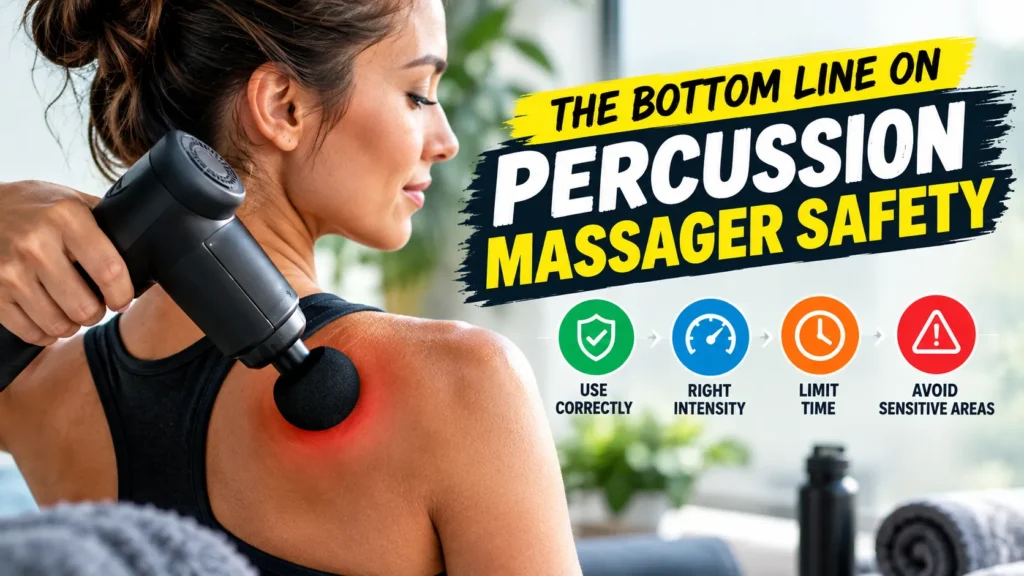
Percussion massagers can be a practical comfort tool for many healthy adults when used on suitable muscle tissue with controlled pressure. Safety improves when you start gently, avoid bones and sensitive areas, keep sessions short, and stop when the body gives you a warning.
The more important question is not only “Are percussion massagers safe?” but “Is this device appropriate for this body area and my current situation?” If you have a relevant medical condition, recent injury or surgery, an implanted device, unexplained symptoms, or significant pain, personalized professional guidance is the safer route.
Frequently Asked Questions
Are percussion massagers safe for everyday use?
They may be reasonable for some healthy adults when used gently on appropriate muscle areas. Follow the device instructions and avoid prolonged or painful use.
Can I use a percussion massager on my spine?
Direct percussion over the spine is generally best avoided. If you want to work nearby, stay on appropriate muscle tissue rather than the bony spine.
Can percussion massagers cause bruising?
Strong or prolonged pressure can contribute to bruising, especially in people who bruise easily or take blood-thinning medication. Ask a healthcare professional if that applies to you.
Is it safe to use a massage gun on the neck?
Use particular caution around the neck and avoid direct percussion over bony or sensitive structures. If you are unsure about the area, choose another muscle group or ask a professional.
Can I use a percussion massager if I take blood thinners?
Do not assume it is appropriate. Because blood-thinning medication can increase bruising concerns with massage, discuss percussion use with your healthcare professional first.
Should a percussion massager hurt to work?
No. Strong pain is not a useful safety target. Reduce intensity, move away from the area, or stop if the sensation becomes painful or unusual.
When should I stop using a percussion massager?
Stop for sharp or severe pain, new numbness or weakness, significant swelling or bruising, or worsening symptoms. Seek urgent help for serious symptoms such as chest pain, trouble breathing, or loss of bladder or bowel control.
Final Thoughts
Percussion massage can be part of a gentle personal-care routine when the device is used on suitable muscle tissue and according to its instructions. Avoid risky areas and excessive pressure, and do not use the device to push through unexplained or worsening symptoms.
If symptoms are severe, unusual, persistent, or getting worse, skip self-massage and seek guidance from a licensed healthcare professional.
Author
-

I’m Alex Turner, a massage product reviewer and wellness writer at RemedyTip. I specialize in researching, evaluating, and comparing massage and recovery products to help readers make informed purchasing decisions. My focus is on practical, evidence-informed product guidance covering muscle recovery, relaxation, everyday comfort, and wellness.
I take a research-driven approach to every product I review. I examine product specifications, features, materials, performance claims, user feedback, durability, comfort, ease of use, and overall value. When appropriate, I also consult trusted industry and health-related sources to verify important information and provide readers with a more complete and balanced view.
I cover a wide range of products, including massage guns, handheld massagers, neck and shoulder massagers, foot massagers, massage chairs, foam rollers, and other recovery tools. Rather than focusing only on marketing claims, I look at how products compare in real-world use and who they are actually suitable for. I also consider different budgets, use cases, and user needs when making recommendations.
At RemedyTip, I’m committed to accuracy, transparency, and unbiased product information. I clearly distinguish between manufacturer claims, available evidence, and my own product analysis so readers can understand the basis of each recommendation. I continuously research new products, technologies, and developments in the massage and recovery space to keep my content current and useful.
My goal is simple: to provide trustworthy, easy-to-understand information that helps readers choose massage and recovery products with greater confidence.