
By Alex Turner | Wellness Writer
Quick Answer: Massage oil can support muscle relaxation and skin comfort when used consistently as part of a routine. Science backs mild benefits for circulation and stress relief, but it won’t heal injuries, cure pain conditions, or replace professional treatment. Realistic expectations + safe technique = the best results.
What You’ll Learn
Whether massage oil delivers real benefits, which claims are marketing hype, how to use it safely, and when DIY massage isn’t enough.
Myth Debunking
Safe Technique
When to Seek Help
Health Disclaimer
This article is for general educational information only. It does not diagnose, treat, cure, or prevent any condition. It does not replace advice from a licensed healthcare professional or massage therapist. Readers should seek professional help for pain, injury, skin reactions, or symptoms that worsen or persist.
Myth vs. Fact: What Science Actually Says About Massage Oil
Massage oil is surrounded by big claims — that it heals muscle damage, eliminates pain, rejuvenates aging skin, or improves athletic performance. The reality is more nuanced. Some benefits are backed by modest research; others are pure marketing. Below, we separate evidence from hype.
Swipe left/right to see the full table →
| The Claim | What the Science Shows | Verdict |
|---|---|---|
| Heals muscle tears or injuries | No clinical evidence for tissue repair. Massage may ease tension around an injury, but cannot mend torn fibers. | Myth |
| Reduces muscle tension & soreness | Moderate evidence. Massage + oil can ease muscle tightness and post-exercise soreness when applied with proper pressure. | Real Benefit |
| Improves blood circulation | Modest evidence. Massage pressure temporarily increases local blood flow, which may support recovery when repeated regularly. | Partial Benefit |
| Cures acne or eliminates scars | No evidence. Oil can clog pores and worsen acne on sensitive skin; scars require professional dermatology. | Myth |
| Moisturizes & softens skin | Well-supported. Oil-based products trap moisture and can improve skin texture when applied to damp skin on compatible skin types. | Real Benefit |
| Reduces stress & promotes relaxation | Modest evidence. Tactile experience of massage supports relaxation; scent (if aromatherapy oil) may enhance mood via placebo and habit. | Partial Benefit |
Breaking Down Common Myths in Detail
Myth 1: Massage Oil Can Repair Muscle Damage
This is one of the most persistent claims. Many people believe that applying oil and massaging sore muscles will somehow rebuild torn fibers or accelerate healing after injury. The truth: massage cannot fuse torn tissue. What it *can* do is reduce the tension and inflammation *around* a damaged muscle, which may ease pain temporarily. If you have a genuine muscle tear or strain, a doctor or physical therapist should assess it first. Massage is a supplement to recovery, not a cure.
Myth 2: Oil Treatments Can Eliminate Scars
No amount of massage oil will fade a scar. Scars are healed wounds — the skin has already reformed. What massage *might* do is improve circulation to the scar area, which could make the skin around it look slightly healthier over months. But the scar itself won’t disappear. If you want to address scars, talk to a dermatologist about professional options like laser therapy or microneedling.
Myth 3: Massage Oil Works for Everyone’s Skin
Heavy oils can clog pores and trigger breakouts on acne-prone or combination skin. Oily skin types may find even light oils make things worse. The benefit here is real — but only for dry or normal skin. If you’re prone to acne, test a small amount on your inner arm first, or stick with lighter formulations (like jojoba oil, which is closer to skin’s natural sebum).
Myth 4: One Application Produces Lasting Results
Massage oil is not a quick fix. Benefits to muscle relaxation, skin softness, and stress relief build with consistent use — typically 2-3 times per week, over several weeks, before you notice a real difference. A one-off massage might feel nice, but won’t change much.
What the Evidence Actually Supports
When you cut through the marketing, massage oil does deliver modest, real benefits — but they require realistic expectations and consistent practice.
Evidence-Based Benefit Strength (General Practical Guide)
Muscle Tension Relief
Strong support from sports medicine studies.
Skin Moisturizing
Well-established dermatology benefit.
Circulation Support
Temporary boost; requires consistent application.
Stress Relief & Relaxation
Supported by ritual and touch; variable results.
The real take-away: Massage oil works best for comfort and relaxation as part of a regular routine, not as a standalone cure for pain or injury. It’s a maintenance tool, not emergency medicine.
Safe Use: How to Apply Massage Oil Properly
The way you use massage oil matters. Sloppy technique — too much pressure, wrong oil type, or applying to broken skin — can cause irritation or make existing problems worse.
Swipe left/right to see the full table →
| Safe Practice | Risky Practice |
|---|---|
| Warm oil slightly before use (30 sec in hands) | Apply cold oil directly or heat in microwave (burns skin) |
| Use gentle, circular pressure on muscle areas | Use hard pressure on joints, nerves, or bruised areas |
| Test on inner arm first if new oil or sensitive skin | Apply directly to acne, cuts, or open skin |
| Apply 2–3 times per week for best results | Expect overnight results from one use |
| Use light oils for face (jojoba, rosehip) | Apply heavy body oils to sensitive facial skin |
| Wash hands after use | Touch face or eyes immediately after oiling hands |
💡 Tip: Add a few drops of essential oil (lavender, eucalyptus) if you want aromatherapy benefit, but only use oils labeled “safe for skin.” Never ingest massage oil or apply it to children without pediatrician approval.
Massage Oil vs. Professional Massage: When DIY Isn’t Enough
Swipe left/right to see the full table →
| DIY Massage at Home | When to Seek Professional Help |
|---|---|
| General muscle tension, stiffness, or soreness | Pain after injury, suspected strain, or ongoing symptoms |
| Routine maintenance & relaxation | Chronic pain, numbness, weakness, or mobility loss |
| Dry skin care or comfort routine | Skin changes, rash, swelling, or severe irritation |
| Post-workout muscle care | Pain during or after massage, or symptoms worsening |
Choosing the Right Oil for Your Needs
Swipe left/right to see the full table →
| Oil Type | Best For | Avoid If |
|---|---|---|
| Coconut oil | Dry skin, muscle massage, body care | Acne-prone or very oily skin |
| Jojoba oil | Face care, sensitive skin, lightweight feel | Severe nut allergies (though unlikely) |
| Almond oil | General body massage, skin softening | Nut allergies, very sensitive skin |
| Arnica oil | Bruising, post-workout muscle support | Open cuts, broken skin, pregnancy |
| Eucalyptus oil (diluted) | Muscle comfort, aromatherapy boost | Applying neat (always dilute), children, pets |
⚠️ Warning: Never use essential oils undiluted on skin, and keep massage oils away from eyes, ears, and broken skin. If you have sensitive skin, allergies, or are pregnant/nursing, test any new oil on a small area first or consult a healthcare provider.
When to Stop Using Massage Oil and Seek Help
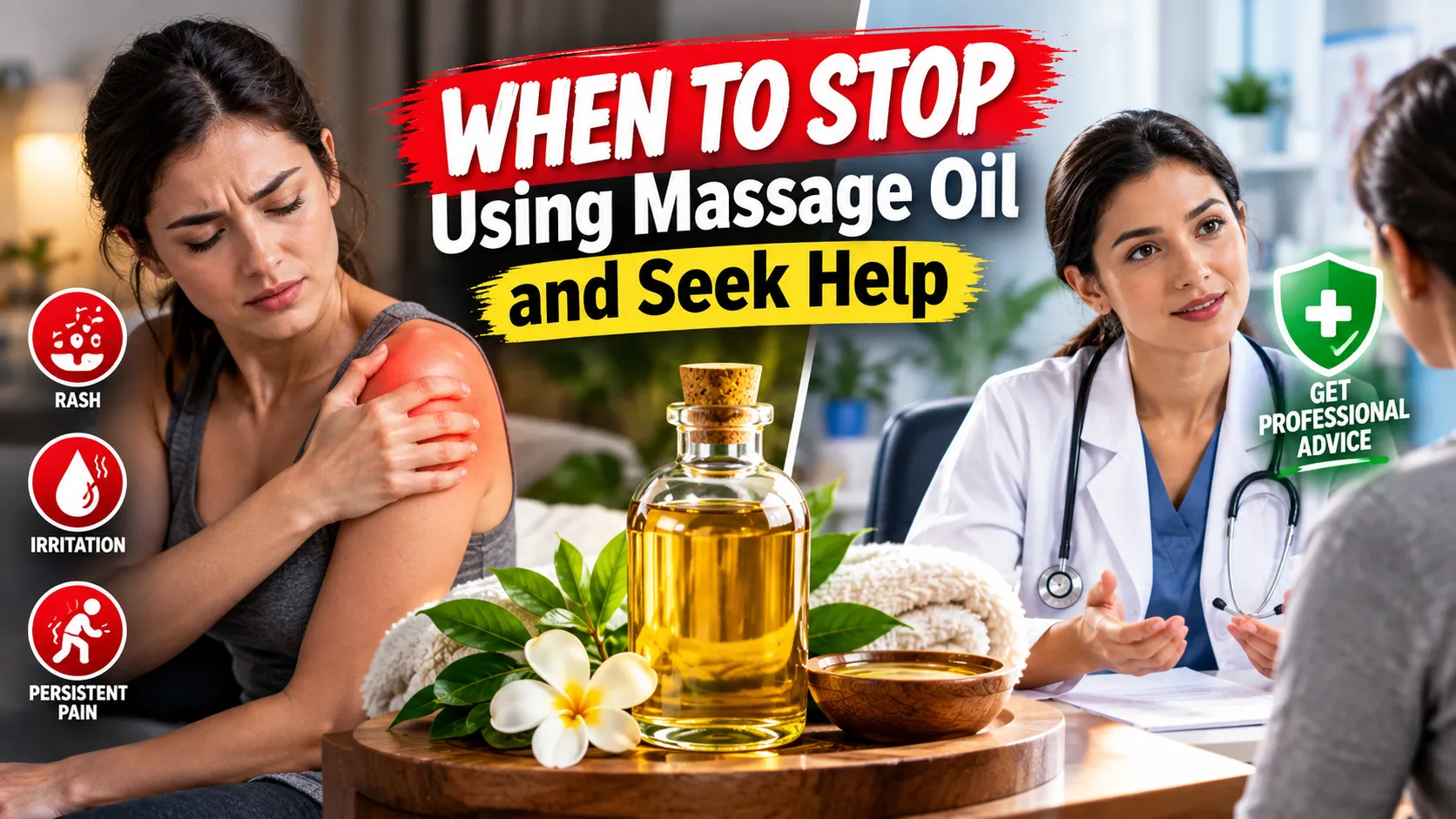
Massage oil is a comfort and maintenance tool — not a treatment for pain, injury, or medical conditions. Stop DIY massage and contact a healthcare provider if you experience:
Red Flags — When to Seek Professional Care
🔴 Pain & Injury
Sharp, severe, or worsening pain; numbness; weakness; inability to move; swelling; bruising that spreads
🔴 Skin Reactions
Rash, hives, itching, burning, redness, swelling, or blistering after oil application
🔴 Symptoms Not Improving
Stiffness, soreness, or discomfort lasting more than 2–3 weeks despite regular use
🔴 General Health Changes
Fever, fatigue, chest pain, or any new or worsening health concern
Common Questions About Massage Oil
How often should I use massage oil for best results?
Can I use massage oil on my face?
Is massage oil safe during pregnancy?
Can I use massage oil for arthritis or joint pain?
Is there a best time of day to use massage oil?
Does the type of massage oil really matter?
Affiliate Disclosure: This article may contain affiliate links to products mentioned. If you purchase through these links, we may earn a small commission at no extra cost to you. We only recommend products relevant to this topic and do not replace professional medical advice.
Final Thoughts
Massage oil works — but realistically. It can ease muscle tension, soften skin, support relaxation, and improve circulation when used consistently. It will not cure pain, heal injuries, erase scars, or replace professional care.
The key is managing expectations and using it as a maintenance routine, not a quick fix. If pain, injury, or skin issues persist or worsen despite regular massage oil use, or if you develop any new symptoms, contact a healthcare provider. For acute pain, injury, or severe symptoms, seek professional help immediately rather than relying on DIY massage alone.
Author
-

I’m Alex Turner, a massage product reviewer and wellness writer at RemedyTip. I specialize in researching, evaluating, and comparing massage and recovery products to help readers make informed purchasing decisions. My focus is on practical, evidence-informed product guidance covering muscle recovery, relaxation, everyday comfort, and wellness.
I take a research-driven approach to every product I review. I examine product specifications, features, materials, performance claims, user feedback, durability, comfort, ease of use, and overall value. When appropriate, I also consult trusted industry and health-related sources to verify important information and provide readers with a more complete and balanced view.
I cover a wide range of products, including massage guns, handheld massagers, neck and shoulder massagers, foot massagers, massage chairs, foam rollers, and other recovery tools. Rather than focusing only on marketing claims, I look at how products compare in real-world use and who they are actually suitable for. I also consider different budgets, use cases, and user needs when making recommendations.
At RemedyTip, I’m committed to accuracy, transparency, and unbiased product information. I clearly distinguish between manufacturer claims, available evidence, and my own product analysis so readers can understand the basis of each recommendation. I continuously research new products, technologies, and developments in the massage and recovery space to keep my content current and useful.
My goal is simple: to provide trustworthy, easy-to-understand information that helps readers choose massage and recovery products with greater confidence.

