Written by Alex Turner
A lot of people already have massage oil at home and wonder if it can double as a candle or diffuser scent. It seems like an easy way to reuse a bottle, but the oils are made for very different jobs. This guide walks through what happens when massage oil meets heat or an ultrasonic diffuser, who should be more careful, and what to use instead.
Home fragrance safety Diffuser use Candle care Safer alternatives
What Massage Oil Is Actually Made For
Massage oil is designed to glide on skin, reduce friction, and stay liquid for a long, slow massage. It’s usually a blend of carrier oils like sweet almond, jojoba, grapeseed, or fractionated coconut oil, sometimes with a small amount of essential oil added for scent. None of that is built with heat, wicks, or ultrasonic mist in mind.
Putting massage oil in candles or diffusers asks the oil to do a job it was never formulated for. Candle wax needs a fragrance oil designed to bind with wax and burn evenly through a wick. Diffusers need water-dispersible oils that break into a fine mist. Massage oil is thick, greasy, and largely oil-based, which is exactly the opposite of what both devices need.
Candles
Candle wicks are calibrated to draw melted wax, not raw oil. Adding massage oil in candles can pool at the base, smoke, or cause the flame to flare unevenly.
Diffusers
Ultrasonic diffusers vibrate water into a fine mist. Massage oil in diffusers doesn’t disperse the same way water-soluble oils do, which can leave residue in the tank.
Who Should Be Extra Cautious

Some households have a higher chance of a bad reaction if massage oil in candles or diffusers is tried anyway. This table is a general guide, not a personal medical assessment.
Swipe left/right to see the full table →
| Group | Why extra caution helps |
|---|---|
| People with asthma or sensitive airways | Smoke or heavy oil vapor may trigger coughing or tightness |
| Households with young children | Kids breathe in more air relative to body size, raising exposure |
| People with pets, especially cats | Some carrier and essential oil blends are poorly tolerated by animals |
| Anyone with known skin or fragrance sensitivity | Heated oil residue on surfaces can trigger contact reactions |
A Simple Safety Decision Path
Before trying massage oil in candles or diffusers, this quick path can help decide whether to skip it.
1
Is the label marked “for candles” or “for diffusers”? If not, it’s not designed for this use.
2
Is anyone in the home asthmatic, very young, pregnant, or sensitive to fragrance? Choose a milder, purpose-made option instead.
3
Is the room well ventilated? Poor airflow raises the impact of any smoke or heavy scent.
4
If any answer raises a concern, skip using massage oil in candles or diffusers and reach for a product made for that purpose.
This is a general practical guide, not a guarantee of safety in every setup.
Massage Oil vs Essential Oil vs Fragrance Oil
Swipe left/right to see the full table →
| Oil type | Built for | Diffuser/candle fit |
|---|---|---|
| Massage oil | Gliding on skin | Poor — thick, not water-soluble |
| Pure essential oil | Concentrated scent | Good in diffusers made for it, in small drops |
| Candle fragrance oil | Binding with wax, burning through a wick | Good — made for this exact use |
Red Flags to Watch For
If massage oil in candles or diffusers has already been tried, these signs suggest it’s time to stop and air out the room.
☑ Visible smoke, soot, or a scorched smell from a candle
☑ Oily film building up inside a diffuser tank
☑ Coughing, throat tightness, or headache soon after use
☑ Skin redness or itching on hands that handled the warm oil
☑ A pet acting unusually lethargic, drooling, or avoiding the room
Common Mistakes vs Better Choices
Swipe left/right to see the full table →
| Common mistake | Better choice |
|---|---|
| Pouring massage oil straight into melted candle wax | Use a fragrance oil rated for the wax type |
| Adding massage oil to a water-based diffuser tank | Use a few drops of pure essential oil instead |
| Running a scented setup in a closed, small room | Keep windows cracked or a door open |
| Assuming any “natural” oil is diffuser-safe | Check the label for diffuser or candle-safe wording |
Safer Alternatives for Candles and Diffusers
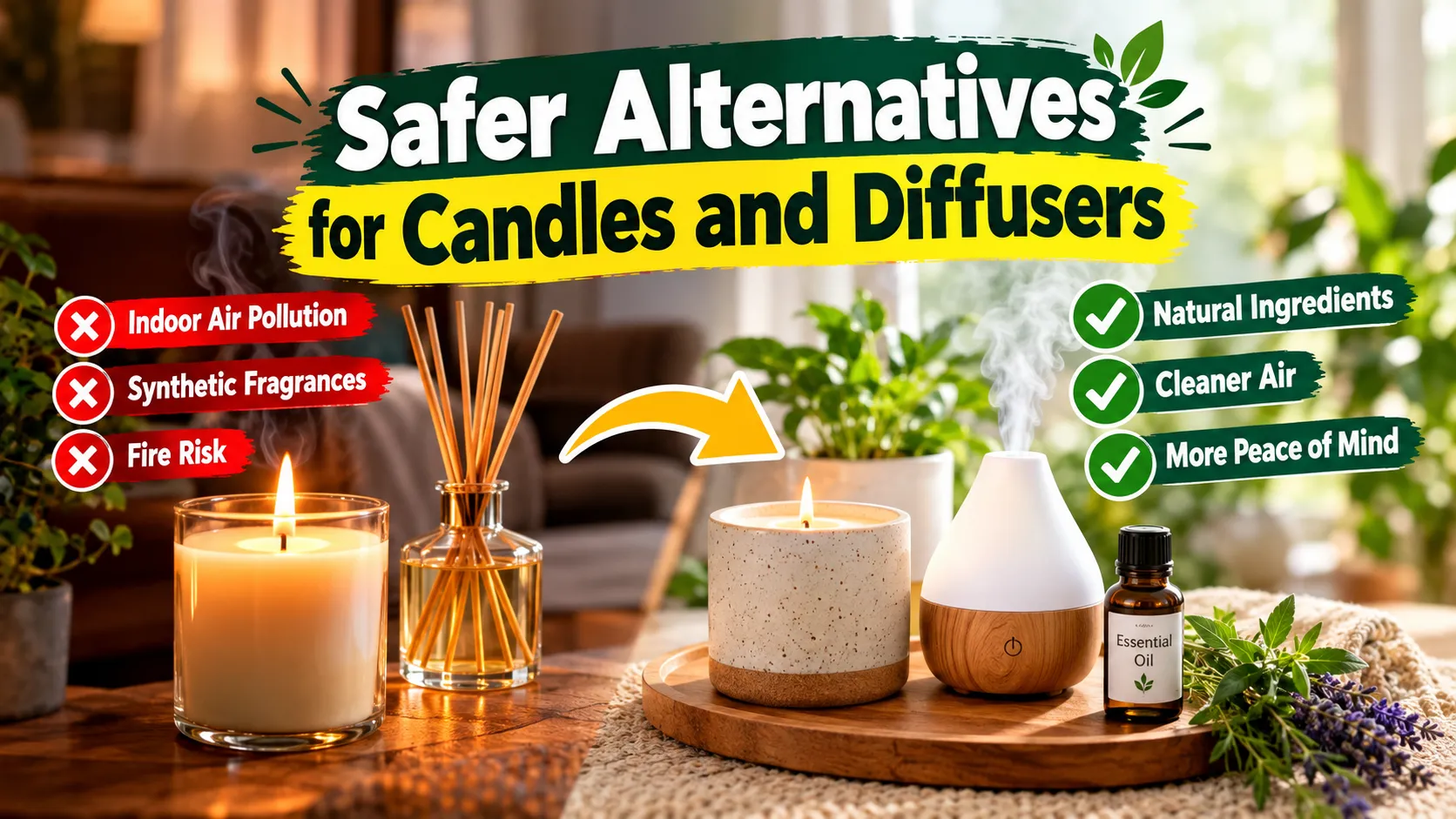
Instead of massage oil in candles or diffusers, these purpose-built options are made for heat and mist.
Swipe left/right to see the full table →
| Alternative | Best for |
|---|---|
| Candle-grade fragrance oil | DIY or refillable soy and wax candles |
| Pure essential oil, a few drops | Ultrasonic diffusers built for water and oil |
| Reed diffuser base oil | Flameless, low-maintenance scenting |
| Wax melt designed for warmers | Flameless electric or tealight warmers |
Reading a Label Before You Buy
Swipe left/right to see the full table →
| Do | Don’t |
|---|---|
| Check for “diffuser-safe” or “candle-safe” wording | Assume massage oil qualifies just because it’s scented |
| Look for a flash point listed on fragrance oils | Guess at how an untested oil will burn |
| Test a new scent in a ventilated room first | Run it for hours in a closed bedroom right away |
General Risk Guide
Purpose-made candle or diffuser oil: Low
Pure essential oil, small amount, per label: Low-Medium
Massage oil in a diffuser: Medium
Massage oil poured into a lit candle: Medium-High
This is a general practical guide based on how each oil type is designed to behave, not a lab-tested rating.
When to Contact a Professional
Ultrasonic Essential Oil Diffuser
Made for water and a few drops of essential oil, which can help make a calming home fragrance routine easier without relying on massage oil in candles or diffusers.
Candle-Safe Fragrance Oil Set
Formulated to bind with wax and burn evenly, so a DIY candle doesn’t need massage oil at all to smell good.
Frequently Asked Questions
Can you put massage oil in a diffuser?
It’s not recommended. Massage oil isn’t water-soluble, so it can leave an oily residue inside an ultrasonic diffuser instead of dispersing as a mist.
Is it safe to add massage oil to a candle?
Generally no. Massage oil can pool in melted wax, smoke, or flare up unevenly since it’s not made to burn through a wick like a real fragrance oil.
What’s the difference between massage oil and essential oil for diffusers?
Massage oil is a thick carrier oil blend for skin, while pure essential oil is concentrated and designed to disperse in small amounts through a diffuser.
Can massage oil be used in a wax warmer?
It’s not the best fit. Wax warmers are built for wax melts or fragrance oils rated for gentle heat, not thick massage oil, which may smoke or smell off when warmed.
Will massage oil clog my diffuser?
It can leave a sticky film on the ultrasonic disc over time, which may affect how well the diffuser mists going forward.
What should I use instead of massage oil in candles or diffusers?
Pure essential oil in small drops works well for diffusers, and a candle-grade fragrance oil is the safer pick for homemade candles.
Can massage oil in candles or diffusers cause skin or breathing irritation?
It’s possible, especially for people with sensitive airways or skin. Watch for coughing, headache, or redness and ventilate the room if this happens.
Massage oil in candles or diffusers might seem like a convenient shortcut, but the two products are built for very different purposes. Sticking with a candle-grade fragrance oil or a small amount of pure essential oil keeps a home fragrance routine simpler and lowers the chance of smoke, residue, or irritation. If any reaction feels severe, worsening, unusual, or doesn’t improve after airing out the space, check in with a healthcare professional.
Author
-

I’m Alex Turner, a massage product reviewer and wellness writer at RemedyTip. I specialize in researching, evaluating, and comparing massage and recovery products to help readers make informed purchasing decisions. My focus is on practical, evidence-informed product guidance covering muscle recovery, relaxation, everyday comfort, and wellness.
I take a research-driven approach to every product I review. I examine product specifications, features, materials, performance claims, user feedback, durability, comfort, ease of use, and overall value. When appropriate, I also consult trusted industry and health-related sources to verify important information and provide readers with a more complete and balanced view.
I cover a wide range of products, including massage guns, handheld massagers, neck and shoulder massagers, foot massagers, massage chairs, foam rollers, and other recovery tools. Rather than focusing only on marketing claims, I look at how products compare in real-world use and who they are actually suitable for. I also consider different budgets, use cases, and user needs when making recommendations.
At RemedyTip, I’m committed to accuracy, transparency, and unbiased product information. I clearly distinguish between manufacturer claims, available evidence, and my own product analysis so readers can understand the basis of each recommendation. I continuously research new products, technologies, and developments in the massage and recovery space to keep my content current and useful.
My goal is simple: to provide trustworthy, easy-to-understand information that helps readers choose massage and recovery products with greater confidence.