
By Michael Hayes
The question “Is massage oil safe during pregnancy” sounds simple, but “massage oil” can mean very different products. Plain carrier oils, fragranced body oils, and essential-oil blends do not have the same ingredients or the same level of uncertainty. The most practical approach is to identify the product, keep use gentle, avoid broken skin, and ask your prenatal care team about individual risks.
What makes one massage oil different from another?
Before deciding whether a product fits your routine, read the full ingredient list. A plain carrier oil is mainly used to reduce friction between hands and skin. A scented body oil may contain fragrance and several botanical extracts. An aromatherapy product can contain concentrated essential oils, which need more caution because pregnancy safety evidence is limited for many oils and blends.
For example, ACOG notes that massage can be part of pregnancy self-care, while positioning and individual circumstances still matter. Guidance on essential oils is more complicated because concentrated oils are not the same as a simple massage lubricant.
Massage oil types at a glance
Swipe left/right to see the full table →
| Type | Main purpose | Extra concern | Practical rule |
|---|---|---|---|
| Plain carrier oil | Reduces friction | Allergy or irritation | Check ingredients |
| Fragranced body oil | Slip and scent | More ingredients | Stop if irritated |
| Essential-oil blend | Aromatherapy | Concentrated actives | Ask a professional |
Ingredient simplicity can make a product easier to evaluate, but “natural” does not automatically mean suitable for every person. Concentrated essential oils can irritate skin, and pregnancy-specific safety data for many exposures remain limited.
A quick visual check can help separate simple products from blends that deserve more individual guidance.
The key interpretation is simple: do not judge the bottle by the word “massage.” The ingredient list and intended use matter more.
Is massage oil safe during pregnancy when it contains essential oils?
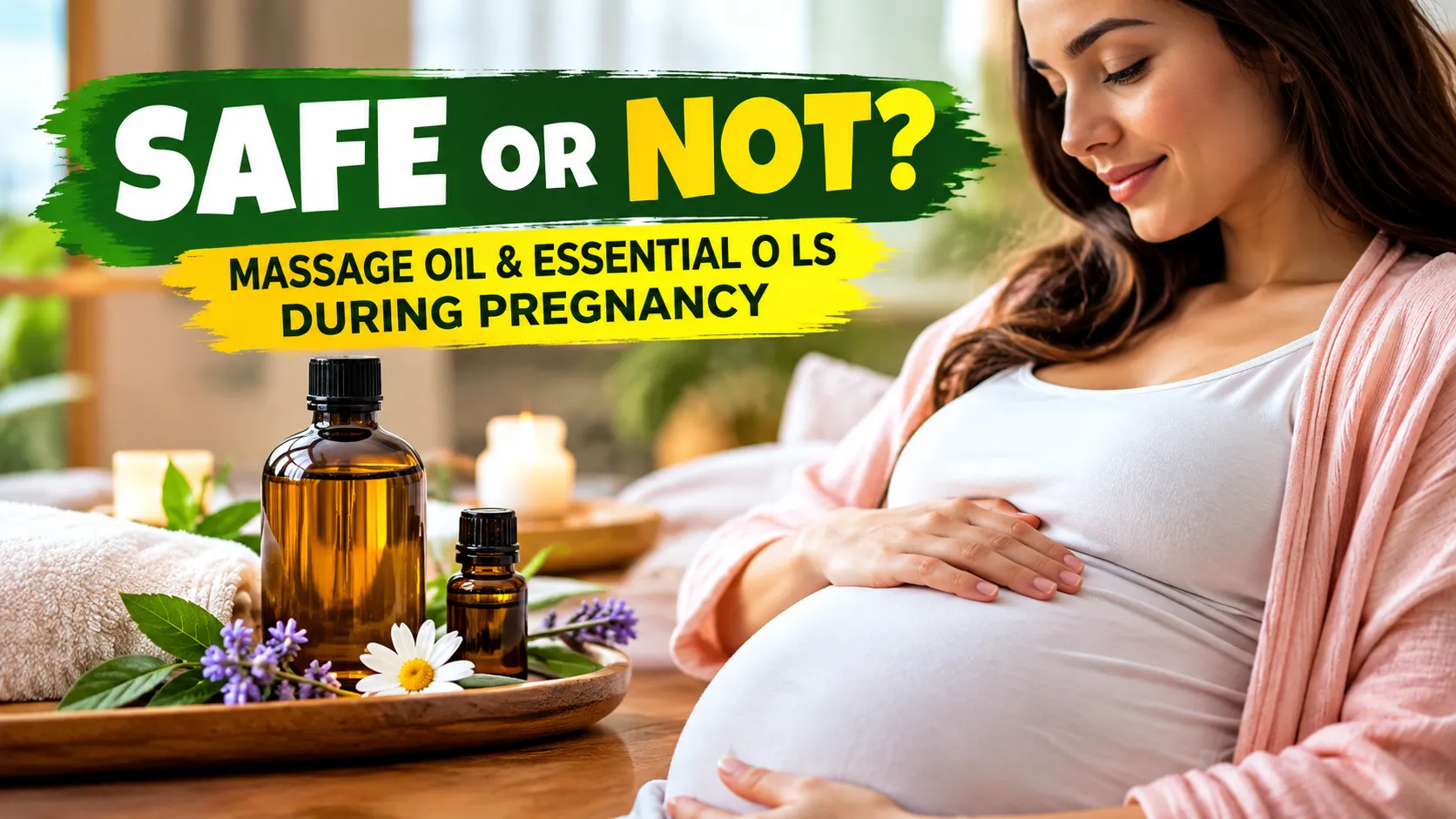
This is where a broad yes-or-no answer becomes less useful. Essential oils are concentrated plant extracts, and reliable pregnancy safety information is not equally available for every oil, concentration, or method of exposure. UKTIS notes that evidence is limited and that higher-concentration topical exposure, such as massage, has not been systematically studied enough to rule out all risks.
Avoid treating a homemade blend as automatically gentle because it is plant-based. Never swallow essential oils, and do not apply undiluted essential oil directly to the skin. Some NHS maternity guidance also recommends professional advice for aromatherapy during pregnancy rather than self-selecting concentrated oils.
Common problems and possible reasons
Swipe left/right to see the full table →
| Problem | Possible reason | Beginner check | Safer next step |
|---|---|---|---|
| Stinging | Skin irritation | Review ingredients | Stop using it |
| Rash | Sensitivity or allergy | Check previous reactions | Seek advice if persistent |
| Strong nausea | Scent sensitivity | Notice fragrance level | Choose fragrance-free |
| Pain with massage | Pressure or technique | Reduce pressure | Stop if painful |
A more experienced reader should also consider the full context: a provider may give different advice when there are pregnancy complications, circulation concerns, skin conditions, allergies, or other individual factors. That is why a single internet list of “safe oils” cannot replace personalized guidance.
Use this safety path before trying a new blend.
When the product or situation is uncertain, pausing to ask is a better decision than assuming a popular oil is suitable for everyone.
How to choose a simpler massage product
If you are asking “Is massage oil safe during pregnancy” because you are shopping for a product, start with the purpose. If you only need slip for gentle massage, a product with a short, understandable ingredient list may be easier to assess than a heavily fragranced blend. Avoid choosing by marketing words such as “detox,” “labor-inducing,” or “therapeutic.”
Routine fit guide
Swipe left/right to see the full table →
| Your goal | Better fit | Check first | Avoid assuming |
|---|---|---|---|
| Simple lubrication | Plain product | Allergies | Natural means risk-free |
| Sensitive to scent | Fragrance-free | Full label | More scent is better |
| Aromatherapy | Provider-guided choice | Oil and dilution | One list fits all |
For sensitive skin, a patch test may help reveal a local reaction before wider use, but it cannot prove that a product is appropriate for every pregnancy. Stop if irritation develops, and seek medical advice for a severe, spreading, or persistent reaction.
Here is a practical fit dashboard rather than a scientific rating.
Usually easier to review. Still check allergies.
May be less comfortable for scent-sensitive users.
Needs ingredient-specific caution and professional guidance when uncertain.
Skip massage there and address the skin problem first.
The easiest product to assess is not automatically the best product for everyone, but fewer unknown ingredients can make a safety conversation clearer.
A gentle massage routine during pregnancy
If your prenatal care provider has not advised against massage and the product is suitable for you, a gentle routine may be more comfortable than deep pressure. Professional prenatal massage guidance commonly emphasizes comfort, appropriate positioning, and lighter techniques rather than aggressive deep-tissue work.
1
2
3
4
5
The routine priority below is a practical guide, not research data.
Ingredient check
Comfortable position
Gentle pressure
Added fragrance
Safety and comfort should come before making the massage feel stronger or more luxurious.
Safe routine versus risky routine
Swipe left/right to see the full table →
| Area | Safer habit | Riskier habit | Decision rule |
|---|---|---|---|
| Pressure | Gentle and comfortable | Painful deep pressure | Do not push through pain |
| Ingredients | Known and reviewed | Unknown homemade mix | Ask if uncertain |
| Skin | Healthy intact skin | Broken or irritated skin | Skip affected area |
| Symptoms | Pause and assess | Continue despite warning signs | Seek advice when needed |
What professionals check that beginners often miss
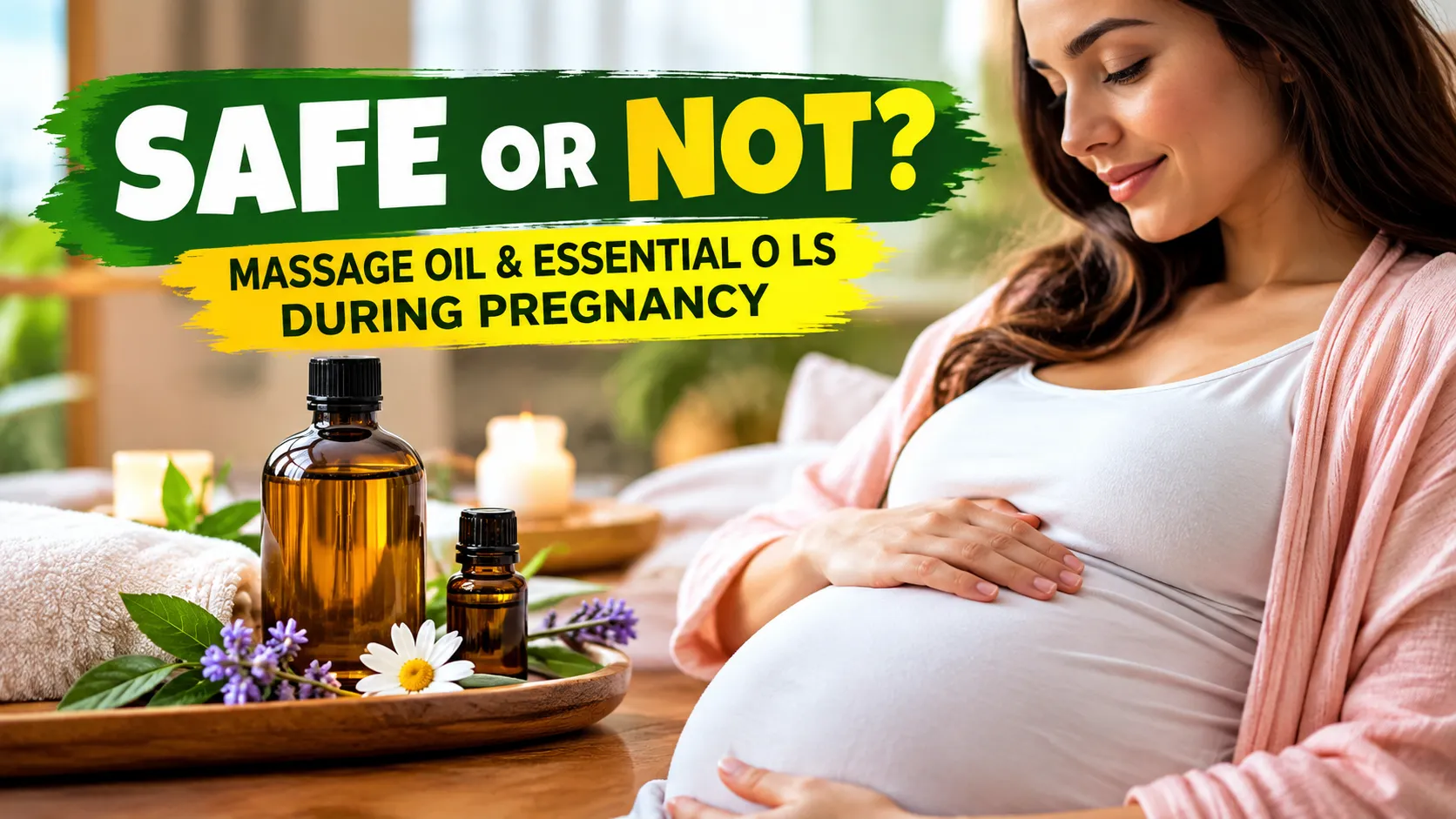
A professional does more than choose a pleasant scent. They may ask about your stage of pregnancy, symptoms, allergies, skin condition, pregnancy history, and any complications or provider instructions. A trained prenatal massage professional also adjusts positioning and pressure for comfort and safety.
That context matters when deciding whether massage oil is safe during pregnancy. A product can look harmless in isolation while the bigger question is whether massage, the ingredients, or the person’s current circumstances call for extra caution.
Use this checklist as a prompt for a conversation, not as a diagnosis tool.
Stop the routine and contact appropriate care.
Seek prompt guidance from your pregnancy care team.
Do not try to massage through it.
Stop exposure and seek medical advice.
These signs are not reasons to experiment with stronger pressure or more oil. They are reasons to stop and get individualized guidance.
Mistake versus better choice
Swipe left/right to see the full table →
| Common mistake | Why it matters | Better choice | When to ask |
|---|---|---|---|
| Trusting “natural” claims | Ingredients still matter | Read the label | Unknown ingredients |
| Using undiluted essential oils | Concentrated exposure | Get professional guidance | Before using a blend |
| Pushing through pain | Pain can signal a problem | Stop and reassess | Persistent symptoms |
| Ignoring provider restrictions | Personal risk can differ | Follow individual advice | Any conflict with advice |
When to contact a professional
The safest answer to “Is massage oil safe during pregnancy” is therefore product-specific and person-specific. Plain products used only to reduce friction may be easier to discuss, while concentrated aromatherapy blends deserve closer attention to the exact oils and their intended use.
The final decision path below summarizes the practical approach.
This approach avoids both extremes: assuming every oil is dangerous and assuming every natural product is automatically safe.
Frequently asked questions
Is massage oil safe during pregnancy in the first trimester?
It depends on the product and your individual pregnancy circumstances. Because guidance is more cautious for concentrated essential oils, ask your prenatal care provider before using an aromatherapy massage blend.
Can I use essential oils in pregnancy massage?
Do not assume every essential oil or blend is suitable. Use only with appropriate professional guidance, never apply concentrated oils directly to skin, and do not ingest them.
Is fragrance-free massage oil a better choice?
Fragrance-free products may be easier to assess when scent sensitivity or irritation is a concern. You should still read the complete ingredient list and consider allergies.
Should I patch test a new massage oil?
A patch test may help identify a local skin reaction before wider use, but it does not prove that a product is appropriate for every pregnancy. Stop using the product if irritation occurs.
Can massage be too deep during pregnancy?
Painful or aggressive pressure is not a good goal. Prenatal massage should be adapted for comfort, and you should stop if massage causes pain or unusual symptoms.
When should I ask my pregnancy care provider before using massage oil?
Ask before using a new essential-oil blend or when you have pregnancy complications, significant medical concerns, allergies, skin problems, or provider-imposed activity restrictions.
What should I do if massage oil causes a reaction?
Stop using it and gently remove the product according to its label. Seek medical advice for severe, spreading, painful, unusual, or persistent reactions.
Final thoughts
Massage oil may fit a pregnancy self-care routine, but the safest choice starts with the exact ingredients, gentle use, and your own pregnancy circumstances. Keep concentrated essential-oil blends separate from simple carrier oils when judging risk, and ask your prenatal care professional when uncertain. Seek professional help for severe, worsening, unusual, persistent, or concerning symptoms.
Author
-

I’m Alex Turner, a massage product reviewer and wellness writer at RemedyTip. I specialize in researching, evaluating, and comparing massage and recovery products to help readers make informed purchasing decisions. My focus is on practical, evidence-informed product guidance covering muscle recovery, relaxation, everyday comfort, and wellness.
I take a research-driven approach to every product I review. I examine product specifications, features, materials, performance claims, user feedback, durability, comfort, ease of use, and overall value. When appropriate, I also consult trusted industry and health-related sources to verify important information and provide readers with a more complete and balanced view.
I cover a wide range of products, including massage guns, handheld massagers, neck and shoulder massagers, foot massagers, massage chairs, foam rollers, and other recovery tools. Rather than focusing only on marketing claims, I look at how products compare in real-world use and who they are actually suitable for. I also consider different budgets, use cases, and user needs when making recommendations.
At RemedyTip, I’m committed to accuracy, transparency, and unbiased product information. I clearly distinguish between manufacturer claims, available evidence, and my own product analysis so readers can understand the basis of each recommendation. I continuously research new products, technologies, and developments in the massage and recovery space to keep my content current and useful.
My goal is simple: to provide trustworthy, easy-to-understand information that helps readers choose massage and recovery products with greater confidence.

