
Written by Alex Turner | Health & Personal Care Content Author
Quick Answer: Yes, massage oil can expire or go bad.
Massage oils can become rancid, develop an unpleasant smell, change texture, or lose quality over time. Check the expiration date when available, inspect the oil before use, and discard it if it smells sour, looks unusual, or causes irritation.
Does Massage Oil Expire or Go Bad?
Massage oil may seem like a product that lasts forever, especially when it is stored in a cabinet and used only occasionally. However, oils are not permanent. Natural and plant-based oils can slowly oxidize when exposed to air, heat, light, and moisture.
The important question is not only whether the bottle has passed a printed date. You should also consider how the oil looks, smells, feels, and has been stored. A bottle that appears normal may still be past its best quality, while an older bottle stored carefully may remain usable for a while beyond its suggested date.
Important Safety Information: This article is for general educational information only. It does not diagnose, treat, cure, or prevent any condition. It does not replace advice from a licensed healthcare professional. Readers should seek professional help for severe, worsening, unusual, or persistent symptoms.
Why Massage Oil Goes Bad Over Time
Massage oil is usually made from one or more carrier oils, essential oils, fragrances, or other cosmetic ingredients. Some formulas also contain vitamin E or preservatives designed to help maintain freshness. Each ingredient can affect how long the product remains stable.
The main reason oil deteriorates is oxidation. Oxygen gradually reacts with fats and oils, especially when the bottle is opened repeatedly. Heat and sunlight can speed up this process. Moisture, dirty hands, and repeated contact with skin can also affect product hygiene.
Natural oils may have different shelf lives depending on their composition. Oils rich in certain unsaturated fats can oxidize faster than more stable oils. This does not mean one type is always unsafe after a specific period, but it does mean storage and inspection matter.
Note: A printed expiration date is useful, but it is not the only factor to consider. Opening date, storage conditions, ingredient type, and visible changes can all affect whether a massage oil is still suitable for use.
How Long Does Massage Oil Usually Last?

There is no single expiration period that applies to every massage oil. The manufacturer’s instructions should be your first reference. Some products list a specific expiration date, while others use a period-after-opening symbol or recommend use within a certain number of months after opening.
Unopened massage oil may generally maintain its intended quality longer than an opened bottle. Once opened, exposure to oxygen and contamination becomes more likely. Frequent opening and closing can gradually reduce freshness.
As a practical guide, always check the product label before relying on a general timeline.
Typical Storage and Timing Guide
Swipe left/right to see the full table →
| Product Status | What to Check | Practical Guidance |
|---|---|---|
| Unopened | Expiration date and storage | Follow label guidance |
| Opened recently | Smell, color, texture | Inspect before each use |
| Opened for months | Storage and freshness | Be more cautious |
| Past date or unusual | Any signs of deterioration | Discard if quality is questionable |
These categories are practical decision aids, not guaranteed expiration timelines. Product labels and manufacturer instructions should take priority.
Signs Your Massage Oil Has Gone Bad
The easiest way to determine whether massage oil is still suitable for use is to inspect it before applying it to your skin. Changes in smell are often one of the earliest noticeable signs of oxidation, but other changes matter too.
Freshness Check: Practical Guide
Mild, familiar, or expected scent.
No unexpected cloudiness, particles, or separation.
Strong odor, unusual texture, or color shift.
When uncertain, avoid using the product on skin.
This visual is a practical freshness guide, not a laboratory test. If the product seems significantly different from when it was new, replacing it is usually the simplest option.
1. A Sour, Bitter, or Rancid Smell
Fresh massage oil usually has a mild natural scent or the fragrance intended by the manufacturer. A strong sour, stale, paint-like, or bitter smell may indicate oxidation. If the scent is unpleasant or noticeably different from the original product, avoid using it.
2. Changes in Color
Some oils naturally darken slightly over time, particularly when exposed to light. However, an unexpected or dramatic color change can be a reason for caution. Compare the oil with its original appearance if possible.
3. Unusual Texture or Separation
Changes in thickness, stickiness, cloudiness, or unexpected particles may indicate that the product has deteriorated or become contaminated. Not every separation means a product is spoiled, especially if the label instructs you to shake it. But persistent or unusual changes should not be ignored.
4. Skin Irritation After Use
If a massage oil suddenly causes itching, burning, redness, or discomfort when it previously did not, stop using it. Irritation can have several possible causes, including fragrance sensitivity, an ingredient reaction, or product deterioration. Do not continue testing a questionable product on your skin.
What Causes Massage Oil to Expire Faster?
Storage conditions can significantly affect how quickly an oil loses freshness. Even a high-quality product may deteriorate faster when exposed to unfavorable conditions.
Heat
High temperatures can accelerate oxidation and may affect the texture or fragrance of massage oil. Avoid leaving bottles near radiators, heating vents, sunny windows, or inside hot vehicles.
Light
Direct sunlight and strong artificial light can contribute to degradation. Dark-colored bottles can help protect some oils, but storing the product in a cool, dark place is still helpful.
Air Exposure
Every time a bottle is opened, oxygen enters the container. Leaving the cap open or using a container with a loose lid increases exposure.
Moisture and Contamination
Water droplets, wet hands, or touching the bottle opening can introduce contamination. Massage oil should be handled with clean, dry hands and kept tightly closed.
Poor Storage Habits
Leaving oil in a bathroom with frequent temperature and humidity changes may not be ideal. A dry cabinet away from direct heat and sunlight is often a better storage location.
Storage Conditions and Their Effect
Swipe left/right to see the full table →
| Storage Factor | Potential Effect | Better Practice |
|---|---|---|
| Direct sunlight | May speed oxidation | Store in a dark cabinet |
| High heat | May reduce freshness | Choose a cool location |
| Loose cap | More air exposure | Close tightly after use |
| Wet handling | Possible contamination | Keep bottle and hands dry |
How to Store Massage Oil Properly
Proper storage can help preserve the intended quality of massage oil for as long as possible. You do not need a complicated setup. A few simple habits make a difference.
Four-Step Storage Routine
Choose a cool place. Keep the bottle away from direct heat and temperature extremes.
Protect it from light. A closed cabinet is generally better than a sunny countertop.
Close the lid tightly. Reduce unnecessary exposure to air after every use.
Keep the bottle clean. Avoid adding water, dirt, or unnecessary contact with the opening.
A consistent storage routine helps reduce avoidable changes in product quality. It also makes it easier to notice when a bottle begins to look or smell different.
Safe Routine vs Risky Routine
Small differences in how you handle massage oil can affect its condition over time. The following comparison focuses on practical habits.
Swipe left/right to see the full table →
| Better Choice | Riskier Habit |
|---|---|
| Store in a cool cabinet | Leave near a sunny window |
| Close cap after use | Leave bottle open |
| Use clean, dry hands | Handle with wet hands |
| Check product before use | Ignore unusual changes |
Can You Use Expired Massage Oil?
If massage oil has passed its expiration date, the safest approach is to follow the manufacturer’s guidance. Expiration dates are intended to identify the period during which the product is expected to maintain its intended quality under appropriate storage conditions.
Using an expired product does not automatically mean something harmful will happen. However, the oil may no longer have the same freshness, stability, or expected performance. The risk of irritation may also be harder to predict when the product has deteriorated.
For this reason, expired massage oil should not be treated as automatically safe simply because it looks acceptable. If the date has passed and you are unsure about the product’s condition, replacing it is a reasonable choice.
Warning: Never use massage oil that has a rancid smell, unusual appearance, unexpected particles, or a significant texture change. Avoid applying questionable products to broken, irritated, or sensitive skin.
Does Natural Massage Oil Expire Faster?
Natural does not automatically mean longer-lasting or shorter-lasting. Plant-based oils vary widely in their chemical composition and stability. Some are more prone to oxidation than others.
Many natural massage oils are made with ingredients such as coconut oil, sweet almond oil, jojoba oil, grapeseed oil, olive oil, or other carrier oils. Their storage needs can differ, and some may become cloudy or change consistency depending on temperature without necessarily indicating spoilage.
The best approach is to avoid judging a product only by whether it is natural or synthetic. Read the label, follow the manufacturer’s storage instructions, and inspect the product before use.
Ingredient and Label Reading Guide
Swipe left/right to see the full table →
| Label Detail | Why It Matters |
|---|---|
| Expiration date | Shows manufacturer’s intended shelf-life guidance |
| Period-after-opening symbol | May indicate recommended use after opening |
| Ingredient list | Helps identify oils, fragrances, and potential sensitivities |
| Storage instructions | Provides product-specific handling guidance |
Common Mistakes When Checking Massage Oil
People often make a few simple mistakes when deciding whether to keep using an old bottle. Recognizing these habits can make product safety decisions easier.
Mistake vs Better Choice
Mistake
Assuming natural oil never expires.
Better Choice
Check freshness and follow label instructions.
Mistake
Ignoring a sour or unusual smell.
Better Choice
Discard products with significant changes.
Another common mistake is transferring oil into an unclean container. This may introduce contamination or make it harder to track the product’s age and original instructions. Keeping the original packaging is usually preferable.
When to Throw Massage Oil Away
You do not need to wait until a product looks completely spoiled before deciding to replace it. If you have doubts about its quality, the cost of a new bottle is often small compared with the inconvenience of using a questionable product.
Discard the oil if:
- It has a strong rancid, sour, or unpleasant smell.
- Its color has changed significantly without a clear explanation.
- The texture has become unusually thick, sticky, cloudy, or separated.
- You notice unexpected particles or signs of contamination.
- The product is past its expiration date and its condition is uncertain.
- It causes new irritation, burning, or discomfort during use.
A Simple Disposal Decision Table
Swipe left/right to see the full table →
| Situation | Practical Choice |
|---|---|
| Looks and smells normal | Follow label and storage guidance |
| Date passed but quality uncertain | Replace rather than guess |
| Strong rancid smell | Discard |
| Causes irritation | Stop use and seek guidance if symptoms persist |
Can Old Massage Oil Cause Skin Problems?
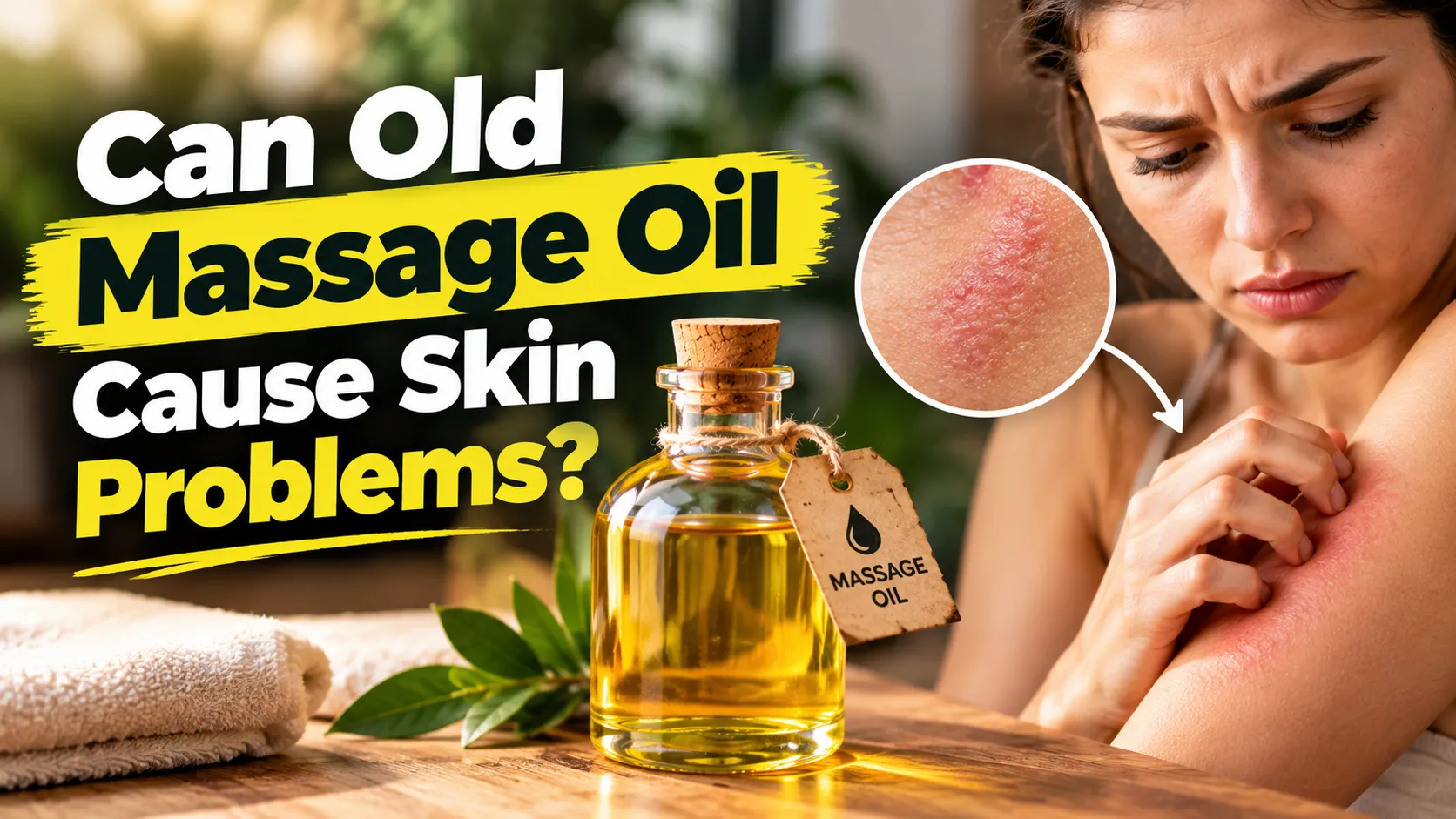
Old or deteriorated massage oil may be more likely to cause an unwanted skin reaction, especially if its ingredients have changed over time or the product has become contaminated. However, skin irritation is not always caused by expiration. Fragrance, essential oils, allergies, and individual sensitivity can also play a role.
If your skin becomes itchy, red, painful, swollen, or uncomfortable after using massage oil, wash the area gently and stop using the product. Avoid repeatedly applying it to see whether the reaction improves.
People with sensitive skin may prefer fragrance-free products and should follow any patch-testing instructions provided by the manufacturer. A healthcare professional can help evaluate persistent or unusual skin symptoms.
When to Contact a Professional
When to contact a professional:
Seek medical advice if you experience severe, worsening, unusual, or persistent skin symptoms after using massage oil. Professional guidance is also appropriate if you develop significant swelling, severe pain, spreading redness, or symptoms that do not improve after stopping use.
If you have known allergies or a history of serious skin reactions, ask a healthcare professional about suitable personal-care products before trying new ingredients.
Frequently Asked Questions
Does massage oil expire if unopened?
Yes. Unopened massage oil can still have a limited shelf life. Check the expiration date and store it according to the manufacturer’s instructions.
How can you tell if massage oil has gone bad?
Look for a rancid smell, unusual color, texture changes, cloudiness, particles, or unexpected skin irritation. If the product seems significantly different, avoid using it.
Can expired massage oil make you sick?
Expired or deteriorated oil may have reduced quality and could increase the chance of skin irritation or other unwanted reactions. Avoid using products with questionable freshness.
How long does massage oil last after opening?
The answer depends on the ingredients, packaging, storage, and manufacturer instructions. Use the recommended period-after-opening guidance when provided and inspect the oil regularly.
Does natural massage oil go rancid?
Yes. Natural oils can oxidize and develop rancid odors over time. Storage conditions and the type of oil influence how quickly this happens.
Should massage oil be refrigerated?
Not usually unless the manufacturer specifically recommends it. A cool, dry, dark storage location is generally more practical for most massage oils.
Can I use massage oil if it smells different but looks normal?
A noticeable change in smell can be an early sign of oxidation or deterioration. It is better to avoid using the product when the odor is unfamiliar, sour, or unpleasant.
Final Thoughts
Massage oil does expire and can go bad, particularly when exposed to air, heat, light, or moisture for extended periods. Checking the expiration date, storing the bottle properly, and watching for changes in smell, color, and texture can help you make a more informed decision.
When in doubt, replacing an old or questionable product is usually the simplest choice. Stop using massage oil if it causes unusual irritation, and seek professional help for severe, worsening, unusual, or persistent symptoms.
Author
-

I’m Alex Turner, a massage product reviewer and wellness writer at RemedyTip. I specialize in researching, evaluating, and comparing massage and recovery products to help readers make informed purchasing decisions. My focus is on practical, evidence-informed product guidance covering muscle recovery, relaxation, everyday comfort, and wellness.
I take a research-driven approach to every product I review. I examine product specifications, features, materials, performance claims, user feedback, durability, comfort, ease of use, and overall value. When appropriate, I also consult trusted industry and health-related sources to verify important information and provide readers with a more complete and balanced view.
I cover a wide range of products, including massage guns, handheld massagers, neck and shoulder massagers, foot massagers, massage chairs, foam rollers, and other recovery tools. Rather than focusing only on marketing claims, I look at how products compare in real-world use and who they are actually suitable for. I also consider different budgets, use cases, and user needs when making recommendations.
At RemedyTip, I’m committed to accuracy, transparency, and unbiased product information. I clearly distinguish between manufacturer claims, available evidence, and my own product analysis so readers can understand the basis of each recommendation. I continuously research new products, technologies, and developments in the massage and recovery space to keep my content current and useful.
My goal is simple: to provide trustworthy, easy-to-understand information that helps readers choose massage and recovery products with greater confidence.

