Shiatsu massage can cover the whole body, but not every session does. A full-body shiatsu session may address the back, neck, shoulders, arms, legs, feet, and other areas, while shorter appointments often focus on specific concerns.
The therapist usually applies pressure through clothing and may add stretches or gentle movement. Session length, the treatment setting, and personal comfort help determine how much of the body receives attention.
Key Takeaways
- Shiatsu may provide full-body or focused treatment.
- Sessions usually use pressure over loose clothing.
- Coverage depends on time, goals, and comfort.
Understanding Shiatsu Therapy
Shiatsu uses steady hand pressure, stretching, and gentle movement to work across the body. Its Japanese roots shape the treatment, while modern practice often focuses on muscle tension, mobility, relaxation, and the client’s comfort.
Core Principles And Traditional Roots
Shiatsu developed in Japan from traditional forms of Japanese bodywork and ideas linked to Chinese medicine. Traditional practice describes ki, or life energy, as moving through pathways called meridians. Practitioners use these ideas to guide treatment, although modern research does not confirm meridians as physical structures.
A session usually takes place on a mat or massage table, with the client fully clothed in loose, comfortable clothing. The practitioner may use thumbs, fingers, palms, elbows, or knees. Pressure combines with rocking, stretching, joint movement, and light kneading rather than the long gliding strokes common in Swedish massage.
Shiatsu can cover the whole body, including the back, shoulders, arms, legs, feet, neck, and head. The exact areas depend on the client’s needs, health history, and comfort.
How Pressure Points Are Used
The practitioner applies pressure to selected areas with a slow, controlled rhythm. Pressure may last several seconds or longer, then ease before moving to another point. The goal is to address tight muscles, restricted movement, and areas that feel sensitive or overworked.
Pressure should feel firm but manageable, not sharp or painful. The client can ask the practitioner to reduce pressure at any time. A full-body session may use broader palm contact for large muscle groups and more focused thumb or finger pressure around the shoulders, hips, hands, or feet.
| Technique | Common purpose |
|---|---|
| Sustained pressure | Addresses localized tension |
| Palm pressure | Covers broader muscle areas |
| Stretching | Supports flexibility and joint movement |
| Rocking or rocking pressure | Encourages relaxation and body awareness |
Shiatsu does not require exposed skin because practitioners generally work through clothing. It should not replace medical care for injuries, severe pain, or other health conditions.
Body Areas Typically Addressed
Shiatsu can address the body from head to feet, but the exact coverage depends on the session length, the client’s needs, and the practitioner’s approach. A full-body session commonly includes the back, neck, shoulders, limbs, feet, and selected areas of the abdomen and head.
Back, Shoulders, And Neck
Practitioners commonly spend significant time on the back, shoulders, and neck because these areas often hold tension from sitting, driving, lifting, or repetitive work. They may apply steady finger, thumb, palm, or elbow pressure along muscles and pressure points.
The practitioner may also use gentle stretches and joint movements for the shoulders and neck. The client usually remains fully clothed, so loose clothing helps the practitioner work through the fabric without restricting movement.
Shiatsu should not cause sharp pain, numbness, or tingling. The client can ask for lighter pressure, especially around the spine, joints, or areas with an injury.
Arms, Legs, And Feet
A full-body shiatsu session may include the upper arms, forearms, hands, thighs, calves, ankles, and feet. The practitioner may use pressure, compression, and slow stretches to address muscle tightness and support comfortable movement.
The feet often receive focused attention because they contain many pressure points used in shiatsu practice. The practitioner may work across the soles, heels, arches, and toes, while adjusting pressure for sensitivity.
| Area | Common techniques |
|---|---|
| Arms and hands | Compression, finger pressure, and gentle stretches |
| Legs | Palm pressure, muscle compression, and mobility work |
| Feet | Thumb pressure, palm work, and toe movement |
A shorter appointment may focus only on areas linked to the client’s main complaint rather than covering every limb.
Abdomen And Head Considerations
Some practitioners include the abdomen, chest area, face, or scalp, while others focus mainly on the back and limbs. Abdominal work usually involves light, controlled pressure and requires the client’s consent. It may be omitted during pregnancy, after recent surgery, or when abdominal pain has an unexplained cause.
Head and face work may include pressure around the scalp, temples, jaw, and forehead. These areas can feel sensitive, so the practitioner should use gradual pressure and check the client’s comfort.
Shiatsu does not require every body area to receive equal attention. A practitioner may spend more time on a painful or tense region while avoiding areas affected by injury, inflammation, skin problems, or other health concerns.
What A Typical Appointment Involves
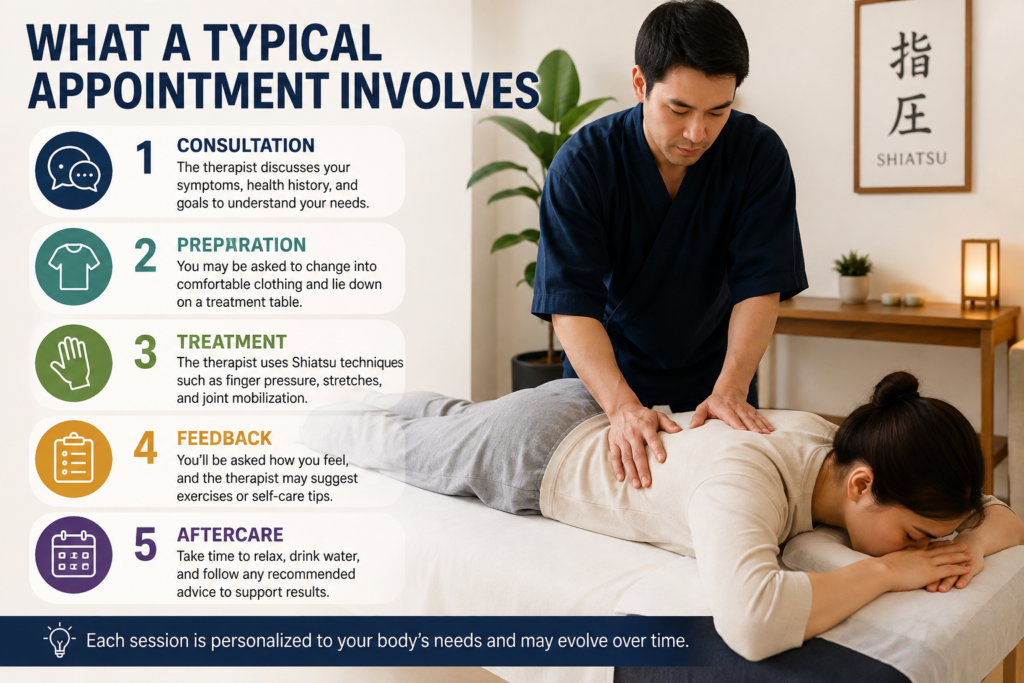
A typical shiatsu appointment uses comfortable clothing, a padded mat or massage table, and positions that let the practitioner reach different parts of the body. The session may cover the whole body or focus on areas such as the back, neck, shoulders, hips, legs, hands, or feet.
Clothing, Positioning, And Setup
The client usually remains fully clothed and wears loose, flexible clothing, such as a T-shirt, sweatpants, or athletic wear. The practitioner may ask the client to remove shoes, watches, belts, or bulky jewelry.
Shiatsu often takes place on a firm, padded mat on the floor, although some clinics use a low massage table. The client may lie on the back, stomach, or side, depending on the area being treated. Pillows or bolsters can support the knees, head, or ankles.
The practitioner should explain the plan and check for injuries, health conditions, pressure preferences, and areas the client does not want treated. The client can request less pressure, a different position, or a pause at any time.
Session Length And Practitioner Techniques
Appointments commonly last 45 to 90 minutes. A shorter visit may focus on one or two areas, while a longer appointment can include the back, neck, arms, legs, feet, and abdomen when appropriate.
The practitioner applies steady pressure with the thumbs, fingers, palms, elbows, or forearms. They may also use gentle rocking, joint movement, assisted stretching, and sustained pressure along selected body areas. Shiatsu does not use needles and usually does not require oil.
The treatment plan depends on the client’s goals, comfort, mobility, and health history.
| Appointment length | Common focus |
|---|---|
| 30–45 minutes | One or two problem areas |
| 60 minutes | Several major body regions |
| 75–90 minutes | Broader, near-full-body treatment |
Potential Benefits And Expected Outcomes
Shiatsu may help the body relax while easing mild muscle tightness. Results vary by person and depend on the cause of discomfort, the therapist’s approach, and the number of sessions.
Relaxation And Stress Relief
Shiatsu uses steady pressure, stretching, and controlled body positioning. These techniques may reduce physical signs of stress, such as tight shoulders, jaw tension, and shallow breathing. A session may also help the nervous system shift toward a calmer state, which can make it easier for some people to rest.
Many people receive shiatsu fully clothed on a floor mat. The quiet setting, slow movements, and focused breathing can support relaxation without requiring vigorous exercise or deep tissue pressure. Some people feel calm immediately after treatment, while others notice better sleep or less stress later that day.
Shiatsu does not treat anxiety or other mental health conditions. People with ongoing or severe stress should use it as a possible supplement to professional care, not as a replacement.
Muscle Tension And Mobility Support
Shiatsu may ease mild tension in areas such as the neck, shoulders, back, hips, and legs. Finger, palm, or thumb pressure can target tight tissues, while stretching and joint movements may support a more comfortable range of motion.
| Possible outcome | What a person may notice |
|---|---|
| Reduced muscle tightness | Less stiffness after sitting, working, or exercising |
| Easier movement | More comfortable neck, shoulder, or hip motion |
| Short-term pain relief | Lower discomfort from uncomplicated muscle tension |
| Improved body awareness | Better recognition of posture and tension patterns |
Research on massage supports some uses for musculoskeletal pain, but shiatsu-specific evidence remains limited. It should not replace medical assessment for sudden, severe, spreading, or persistent pain.
How Shiatsu Differs From Other Massage Styles
Shiatsu uses finger, thumb, palm, and sometimes elbow pressure, along with stretching and joint movement. Unlike many table massages, clients usually remain fully clothed and may lie on a floor mat.
Comparison With Swedish Massage
Swedish massage mainly uses long strokes, kneading, circular movements, and light tapping on exposed skin. The therapist often applies oil or lotion while the client lies on a padded table. This style targets muscle tension, circulation, and relaxation through repeated movements across the body.
Shiatsu uses steady pressure on specific areas, combined with gentle stretches and changes in body position. It does not usually rely on oil or direct work on bare skin. A session may cover the entire body, but the therapist adjusts the pressure and movements to the client’s comfort and physical needs.
Swedish massage often focuses on muscles and soft tissue. Shiatsu includes those areas but also follows traditional pressure pathways called meridians. These concepts come from East Asian medicine and do not describe the body’s anatomy in the same way as modern medical science.
Comparison With Deep Tissue Massage
Deep tissue massage uses slow, firm strokes and focused pressure to address tight muscles, adhesions, and deeper layers of connective tissue. The therapist may work along specific muscles and can increase pressure when the client can tolerate it. Some soreness may occur afterward, especially after intense treatment.
Shiatsu uses compression, stretching, and supported movement rather than sustained pressure aimed at deep muscle layers. The pressure may feel firm, but it should not cause sharp pain. Because the client remains clothed, the therapist works through clothing instead of applying oil directly to the skin.
Deep tissue massage often targets a specific problem area, such as the shoulders or lower back. Shiatsu can address a full-body pattern while still giving extra attention to areas of discomfort. People with injuries or health conditions should discuss treatment with a qualified health professional first.
Safety, Contraindications, And Precautions
Shiatsu can cover much of the body, but pressure and positioning should match each person’s health needs. A qualified practitioner should screen for medical conditions, recent procedures, pregnancy, medicines, and areas that need protection.
When To Consult A Healthcare Professional
A person should ask a healthcare professional before receiving shiatsu if they have a serious or unstable medical condition. This includes heart disease, a bleeding disorder, cancer, blood clots, severe osteoporosis, or uncontrolled high blood pressure. Medical advice also helps people who take blood thinners or have a condition that affects sensation.
Shiatsu should be postponed during a fever, contagious illness, infectious skin condition, or when open wounds are present. Recent surgery also requires medical clearance. The practitioner should avoid the surgical area until it has healed; some guidance recommends avoiding scar tissue for several months.
Pregnant clients should tell the practitioner before treatment, especially during the first 12 weeks or when complications exist. A practitioner may adjust body position, pressure, and treatment areas. People should stop the session and seek medical advice if they experience sharp pain, dizziness, shortness of breath, unusual bleeding, or worsening symptoms.
Choosing A Qualified Practitioner
A qualified practitioner should complete recognized shiatsu training and follow local licensing or professional rules. Before booking, the client can ask about training, experience with specific health conditions, hygiene practices, and professional insurance. A reputable practitioner should answer clearly and avoid promising to diagnose or cure disease.
The practitioner should conduct a health intake before touching the client. It should cover medical history, medications, pregnancy, allergies, recent surgery, injuries, and current symptoms. Clients should also identify painful, numb, swollen, bruised, or inflamed areas so the practitioner can avoid or modify them.
During a full-body session, the client should remain comfortably covered and provide ongoing consent. Pressure should feel firm but tolerable, never sharp or forced. The practitioner should explain positioning, invite feedback, and stop when requested. A client should choose another provider if the practitioner dismisses medical concerns, pressures them to continue, or uses unsafe pressure.
Preparing For Your First Session
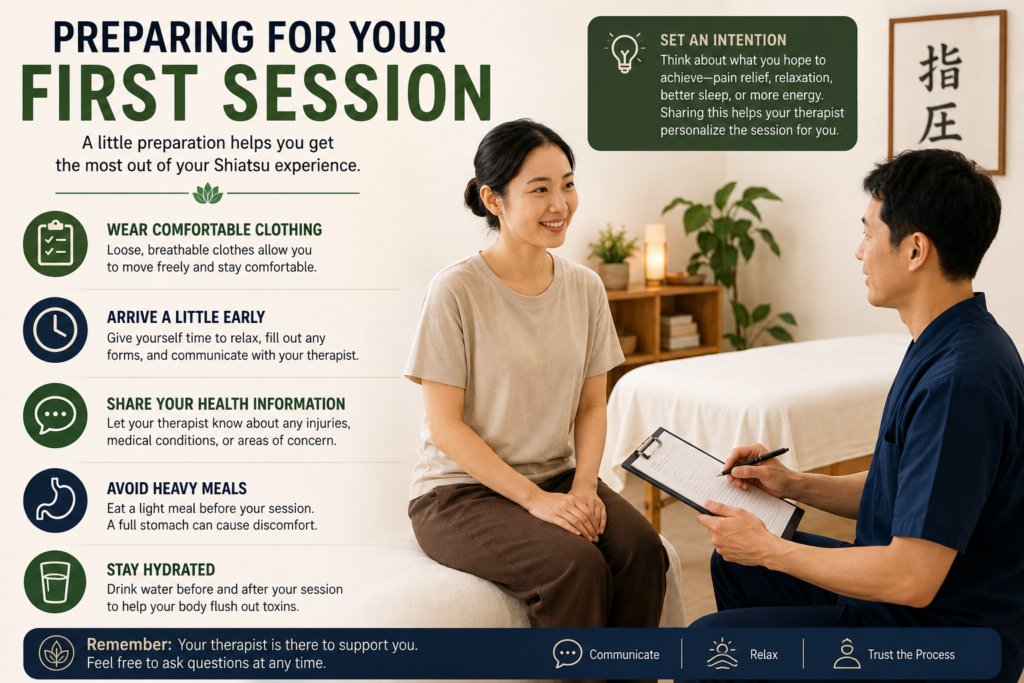
A first shiatsu visit usually involves loose clothing, a brief health review, and a discussion about pressure and comfort. The client should also share medical conditions, injuries, medications, and any areas that need special care.
What To Wear And Bring
Shiatsu is usually performed on a floor mat while the client remains fully clothed. Loose, flexible clothing works best, such as cotton pants, a T-shirt, or light workout clothes. Tight jeans, belts, thick seams, and stiff fabrics can limit stretching and make pressure less comfortable.
The client should wear clean socks because the feet may receive pressure and stretching. A light meal and water can help, but a large meal immediately before the appointment may feel uncomfortable. The client should bring a list of medications, relevant medical records, and any questions about the treatment.
The practitioner may provide a blanket or ask the client to remove bulky items, such as a watch, belt, or jewelry. Shiatsu does not require massage oil, and the client usually does not need to undress.
Communicating Preferences And Health History
Before treatment, the client should describe current pain, recent injuries, surgeries, numbness, skin problems, and medical conditions. Pregnancy, osteoporosis, blood-clotting problems, uncontrolled high blood pressure, and other serious conditions may require medical advice before treatment. A practitioner may adjust or postpone the session when safety concerns exist.
The client should also mention medications, including blood thinners and pain medicines. Clear information helps the practitioner choose safer positions and pressure levels. A licensed provider can explain general treatment limits through trusted health sources such as information about shiatsu.
During the session, the client can request lighter pressure, a different position, more support, or a pause at any time. Sharp pain, tingling, dizziness, or increased numbness should be reported immediately. Relaxation may feel pleasant, but strong pain does not indicate an effective treatment.
FAQs
Is shiatsu massage full body?
Shiatsu can be a full-body treatment, but it does not always cover every area. The therapist may focus on the back, neck, shoulders, arms, legs, or feet based on the session length and the client’s needs.
What happens during a shiatsu session?
The client usually remains fully clothed and lies on a floor mat or firm surface. The therapist uses steady pressure, gentle stretching, and body positioning with the fingers, palms, elbows, or knees.
How long does a full-body session take?
A full-body session often takes about 60 to 90 minutes, though timing varies by provider. Shorter appointments may target only one or two areas.
Can the client request certain areas?
Yes. The client can tell the therapist which areas feel tense or painful and which areas they prefer to avoid. The therapist should adjust the pressure and techniques to match the client’s comfort.
Does shiatsu use oil or require undressing?
Shiatsu generally does not require massage oil or undressing. Loose, comfortable clothing allows the client to move easily during stretches.
Who should check with a health professional first?
People who are pregnant or have recent injuries, severe pain, blood-clotting problems, or other medical conditions should ask a qualified health professional before receiving shiatsu. A trained therapist should also know about relevant health concerns before starting.
Conclusion
Shiatsu massage can be full body, but the treatment does not always cover every area. A therapist may focus on the back, neck, shoulders, arms, legs, or feet based on the client’s needs, the session length, and personal comfort.
Clients usually remain clothed while the therapist applies steady pressure with the fingers, thumbs, palms, or body weight. Gentle stretching and joint movement may also form part of the session.
Before treatment begins, the client should discuss pain, injuries, medical conditions, pregnancy, and areas they do not want touched. The therapist can then adjust the pressure and choose between a targeted session and broader full-body work.
Key points:
- Shiatsu may cover most of the body during a longer appointment.
- Shorter sessions often target specific areas.
- Treatment coverage depends on the therapist’s approach and the client’s preferences.
- Clients should communicate discomfort during the session.
- People with certain health conditions should ask a qualified health professional before receiving massage.