Shiatsu may offer short-term relief for some people with sciatica by easing muscle tension and improving comfort. It may help manage symptoms, but it does not treat the underlying cause of sciatica and should not replace medical care.
A qualified therapist should use gentle, targeted techniques and avoid direct pressure on painful areas. Anyone with numbness, weakness, loss of bladder or bowel control, fever, or sudden severe pain should seek medical care before trying massage.
Key Takeaways
- Shiatsu may provide temporary symptom relief.
- Gentle treatment works better than forceful pressure.
- Medical evaluation matters when warning signs appear.
Sciatica Basics And Common Causes
Sciatica describes pain caused by irritation or pressure on the sciatic nerve or its roots in the lower spine. A herniated disc, spinal narrowing, bone changes, or tight muscles near the buttock can contribute to this problem.
Symptoms That May Indicate Nerve Involvement
Sciatica often affects one side of the body. Pain may travel from the lower back or buttock through the back of the thigh and into the calf or foot. People may describe it as burning, shooting, electric, or sharp pain.
Nerve irritation can also cause tingling, numbness, or weakness in the affected leg. Symptoms may worsen with sitting, coughing, sneezing, bending, or lifting. Muscle soreness alone usually stays in a smaller area and does not follow a clear path down the leg.
Shiatsu may relax nearby muscles, but firm pressure can worsen symptoms when the nerve is highly irritated. A qualified practitioner should use gentle techniques and avoid pressing directly on painful areas.
When Sciatica Requires Medical Assessment
A healthcare professional should assess sciatica when pain lasts more than a few weeks, keeps returning, limits walking or sleep, or does not improve with basic care. Assessment can help identify the cause and guide safe treatment.
Urgent medical care is needed for new loss of bladder or bowel control, numbness around the genitals or inner thighs, or severe or worsening weakness in both legs. These signs may indicate serious nerve compression.
Fever, unexplained weight loss, a history of cancer, major injury, or severe night pain also requires prompt medical attention. Massage should not replace assessment when these warning signs appear.
How Shiatsu May Affect Sciatic Pain
Shiatsu may ease sciatica when tight muscles add pressure around the lower back, hip, or buttocks. Gentle touch may also support relaxation and change how the nervous system processes pain, but it does not correct every cause of sciatica.
Pressure Points And Muscle Tension
Shiatsu uses finger, thumb, palm, and sometimes elbow pressure on muscles and selected body areas. For sciatica, a therapist may work gently around the lower back, hips, buttocks, and hamstrings to reduce muscle tightness that can increase discomfort.
This approach may help when muscle tension or piriformis irritation contributes to symptoms. It cannot remove pressure caused by a severe disc problem, spinal narrowing, or another structural condition.
Pressure should feel controlled, not sharp or forceful. A therapist should avoid pressing directly on painful nerve symptoms, areas with numbness, or the spine. Strong pressure may worsen shooting pain, tingling, or numbness.
Relaxation And Pain Modulation
Shiatsu may promote relaxation by using steady pressure, slow movements, and focused breathing. Reduced muscle guarding can make movement more comfortable and may provide temporary relief from lower back or leg pain.
Relaxation can also affect pain processing. When the body remains tense, the nervous system may become more sensitive to painful signals. Shiatsu may reduce this tension, but research does not show that it treats the underlying cause of sciatica.
A person should stop treatment if symptoms spread farther down the leg or become stronger. New weakness, loss of bladder or bowel control, or numbness around the groin requires urgent medical care rather than massage.
What Research And Clinical Evidence Suggest
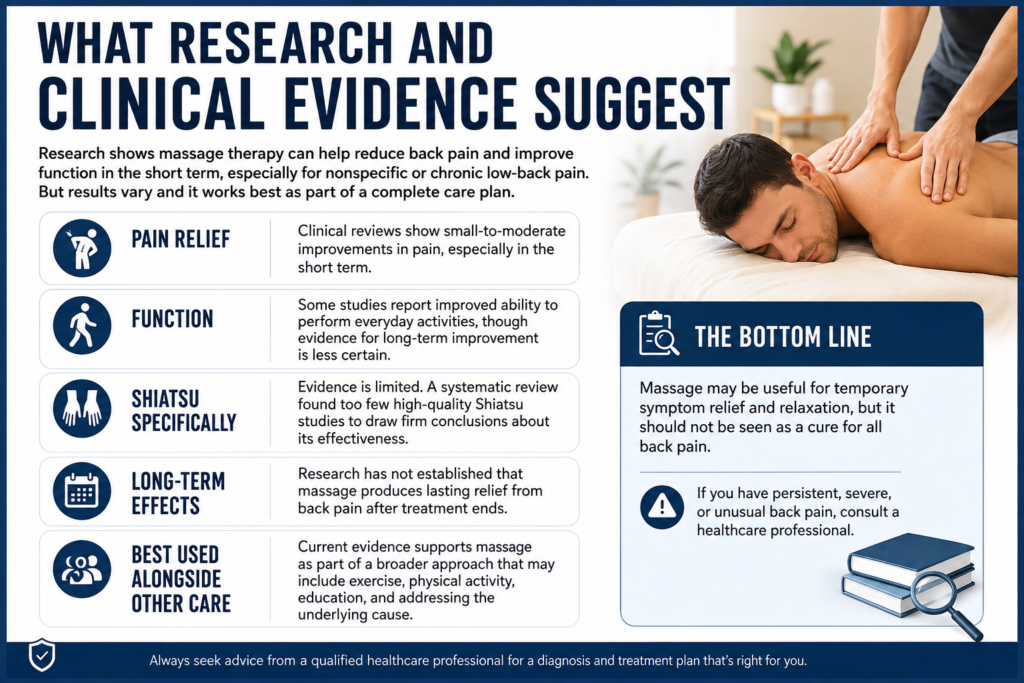
Shiatsu may ease muscle tension and help some people feel less pain or stress. However, research has not clearly shown that it treats the nerve compression or other underlying causes of sciatica.
Limits Of Current Evidence
Research on shiatsu for sciatica remains limited. Reviews have found relatively few high-quality clinical trials, and many studies examine acupressure or broader massage techniques rather than shiatsu alone. Differences in treatment pressure, session length, and study design also make results difficult to compare.
Evidence may support short-term relaxation or reduced muscle tightness, but it does not prove that shiatsu repairs a slipped disc, widens a narrowed spinal canal, or prevents symptoms from returning. A person with sciatica should not use it to delay medical assessment, especially when pain causes weakness, numbness that worsens, or bladder or bowel problems.
Shiatsu also uses firm pressure and stretching. These techniques may aggravate an irritated nerve in some people, so a trained practitioner should adjust the pressure and stop if symptoms spread farther down the leg.
How Shiatsu Compares With Other Conservative Care
Clinical guidance generally places massage among several noninvasive options for short-term or persistent sciatica. Shiatsu may offer similar comfort to other hands-on massage methods, but research does not show that it works better than standard massage, exercise, or physical therapy.
| Approach | Potential role | Evidence and limits |
|---|---|---|
| Shiatsu | May reduce muscle tension and support relaxation | Direct evidence for sciatica remains limited |
| Physical therapy | Builds strength, mobility, and activity tolerance | Often forms a central part of conservative care |
| Massage | May provide short-term pain relief and relaxation | It does not correct every cause of nerve irritation |
Exercise-based care and advice on staying active often address movement and function more directly. Shiatsu can serve as an additional comfort measure when a clinician considers it safe, but it should complement—not replace—medical evaluation and rehabilitation.
Who May Benefit Most
Shiatsu may help people whose sciatic symptoms involve muscle tightness rather than severe nerve compression. It may also suit people with stable, recurring symptoms who want short-term relief alongside medical care and exercise.
Muscle-Related Contributors
Shiatsu may benefit people with tight muscles in the lower back, hips, buttocks, or hamstrings. Muscle tension around the piriformis can sometimes irritate the sciatic nerve and produce pain that travels into the leg. In these cases, gentle, targeted pressure may reduce muscle tightness and improve movement.
A trained therapist should avoid pressing directly on painful nerve pathways or using forceful pressure. The session should focus on the surrounding muscles and adjust to the person’s pain response. Shiatsu cannot correct conditions such as a herniated disc, spinal narrowing, or nerve damage.
People with numbness, weakness, or worsening leg pain should seek medical assessment before receiving massage. A clinician can help identify the cause and decide whether massage is appropriate.
Chronic Versus Acute Symptoms
Shiatsu may be more suitable for stable, recurring sciatica than for sudden, severe symptoms. People with chronic muscle-related discomfort may experience temporary relief from reduced tension, easier movement, and relaxation. They should combine massage with recommended exercises, posture changes, and other medical care.
During an acute flare, strong pressure may worsen irritation. A person with intense pain, marked inflammation, or difficulty walking should postpone massage and seek medical advice. The therapist should use light contact, stop if symptoms spread farther down the leg, and avoid treatment when warning signs appear.
Urgent evaluation is needed for new bladder or bowel problems, numbness around the groin, or rapidly increasing leg weakness.
Safety Considerations And Contraindications
Shiatsu may ease muscle tension for some people with sciatica, but firm pressure can worsen nerve irritation. A trained practitioner should adjust the session to the person’s symptoms, health conditions, and medical advice.
Situations To Avoid Deep Pressure
A person should avoid deep pressure directly over the lower spine, buttocks, or the painful leg when symptoms include sharp, burning, or electric pain. Pressure should also stop if it causes numbness, tingling, or pain that travels farther down the leg.
Shiatsu should be postponed over open wounds, skin infections, swelling, bruises, or recent surgical areas. People with a fever or serious illness should wait until they recover. Those who take blood thinners, have a bleeding disorder, severe osteoporosis, or an unstable spinal condition should ask a health professional before treatment.
Pregnant people, especially during the first three months, should seek medical guidance and use a practitioner trained in prenatal care. Shiatsu should complement, not replace, an assessment of persistent or severe sciatica.
Warning Signs To Stop Treatment
The practitioner should stop immediately if the person develops worsening leg pain, new numbness, increasing weakness, dizziness, nausea, or unusual sweating. The person should not try to tolerate pain in the hope that stronger pressure will provide better relief.
Urgent medical care is needed for new loss of bladder or bowel control, numbness around the genitals or inner thighs, or rapidly worsening weakness in one or both legs. These symptoms may signal serious nerve compression.
After treatment, symptoms that remain worse, spread, or interfere with walking require medical review. A person should also seek care for fever, unexplained weight loss, major injury, or severe pain that does not improve with rest.
What To Expect During A Session
A shiatsu session for sciatica usually starts with a health review and gentle movement checks. Treatment should focus on nearby muscles and comfort, while the practitioner avoids pressure that increases leg pain, numbness, or tingling.
Assessment And Treatment Approach
The practitioner asks about the pain’s location, severity, timing, and symptoms such as weakness or numbness. They may also ask about injuries, medical conditions, medicines, and previous treatment. Simple movement checks can show which positions worsen or ease symptoms.
The client usually remains fully clothed and lies on a mat or massage table. The practitioner may use gentle pressure with the thumbs, palms, or elbows on the lower back, hips, buttocks, and upper legs. Direct pressure on the spine or painful nerve path should not cause sharp pain or increased tingling.
Shiatsu may ease muscle tension and help the client relax, but it does not correct every cause of sciatica. A qualified practitioner should stop or change the treatment if symptoms spread, become stronger, or include new weakness. Severe or sudden symptoms require medical assessment rather than massage.
Typical Frequency And Duration
A session often lasts 30 to 60 minutes, depending on the person’s symptoms and tolerance. A first visit may take longer because the practitioner needs time to review the client’s health history and treatment goals.
The practitioner may suggest one session to assess the response before planning more visits. If symptoms improve without worsening nerve signs, sessions might occur weekly for a short period. The schedule should depend on symptom changes, not a fixed course of treatment.
The client should track pain, tingling, numbness, and movement after each visit. Treatment should be paused if symptoms worsen or remain aggravated for more than a short period. Persistent sciatica, leg weakness, bowel or bladder changes, or numbness around the groin needs prompt medical care.
Building A Broader Self-Care Plan
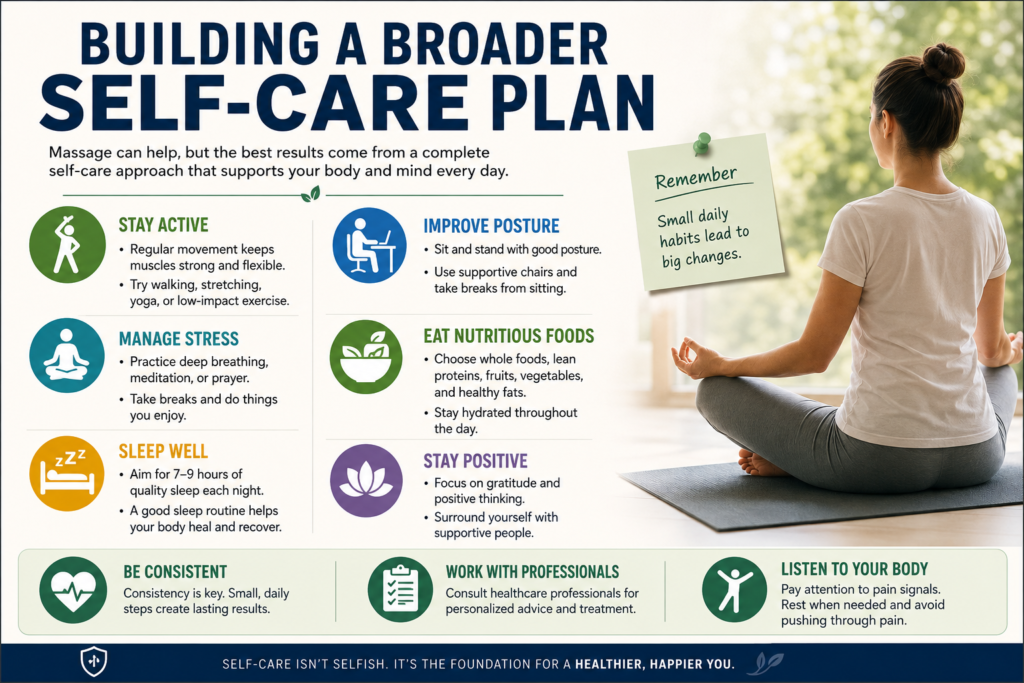
A broader plan can combine gentle movement, better sitting habits, and care from qualified professionals. Shiatsu may support comfort, but it should not replace an assessment when pain travels down the leg or limits normal movement.
Movement And Ergonomic Support
Short, frequent walks can help prevent stiffness without placing heavy strain on the lower back. A person with sciatica should increase activity gradually and stop any movement that causes sharper leg pain, numbness, or weakness.
Gentle exercises may include pelvic tilts, hamstring stretches, and controlled nerve-gliding movements. A physical therapist can show the correct technique because some stretches may increase symptoms when the nerve is highly irritated.
Work habits also matter. The person should keep both feet supported, place the screen near eye level, and change position every 30–45 minutes. A small cushion may support the lower back, but it should not force the spine into an uncomfortable position. Heavy lifting should involve bending the knees, keeping the load close, and avoiding twisting.
Working With Qualified Health Professionals
A doctor or physical therapist can check whether symptoms come from nerve irritation, a disc problem, spinal narrowing, or another condition. This assessment helps determine whether shiatsu fits safely into the care plan.
A licensed massage therapist with experience in sciatica should use pressure that matches the person’s symptoms. Direct, forceful work over the spine or painful nerve path may worsen irritation. The person should report increased tingling, burning, numbness, or weakness during treatment.
Medical care becomes urgent when sciatica causes new loss of bladder or bowel control, numbness around the groin, or severe weakness in both legs. A professional should also assess pain that follows a major injury, occurs with fever, or continues to worsen despite rest and basic care.
FAQs
Can shiatsu massage help sciatica?
Shiatsu may ease muscle tightness and provide short-term pain relief for some people. It does not treat every cause of sciatica, such as a herniated disk or spinal narrowing.
Can shiatsu make sciatica worse?
It can. Firm pressure may irritate an inflamed nerve, especially when pain travels down the leg. The therapist should use gentle pressure and stop if symptoms increase.
When should someone avoid shiatsu?
A person should delay massage and seek medical advice for new or severe weakness, numbness in both legs, loss of bladder or bowel control, or numbness around the groin. These symptoms may require urgent care.
What should someone tell the therapist?
The client should explain where the pain starts, where it travels, and whether numbness or weakness occurs. The therapist should avoid forceful pressure directly over the spine and painful nerve pathway.
How often should someone receive shiatsu?
There is no fixed schedule. A qualified health professional can help set a plan based on the cause, severity, and response to treatment.
Can shiatsu replace medical treatment?
No. Shiatsu may support comfort and movement, but a clinician should assess persistent, severe, or recurring sciatica. Physical therapy and other treatments may address the underlying problem.
Conclusion
Shiatsu massage may provide short-term relief when muscle tightness adds to sciatic pain. Gentle pressure can support relaxation and movement, but it does not treat every cause of sciatica, such as a disc problem or spinal narrowing.
A qualified therapist should use light, controlled techniques and avoid direct, forceful pressure over the spine or painful nerve areas. The client should tell the therapist about the pain’s location, intensity, and any numbness or weakness.
Shiatsu should stop if it increases shooting pain, tingling, or numbness. A medical professional should assess severe or ongoing symptoms, especially leg weakness or changes in bladder or bowel control. Massage works best as part of a broader care plan that may include exercise and physical therapy.