A neck massager uses pressure, movement, vibration, heat, or gentle electrical pulses to target tight muscles around the neck and shoulders. It can ease mild muscle tension and stiffness by relaxing muscles and increasing local blood flow, but it cannot treat every cause of neck pain.
Different devices create different sensations, and the right setting depends on the user’s comfort and symptoms. Michael Hayes of RemedyTip.com emphasizes practical use: learning how each mode works, choosing safe intensity, and recognizing when persistent pain needs medical care.
Key Takeaways
- Neck massagers use several methods to relax tight muscles.
- Settings affect comfort, pressure, and muscle response.
- Safe use matters, especially when neck pain persists.
Core Massage Mechanisms
Neck massagers use different forms of movement and warmth to affect tight muscles. Their results depend on the device type, pressure level, treatment time, and the cause of the neck discomfort.
Percussion And Vibration
Percussion devices use repeated tapping or pulsing movements. Vibration devices produce faster, smaller movements that shake the skin and nearby soft tissue. Both methods can provide sensory input that may reduce the feeling of muscle tightness and discomfort for a short time.
These movements may also increase local blood flow while the device operates. They do not physically remove knots or repair damaged tissue. Instead, they may help muscles relax by changing how the nervous system processes pressure and pain signals.
A user should place the device on the fleshy muscles beside the spine, not directly over the neck bones. Low settings work best at first. Strong pressure or prolonged use can cause bruising, soreness, numbness, or irritation.
Kneading And Rolling
Kneading heads use rotating nodes that press into the muscles in a pattern similar to hand massage. Rolling heads move across the skin and may provide a smoother, less focused pressure. These mechanisms commonly target the upper trapezius muscles, which run from the neck to the shoulders.
The pressure can temporarily reduce stiffness linked to prolonged sitting, poor posture, or repetitive tasks. A device cannot correct the underlying cause, such as joint disease, nerve compression, or an injury. It should move slowly over muscle rather than remain in one painful spot.
| Mechanism | Main sensation | Safer use |
|---|---|---|
| Kneading | Deep, circular pressure | Use gentle pressure on soft muscle |
| Rolling | Broad, gliding pressure | Move across the neck and shoulders |
| Percussion | Repeated tapping | Avoid bones and sensitive areas |
Heat Therapy
Heat therapy warms the skin and shallow tissues. This warmth can increase comfort, reduce the feeling of stiffness, and make massage movements feel less intense. Some devices combine heat with kneading, rolling, or vibration.
Heat does not treat every type of neck pain. It may worsen swelling from a recent injury, and high temperatures can burn the skin, especially during long sessions or when sensation is reduced. The user should choose a mild setting, check the skin during use, and follow the device’s time limits.
People with poor circulation, diabetes-related nerve damage, or reduced heat sensitivity should ask a health professional before using heated massage tools. A massager should not replace medical care for severe pain, weakness, numbness, fever, or pain after an accident.
Main Components And Their Roles
A neck massager combines moving parts, electronic controls, and body supports to apply pressure, vibration, heat, or electrical stimulation. Each component affects how the device feels, where it applies force, and how safely it operates.
Motors And Massage Nodes
Electric models often use one or more DC motors to drive rotating massage nodes. These nodes may turn in fixed directions or switch direction to imitate kneading. Vibration models use smaller motors with offset weights to create rapid movement rather than deep rotation.
The nodes transfer mechanical force to the neck and shoulder muscles. Their shape, spacing, and covering affect pressure and comfort. Soft silicone or fabric covers reduce friction, while firm nodes provide stronger contact. Heat elements may sit near the nodes and warm the surrounding area, but they do not directly loosen tissue or treat the cause of neck pain.
Users should place the nodes on muscle beside the spine, not directly over the bones at the front or back of the neck. Strong pressure can cause soreness, so shorter sessions and lower settings offer a safer starting point.
Controls And Power Sources
A control panel usually adjusts speed, direction, heat, or session time. Some devices use buttons on the unit, while others use a wired remote or a phone app. An automatic timer can stop the motor after a set period and help prevent prolonged use.
Most portable models use rechargeable lithium-ion batteries. Plug-in models draw power from a wall adapter, which can provide steady output but limits movement. Battery capacity affects operating time, and charging circuits help prevent overcharging.
| Component | Main role |
|---|---|
| Motor control | Sets movement speed and direction |
| Heat control | Turns warming elements on or off |
| Timer | Limits the length of a session |
| Battery or adapter | Supplies electrical power |
| Safety circuit | Helps manage overheating or excess current |
Electrical stimulation models use electrodes instead of moving nodes. They send controlled, low-level pulses through the skin and require different safety precautions than mechanical massagers.
Straps And Ergonomic Supports
Handles or adjustable straps help keep a handheld massager in contact with the neck and shoulders. They also let the user control pressure by pulling the device closer or loosening it. A balanced design reduces the need to hold the full weight during use.
Some units include a curved frame, padded collar, or shoulder rests. These parts spread the load across a larger area and help align the massage nodes with the upper trapezius muscles. Flexible materials can fit different body shapes, while excessive stiffness may create uneven pressure.
The device should sit securely without restricting breathing, swallowing, or head movement. Users should stop if they notice numbness, tingling, dizziness, skin irritation, or increasing pain. Loose clothing and clean contact surfaces also improve comfort and hygiene.
How Different Massage Modes Affect Muscles
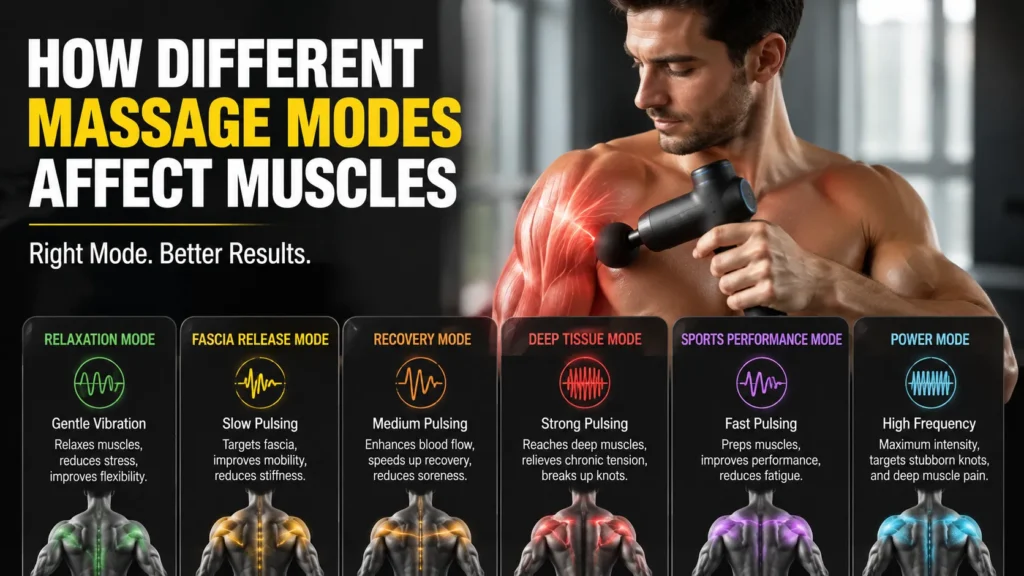
Neck massagers use pressure, movement, vibration, heat, or electrical pulses to affect muscles in different ways. The setting, pressure, and session length determine whether the device mainly eases tightness, warms tissue, or targets specific sore spots.
Muscle Relaxation
Kneading and shiatsu modes use rotating nodes or rollers to press and move across the neck muscles. This action can reduce muscle stiffness by applying repeated pressure to areas that stay contracted, such as the upper trapezius and muscles beside the spine.
Vibration creates rapid, lighter movements. It may help reduce the feeling of tightness without the deeper pressure produced by kneading. Some devices combine vibration with rolling or compression, allowing users to choose a gentler setting for daily use.
Pressure should feel firm but comfortable. If the massager causes sharp pain, numbness, dizziness, or increased soreness, the user should stop and reduce the intensity during the next session.
Blood Flow And Warmth
Massage may support short-term blood flow in the treated muscles. Moving pressure can compress and release soft tissue, while heat can widen nearby blood vessels and make the area feel more flexible.
Heat also helps muscles relax before or during massage. A warm setting may suit stiffness caused by prolonged sitting, computer work, or exposure to cold. It does not repair an injury or treat the cause of lasting neck pain.
Users should keep heat at a comfortable level and follow the device instructions. They should avoid heat over reduced skin sensation, swelling, open wounds, or a recent injury unless a health professional approves it.
Tension And Trigger Points
A neck massager can apply focused pressure to tight bands of muscle, often called trigger points. This pressure may reduce local tenderness and make movement feel easier for a short time, especially when muscle tension contributes to the discomfort.
Devices with adjustable heads or kneading nodes can target the sides and back of the neck. Users should avoid placing strong pressure directly on the front or sides of the neck, where important blood vessels, nerves, and the airway are located.
| Sensation during use | Recommended action |
|---|---|
| Mild pressure or warmth | Continue at a comfortable setting |
| Sharp or shooting pain | Stop the device |
| Numbness or tingling | Stop and seek medical advice if it continues |
| Mild soreness afterward | Rest the area and reduce intensity next time |
Types Of Neck Massagers
Neck massagers use different movements and pressure levels to affect tight muscles. Shiatsu pillows knead the neck, percussion devices deliver rapid taps, and wearable models provide gentle vibration or heat while leaving the hands free.
Shiatsu Pillow Massagers
Shiatsu pillow massagers use rotating nodes that press and knead the muscles along the neck and upper shoulders. Many models change direction to imitate the circular motion of hand massage. Some also include heat, which may help relax stiff muscles and make the pressure feel more comfortable.
The user usually places the device behind the neck or across the shoulders. Straps can hold it against the body, but the user should avoid pressing too hard or using it directly on the spine. Short sessions of about 10 to 15 minutes are generally more suitable than prolonged use.
These devices work best for broad areas of muscle tension. They may feel too intense for people with sensitive skin, recent injuries, or severe pain.
Handheld Percussion Devices
Handheld percussion devices use a motor to move a small massage head rapidly against the body. The repeated tapping can reduce the feeling of tightness in the upper trapezius and shoulder muscles. Users can choose different speed settings and attachments, depending on the area and level of sensitivity.
A handheld design lets the user control the exact location and pressure. It can reach the shoulders and upper back, but the user may need another person’s help to treat the middle of the back. The device should not be applied to the front or sides of the neck, the spine, bones, or swollen areas.
Lower settings provide a safer starting point. A user should stop if the device causes sharp pain, numbness, dizziness, bruising, or increased symptoms.
Wearable Neck Massagers
Wearable neck massagers rest around the neck and commonly use vibration, electrical muscle stimulation, heat, or a combination of these methods. Vibration models create mild mechanical movement, while electrical models send small pulses through skin electrodes to stimulate nearby muscles. Their effects vary by design and by user.
These devices are lightweight and hands-free, making them useful during short breaks or light activity. They usually provide less deep pressure than shiatsu or percussion models. The user should follow the fitting instructions and keep electrodes on clean, intact skin when the device uses electrical stimulation.
People with pacemakers, implanted electronic devices, reduced sensation, or certain medical conditions should seek medical advice before using electrical models. Heat settings also require caution because reduced sensation can increase the risk of burns.
Using A Neck Massager Safely
Safe use depends on gentle pressure, correct placement, and short sessions. A person should use the lowest comfortable setting, avoid the front of the neck, and stop if symptoms worsen or unusual symptoms appear.
Positioning And Pressure
The massager should rest on the muscles at the back and sides of the neck, shoulders, or upper back. It should not press directly on the throat, windpipe, spine, or the bony area behind the ears. A person should sit upright and keep the head in a neutral position rather than bending it forward.
The device should move slowly and stay on each area for only a short time. Pressure should feel firm but comfortable, never sharp, numb, or painful. Massage guns require extra care: the user should choose a low speed, avoid the front and sides of the neck, and never press over bones or the spine.
People with neck injuries, nerve problems, blood-clotting disorders, or implanted medical devices should ask a health professional before using an electric massager. Medical guidance also makes sense after recent surgery or when neck pain has no clear cause.
Session Length And Frequency
A first session should last about 5 minutes. If the neck feels normal afterward, the user can increase the time gradually, but most sessions should stay within 10 to 15 minutes. The device should not remain on one spot for more than a few minutes.
Using a neck massager once a day may help with occasional muscle tightness. It should not replace medical care, stretching, rest, or treatment for an ongoing condition. If soreness lasts more than a day after use, the person should reduce pressure, shorten the session, or stop using the device.
The user should follow the product instructions because heat, vibration, kneading, and percussion devices have different limits. Heat settings require additional care, especially for people with reduced skin sensation.
When To Stop
The user should stop immediately if the device causes sharp pain, tingling, numbness, weakness, dizziness, nausea, headache, or pain that travels into an arm. Skin that becomes very red, swollen, bruised, or unusually hot also signals a need to stop.
Neck pain after a fall, car crash, or other injury needs medical assessment rather than self-treatment. A person should also seek prompt care for severe pain, fever, trouble speaking, trouble walking, fainting, or loss of bladder or bowel control.
If symptoms continue, worsen, or return often, a health professional should evaluate them. A neck massager may ease simple muscle tension, but it cannot diagnose or treat conditions affecting the nerves, joints, blood vessels, or spinal cord.
Choosing Suitable Settings
The right settings depend on the device, the user’s comfort, and the source of neck tension. A gentle intensity, limited heat, and slow movement usually provide a safer starting point than strong pressure or high speed.
Intensity Levels
The user should begin at the lowest intensity and place the massager on the muscles beside the neck and across the upper shoulders. The device should not press directly on the spine, throat, front of the neck, or bony areas.
A mild pulling or kneading feeling can be normal. Sharp pain, numbness, tingling, dizziness, headache, or increased soreness signals that the user should stop and remove the device. The user can raise the intensity one level at a time only when the lower setting feels comfortable.
Most sessions should last about 10–15 minutes, unless the manufacturer gives different instructions. Stronger pressure does not necessarily improve results. People with an injury, nerve symptoms, or a medical condition should ask a health professional before using a powered massager.
Heat Settings
Heat can help relax tight muscles and make a massage feel more comfortable. The user should start with the lowest heat setting and check the skin after several minutes. The device should feel warm, not hot or painful.
The user should avoid heat on areas with reduced sensation, swelling, open wounds, skin irritation, or a recent injury. People with poor circulation, diabetes, or difficulty sensing temperature should seek medical advice before using heat.
A thin layer of clothing can reduce direct heat and pressure. The user should never fall asleep while the heat function is running. If the skin becomes very red, painful, or unusually sensitive, the user should turn off the heat and stop the session.
Massage Direction And Speed
Shiatsu nodes often move in circles or alternate directions to knead the muscles. The user should position them on the tense muscles at the base of the skull and upper shoulders, then adjust the device so it does not push into the spine.
A slow speed usually suits beginners and people with stiffness. Faster movement may feel more stimulating, but it can increase soreness if the device presses too hard. The user should keep the massager moving when using a massage gun and avoid holding it over one spot.
The device should not be used on the front or sides of the throat. For information about neck anatomy and structures, readers can consult this neck anatomy reference. The user should follow the device manual because controls, movement patterns, and time limits vary by model.
Care And Maintenance
Regular cleaning helps prevent skin oils and dust from building up on the massager. Careful inspections can reveal damage early, while proper storage protects the device from moisture, heat, and pressure.
Cleaning The Device
The user should turn off and unplug the neck massager before cleaning it. A soft cloth slightly dampened with water can remove sweat, oil, and surface dirt from the housing and massage nodes.
The user should avoid soaking the device or allowing liquid to enter buttons, vents, seams, or charging ports. Unless the manufacturer gives different instructions, the device should not be cleaned with bleach, alcohol, abrasive powders, or strong household cleaners. These products can damage plastic, fabric, or protective coatings.
If the massager has a removable cover, the user should check its care label before washing it. The cover should be fully dry before it goes back on the device. Heat pads and electrical parts should never be washed unless the manufacturer specifically states that they are washable.
Inspecting Cords And Covers
The user should inspect the power cord, plug, charging cable, and connector before each use. Fraying, exposed wires, bent pins, loose connections, burn marks, or unusual heat indicate that the device needs to be unplugged and taken out of service.
The user should also check the cover, seams, massage nodes, and fasteners. A torn cover can expose internal parts or allow debris to reach the mechanism. Loose or cracked nodes may press unevenly against the neck and should not be used.
The user should not repair electrical parts with tape or use a damaged cable as a temporary fix. Replacement parts should come from the manufacturer or meet the exact specifications listed in the manual. If the massager makes a new grinding sound, gives off an odor, or behaves irregularly, the user should stop using it and seek service.
Storage Practices
The user should clean and dry the massager before storing it. The device should remain in a cool, dry place away from sinks, showers, direct sunlight, and heating vents. Moisture can damage electrical parts, while heat may weaken covers and deform plastic.
The power cord should be stored loosely rather than wrapped tightly around the device. Tight bends can strain the wires near the plug or connector. The user should also avoid placing heavy objects on the massager, since pressure can damage its frame, nodes, or heat components.
When available, the original case provides useful protection from dust and impact. The massager should remain switched off while stored, and rechargeable models should follow the manufacturer’s charging and storage instructions. Children and pets should not have access to the device or its loose cables.
FAQs
How does a neck massager work?
A neck massager uses pressure, kneading, vibration, or heat to target tight muscles in the neck and upper back. These actions may help reduce muscle tension and make mild stiffness feel better.
Can heat improve the massage?
Heat can relax muscles and make the massage feel more comfortable. Users should follow the device’s temperature and time limits to avoid skin irritation or burns.
How long should someone use a neck massager?
Most people should start with a short session at a low setting, such as 10 to 15 minutes. The device’s instructions should guide session length and frequency.
Can a neck massager treat every type of neck pain?
No. It may help with mild muscle tightness, posture-related discomfort, or temporary stiffness. It cannot treat injuries, nerve problems, arthritis, or other underlying conditions.
Who should avoid using one?
People with a recent neck injury, numbness, weakness, severe pain, or unexplained symptoms should seek medical advice before using a massager. People with certain medical devices or conditions should also ask a health professional first.
When should use stop?
Use should stop if the device causes sharp pain, dizziness, tingling, numbness, swelling, or skin changes. Persistent or worsening pain requires medical evaluation.
Conclusion
A neck massager applies pressure, vibration, kneading, heat, or a mix of these actions to the neck and upper back. These effects can relax tight muscles, reduce stiffness, and improve comfort for some people with mild, short-term muscle tension.
Its results depend on the cause of the pain, the device type, and how it is used. A massager may support relaxation, but it cannot correct nerve problems, injuries, arthritis, or other medical conditions.
For safer use, a person should:
- Start with low pressure and short sessions.
- Avoid direct pressure on the front of the neck and spine.
- Stop if pain, numbness, dizziness, or weakness occurs.
- Follow the device instructions.
- Seek medical advice for severe, lasting, or worsening symptoms.
A neck massager works best as one part of healthy habits, such as good posture, regular movement, and gentle stretching.