Why Does Neck Hurt When Turning? Causes, Fixes, and Safe Relief Tips
By Ethan Carter / April 30, 2026
Neck pain when turning your head can make simple movement feel stressful
I’m Ethan Carter, and I’ve spent years testing massage tools, recovery products, and pain relief methods. I focus on simple, practical advice that helps people feel better and recover faster at home.
If your neck hurts when you turn, the cause is often muscle tension, stiffness, posture strain, or sleeping in a poor position. In this guide, I’ll show you what may be happening, what you can try at home, and when it is smarter to get checked.
Quick answer: Your neck usually hurts when turning because of tight muscles, poor posture, stress, sleep position, or a mild strain. Most cases improve with gentle heat, light stretching, posture fixes, and careful self-massage. See a doctor if the pain is severe, follows an injury, or comes with numbness, weakness, fever, or spreading pain.
This is a very common issue, and in most cases it isn’t serious. But it’s worth understanding what’s happening so you can treat it correctly — and know when it’s time to get checked out.
Neck pain can feel sharp, dull, tight, or stuck. It may show up when you look over your shoulder while driving, turn toward your computer screen, or wake up after sleeping in an awkward position.
Most everyday neck stiffness is linked to soft tissue irritation, muscle tension, or posture habits. Cleveland Clinic notes that stiff neck can happen from overuse or sleeping in an unusual position, but it can also need care if it does not improve with home treatment. You can read their overview here: Cleveland Clinic stiff neck guide.
What Neck Pain When Turning Usually Means
When people ask, “why does neck hurt when turning,” they are often dealing with a movement problem. The neck is not only sore. It also feels limited.
Your neck has small joints, discs, muscles, nerves, and connective tissue that all work together. When one area gets tight or irritated, turning your head can feel uncomfortable.
Why this matters for daily movement
Turning your head is part of everyday life. You do it while driving, checking blind spots, talking to someone beside you, working at a desk, exercising, and getting comfortable in bed.
If your neck feels tight, your body may protect the area by limiting motion. That can make the pain feel worse because you start moving stiffly.
Common signs of a stiff or strained neck
- Pain when looking left or right
- Tightness from the neck into the shoulders
- A pulling feeling near the upper trapezius muscle
- Headache with neck tension
- Reduced range of motion
- Soreness after sleep, desk work, or exercise
Note
This article is for general wellness and pain relief education. I am not diagnosing your neck pain. If your pain feels unusual, intense, or connected to an injury, it is best to speak with a qualified healthcare professional.
Key Takeaways for Fast Neck Relief
Most common cause
Muscle tension, poor posture, stress, or sleeping in a strained position often makes the neck hurt when turning.
Best first step
Avoid forcing the painful turn. Use gentle movement, heat or ice, and light self massage around the tight muscles.
When to be careful
Get medical help if pain follows an accident, spreads down the arm, or comes with weakness, numbness, fever, or severe headache.
How Neck Pain When Turning Works Inside the Body
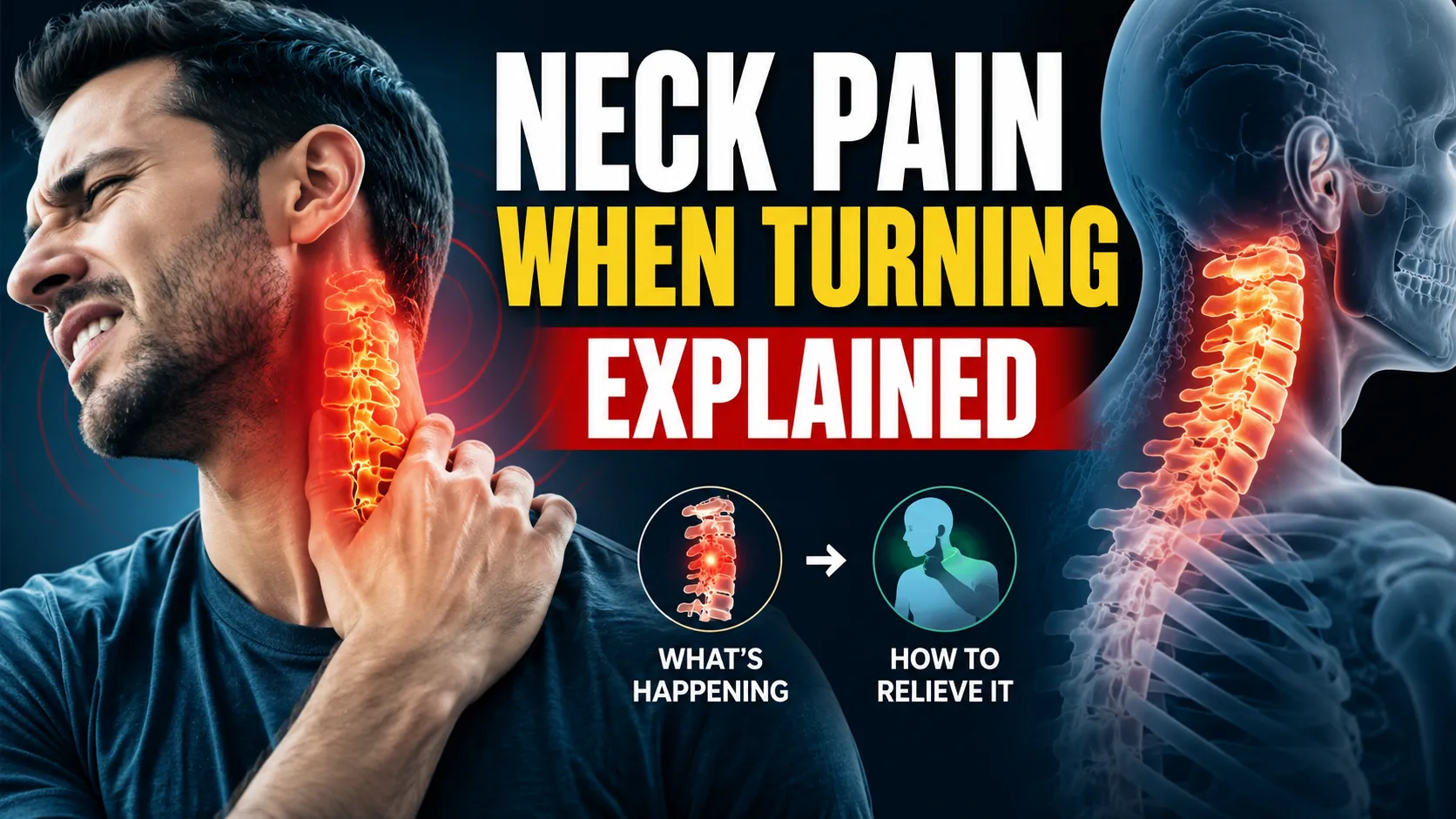
The neck is built for movement, but it is also easy to overload. Long sitting, phone use, stress, workouts, and poor sleep can all add tension to the same small area.
Muscle tension and soft tissue irritation
The upper trapezius, levator scapulae, and small muscles around the cervical spine can get tight from repeated posture strain. When these muscles tighten, turning your head may pull on irritated soft tissue.
Mayo Clinic lists muscle tightness, spasms, headache, and reduced ability to move the head as common neck pain symptoms. Their neck pain overview is helpful here: Mayo Clinic neck pain symptoms and causes.
Trigger points and fascia tightness
Trigger points are small tight spots in muscle tissue. They can feel like knots. A trigger point near the neck or shoulder may refer discomfort into the head, upper back, or shoulder area.
Fascia is connective tissue that surrounds muscles. When it feels stiff, sliding and movement can feel less smooth. This is one reason gentle massage, heat, and slow mobility work may help some people feel looser.
Posture, desk work, and sleep position
Many people notice neck pain after sitting all day. A low laptop, forward head posture, or long phone use can keep the neck muscles working harder than they should.
Sleep position also matters. A pillow that is too high, too flat, or too firm can hold your neck at an awkward angle for hours.
When nerves or joints may be involved
Sometimes neck pain is more than basic muscle tightness. If pain travels into your arm, causes tingling, or comes with weakness, a nerve may be irritated. That is a reason to get professional advice instead of only using home massage tools.
Common Reasons Your Neck Hurts When You Turn Your Head
Sleeping in an awkward position
This is one of the most common causes I see in everyday recovery routines. You wake up, try to turn your head, and one side feels locked.
This can happen if your neck stayed rotated or bent for too long while sleeping.
Desk posture and phone use
Leaning toward a laptop or looking down at a phone can strain the back and sides of the neck. Over time, your muscles may stay tight even after you stop working.
This is common for office workers, students, remote workers, drivers, and anyone who spends hours in one position.
Stress-related neck and shoulder tension
Stress often shows up in the shoulders. Many people raise or brace their shoulders without noticing. This can tighten the neck, upper traps, and jaw area.
A calming evening routine with heat, light massage, and slow breathing may help the muscles relax before sleep.
Workout soreness or overuse strain
Neck pain can happen after lifting, overhead work, cycling, swimming, or intense exercise. Sometimes the neck muscles work harder when the shoulders, upper back, or core are tired.
Poor pillow support
Your pillow should support a neutral neck position. If your head tilts up or drops down all night, your neck may feel sore when turning in the morning.
Sudden movement or mild strain
A quick twist, awkward reach, or sudden workout movement can irritate neck muscles. In mild cases, careful home care may help. But if the pain is severe or follows a fall or accident, get medical care.
Symptom vs Solution: What Your Neck Pain May Be Telling You
How to Relieve Neck Pain at Home Step by Step
Here is the simple routine I would start with for mild neck stiffness from posture, sleep position, or muscle tension.
Stop forcing the painful movement. Do not keep testing the sore turn every few minutes. Move within a comfortable range and give the tissue a chance to calm down.
Use heat or ice the smart way. Ice may feel better early if the area feels sharp or irritated. Heat often works well for tight, stiff muscles. Use either for short sessions and protect your skin.
Try gentle range-of-motion work. Slowly turn your head only as far as feels comfortable. Then return to center. Keep it smooth. Do not bounce or push into sharp pain.
Use light self massage around the tight area. Massage the upper shoulders, base of the skull, and sides of the neck with gentle pressure. Avoid pressing hard on the front of the neck.
Fix your desk and sleep setup. Raise your screen, relax your shoulders, and keep your phone closer to eye level. At night, use a pillow that keeps your neck neutral.
Track what makes it better or worse. Notice whether pain improves with heat, movement, rest, or posture changes. If it keeps getting worse, do not keep guessing.
Tip
For mild stiffness, I like combining heat with slow breathing before gentle massage. It helps many people relax the shoulders instead of guarding the neck.
Best Neck Self Massage Techniques for Tight Muscles
Self massage can be helpful when the pain feels muscular, tight, or stress-related. The key is to stay gentle. More pressure is not always better.
Fingertip neck massage
Use your fingertips to make slow circles along the sore muscles on the back and side of the neck. Keep pressure light to moderate. Stop if pain shoots, burns, or spreads.
Tennis ball upper back release
Place a tennis ball between your upper back and a wall. Roll slowly around the shoulder blade area. This can help loosen upper back tension that may pull on the neck.
Shoulder and trap massage
Many stiff neck problems start in the upper shoulders. Gently squeeze and knead the top of the shoulder. Stay away from the throat area and avoid hard pressure near the spine.
Gentle heat plus massage routine
Use a warm compress for 10 to 15 minutes. Then do light massage for 2 to 5 minutes. Finish with slow neck turns in a comfortable range.
Technique Comparison: What Works Best for Neck Pain When Turning?
Benefits of Massage and Recovery Tools for Neck Stiffness

Massage tools are not magic cures. But when used carefully, they can support a better home recovery routine.
May support relaxation
Light massage can help your shoulders drop and your breathing slow down after a long workday.
May improve comfort before sleep
A short heat and massage routine may help tight neck muscles feel calmer before bed.
May support better mobility
When muscles feel less guarded, gentle range-of-motion work may feel easier.
Healthline also lists home options such as heat, ice, gentle stretching, and posture changes for stiff neck relief. Their guide is here: Healthline stiff neck home remedies.
Best Tools and Product Recommendations for Neck Pain Relief
If your neck hurts when turning because of daily tension, desk posture, or sleep discomfort, the right tool may make your routine easier. I would keep it simple and start with gentle options.
Heated Neck and Shoulder Massager
A heated neck massager may help people who feel tightness in the upper shoulders after desk work, driving, or stress.
Adjustable Cervical Pillow
An adjustable cervical pillow may support a more neutral neck position for side and back sleepers.
Mini Massage Gun with Soft Attachment
A mini massage gun may help with upper shoulder and trap tightness, but it should be used lightly and never on the front of the neck.
Product Comparison: Neck Massager vs Pillow vs Massage Gun
Common Problems and Fixes
Common Mistakes to Avoid with Neck Pain
Stretching too hard
Hard stretching can irritate the area more. A good neck stretch should feel mild and controlled, not sharp.
Using a massage gun directly on the front of the neck
Do not use a massage gun on the throat or front of the neck. If you use percussion therapy, keep it on the upper shoulders and traps with light pressure.
Ignoring posture
A massage tool may feel good for a few minutes, but if your desk setup keeps pulling your head forward, the tightness may return.
Sleeping on poor support
If your pillow keeps your neck bent all night, morning pain may keep coming back. Pillow height matters more than most people think.
Waiting too long when symptoms are serious
Home care is not the right answer for every neck problem. Severe, spreading, or injury-related pain deserves professional attention.
Safety Tips: When Neck Pain Needs Medical Attention
Most mild neck stiffness improves with simple care. Mayo Clinic notes that mild to moderate neck pain often responds to self-care within a few weeks. Still, some symptoms should not be ignored. Their treatment overview is here: Mayo Clinic neck pain diagnosis and treatment.
Warning
Get medical help if neck pain follows a fall, car accident, or sports injury. Also get help if you have numbness, weakness, fever, severe headache, confusion, balance issues, or pain spreading down the arm.
Who should be extra careful with massage tools
- People with recent neck injury
- People with nerve symptoms like numbness or weakness
- People with severe osteoporosis or fragile skin
- People recovering from surgery
- People who feel dizzy during neck movement
- Anyone unsure whether massage is safe for their condition
Safe pressure rules
Use light pressure first. Stay on muscles, not bones. Avoid the throat. Do not chase pain. If a tool makes symptoms worse, stop using it.
FAQ: Why Does Neck Hurt When Turning?
Why does my neck hurt on one side when I turn it?
One-sided neck pain often comes from muscle tightness, sleeping in an awkward position, desk posture, or a mild strain. If pain spreads into your arm or comes with numbness or weakness, get medical advice.
Is it better to use heat or ice for neck pain?
Ice may feel better for fresh irritation or sharp soreness. Heat often works better for stiff, tight muscles. Use short sessions and protect your skin.
Should I massage my neck if it hurts to turn?
Gentle massage may help if the pain feels muscular or tense. Avoid hard pressure, avoid the front of the neck, and stop if pain spreads, burns, or feels sharp.
Can a bad pillow cause neck pain when turning?
Yes. A pillow that is too high, too flat, or unsupportive can hold your neck in a poor position overnight and leave it stiff in the morning.
How long does neck pain from sleeping wrong last?
Mild stiffness from sleeping wrong often improves within a few days with gentle care. If it does not improve, gets worse, or feels severe, consider getting checked.
Can stress make my neck hurt when turning?
Yes. Stress can make you tighten your shoulders, jaw, and neck without noticing. Relaxation, breathing, heat, and light massage may help reduce tension.
When should I worry about neck pain?
Worry if neck pain follows an injury, is severe, spreads down your arm, or comes with weakness, numbness, fever, severe headache, confusion, or balance problems.
Final thoughts
If your neck hurts when turning, start with the basics: don’t force the movement, use gentle heat or ice, try light self-massage, and fix your posture and sleep setup.
For most people, small daily changes work better than one aggressive stretch or one hard massage session. Keep it gentle, watch how your symptoms respond, and get medical help if the pain feels serious or isn’t improving.