If your knees feel sore, the best first steps are to reduce the activity that irritated them, use ice for swelling or heat for stiffness, keep the joint moving gently, and massage the muscles around the knee instead of pressing hard on the kneecap itself.
Sore knees can make simple things feel harder. Walking hurts. Stairs feel annoying. Even sitting too long can make the joint feel stiff when you stand up. I’m Ethan Carter, and I’ve spent years testing massage tools, recovery products, and pain relief methods. I focus on simple, practical advice that helps people feel better and recover faster at home. In this guide, I’ll show you what usually helps, what to avoid, and which tools are actually worth considering.
Quick Answer
For most mild to moderate knee soreness, I start with rest from aggravating activity, then choose ice if the knee feels swollen or warm and heat if it feels stiff or tight. After that, I use gentle movement, light self massage on the quads and calves, and support like compression if needed. If the pain is sharp, the knee looks very swollen, or you cannot put weight on it, it is smarter to stop home treatment and get medical advice.
What Sore Knees Usually Mean and Why It Matters
Common reasons knees feel sore
Knee soreness often shows up after overuse, long walks, workouts, standing all day, poor movement mechanics, or too much sitting. In many cases, the knee itself is not the only problem. Tight quads, calves, hamstrings, hips, or irritated soft tissue around the joint can increase pressure and make the knee feel stiff, achy, or tender.
I also see this in people with desk jobs. They sit for hours, then stand up and the knee feels rusty. That can happen when circulation drops, the joint stays in one position too long, and the surrounding muscles tighten up.
Why stiffness, swelling, and tight surrounding muscles make it worse
When the area around the knee gets tight, the joint may not move as smoothly. Range of motion can feel limited. You may notice soreness when bending down, using stairs, or standing after sitting. If there is mild inflammation or swelling, the knee may also feel puffy, warm, or heavy.
That is why knee relief is not just about the joint. It is also about calming irritation, improving circulation, and reducing muscle tension in the surrounding soft tissue.
How Knee Soreness Works in the Body
Muscle tension, soft tissue, fascia, and trigger points
The knee sits between the hips and ankles, so it takes stress from both directions. If your quads are tight, your calves are stiff, or your glutes are not supporting movement well, that stress can build up at the knee. Fascia and soft tissue around the thigh and lower leg can also get tight and create trigger points that change how the knee feels during everyday movement.
One thing I tell people all the time is this: do not attack the kneecap with deep pressure. Massage usually works better on the muscles that influence the knee, especially the quads, calves, hamstrings, and outer thigh. That is often where I get the best relief results at home.
Circulation, range of motion, and recovery time
Gentle movement helps bring blood flow into the area. Better circulation can support recovery and reduce that stiff, stuck feeling many people notice first thing in the morning or after sitting. When movement improves, range of motion often improves too, and the knee may feel less guarded.
Recovery time depends on what caused the soreness. Mild post-workout soreness may settle in a day or two. Overuse soreness from repetitive activity can take longer if you keep irritating the same pattern without changing anything.
How to Relieve Sore Knees at Home Step by Step
Step 1: Reduce irritation and calm swelling
If your knee got sore after a tough workout, a long day on your feet, or too many stairs, pull back for a day or two from the activity that made it worse. You do not need full bed rest in most cases, but you do want to stop feeding the irritation.
If the knee looks puffy or feels warm, I usually start with ice. Wrap an ice pack in a towel and use it for short sessions. If the knee is not swollen and mostly feels tight or stiff, heat may be the better first choice.
Step 2: Pick ice or heat based on your symptoms
Use ice when the knee is swollen, warm, or freshly irritated after activity. Use heat when the knee feels stiff, achy, or tight without much swelling. A lot of people use the wrong one and then wonder why the knee still feels off.
| Symptom | Best First Choice | Why It Helps |
|---|---|---|
| Warm, swollen, irritated knee | Ice | May help calm irritation and reduce swelling |
| Stiff knee after sitting or first thing in the morning | Heat | May loosen tight tissue and improve comfort |
| Dull ache after light activity | Heat or gentle movement | Can support circulation and mobility |
| Sore after a workout | Ice first, then light movement later | Can help settle irritation before recovery work |
Step 3: Restore gentle movement
Once the knee is calmer, I like to add easy movement. The goal is not to stretch aggressively. The goal is to reduce stiffness without irritating the joint.
Simple knee-friendly movement routine:
1. Straighten and bend the knee slowly for a minute.
2. Do a gentle calf stretch if it feels comfortable.
3. Tighten the front of the thigh for a few seconds, then relax.
4. Take a short easy walk on flat ground if walking does not increase pain.
This light mobility work often helps office workers, older adults, and anyone with that stiff, rusty feeling.
Step 4: Use self massage the right way
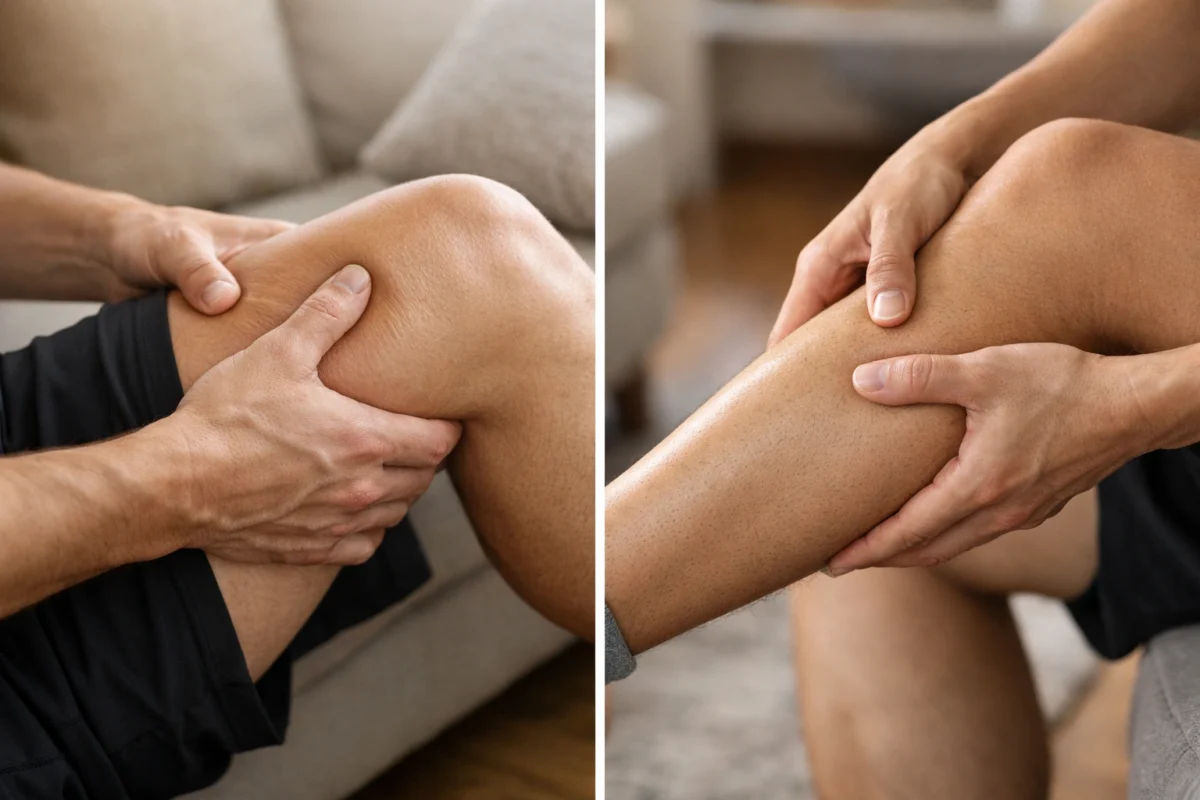
Self massage can be very helpful for sore knees, but technique matters. I do not recommend pounding the knee joint or digging hard into the kneecap. Instead, I work on the muscles around it.
Best spots to massage for sore knees:
Quads: The front of the thigh often gets tight and pulls on the area above the knee.
Calves: Tight calves can change how the knee tracks and feels during walking.
Hamstrings: Tension behind the leg can contribute to knee stiffness.
Outer thigh and hips: This area can feel especially tight after running, squats, or long periods of sitting.
Simple self massage routine:
1. Apply light to moderate pressure to the quads for 30 to 60 seconds per area.
2. Massage the calves with slow strokes from ankle toward knee.
3. Use a tennis ball or massage ball on the glutes or outer hip against a wall if those areas feel tight.
4. Stop if you feel sharp pain, tingling, or more swelling.
A massage gun can also help, but I only use it on the muscles around the knee, not directly on the joint. A soft ball attachment and a lower pressure setting are usually the safest place to start.
Step 5: Add support with compression, footwear, and posture
Compression can be useful when the knee feels mildly swollen, unsupported, or achy during daily activity. A simple sleeve may help you feel more stable and can be especially useful for travel, long workdays, or light walking.
Footwear matters too. Worn-out shoes can change how force moves through the knees. If your soreness gets worse after standing all day, poor shoe support may be part of the problem.
Posture and ergonomics also matter more than most people realize. If you sit with knees bent for long stretches, get up regularly, straighten the legs, and move around. Small changes in position can reduce stiffness fast.
Step 6: Adjust activity and recovery habits
If your sore knees keep coming back, look at your training volume, walking surface, squat depth, stair use, and recovery habits. Many people do too much too soon after soreness starts. That slows recovery and turns a small issue into a lingering one.
Sleep, hydration, and a little daily mobility work can make a real difference. I have found that a short consistent routine works better than doing one long aggressive recovery session once a week.
Benefits and Best Uses of These Knee Relief Methods
Best for post-workout soreness
If your knees feel sore after exercise, the most helpful combination is usually temporary activity reduction, ice if the joint feels irritated, and gentle soft tissue work on the quads and calves. This can support recovery without making the joint more sensitive.
Best for desk job stiffness
If your knees feel stiff after sitting, heat and movement usually work better than complete rest. A warm wrap followed by a short walk and light stretching often helps far more than staying still.
Best for older adults and daily aches
For older adults or anyone dealing with general daily knee aches, I usually lean toward gentler options: light heat, easy mobility, light self massage, supportive shoes, and compression during activity if it feels helpful.
Common Problems and Fixes
| Problem | Possible Reason | What Often Helps |
|---|---|---|
| Knees feel sore after walking | Overuse, poor shoes, tight calves or quads | Reduce walking volume for a day, check footwear, massage calves and quads, use compression if needed |
| Knees feel stiff after sitting | Low movement, poor circulation, tight soft tissue | Use heat, stand up more often, do gentle bends and leg straightening |
| Knees ache after leg day | Training load too high, limited recovery, tight surrounding muscles | Ice if irritated, gentle mobility, massage quads and hips, reduce load next session |
| Knees hurt going down stairs | Joint irritation, weak support muscles, tight thighs | Shorten stride, use handrail, reduce aggravating activity, support surrounding muscles with massage and mobility work |
| Knees feel puffy and tired by evening | Long standing, mild swelling, low recovery | Rest with legs elevated, use compression, ice if warm, reduce time on feet when possible |
Common Mistakes to Avoid
Using deep pressure directly on the knee joint: This is one of the biggest mistakes I see. The joint itself is usually not the best place for aggressive massage.
Using heat on a hot swollen knee: Heat is great for stiffness, but it is not always the right choice for fresh irritation or swelling.
Stretching too hard too soon: If the area is already irritated, aggressive stretching can make it feel worse.
Jumping back into workouts too fast: A sore knee often needs a short reset. Pushing through sharp or worsening pain usually backfires.
Ignoring hips, calves, and shoes: Knee discomfort often reflects what is happening above and below the joint.
Safety Tips and Best Practices
Home care is often enough for mild soreness, but there are times to be careful. Stop self treatment and get medical advice if the pain is severe, the knee is badly swollen, you heard a pop during injury, the knee locks, you cannot bear weight, or it keeps giving out.
You should also be more cautious with massage tools if the area is very inflamed, bruised, or recently injured. And if you have redness, fever, or major calf swelling, do not try to self-treat around it.
For general information on knee pain triggers, I recommend reading Cleveland Clinic’s knee pain overview. For basic rest, ice, compression, and elevation guidance, Mayo Clinic’s RICE guide is a useful refresher. If you want a broader plain-English overview, Healthline’s knee pain guide is also helpful.
Best Tools and Products for Sore Knees
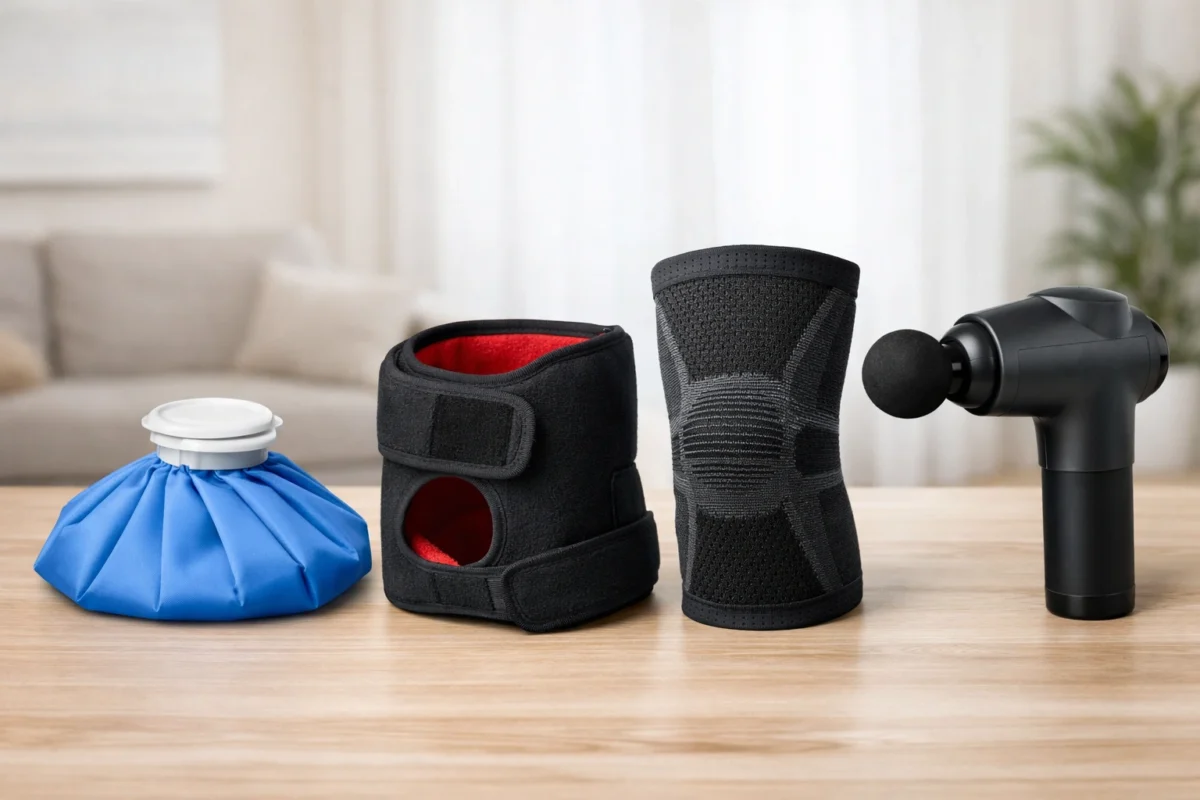
I do not think everyone with sore knees needs gear. But if you deal with stiffness, recurring daily aches, or post-workout soreness, a few tools can make home care easier and more consistent.
| Tool | Best For | How It Helps | Best For Who |
|---|---|---|---|
| Heating pad wrap | Stiff knees | Supports warmth and comfort before movement | Desk workers, older adults, daily aches |
| Compression knee sleeve | Light support and mild swelling | May improve comfort during walking or standing | Travel, workdays, easy activity |
| Massage gun with soft attachment | Tight quads and calves | Helps loosen surrounding muscles without deep manual effort | Post-workout recovery, active adults |
Best for heat therapy
A heating pad wrap is a great match when your knee feels stiff more than swollen. I like heat before mobility work, before an evening walk, or after sitting for long periods.
Knee Heating Pad Wrap
Best for stiff knees that feel better with warmth and gentle circulation support before movement.
Best for compression support
A compression sleeve is simple, affordable, and useful when the knee feels mildly swollen, unsupported, or achy during daily activity. It is not a cure, but many people find it helpful for comfort.
Compression Knee Sleeve
Best for light support during walking, standing, travel, and mild swelling after overuse.
Best for massage around the knee
If your soreness seems tied to tight quads, calves, or hips, a compact massage gun can save effort. Just keep the pressure moderate and stay off the kneecap itself.
Massage Gun With Soft Ball Head
Best for loosening quads and calves that may be adding tension around a sore knee.
Ice vs Heat vs Compression vs Massage: What Works Best for Sore Knees?
The best option depends on what the knee feels like, not just the fact that it hurts.
| Method | Best When | Main Benefit | Watch Out For |
|---|---|---|---|
| Ice | The knee is warm, irritated, or swollen | May help calm fresh soreness | Do not apply directly to bare skin |
| Heat | The knee feels stiff, tight, or achy | Can improve comfort and mobility | Avoid if the knee is hot and very swollen |
| Compression | You want light support during daily activity | May improve comfort and confidence while moving | Do not wear it so tight that it feels numb |
| Massage | The surrounding muscles feel tight | Can reduce soft tissue tension around the knee | Avoid deep direct pressure on the joint |
If I had to simplify it, I would say this: ice for irritation, heat for stiffness, compression for support, and massage for tight surrounding muscles. In the real world, many people do best with a mix of all four at different times.
FAQ
What is the fastest way to relieve sore knees at home?
The fastest approach is usually to stop the activity that irritated the knee, use ice for swelling or heat for stiffness, and do gentle movement once the area calms down.
Should I use ice or heat on sore knees?
Use ice when the knee is swollen, warm, or freshly irritated. Use heat when the knee feels stiff, tight, or achy without much swelling.
Is walking good for sore knees?
Easy walking on flat ground can help some people, especially when stiffness is the main issue. If walking makes the pain sharper or worse, reduce it for now.
Can a massage gun help sore knees?
Yes, but it works best on the quads, calves, and other muscles around the knee. Do not use aggressive pressure directly on the kneecap or painful joint line.
Why do my knees feel sore after sitting?
This often happens because the joint stays bent too long and the surrounding muscles get tight. Heat, standing up more often, and gentle movement usually help.
When should I worry about sore knees?
You should be more concerned if the knee is badly swollen, locks, gives out, follows a fall or twist, or you cannot put weight on it comfortably.
Conclusion
If your knees feel sore, start simple. Calm irritation, choose ice or heat based on the symptoms, move gently, and focus your massage work on the muscles around the joint. In my experience, consistency beats intensity almost every time. If you want extra support, tools like a heating wrap, compression sleeve, or massage gun can make your home routine easier without overcomplicating it.