Quick Answer
What helps arthritis pain most is a mix of gentle movement, heat, light massage, joint support, and smart pacing. Many people find that short walks, easy stretching, compression, warm therapy, and the right at-home tools can reduce stiffness, support circulation, and make everyday joint pain feel more manageable.
Arthritis pain can make normal tasks feel harder than they should. Getting out of bed. Opening a jar. Walking after sitting too long. I’m Ethan Carter, and I’ve spent years testing massage tools, recovery products, and pain relief methods. I focus on simple, practical advice that helps people feel better and recover faster at home. In this guide, I’ll show you what often helps, what to avoid, and which tools may be worth using.
Why Your Joints Feel Stiff and Painful in the First Place
Arthritis pain is not always just about the joint itself. In real life, it is often a mix of joint irritation, stiffness, swelling, and tight muscles around the area. That is why one person feels more pain in the morning, while someone else feels worse after a long day on their feet.
What arthritis pain usually feels like
Many people describe arthritis pain as aching, stiffness, soreness, or a deep grinding discomfort. Some joints feel tight after rest. Others get cranky after too much activity. Hands may hurt when gripping. Knees may feel stiff after sitting. Feet may ache after standing. Shoulders may feel limited and tense at the same time.
Why stiffness, inflammation, and surrounding muscle tension all matter
When a joint is irritated, the muscles around it often tighten up to protect it. That can reduce range of motion and make the area feel even more painful. Heat, light movement, and gentle soft tissue work may help those surrounding muscles relax. Cold can be useful when the joint feels hot, puffy, or especially irritated.
How posture, overuse, and low movement can make it worse
I see this all the time with desk workers, older adults, and people who push hard on busy days. Sitting too long can make knees, hips, neck, and hands feel stiff. Poor posture can add extra stress to already sensitive joints. Overuse can lead to swelling and recovery delay. On the other side, doing too little movement can leave joints feeling even tighter.
How Arthritis Pain Relief Actually Works
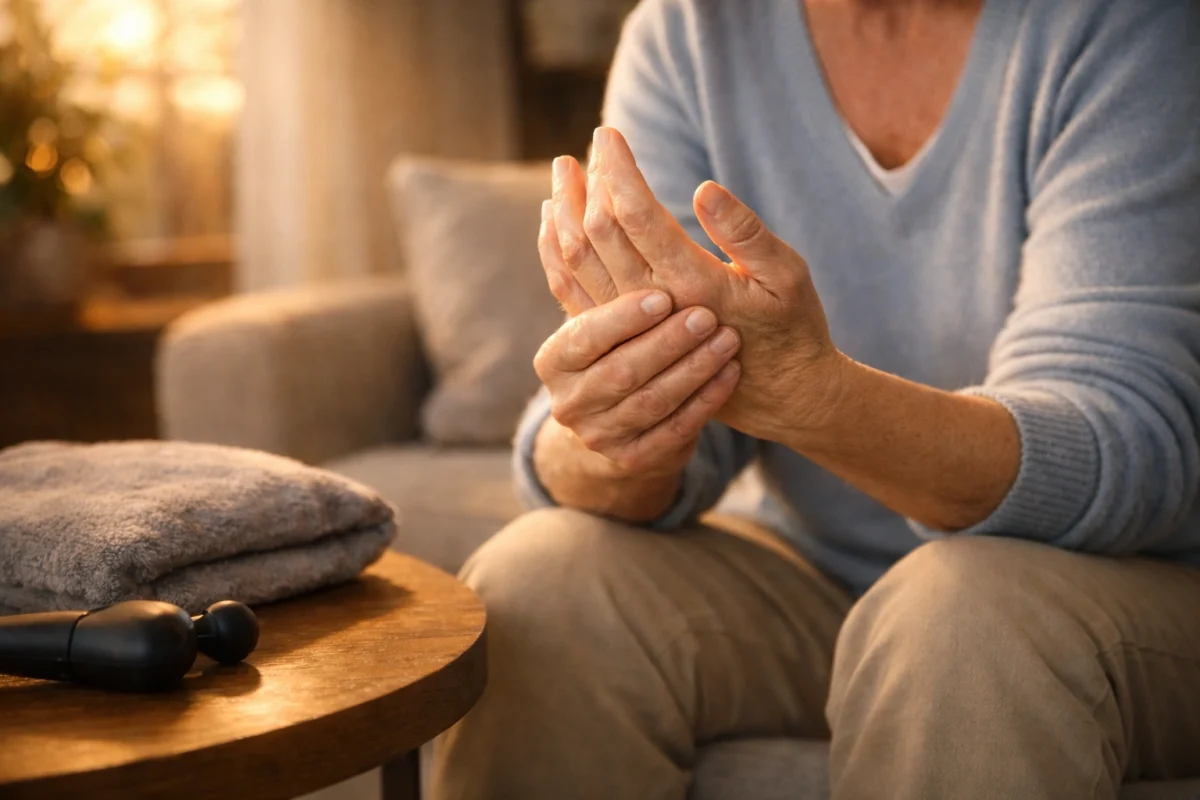
In my experience, the best arthritis pain relief plans do not rely on one thing. They stack small wins together. That usually means calming the irritated area, improving circulation, reducing muscle tension, and keeping the joint moving in a gentle way.
Calming irritation and swelling
When a joint feels angry, hot, or swollen, cold therapy may help settle things down. This is often helpful after a long walk, too much gripping, or a flare day. You are not trying to freeze the area. You are trying to calm it.
Improving circulation and range of motion
Heat therapy often works best for stiffness. Warmth can help blood flow, loosen tight soft tissue, and make movement feel easier. This is why a heating pad before morning stretching or a warm shower before a walk often feels so good.
Reducing soft tissue tightness around the joint
Not every ache needs direct pressure on the painful joint. In many cases, the better move is working on the muscles around it. For example, neck arthritis pain may feel worse when the upper traps are tight. Knee pain may feel worse when the quads and calves are stiff. Hand pain may feel worse when the forearm muscles are overworked.
Supporting recovery with pacing, sleep, and joint-friendly habits
Arthritis pain usually responds better to consistency than intensity. Short walks. Gentle stretching. Better desk setup. Smarter sleep positions. Taking breaks before you get sore instead of after. These boring basics often work better than chasing one miracle fix.
How to Relieve Arthritis Pain at Home Step by Step
This is the simple routine I recommend to most people who want practical home relief.
Step 1: Use heat or cold the right way
Use heat
-
- when the joint feels stiff, tight, or slow to move.
Use cold
-
- when the area feels swollen, hot, or irritated after activity.
Keep it short
- and comfortable. You want relief, not skin irritation.
Step 2: Do gentle movement instead of total rest
Very light movement may help more than full rest for many people. Try an easy walk, hand opening and closing, ankle circles, or slow shoulder rolls. The goal is to keep the joint from getting stiffer without pushing into sharp pain.
Step 3: Try light self massage around the joint
Focus on the muscles around the sore joint, not heavy pressure right on it. For hands, that may mean the forearms. For knees, the thighs and calves. For shoulders, the upper back and chest. A tennis ball, warm hands, or a gentle massager can work well when used carefully.
Step 4: Support the joint with compression or better ergonomics
Compression gloves, knee sleeves, cushioned footwear, supportive chairs, and a better keyboard setup can all reduce daily strain. These do not cure arthritis, but they can make flare-ups less frequent and movement less aggravating.
Step 5: Build a simple morning and evening routine
Morning is a great time for heat and light mobility. Evening is a good time for gentle stretching, stress relief, and a short massage session on surrounding muscles. This kind of routine often works better than waiting for pain to get bad.
What Helps Arthritis Pain Most Day to Day
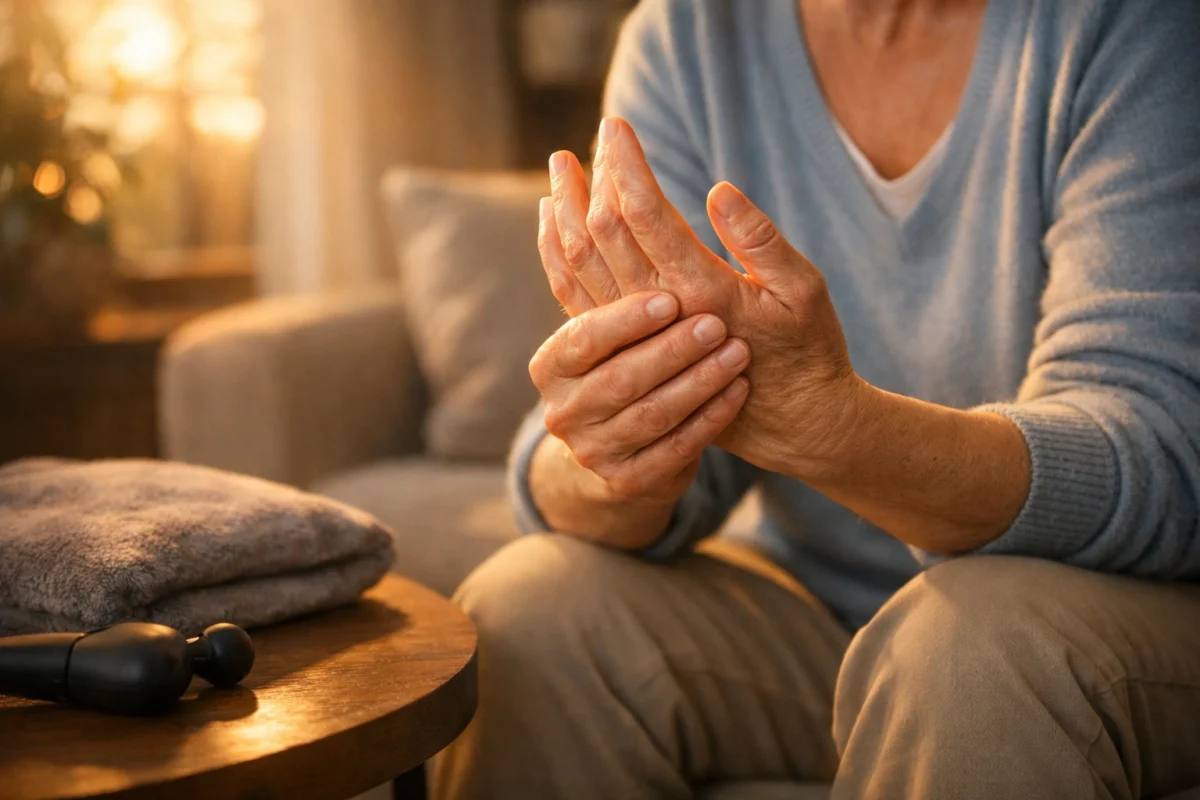
Gentle exercise and mobility work
Easy movement is one of the most reliable tools for arthritis pain. Many people do well with walking, light stretching, chair exercises, or short mobility sessions. The sweet spot is usually doing enough to stay loose without pushing hard enough to create a flare.
Heat therapy for stiffness
Heat tends to work best when your joints feel stiff, achy, or hard to move. I especially like it in the morning, after long desk hours, or before a short exercise session. A heating pad is often the simplest way to start.
Cold therapy for hot or swollen flares
If the area feels more swollen than stiff, cold can be the better choice. It can also be useful after a day with more walking, more standing, or more hand use than usual.
Massage and self massage for tight surrounding muscles
Massage may help arthritis pain when muscle tightness is adding to the problem. That is common in the neck, shoulders, hands, hips, and knees. Gentle pressure, light vibration, and warm self massage often work better than aggressive deep pressure.
Better sleep, stress relief, and activity pacing
Stress can make muscles tighten up and may make pain feel louder. Poor sleep can do the same. A calming evening routine, supportive pillows, and taking movement breaks during the day can make a real difference over time.
Symptom vs What Usually Helps Most
| Symptom | What Often Helps | What to Avoid | Best For |
|---|---|---|---|
| Morning stiffness | Heat, warm shower, easy mobility | Jumping straight into hard activity | Hands, knees, hips, shoulders |
| Hot or swollen flare | Cold therapy, rest, lighter activity | Heavy massage, strong heat | Sudden irritation after overuse |
| Hand pain when gripping | Compression gloves, warm hand routine, forearm massage | Long gripping sessions without breaks | Desk work, cooking, hobbies |
| Knee pain after sitting | Short walk, quad and calf mobility, light heat | Staying seated too long | Office workers, drivers |
| Shoulder tightness with arthritis | Gentle massage around upper back, heat, posture reset | High-pressure tools on the joint | Stress tension, desk posture |
| Foot or ankle soreness after standing | Supportive shoes, cold after activity, calf massage | Flat unsupportive footwear | Retail work, travel, long standing |
| Nighttime discomfort | Heat before bed, light stretching, pillow support | Late heavy activity | People with sleep disruption |
Best Massage and Recovery Tools for Arthritis Pain
Because this keyword has real product relevance, I think a few home tools can be useful here. I would just be selective. The best tools are usually the ones that calm stiffness and support daily comfort without beating up a sensitive joint.
Heating pads
A heating pad is one of the easiest and most practical tools for arthritis pain. It is especially useful for stiff hands, knees, shoulders, neck, and lower back. I like it before light stretching or first thing in the morning.
Thermophore MaxHEAT Heating Pad
A simple heat option that may help loosen stiff joints and the tight muscles around them before gentle movement.
Compression gloves or sleeves
Compression is not flashy, but it often works well for people who want support during daily tasks. Gloves can be useful for hand stiffness, especially in the morning or during desk work. Sleeves can support elbows or knees during light activity.
Copper Compression Arthritis Gloves
A lightweight option many people use for hand support, warmth, and easier daily movement.
Hand massagers and gentle vibration tools
These can be helpful for people with hand stiffness who prefer light pressure and warmth. I would keep the intensity low and stop if the area feels more irritated instead of better.
Shiatsu pillows for neck, shoulder, or back tension
These can help when arthritis pain is made worse by muscle tension around the area. I like them more for the surrounding soft tissue than for direct pressure over a tender joint.
Zyllion Shiatsu Back and Neck Massager
Best used on tight surrounding muscles in the neck, shoulders, and upper back when tension is feeding into joint discomfort.
When high-pressure tools are not the right choice
This is where I think people get into trouble. A massage gun or aggressive deep tissue session is not always a match for arthritis pain. If a joint is hot, swollen, very tender, or actively flaring, strong percussion and hard pressure may make it feel worse. These tools usually make more sense on the surrounding muscles, with low pressure, short sessions, and common sense.
Heat vs Ice vs Massage vs Massage Gun
| Option | Best Use | Main Benefit | Downside | Best For |
|---|---|---|---|---|
| Heat | Stiff, achy joints | Helps loosen tissue and improve comfort before movement | Not ideal for hot swollen flares | Morning stiffness, desk-job tightness |
| Ice | Swollen or irritated joints | May calm soreness after overuse | Can feel too intense on very sensitive areas | Flare days, post-activity soreness |
| Gentle massage | Tight muscles around the joint | Supports relaxation and circulation | Too much pressure can backfire | Neck, shoulders, forearms, calves |
| Massage gun | Surrounding muscle tension only | Fast relief for tight soft tissue | Often too aggressive directly on painful joints | Athletes or active adults with muscle tightness around arthritis |
| Compression gloves or sleeves | Daily support | Light support and warmth | Does not reduce a flare on its own | Hands, elbows, knees |
Common Problems and Fixes
| Problem | Likely Cause | Practical Fix |
|---|---|---|
| Your joints feel worst first thing in the morning | Overnight stiffness and low circulation | Use heat, then do 5 to 10 minutes of gentle movement before heavy tasks |
| Your hands ache during desk work | Long gripping, keyboard strain, poor wrist setup | Use compression gloves, take grip breaks, and improve desk ergonomics |
| Your knee hurts after sitting too long | Stiff quads, hips, and limited circulation | Stand up every hour, walk briefly, and stretch the front of the thighs |
| Your shoulder feels locked up | Joint stiffness plus upper-back and chest tightness | Use gentle heat and soft tissue work around the shoulder, not deep pressure on it |
| Your feet or ankles hurt after standing | Overuse, poor support, tired calves | Switch to supportive footwear, elevate when needed, and use cold after long days |
| You feel worse after using a massager | Too much pressure or wrong tool choice | Lower the intensity, shorten the session, or switch to heat and gentler manual work |
Common Mistakes to Avoid
Overdoing activity on a good day
This is one of the biggest mistakes I see. You feel better, so you do everything at once. Then the joint gets irritated and the next day is rough. Pacing is usually the smarter play.
Using too much pressure on painful joints
More pressure is not always more relief. With arthritis pain, lighter pressure often works better, especially if you are using a massage tool at home.
Staying still too long
Rest has value, but too much of it can increase stiffness. Short movement breaks often help more than long periods of sitting or lying down.
Ignoring sleep setup and daily posture
Your pillow, chair, keyboard height, and footwear affect your joints more than most people realize. Small ergonomic changes can lower daily strain.
Safety Tips and Best Practices
Home relief can be very helpful, but it still needs common sense.
- Do not use heavy pressure directly on a hot, swollen, or very tender joint.
- Start any massage tool on the lowest setting and keep sessions short.
- Use massage on the surrounding muscles more than the joint itself.
- Stop if a tool causes sharp pain, lingering irritation, or more swelling.
- Be extra careful if you already know certain movements or pressure make your flare-ups worse.
For more general guidance on arthritis symptoms and treatment basics, these overviews from Cleveland Clinic and Mayo Clinic are useful starting points.
If pain is rapidly getting worse, the joint is unusually red or swollen, or you cannot use the joint normally, it is a good idea to get medical advice instead of pushing through.
FAQ
What helps arthritis pain fast at home?
Heat for stiffness, cold for swelling, and a few minutes of gentle movement often help fastest at home. Light massage around the joint and compression can also make daily pain feel more manageable.
Is heat or ice better for arthritis pain?
Heat is usually better for stiff, achy joints, while ice is often better for hot or swollen flare-ups. Many people end up using both at different times.
Does massage help arthritis pain?
Massage may help when tight muscles around the joint are adding to the pain. Gentle pressure usually works better than deep pressure on sensitive joints.
Are massage guns good for arthritis?
Massage guns can help tight muscles around an arthritic area, but they are not always a good choice directly on a painful joint. Use low pressure and avoid hot, swollen, or very tender joints.
What exercise helps arthritis pain?
Gentle movement usually helps most, such as walking, easy stretching, hand mobility drills, and simple range-of-motion work. The goal is regular movement without overdoing it.
What should you avoid during an arthritis flare?
You should usually avoid aggressive massage, high-pressure tools, and pushing through painful activity during a flare. Short rest, cold therapy, and lighter movement are often a better fit.
Do compression gloves help arthritis pain?
Compression gloves may help by adding light support, warmth, and comfort during daily tasks. They often work best as part of a bigger routine, not as a standalone fix.
Conclusion
What helps arthritis pain most is rarely one magic tool. It is usually a smart mix of heat or cold, gentle movement, better support, and careful massage around the area. If you want the simplest place to start, build a short morning and evening routine and add one or two tools that make daily life easier. That tends to be the most realistic path to steady relief at home.