Quick Answer: Knee swelling usually happens when fluid builds up in or around the joint. Common causes include injury, overuse, arthritis, bursitis, tendinitis, and irritation from repetitive movement. Mild cases may improve with rest, cold therapy, compression, and gentle recovery habits.
A swollen knee can feel tight, stiff, and frustrating.
Sometimes it starts after exercise. Sometimes it shows up after a long day on your feet. And sometimes it happens without one clear cause.
I’m Ethan Carter, and I’ve spent years testing massage tools, recovery products, and pain relief methods. I focus on simple, practical advice that helps people feel better and recover faster at home.
In this guide, I’ll explain what causes knee swelling, what may help at home, when massage tools make sense, and when you should stop self-treatment and get medical advice.
Quick Answer
Knee swelling is usually a sign that the joint or nearby soft tissue is irritated. That irritation can come from a twist, overuse, arthritis, tendon stress, bursitis, or fluid buildup inside the joint. The best first step is to reduce irritation and avoid making the swelling worse.
Why Knee Swelling Happens in the First Place
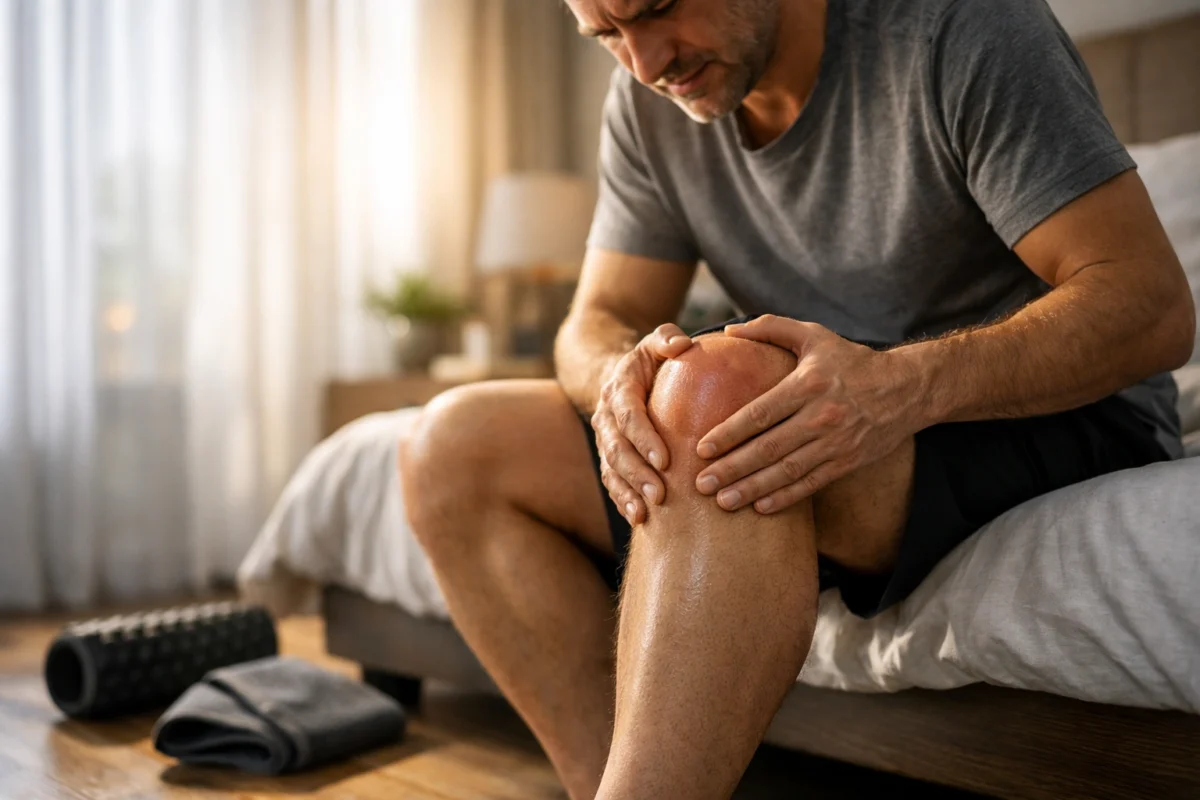
What swelling usually means
In simple terms, swelling means your body is reacting to stress. The knee may collect extra fluid inside the joint, or the tissue around it may become inflamed. That can make the area look puffy and feel tight.
Why it matters
Swelling is not just about appearance. It can limit movement, make walking uncomfortable, and create pressure inside the joint. That is why even mild swelling can make the knee feel weak or stiff.
Why pain and stiffness often show up too
When the knee is irritated, the body tries to protect it. That can lead to reduced range of motion, soreness, and stiffness, especially after sitting, walking, or climbing stairs.
How Knee Swelling Works in the Body
The knee is a busy joint. It handles body weight, absorbs impact, and relies on muscles, tendons, ligaments, cartilage, and fluid to move smoothly.
When one part gets overloaded, the area can become irritated. That irritation may trigger inflammation and fluid buildup. The result is a swollen knee that feels harder to bend or straighten.
In real life, this often happens when tight quads, weak glutes, sore calves, or poor movement mechanics force the knee to do more work than it should.
The Most Common Causes of Knee Swelling
1. Injury or sudden trauma
A twist, awkward landing, fall, or direct hit can cause swelling quickly. This may happen with ligament strain, meniscus irritation, or impact to the kneecap area.
If swelling comes on fast after an injury, the knee needs extra care.
2. Overuse and repetitive stress
This is one of the most common causes I see. Running, squats, sports, stair climbing, hiking, and long walks can all irritate the knee if volume goes up too fast.
Even daily habits matter. Standing for hours, repetitive kneeling, or doing too much lower-body training without enough recovery can lead to swelling.
3. Arthritis and joint wear
Arthritis can cause recurring knee swelling, especially in older adults. In these cases, the knee may also feel stiff in the morning or achy after long periods of sitting.
The swelling often comes and goes based on activity level, joint irritation, and overall recovery.
4. Bursitis
Bursae are small fluid-filled sacs that reduce friction. When one gets irritated, the area may become puffy and tender. This is common in people who kneel a lot or repeat the same knee-heavy movement over and over.
5. Tendinitis
Tendons around the knee can become irritated from repetitive jumping, running, or overtraining. This can lead to soreness, tenderness, and mild swelling near the tendon.
6. Fluid buildup without one clear cause
Sometimes there is no dramatic injury. The knee may swell because several smaller issues stack up together, such as:
- Tight muscles around the knee
- Poor recovery after workouts
- Limited ankle or hip mobility
- Long desk-job sitting followed by sudden activity
- Chronic joint irritation
7. Infection or severe inflammation
This is less common, but it matters. If the knee is very warm, very red, sharply painful, or you also have fever or feel ill, that is not a normal recovery situation.
Quick Symptom Table: What the Swelling May Be Telling You
| What you notice | Possible cause | What may help first | When to get checked |
|---|---|---|---|
| Swelling after a twist or fall | Injury or internal irritation | Rest, cold therapy, compression, elevation | If pain is severe or you cannot bear weight |
| Puffy knee after exercise | Overuse strain | Reduce activity, ice, gentle recovery work | If it keeps returning |
| Recurring swelling and stiffness | Arthritis or chronic irritation | Activity pacing, mobility work, light support | If movement keeps getting worse |
| Tender swelling in one spot | Bursitis or tendinitis | Cold therapy, rest from aggravating movement | If swelling does not settle |
| Hot, red, very painful knee | Infection or severe inflammation | Do not massage or heat it | Get urgent medical care |
How to Relieve Knee Swelling at Home Step by Step
Step 1: Reduce the load
Stop the activity that seems to be making the knee worse. That does not mean full bed rest. It usually means backing off intense movement while keeping light, comfortable motion in your day.
Step 2: Use cold therapy
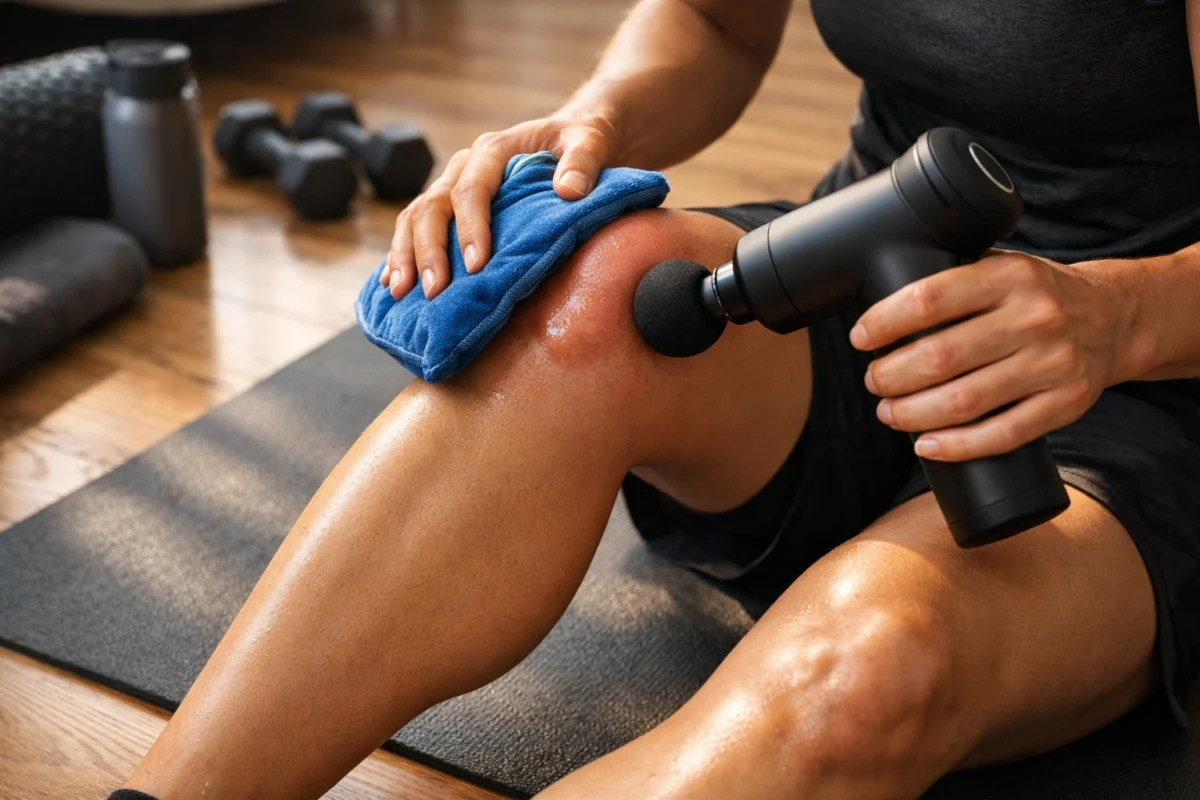
Cold therapy often works best when the knee feels warm, puffy, or freshly irritated. A cold wrap can be more convenient than a loose ice pack because it stays in place better.
Step 3: Try light compression
A compression sleeve may help reduce that heavy, full feeling in the knee. It should feel supportive, not tight or restrictive.
Step 4: Elevate when resting
When you are sitting or lying down, support the leg so the knee is slightly elevated. This may help reduce pooling and make the joint feel less tight.
Step 5: Add gentle mobility
Once the swelling starts easing, gentle movement often helps more than doing nothing. Simple range-of-motion work, light walking, and easy stretching for the quads, calves, and hips can support recovery.
Can Massage Help a Swollen Knee?
When massage may help
Massage may help when the main issue is muscle tightness around the knee. Tight quads, hamstrings, calves, and outer thigh tissues can all increase stress on the joint.
In those cases, gentle work around the knee may support comfort and mobility.
When massage is not a good idea
If the knee is hot, sharply painful, badly swollen, or freshly injured, deep massage is usually not the right move. Direct pressure may irritate the area more.
Best self-massage approach
I usually recommend focusing on the surrounding muscles instead of pressing directly on the swollen spot. That can include:
- Foam rolling the quads
- Gentle massage gun use on the thigh and calf
- Massage ball work on glutes and outer hip
This approach often works better because it reduces tension without overloading the irritated joint itself.
Benefits of Addressing Knee Swelling Early
- Better range of motion
- Less stiffness after sitting
- More comfortable walking
- Smoother post-workout recovery
- Less compensation in the hips and ankles
- Better comfort during sleep and daily activity
Best Tools for Knee Swelling Relief at Home
You do not need a huge setup. A few practical tools can make home recovery easier when used correctly.
Cold therapy knee wrap
This is one of the most useful tools for fresh swelling or post-activity flare-ups.
Cold Therapy Knee Wrap
A simple option for cooling the knee after exercise, long walks, or mild swelling flare-ups.
Compression knee sleeve
A knee sleeve may help during daily movement, especially when the knee feels puffy or mildly unstable.
Compression Knee Sleeve
Useful for light support during walking, workdays on your feet, and gentle recovery movement.
Massage gun for surrounding muscle tension
If your knee issues are tied to tight quads or calves, a massage gun may help support recovery. Just avoid aggressive pressure directly on the swollen joint.
Percussion Massage Gun
Best for reducing muscle tightness above and below the knee during home recovery routines.
Comparison Section
Ice vs heat for knee swelling
| Option | Best for | Main benefit | When to avoid |
|---|---|---|---|
| Ice | Fresh swelling, warmth, post-workout flare-ups | May help calm puffiness and soreness | Avoid direct contact with bare skin |
| Heat | Muscle stiffness after swelling settles | May help surrounding tissues relax | Usually not ideal for a hot, swollen knee |
Compression sleeve vs cold wrap
| Tool | Best use | Why people like it | Limitation |
|---|---|---|---|
| Compression sleeve | Daily support and mild swelling | Easy to wear while moving | Can feel uncomfortable if too tight |
| Cold wrap | Fresh irritation and post-activity swelling | Direct cooling support | Not designed for long wear |
Massage gun vs foam roller for tight muscles around the knee
| Tool | Best for | Main advantage | Best for who |
|---|---|---|---|
| Massage gun | Quick relief for quads and calves | Fast and easy to use | People who want convenient home use |
| Foam roller | General mobility and recovery work | Affordable and versatile | People who do regular stretching and mobility routines |
Common Problems and Fixes
My knee keeps swelling after workouts
You may be returning to full activity too quickly. Reduce the volume, shorten the session, and improve your recovery routine between workouts.
Compression makes my knee feel worse
The sleeve may be too tight, or the joint may be too irritated for all-day use. Try shorter wear time or switch to cold therapy first.
Heat seems to make it puffier
That can happen when the knee is still actively inflamed. In that case, cold therapy is usually the better option.
Massage irritates the area
Back off direct pressure and work farther away from the joint. Focus on the thigh, calf, and hip muscles instead.
The swelling goes down, then comes back
This usually means the root issue is still there. Common reasons include overuse, poor footwear, weak glutes, tight quads, or returning to exercise too soon.
Common Mistakes to Avoid
- Using heat too early on a hot, swollen knee
- Massaging directly over obvious swelling
- Jumping back into workouts too fast
- Wearing overly tight compression
- Ignoring loss of motion or instability
- Pushing through sharp pain during activity
Safety Tips and Best Practices
Home recovery tools can be helpful, but they are not right for every situation.
Stop self-treatment and get medical advice if:
- You cannot bear weight well
- The knee locks or gives out
- You cannot fully bend or straighten the knee
- The swelling is severe or getting worse fast
- The knee is hot, red, and very painful
- You also have fever or feel unwell
For general medical information on knee swelling and knee pain, these resources are worth reading:
FAQ
What causes knee swelling without injury?
Knee swelling without a clear injury may come from overuse, arthritis, bursitis, tendinitis, or chronic irritation that has built up over time.
Can walking too much cause knee swelling?
Yes. Long walks, standing for hours, or increasing activity too quickly can irritate the knee and lead to swelling.
Should I ice a swollen knee or use heat?
Ice is usually the better first choice for a fresh, warm, or puffy knee. Heat may help later if stiffness becomes the main issue.
Is massage good for knee swelling?
Massage may help when tight muscles around the knee are part of the problem, but deep pressure directly on a swollen knee is usually not a good idea.
How long does knee swelling take to go down?
Mild swelling may settle in a few days with rest and recovery support, but the timeline depends on what caused it and whether the joint keeps getting irritated.
When should I worry about a swollen knee?
You should take it more seriously if you cannot bear weight, the knee is very red or hot, pain is severe, movement is limited, or you also have fever.
Conclusion
Knee swelling usually means the joint is reacting to stress, irritation, or overload. The most common causes are injury, overuse, arthritis, bursitis, and tendon irritation.
The good news is that many mild cases respond well to smarter recovery habits, cold therapy, light compression, and less stress on the joint while it settles down.
If you are building a simple at-home setup, a cold wrap, a supportive knee sleeve, and one tool for surrounding muscle recovery are the most practical places to start.