Say goodbye to workplace sciatica pain with our ultimate guide. Learn how to optimize your office setup, master pain-reducing sitting posture, and integrate crucial movement breaks. Discover essential accessories and lifestyle tips to achieve a sciatica pain-free workday, transforming your comfort and productivity. This comprehensive resource empowers you to manage and alleviate sciatica symptoms, making long hours at your desk much more bearable.
Working in an office often means spending long hours sitting at a desk. For anyone suffering from sciatica, this can quickly turn into a daily battle against persistent and sometimes debilitating pain. Sciatica, characterized by pain radiating along the sciatic nerve from your lower back down one or both legs, can make even the simplest tasks uncomfortable, let alone a full workday.
But here’s the good news: you don’t have to surrender to the pain. By making smart adjustments to your office setup, sitting habits, and daily routine, you can significantly reduce sciatica symptoms and reclaim your comfort. This comprehensive guide will walk you through practical, step-by-step strategies to transform your workday into a pain-free experience. We’ll cover everything from ergonomic adjustments and proper posture to essential accessories and crucial movement breaks, all designed to help you manage your sciatica effectively.
Get ready to learn how to create an office environment that supports your body, so you can focus on your work, not your sciatica pain.
Key Takeaways
- Prioritize Ergonomics: Invest in or adjust your chair, desk, and monitor to create a supportive and aligned workstation, crucial for managing sciatica.
- Master Proper Posture: Always sit with your feet flat, knees and hips at a 90-degree angle, and a naturally curved lower back using lumbar support to reduce pressure on the sciatic nerve.
- Embrace Regular Movement: Never sit for more than 30-60 minutes without taking a micro-break to stand, walk, or stretch. Movement is vital for preventing sciatica flare-ups.
- Utilize Supportive Accessories: Lumbar cushions, footrests, and specialized seat cushions can significantly enhance comfort and correct posture, offering targeted relief for sciatica.
- Integrate Desk Stretches: Perform gentle, low-impact stretches at your desk to alleviate stiffness, improve circulation, and release tension that can contribute to sciatica pain.
- Beyond the Desk Matters: Hydration, nutrition, regular exercise, and stress management are essential lifestyle factors that profoundly impact your overall sciatica relief and well-being.
Understanding Sciatica and Its Triggers
Before diving into solutions, let’s briefly understand what sciatica is and why prolonged sitting can be such a common trigger. Sciatica isn’t a condition itself but rather a symptom of an underlying problem that puts pressure on the sciatic nerve, the longest and thickest nerve in your body. This pressure can come from a herniated disc, spinal stenosis, piriformis syndrome, or other issues in the lower back.
When you sit, especially for extended periods with poor posture, you increase the load on your lumbar spine and pelvic area. This can compress the discs in your lower back, irritate the piriformis muscle, or directly pinch the sciatic nerve. Poor circulation and muscle stiffness from inactivity also contribute to discomfort and can worsen existing sciatica pain. Understanding these mechanisms is the first step toward effective management.
The Foundation: Your Ergonomic Setup
Your office setup is the cornerstone of a pain-free workday with sciatica. Even minor adjustments can make a huge difference in alleviating pressure on your sciatic nerve. Think of your workspace as an extension of your body, designed to support its natural alignment.
Visual guide about Master Office Sitting Tips for Sciatica Pain Free Workday
Image source: bodsupport.com
Choosing the Right Chair
An ergonomic chair is a game-changer for sciatica. It allows for adjustability to fit your unique body and support proper posture. Look for features like:
- Adjustable Seat Height: Your feet should be flat on the floor (or a footrest) with your knees at a 90-degree angle, or slightly wider than 90 degrees if that feels better.
- Lumbar Support: A good chair will have a backrest that supports the natural inward curve of your lower back, where your sciatic nerve originates. Many have adjustable lumbar support, allowing you to fine-tune it.
- Adjustable Armrests: They should support your forearms lightly, allowing your shoulders to relax, not shrug. Your elbows should be at roughly a 90-degree angle when typing.
- Seat Depth: Ensure there’s about 2-4 inches between the front edge of your seat and the back of your knees. This prevents pressure on the back of your thighs, which can impede circulation and irritate your sciatica.
Desk Height and Monitor Placement
Your desk height should complement your chair. Ideally, your forearms should be parallel to the floor when typing, with your wrists straight. If your desk isn’t adjustable, you might need to adjust your chair height and use a footrest.
- Monitor Position: Place your monitor directly in front of you, about an arm’s length away. The top of the screen should be at or slightly below eye level. This prevents neck strain, which can indirectly contribute to back issues and exacerbate sciatica.
- Multiple Monitors: If you use two monitors, center them both in front of you, or place your primary monitor directly in front and the secondary one to the side, turning your head only minimally.
Keyboard and Mouse Ergonomics
These seemingly small details can have a big impact over hours of use. Keep your keyboard and mouse close to your body to avoid reaching, which can strain your shoulders and upper back.
- Neutral Wrist Position: Your wrists should be straight, not bent up, down, or to the side. Consider an ergonomic keyboard or wrist rests if needed, but use wrist rests only during pauses, not while actively typing.
- Mouse Placement: Use a mouse that fits your hand comfortably and try to keep your elbow close to your body. Experiment with different types of mice, like a vertical mouse, if you experience discomfort.
Mastering the Art of Sitting for Sciatica Relief
Even with the best ergonomic setup, how you actually sit is paramount. Conscious effort to maintain proper posture can significantly reduce irritation of the sciatic nerve. It’s not just about what you sit on, but how you sit.
Visual guide about Master Office Sitting Tips for Sciatica Pain Free Workday
Image source: cdn.shopify.com
The “Ideal” Sciatica-Friendly Posture
Aim for this posture as much as possible, remembering that movement and changing positions are even more important than maintaining one “perfect” pose constantly:
- Feet Flat: Both feet should be flat on the floor or a footrest. Avoid crossing your legs, which can misalign your hips and put pressure on your sciatic nerve.
- Knees at 90 Degrees: Your knees should be roughly at the same height as your hips, or slightly lower, creating a 90-degree angle.
- Hips All the Way Back: Sit as far back in your chair as possible so your lower back is fully supported by the chair’s backrest or lumbar cushion.
- Gentle Lumbar Curve: Maintain the natural inward curve of your lower back. Avoid slumping or arching excessively.
- Shoulders Relaxed: Keep your shoulders down and relaxed, not hunched up towards your ears.
Utilizing Lumbar Support
A good lumbar support cushion or the built-in support of your ergonomic chair helps maintain the natural curve of your lower spine. This reduces pressure on the discs and ligaments in your lower back, directly impacting sciatica relief. If your chair lacks adequate lumbar support, a rolled towel or a specialized lumbar cushion can be a great addition.
Managing Leg and Foot Placement
Be mindful of your leg and foot positions. Avoid anything that creates pressure points or twists your spine. Crossing your legs or tucking them under your chair can misalign your pelvis and increase sciatica symptoms. A footrest can be incredibly helpful if your feet don’t comfortably reach the floor, or if you benefit from elevating them slightly to open up your hip angle.
Integrating Movement and Breaks
This might be the single most important tip for managing sciatica in the office: movement is medicine. Prolonged static positions are detrimental to back health and will almost certainly aggravate sciatica. Your body is designed to move, not to sit still for hours on end.
Visual guide about Master Office Sitting Tips for Sciatica Pain Free Workday
Image source: cdn.shopify.com
The Power of Micro-Breaks
Aim to take a short break every 30-60 minutes. This doesn’t mean leaving your desk for a coffee break every hour, although longer breaks are good too. A micro-break can be as simple as:
- Standing up and stretching for 30 seconds.
- Walking to the water cooler or restroom.
- Doing a quick pelvic tilt or shoulder roll.
These frequent, brief movements improve circulation, reduce muscle stiffness, and decompress your spine, offering significant sciatica relief.
Standing Desks: A Game Changer?
A standing desk can be an excellent investment for sciatica sufferers, but it’s not a complete solution on its own. The key is to alternate between sitting and standing. Standing for too long can also be detrimental, especially if you have poor standing posture or other underlying conditions. Start with short periods of standing (15-30 minutes) and gradually increase as tolerated.
- Proper Standing Posture: When standing, distribute your weight evenly on both feet. Keep a slight bend in your knees, avoid locking them. Engage your core gently.
- Anti-Fatigue Mat: If you use a standing desk, an anti-fatigue mat can significantly reduce foot and leg strain.
Gentle Stretches at Your Desk
Incorporating specific stretches throughout your day can alleviate tension and improve flexibility, directly benefiting your sciatica.
- Pelvic Tilts: While seated, gently rock your pelvis forward and backward.
- Seated Piriformis Stretch: Sit tall, cross one ankle over the opposite knee. Gently lean forward with a straight back until you feel a stretch in your glute. Hold for 20-30 seconds, then switch sides. This is excellent for piriformis syndrome-related sciatica.
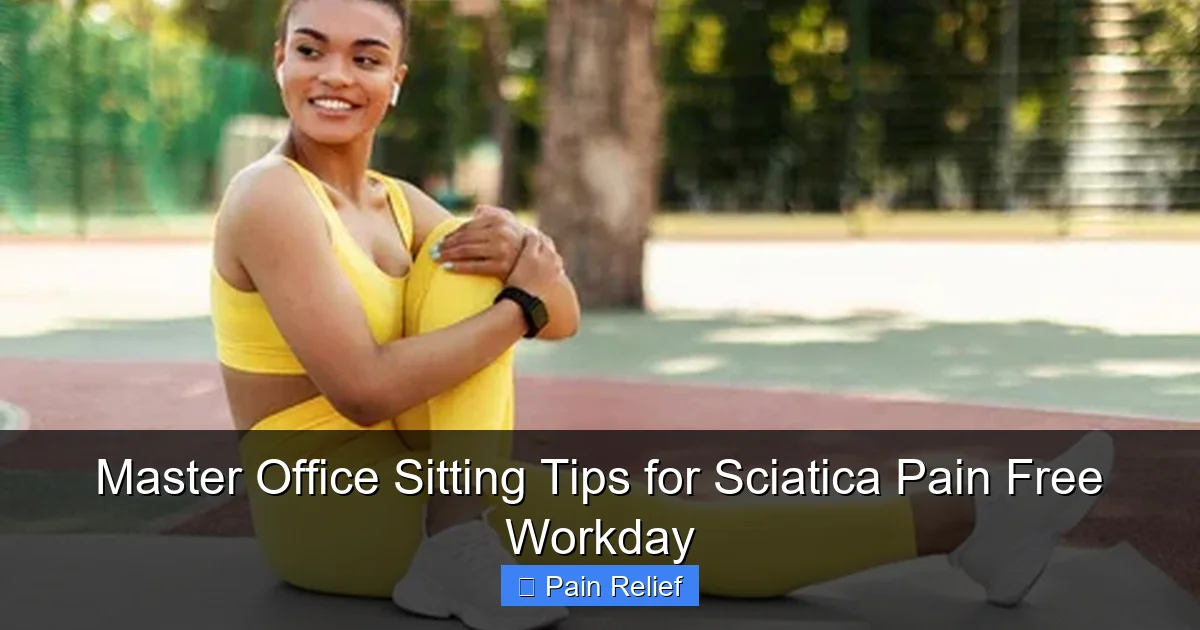
- Knee-to-Chest Stretch: While seated, gently pull one knee towards your chest, holding it with your hands. Repeat on the other side.
- Gentle Spinal Twist: Sit tall, turn your upper body to one side, using your chair arm or back for leverage. Look over your shoulder. Hold briefly, then switch sides.
Always perform stretches gently and stop if you feel any sharp pain. Consult a physical therapist for personalized stretch recommendations if you’re unsure.
Essential Accessories for Sciatica Support
Sometimes, your ergonomic chair or desk isn’t quite enough. A few well-chosen accessories can provide targeted support and relief for your sciatica, enhancing your overall comfort.
Lumbar Support Cushions
If your chair’s built-in lumbar support is insufficient or non-existent, a separate lumbar support cushion is a must-have. These cushions are designed to maintain the natural curve of your lower spine, supporting your back in the correct position and reducing pressure on the sciatic nerve. Look for one that’s firm but comfortable and fits the curve of your back.
Footrests
A footrest can be incredibly beneficial, especially if your feet don’t quite reach the floor comfortably, or if your desk is too high. A footrest helps maintain the ideal 90-degree knee angle, reduces pressure on the back of your thighs, and promotes better circulation. It can also help shift weight slightly to relieve pressure on your lower back and sciatic nerve. Some footrests even allow for gentle rocking, which can be a subtle way to encourage movement.
Seat Cushions
Certain seat cushions are specifically designed to alleviate pressure on the tailbone (coccyx) and lower back, which can be helpful for sciatica. Look for:
- Coccyx Cutout Cushions: These cushions have a U-shaped cutout at the back to relieve direct pressure on the tailbone, which can sometimes irritate the sciatic nerve.
- Wedge Cushions: These slightly elevate your hips, promoting a more open hip angle and a natural lumbar curve.
Ensure any cushion you choose doesn’t raise you too high, throwing off your overall ergonomic setup.
Lifestyle Adjustments Beyond the Desk
Managing sciatica isn’t just about what you do at your desk. Your overall lifestyle plays a huge role in preventing and alleviating symptoms. Addressing these factors can create a more resilient body and reduce your susceptibility to sciatica pain.
Hydration and Nutrition
Staying well-hydrated is crucial for disc health, as discs are primarily made of water. Dehydrated discs can be less resilient and more prone to injury. A diet rich in anti-inflammatory foods (like fruits, vegetables, lean proteins, and healthy fats) can also help reduce overall inflammation in the body, which can contribute to sciatica pain.
Regular Exercise and Strengthening
While prolonged sitting is bad, complete inactivity is worse. Regular, gentle exercise is vital for sciatica management. Focus on activities that strengthen your core muscles (abdominal and back muscles) and glutes, as these support your spine. Walking, swimming, cycling (if comfortable), and specific core exercises like planks or bird-dog can be very beneficial. Always start slowly and listen to your body.
Stress Management
Stress can exacerbate pain perception and cause muscles to tense up, potentially worsening sciatica. Incorporating stress-reduction techniques like meditation, deep breathing exercises, yoga, or spending time in nature can significantly impact your overall well-being and pain levels. A relaxed body is often a less painful body.
Troubleshooting Common Sciatica Sitting Issues
Even with the best intentions, you might still experience some sciatica discomfort. Here’s how to troubleshoot common issues:
- Pain Persists Despite Adjustments: Re-evaluate each aspect of your setup. Is your lumbar support exactly right? Are you taking breaks often enough? Sometimes a slight angle change or moving an accessory can make a big difference. Consider consulting an ergonomic specialist or physical therapist for a professional assessment.
- Numbness or Tingling Increases: This is a sign of nerve compression. Immediately change your position, stand up, and walk around. If it persists, seek medical advice, as this could indicate worsening nerve irritation.
- Finding the “Perfect” Chair is Hard: No single chair works for everyone. If purchasing a new chair isn’t feasible, focus on optimizing your current one with cushions, footrests, and careful posture. Small improvements are better than none.
- Difficulty Remembering to Move: Set a timer or use an app that reminds you to stand up and stretch every 30-60 minutes. Make it a habit.
Always remember that persistent or worsening sciatica pain should be evaluated by a healthcare professional. These tips are for management, not a cure for underlying medical conditions.
Conclusion
Living with sciatica doesn’t mean your workday has to be an endurance test. By proactively implementing these office sitting tips, you can significantly reduce discomfort and work towards a pain-free experience. Remember, consistency is key. It might take time to adjust to new habits and an optimized setup, but the relief you gain will be well worth the effort.
Start with one or two changes today, and gradually build up your sciatica-friendly routine. Listen to your body, make regular adjustments, and prioritize movement throughout your day. Your back, and your productivity, will thank you for it. Take control of your comfort and master your office sitting for a healthier, happier workday, free from the grips of sciatica.
🎥 Related Video: Quick sciatic pain relief #singaporetiktok #chiro #chiropractortiktok #adulting #singapore
📺 RE:Chiropractic Pain Solutions For Singapore
More helpful tips in link in our bio Here you’ll find a variety of videos on the latest techniques, treatments, and tips to help you …