Discover the secret to perfect standing posture for back health with our comprehensive guide. Learn how to align your body from feet to head, engage your core, and avoid common mistakes to alleviate back pain and improve overall well-being. This guide provides practical steps and daily tips to help you maintain a healthy spine effortlessly and find lasting pain relief.
Key Takeaways
- Foundation First: Ground your stance with feet hip-width apart, even weight distribution, and soft, unlocked knees to create a stable base for optimal standing posture for back health.
- Core is Key: Gently engage your deep abdominal muscles and maintain a neutral pelvis to provide essential support for your lower back and prevent strain.
- Stack Your Spine: Align your shoulders back and down, open your chest, and position your head so your ears are directly over your shoulders with a gentle chin tuck.
- Visualize Elongation: Imagine a string gently pulling the crown of your head upwards, elongating your spine and decompressing vertebrae for a naturally taller, lighter stance.
- Avoid Common Mistakes: Be mindful of slouching, hyperextending your lower back, locking your knees, and forwarding head posture to prevent unnecessary strain and pain.
- Integrate Daily: Make good standing posture a conscious habit throughout your day – at work, while waiting, cooking, and during other everyday activities.
- Support and Strengthen: Combine proper posture with supportive footwear, anti-fatigue mats, regular core and back strengthening exercises, and stretching for lasting back health benefits.
The Secret to Perfect Standing Posture for Back Health
Do you often find yourself battling persistent back pain after a long day? Do you feel tired, slumped, or just generally uncomfortable when you stand? You’re not alone. In our modern world, where sitting dominates much of our lives, many of us have forgotten the fundamental principles of good standing posture. But what if there was a simple “secret” to unlock comfort, alleviate pain, and even boost your energy and confidence, all through how you stand?
This comprehensive guide will reveal that secret: a systematic approach to perfecting your standing posture for back health. We’re not talking about military-style rigidity, but a natural, relaxed, and powerfully aligned stance that supports your spine, reduces strain, and promotes overall well-being. You’ll learn precisely how to align your body from the ground up, identify and correct common posture mistakes, and seamlessly integrate these healthful habits into your daily routine. Get ready to transform how you stand and, in turn, how you feel.
The Foundation: Why Standing Posture Matters for Back Health
Before we dive into the “how,” let’s briefly understand the “why.” Your spine is a marvel of engineering, a complex structure of bones (vertebrae), cushioning discs, nerves, and muscles. Its natural S-shape acts like a spring, absorbing shock and allowing for flexible movement. When you maintain a good standing posture for back health, you allow your spine to retain its natural curves, distributing weight evenly and minimizing stress on its components.
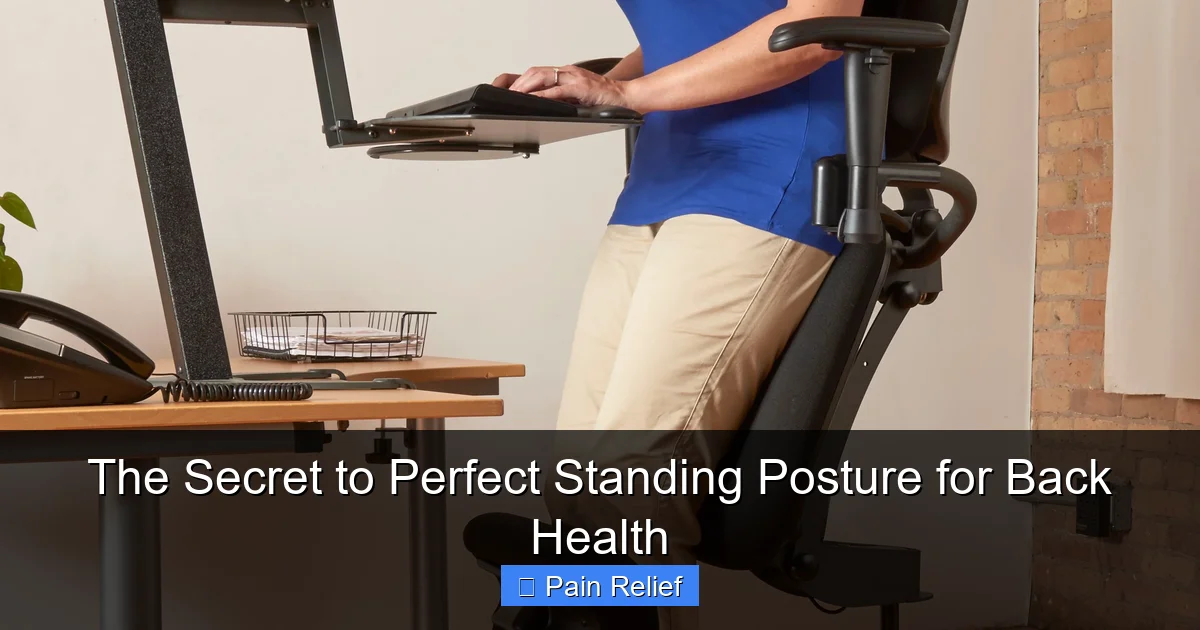
Visual guide about The Secret to Perfect Standing Posture for Back Health
Image source: healthpostures.com
Poor standing posture, however, throws this delicate balance out of whack. Slouching, hunching, or hyperextending your lower back places undue pressure on specific areas. This can lead to:
- Muscle Strain: Muscles work overtime to compensate for misalignment, leading to fatigue, tightness, and pain.
- Disc Compression: Uneven pressure can compress the intervertebral discs, potentially contributing to disc bulges or herniations.
- Nerve Impingement: Misaligned vertebrae can pinch nerves, causing radiating pain, numbness, or tingling.
- Joint Degeneration: Long-term poor alignment can accelerate wear and tear on spinal joints.
On the flip side, embracing good standing posture for back health brings a cascade of benefits beyond just pain relief. It can improve circulation, enhance breathing, increase energy levels, and even boost your confidence and mood. It’s an investment in your entire body’s health, starting with your back.
Step 1: The Starting Point – Grounding Your Stance
Every great structure needs a solid foundation, and your body is no different. The journey to perfect standing posture for back health begins with your feet.
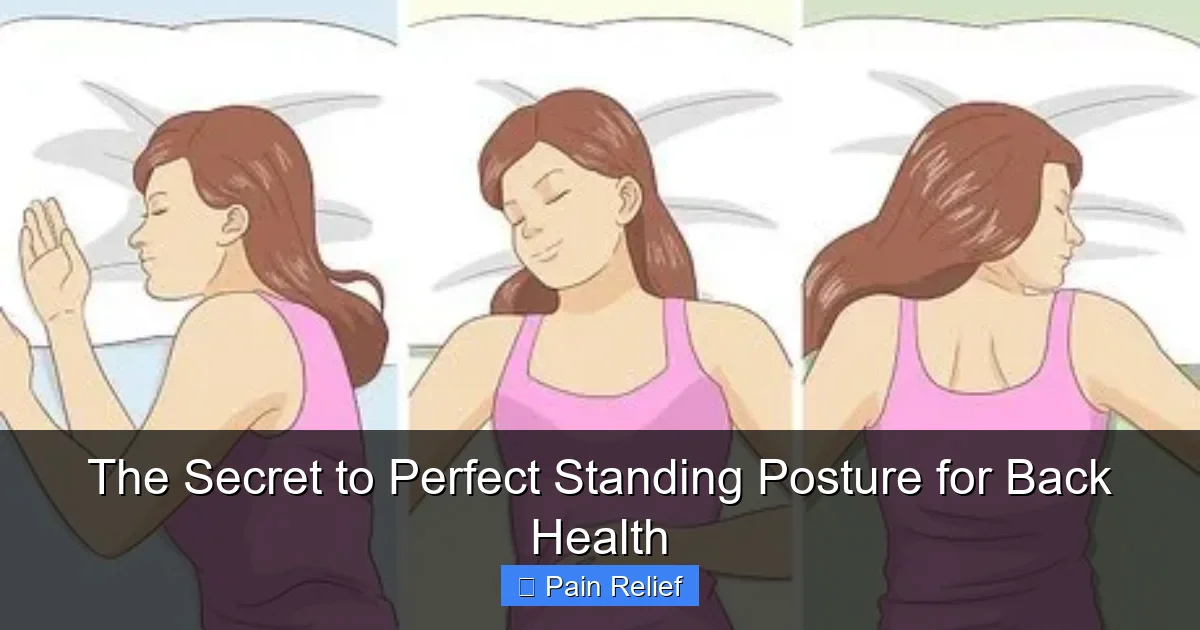
Visual guide about The Secret to Perfect Standing Posture for Back Health
Image source: secretsofthegreengarden.com
Finding Your Foot Placement
Begin by standing with your feet roughly hip-width apart. This isn’t a rigid measurement; think about what feels natural and stable for you. For most people, this means the center of your ankles aligns with your hip joints. Avoid standing with your feet too close together, which can make you unstable, or too far apart, which can create unnecessary tension.
Distributing Your Weight Evenly
Once your feet are placed, pay attention to how your weight is distributed. Are you leaning heavily on your heels, the balls of your feet, or one side more than the other? Aim for an even distribution across both feet and throughout the soles of your feet. Imagine you have four points of contact on each foot: the base of your big toe, the base of your little toe, and both sides of your heel. Try to feel connected to the ground through all these points. This creates a stable base for the rest of your body.
Softening Your Knees
Many people tend to “lock” their knees when standing, pushing them backward until they’re hyperextended. This puts unnecessary strain on your knee joints and can create a ripple effect of misalignment up your kinetic chain. Instead, maintain a slight, almost imperceptible bend in your knees. They shouldn’t be completely locked straight or noticeably bent. Think of them as “soft” or “unlocked.” This small adjustment allows your muscles to work more efficiently and reduces stress on your joints, contributing significantly to optimal standing posture for back health.
Step 2: Engaging Your Core – The Powerhouse
Your core muscles are the unsung heroes of good posture. They provide essential support for your spine, acting like a natural corset. Engaging them doesn’t mean sucking in your stomach or tensing up aggressively; it’s a subtle, gentle engagement.
Visual guide about The Secret to Perfect Standing Posture for Back Health
Image source: healthinfolife.com
Gentle Abdominal Engagement
Think about drawing your navel gently towards your spine, as if you’re tightening a belt just one notch. You should still be able to breathe deeply and normally. This isn’t about flexing your “six-pack” muscles; it’s about activating the deeper core muscles, particularly the transverse abdominis. This gentle tension provides stability for your lower back without making you feel stiff or restricted. It’s a crucial element in maintaining healthy standing posture for back health.
Achieving a Neutral Pelvis
Your pelvis acts as the base for your spine. Many people unknowingly tilt their pelvis forward (anterior tilt, often associated with a pronounced arch in the lower back) or backward (posterior tilt, often leading to a flattened lower back). For optimal standing posture for back health, you want to achieve a neutral pelvic position. Imagine your pelvis is a bowl of water. You want to keep the water from spilling out the front or back. A simple way to find this is to place your hands on your hips, with your thumbs pointing towards your back and your index fingers pointing towards your pubic bone. In a neutral position, your pubic bone and the bony prominences at the front of your hips should be in roughly the same vertical plane.
Step 3: Aligning Your Spine – Stack It Up!
With your foundation set and core engaged, it’s time to focus on the alignment of your upper body and spine. Think of stacking blocks one on top of the other, creating a stable tower.
Shoulders Back and Down
Many of us carry tension in our shoulders, hunching them up towards our ears or letting them roll forward. For good standing posture for back health, gently roll your shoulders back and down. Imagine you’re trying to put your shoulder blades into your back pockets. This opens up your chest and prevents rounding of the upper back. Avoid pulling them too far back, which can create an unnatural stiffness; it should feel relaxed yet engaged.
Opening Your Chest
Once your shoulders are in place, your chest should naturally feel more open and lifted. This doesn’t mean puffing it out aggressively. A naturally open chest allows for fuller breathing and helps maintain the gentle curve of your upper spine. It counteracts the forward-slumped posture so common with desk work and smartphone use.
Head Position: Ears Over Shoulders
One of the biggest culprits of neck and upper back pain is a forward head posture. This is where your head juts out in front of your body, putting immense strain on your neck muscles and cervical spine. For proper standing posture for back health, align your head so that your ears are directly over your shoulders. Imagine a plumb line dropping from your earlobe straight down through the middle of your shoulder.
Gentle Chin Tuck
To achieve the correct head alignment, you might need a gentle chin tuck. This isn’t about looking down. Instead, imagine a string pulling the crown of your head upwards while you gently pull your chin back, as if you’re trying to create a “double chin” – but subtly. This lengthens the back of your neck and brings your head into a balanced position over your spine. It feels slightly different at first, but it’s crucial for cervical spine health.
Step 4: The Visualization Technique – Imagine a String
This final step ties all the previous elements together and helps you maintain an elongated, relaxed, and powerful stance. It’s often the “secret sauce” to truly natural and effective standing posture for back health.
The Crown of Your Head Pulled Upward
Imagine a string attached to the very crown of your head, gently pulling you upwards towards the ceiling. Feel this imaginary string lengthening your spine, decompressing your vertebrae, and creating space between each segment. This upward pull helps you stand taller without feeling rigid. It encourages a natural elongation and lightness throughout your entire body.
Elongating the Spine, Not Arching
Crucially, this visualization is about elongating your spine vertically, not arching your back. Maintain the neutral pelvis and gentle core engagement you established earlier. The goal is to feel taller, lighter, and more expansive, allowing your natural spinal curves to flourish without exaggeration. This continuous gentle upward pull is what makes your good standing posture feel effortless and sustainable over time.
Common Standing Posture Mistakes to Avoid
Even with good intentions, it’s easy to fall into common posture traps. Being aware of these missteps is the first step to correcting them and mastering your standing posture for back health.
- Slouching or Hunching: Rounds your upper back and shoulders, often pushing your head forward, compressing your chest and straining your upper back and neck.
- Hyperextension of the Lower Back (Excessive Arch): Often comes from trying too hard to “stand up straight,” putting significant pressure on your lumbar discs and facet joints. Remember the neutral pelvis!
- Tilting Head Forward (“Text Neck”): Juts your head out in front of your body, putting immense strain on your neck muscles and cervical spine. Remember the chin tuck and ears-over-shoulders alignment.
- Locking Knees: Strains your knee joints and can lead to a domino effect of misalignment up the kinetic chain. Keep them soft!
- Shifting Weight to One Side: Creates an imbalance in your hips and spine, leading to muscle fatigue and potential joint problems over time. Distribute your weight evenly.
- Standing with Feet Too Wide or Too Narrow: Disrupts your base of support and leads to instability or unnecessary muscle tension.
Integrating Good Standing Posture into Your Daily Life
The “secret” to perfect standing posture for back health isn’t just knowing what to do, but doing it consistently. Here’s how to make it a natural part of your day:
At Work (Standing Desks, Breaks)
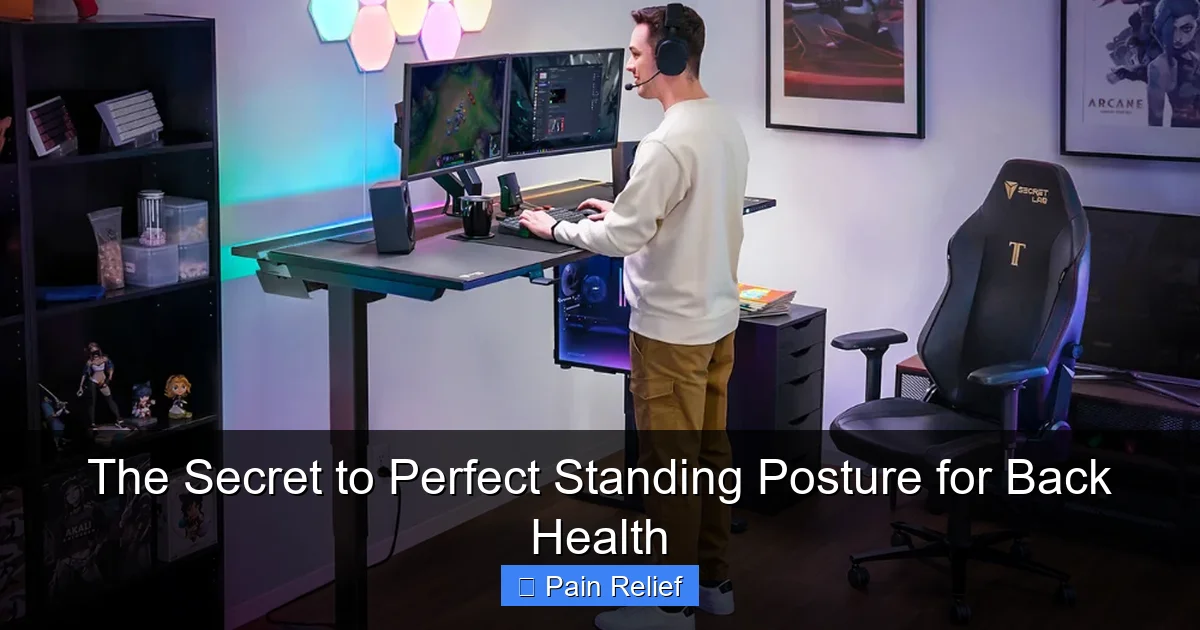
- Standing Desks: Ensure your monitor is at eye level and keyboard/mouse at elbow height. Take short sitting breaks and vary your stance.
- Regular Movement: Take frequent short breaks to walk around, stretch, or reset your posture. Set a timer if needed.
Waiting in Line or Public Transport
These are prime opportunities! Instead of slumping, use this time to consciously practice your perfect standing posture. Ground your feet, soften your knees, engage your core, and imagine that string pulling you up.
Cooking, Chores, or Hobbies
Be mindful of your posture during everyday activities. When washing dishes, gardening, or standing at a workbench, try to maintain your alignment. Use a kitchen mat for comfort if you’re standing for long periods.
Mindfulness and Regular Checks
Make it a habit to do quick “posture checks” throughout the day. A simple mental scan from feet to head can remind you to re-align before poor habits set in. You can even set gentle alarms on your phone as reminders.
Practical Tips for Maintaining Perfect Standing Posture
Beyond the direct alignment, several external factors and practices can support your journey to ideal standing posture for back health.
- Ergonomic Considerations:
- Supportive Footwear: Wear comfortable, supportive shoes, especially if you spend a lot of time on your feet. Avoid high heels for extended periods.
- Standing Mats: Anti-fatigue mats can make a huge difference if you work at a standing desk or in a job that requires prolonged standing.
- Strengthening Exercises:
- Core Strengthening: Planks, bird-dog, and dead bugs are excellent for building the deep core strength needed to support your spine.
- Back & Glute Strengthening: Exercises like glute bridges and rows can strengthen the muscles that support your posterior chain and help maintain good posture.
- Stretching:
- Chest Stretches: Open up a tight chest to counteract slouching (e.g., doorway stretches).
- Hip Flexor Stretches: Loosen tight hip flexors that can contribute to an anterior pelvic tilt (e.g., lunging stretches).
- Regular Movement: The best posture is the next posture. Avoid staying still in any position for too long, even a perfectly aligned one. Shift your weight, walk around, and stretch frequently.
- Use a Mirror: Periodically check your posture in a full-length mirror. This visual feedback can be incredibly helpful in understanding what proper alignment feels like and looks like.
- Seek Professional Help: If you experience persistent pain, numbness, or tingling, or if you struggle to improve your posture on your own, consider consulting a physical therapist, chiropractor, or doctor. They can provide personalized assessments and guidance.
Troubleshooting Your Standing Posture Journey
Embarking on a posture correction journey can come with its own set of challenges. Here are some common issues and how to address them:
“My back still hurts, even when I try to stand up straight.”
Possible Reasons & Solutions: You might be overcorrecting or have existing muscle imbalances. Go slowly, don’t force it. Ensure your core is gently engaged and your pelvis is neutral, not excessively arched. If pain persists, consult a healthcare professional to identify underlying issues.
“It feels unnatural or stiff to stand this way.”
Possible Reasons & Solutions: This is common if you’ve had poor posture for a long time. Your muscles need time to build new memory. Start with shorter periods of conscious posture, gradually increasing. Focus on relaxation within the alignment; it’s about being strong and elongated, not rigid.
“I keep forgetting to maintain good posture throughout the day.”
Possible Reasons & Solutions: Habits take time and consistent effort. Set visual cues around your environment or use alarms on your phone to do quick posture checks every 30-60 minutes. Associate posture checks with routine tasks, making it a more automatic habit.
“My feet get tired or sore when standing for longer periods.”
Possible Reasons & Solutions: This could be due to inadequate footwear, a hard standing surface, or adjusting to new weight distribution. Invest in high-quality, supportive shoes and use an anti-fatigue mat. Practice subtle weight shifts while maintaining overall alignment.
“I feel like I’m doing it right, but I don’t see much improvement.”
Possible Reasons & Solutions: Posture correction is gradual. Consider filming yourself or using a mirror for objective assessment, as what feels right might not be quite right. Combine posture work with strengthening and stretching exercises, and remember that patience and persistence are key.
Conclusion
The “secret” to perfect standing posture for back health isn’t a complex mystery, but rather a commitment to conscious awareness and consistent practice of fundamental alignment principles. By grounding your stance, engaging your core, stacking your spine, and visualizing elongation, you empower your body to support itself naturally, alleviating pain and fostering overall well-being. It’s a journey, not a destination, requiring patience and persistence.
Embracing good standing posture offers profound benefits, from reducing back pain and increasing energy to boosting your confidence. Start today, one step at a time, one mindful moment at a time. Your back – and your entire body – will thank you for this transformative investment in your health and comfort.
🎥 Related Video: PERFECT 5 Minute Posture Routine (FIX YOUR SIT!)
📺 Jeremy Ethier
Here’s the perfect 5 minute posture routine. “Bad posture” isn’t something to be too worried about, but lack of movement …