Are you suffering from debilitating sciatica pain? This comprehensive guide offers practical posture tips for sciatica relief, helping you understand how correct body alignment can significantly reduce discomfort. Learn simple yet effective adjustments for sitting, standing, sleeping, and daily activities to stop your pain now and regain control over your well-being. By integrating these habits, you can protect your sciatic nerve and find lasting relief.
Do you ever feel a sharp, shooting pain radiating from your lower back, down through your buttock, and into your leg? If so, you might be experiencing sciatica. This frustrating condition can turn everyday activities into a painful struggle. But what if we told you that many of your daily habits, especially how you hold your body, could be contributing to your pain?
You’re not alone in this battle. Millions suffer from sciatica, often caused by compression or irritation of the sciatic nerve. The good news? One of the most powerful tools for managing and even stopping this pain is something you have direct control over: your posture. Mastering correct posture is not just about standing up straight; it’s about protecting your spine and nerve pathways in every movement you make.
In this comprehensive guide, “Posture Tips for Sciatica Relief Stop Your Pain Now,” we’re going to dive deep into how your posture affects your sciatica and, more importantly, how you can make simple, effective changes to find significant relief. We’ll cover everything from how you sit and stand to how you sleep and lift. By the end of this guide, you’ll have a clear, actionable plan to integrate better posture into your life and reclaim your comfort. Let’s stop your pain now!
Key Takeaways
- Embrace a Neutral Spine: The foundational principle for sciatica relief is maintaining your spine’s natural S-curve in all activities to minimize pressure on the sciatic nerve.
- Optimize Your Sitting Ergonomics: Choose a supportive chair, ensure your feet are flat, and use lumbar support to keep your back aligned, preventing slouching and pain flare-ups.
- Prioritize Smart Sleeping Postures: Sleeping on your back with a pillow under your knees or on your side with a pillow between your knees can significantly reduce strain on your lower back and sciatic nerve.
- Move with Awareness and Purpose: Practice proper lifting techniques (lift with legs, not back), take regular movement breaks, and avoid prolonged static positions to protect your spine.
- Strengthen Your Core and Glutes: A strong core and gluteal muscles provide essential support for your lower back, enhancing your ability to maintain good posture and offering long-term sciatica relief.
- Consistency is Crucial: Posture improvement is a habit. Regular practice and mindfulness in everyday movements are key to sustained pain reduction and preventing sciatica recurrence.
- Don’t Hesitate to Seek Professional Help: If pain persists or worsens, consult a doctor or physical therapist. They can provide personalized advice, diagnosis, and advanced treatment options for your sciatica.
Understanding Sciatica and Why Posture Matters
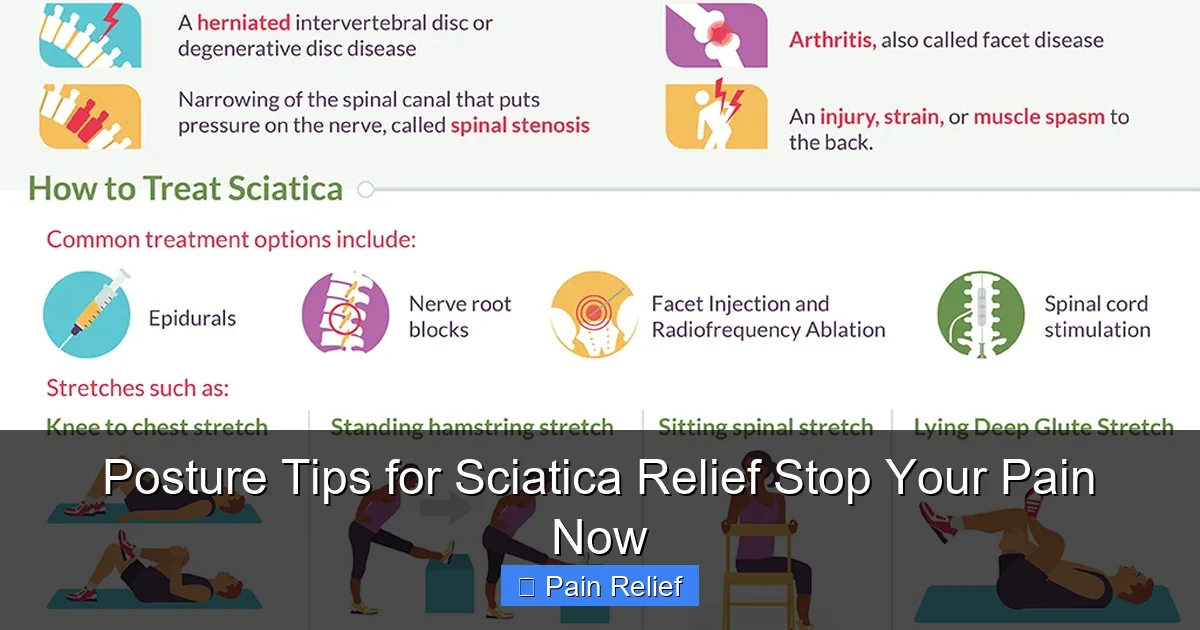
Before we jump into the “how-to,” let’s briefly understand what sciatica is. Sciatica is not a condition itself but rather a symptom of an underlying problem. It refers to pain that radiates along the path of the sciatic nerve, which branches from your lower back through your hips and buttocks and down each leg. Common causes include a herniated disc, spinal stenosis, piriformis syndrome, or even bone spurs.
How does posture fit into all of this? Your spine has natural curves designed to absorb shock and distribute weight evenly. When your posture is poor – whether you’re slouching, hunching, or twisting – you put undue stress and pressure on your spinal discs, vertebrae, and the surrounding muscles. This constant pressure can aggravate or even cause the compression of the sciatic nerve, leading to pain, numbness, or tingling. Correct posture, conversely, helps to maintain the spine’s natural alignment, creating space for the nerve and reducing irritation. It’s a fundamental step towards effective sciatica relief.
General Principles for Sciatica-Friendly Posture
Regardless of the activity, a few core principles underpin all good posture for sciatica relief:
Visual guide about Posture Tips for Sciatica Relief Stop Your Pain Now
Image source: paininjuryrelief.com
Maintain a Neutral Spine
Think of your spine’s natural S-curve. Your goal is to keep this curve intact as much as possible. This means avoiding excessive arching or flattening of your lower back. A neutral spine allows for optimal load distribution and minimizes pressure on the sciatic nerve.
Engage Your Core Muscles
Your core muscles (abdominal muscles, obliques, and lower back muscles) act like a natural corset for your spine. When engaged, they provide stability and support, helping you maintain a neutral spine. You don’t need to suck in your stomach; just a gentle drawing in of your navel towards your spine is often enough.
Distribute Weight Evenly
Whether sitting or standing, ensure your weight is distributed equally across your body. Uneven weight distribution can lead to muscular imbalances and increased stress on one side of your spine, potentially aggravating sciatica.
Take Regular Movement Breaks
Sitting or standing in one position for too long is detrimental. Regular movement helps to improve circulation, reduce stiffness, and relieve pressure on your spine. Aim to change your position every 30-60 minutes.
Posture Tips for Everyday Activities: Stop Your Pain Now!
Let’s break down specific posture tips for sciatica relief in various common scenarios:

Visual guide about Posture Tips for Sciatica Relief Stop Your Pain Now
Image source: easyposturebrands.com
1. Sitting Posture for Sciatica Relief
Many of us spend a significant portion of our day sitting. This position can put immense pressure on your lower back and sciatic nerve if not done correctly.
Choose the Right Chair
Opt for an ergonomic chair that provides good lumbar support, allowing your spine to maintain its natural curve. If your chair lacks this, use a rolled towel, a small pillow, or a specific lumbar support cushion. These posture tips are vital for comfort.
Ensure Proper Setup
- Feet Flat: Your feet should be flat on the floor or a footrest. Avoid dangling feet, which can create pressure points.
- Knees at Hip Level or Slightly Below: Your hips should be slightly higher than your knees. This helps maintain the natural curve of your lower back.
- Armrests: Use armrests to support your arms and shoulders, taking pressure off your neck and upper back.
- Monitor Height: Position your computer monitor at eye level to prevent neck strain and forward head posture.
Proper Sitting Technique
- Sit Back: Always sit all the way back in your chair, utilizing the backrest.
- Avoid Slouching: Resist the urge to slouch or hunch forward. Imagine a string pulling the crown of your head towards the ceiling.
- Don’t Cross Your Legs: Crossing your legs can rotate your pelvis, causing uneven pressure on your lower back and potentially compressing the sciatic nerve.
- Frequent Breaks: Even with perfect posture, long periods of sitting are not ideal. Stand up, stretch, and walk around every 30-60 minutes.
2. Standing Posture for Sciatica Relief
When standing, gravity can either be your friend or foe, depending on your posture.
Distribute Weight Evenly
Stand with your feet shoulder-width apart, distributing your weight evenly through both feet. Avoid leaning heavily on one leg or standing with locked knees.
Maintain Neutral Spine
Engage your core gently. Let your shoulders relax back and down, and keep your head aligned over your shoulders. Imagine that string pulling your head upwards again. Try to avoid pushing your pelvis too far forward or arching your lower back excessively.
Working at a Standing Desk
If you use a standing desk, alternate between sitting and standing. Use an anti-fatigue mat to reduce strain on your feet and back. Place one foot on a small footrest or stool occasionally to shift pressure and keep your lower back comfortable. These standing posture tips are essential for sciatica relief.
3. Lying and Sleeping Posture for Sciatica Relief
Given we spend roughly one-third of our lives sleeping, your sleeping posture significantly impacts sciatica. An unsupportive position can exacerbate pain overnight, leading to a stiff and painful morning.
Sleeping on Your Back
This is often the most recommended position for sciatica relief. Place a pillow under your knees. This helps maintain the natural curve of your lumbar spine, reducing pressure on the sciatic nerve. Your head pillow should support the natural curve of your neck without propping your head up too high.
Sleeping on Your Side
If you prefer sleeping on your side, ensure your spine remains straight. Place a firm pillow between your knees. This prevents your top leg from pulling your pelvis out of alignment and rotating your lower back, which can irritate the sciatic nerve. Use a relatively firm pillow under your head to keep your neck aligned with your spine.
Sleeping on Your Stomach (Avoid if possible)
Sleeping on your stomach is generally not recommended for sciatica sufferers. It forces your lower back to arch excessively and requires you to turn your head to one side for prolonged periods, straining both your neck and lower back. If you absolutely must sleep on your stomach, try placing a thin pillow under your pelvis to reduce the arch in your lower back, and use a very thin head pillow or no pillow at all.
Pillow and Mattress Choice
Invest in a supportive mattress that is neither too soft nor too firm. A medium-firm mattress often works best for maintaining spinal alignment. Your pillows should support the natural curves of your neck and spine without causing uncomfortable angles. Good sleep posture is crucial for sciatica relief.
4. Lifting and Bending Posture for Sciatica Relief
Improper lifting is a common cause of sciatica flare-ups.
The “Hinge” Technique
When you need to pick something up, especially from the floor, always bend at your knees and hips, keeping your back straight. This is called hinging. Engage your core, keep the object close to your body, and lift using your leg muscles. Avoid bending at your waist with straight legs. This puts immense strain on your lower back.
Avoid Twisting
Never lift and twist simultaneously. If you need to turn while holding an object, lift the object first, then pivot your entire body (feet included) in the direction you want to go. These lifting posture tips are essential for preventing sciatica pain.
5. Driving Posture for Sciatica Relief
Long drives can be particularly challenging for sciatica sufferers.
Adjust Your Seat
Move your seat as far forward as comfortable while still maintaining a safe distance from the steering wheel and pedals. This allows your knees to be slightly bent and your feet to reach the pedals easily. The goal is to keep your hips at or slightly above knee level.
Use Lumbar Support
Just like with your office chair, ensure your car seat provides adequate lumbar support. If not, use a small pillow or rolled towel. This helps maintain the neutral curve of your lower back.
Regular Breaks
For longer journeys, pull over every hour or so to get out, stretch, and walk around for a few minutes. This prevents stiffness and reduces pressure buildup. These driving posture tips can make a huge difference for sciatica relief.
Advanced Posture Habits & Exercises for Sciatica Relief
Beyond daily posture, incorporating specific habits and exercises can further enhance your sciatica relief:
Gentle Stretching
Regular, gentle stretches for your hamstrings, piriformis, and lower back can help alleviate tension around the sciatic nerve. Consult a physical therapist for safe and effective stretches tailored to your condition. Examples include knee-to-chest stretches and gentle piriformis stretches.
Strengthening Core and Glute Muscles
A strong core and powerful gluteal muscles provide excellent support for your lower back and pelvis, making it easier to maintain good posture throughout the day. Exercises like planks, bird-dogs, and glute bridges are fantastic for building this foundational strength. Remember, consistent effort leads to lasting sciatica relief.
Mindfulness and Body Awareness
Often, we adopt poor posture unconsciously. Practicing mindfulness – paying attention to how your body feels and holds itself – can help you catch yourself slouching or twisting before pain sets in. Set reminders on your phone to check your posture periodically. This proactive approach is a powerful tool for sciatica relief.
Troubleshooting Common Posture Mistakes
Even with the best intentions, it’s easy to fall back into old habits. Here are some common posture mistakes and how to fix them for better sciatica relief:
Slouching or Hunching
Fix: Imagine a string pulling the top of your head towards the ceiling. Gently pull your shoulders back and down. Engage your core slightly. Use lumbar support when sitting.
Crossing Legs
Fix: Keep both feet flat on the floor or a footrest. If you find yourself crossing your legs, gently uncross them and readjust your sitting position.
Tilting Head Forward (Text Neck)
Fix: Align your ears over your shoulders. When looking at screens, bring the screen to eye level rather than craning your neck down. This often comes with a rounded upper back, which affects the lower spine too.
Prolonged Static Positions
Fix: Set a timer to remind yourself to move every 30-60 minutes. Stand up, walk around, do a gentle stretch, or simply shift your weight. This is crucial for ongoing sciatica relief.
When to Seek Professional Help
While these posture tips for sciatica relief can be incredibly effective, they may not be a complete solution for everyone. If your pain is severe, persistent, or worsening, if you experience sudden weakness in your leg, or if you have bladder or bowel control issues, seek immediate medical attention. A doctor or physical therapist can provide an accurate diagnosis, recommend personalized exercises, and explore other treatment options. Don’t hesitate to seek expert advice if needed.
Conclusion: Empower Yourself with Good Posture for Sciatica Relief
Sciatica pain can be debilitating, but you have the power to make significant changes. By diligently applying these posture tips for sciatica relief to your daily life – whether you’re sitting, standing, sleeping, or moving – you can protect your sciatic nerve, reduce irritation, and ultimately stop your pain. It takes conscious effort and consistency, but the relief you’ll experience is well worth it. Start integrating these habits today and take the first step towards a more comfortable, pain-free life. Your spine will thank you!
🎥 Related Video: 4 Stretches For Sciatic Nerve Pain Relief! [Stop Sciatica Fast!]
📺 Tone and Tighten
SEE FULL VIDEO HERE: https://youtu.be/jNS_mK-NeM8 Four of the best stretches you can do at home for sciatic nerve pain relief …