Are you tired of debilitating sciatica flare-ups? This comprehensive guide provides actionable sciatica flare up prevention tips designed to empower you with the knowledge and strategies needed to minimize their occurrence. Learn about proper posture, targeted exercises, ergonomic adjustments, and lifestyle choices that can significantly reduce your risk of sciatic nerve pain, helping you reclaim a comfortable, active life.
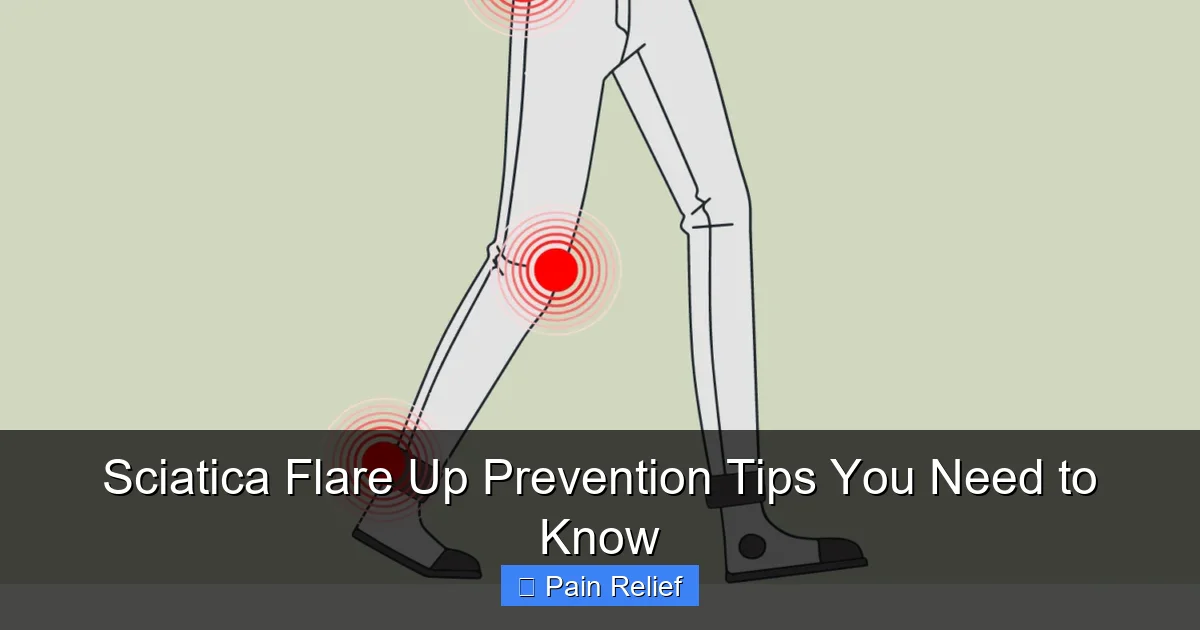
Sciatica Flare Up Prevention Tips You Need to Know
Do you ever feel that sharp, shooting pain radiating from your lower back, down through your buttock, and into one of your legs? That’s sciatica, and if you’ve experienced it, you know how debilitating a flare-up can be. It can turn simple daily tasks into agonizing challenges, making you dread even the smallest movements. But what if you could take proactive steps to prevent those unwelcome flare-ups? What if you could significantly reduce your risk of experiencing that familiar, intense pain?
You’re in the right place. This comprehensive guide is dedicated to equipping you with practical, easy-to-understand sciatica flare up prevention tips. We’ll explore everything from mastering proper posture and incorporating beneficial exercises into your routine to optimizing your environment and adopting a healthier lifestyle. Our goal is to empower you with the knowledge and strategies to keep sciatica pain at bay, allowing you to live a more comfortable, active, and pain-free life. Let’s dive in and learn how to proactively manage and prevent sciatica flare-ups.
Key Takeaways
- Master Proper Posture: Correct sitting, standing, and lifting techniques are fundamental to preventing undue pressure on your sciatic nerve.
- Embrace Regular, Gentle Exercise: Strengthening your core, stretching tight muscles, and engaging in low-impact aerobic activities are crucial for spinal health and flexibility.
- Optimize Your Environment: Ergonomic workstation setups and frequent movement breaks can significantly reduce the strain that often triggers sciatica.
- Practice Mindful Movement: Consciously avoid sudden twists, bends, and incorrect body mechanics in daily activities to protect your spine.
- Prioritize Rest and Stress Management: Quality sleep and effective stress reduction techniques play a vital role in muscle relaxation and overall nerve health, helping prevent sciatica flare-ups.
- Maintain a Healthy Lifestyle: Managing your weight, staying hydrated, and adopting an anti-inflammatory diet support a healthier spine and reduce systemic inflammation.
- Seek Professional Guidance Early: Don’t hesitate to consult healthcare professionals like physiotherapists or doctors for personalized advice and to address any warning signs promptly.
Understanding Sciatica and Its Triggers
Before we jump into prevention, it’s helpful to understand what sciatica is. Sciatica isn’t a condition itself; it’s a symptom of an underlying problem affecting the sciatic nerve. This nerve, the longest and thickest in your body, originates in your lower back, runs through your buttocks, and extends down each leg. When it gets compressed, irritated, or inflamed, you feel the characteristic pain, numbness, tingling, or weakness associated with sciatica.
Common triggers for sciatica flare-ups include:
- Herniated or Slipped Disc: This is the most common cause, where the soft cushion between your vertebrae bulges out and presses on the nerve.
- Spinal Stenosis: A narrowing of the spinal canal that puts pressure on the spinal cord and nerves.
- Piriformis Syndrome: When the piriformis muscle (deep in the buttock) spasms and compresses the sciatic nerve.
- Poor Posture: Prolonged sitting or standing incorrectly can strain your lower back.
- Sudden Movements: Twisting or bending improperly.
- Lifting Heavy Objects: Especially without proper form.
- Lack of Exercise: Weak core muscles provide less support for your spine.
- Obesity: Excess weight puts added stress on your spine.
- Stress: Can lead to muscle tension and contribute to pain.
By understanding these triggers, you’re already taking the first step in effective sciatica flare up prevention tips.
Step 1: Master Proper Posture
Your posture, whether sitting, standing, or lifting, significantly impacts your spinal health and can directly contribute to or prevent sciatica. Maintaining good alignment reduces stress on your lower back and the sciatic nerve.

Visual guide about Sciatica Flare Up Prevention Tips You Need to Know
Image source: sciaticazone.com
Optimize Your Sitting Posture
- Sit Up Straight: Keep your back against the chair. Use a lumbar support pillow if your chair doesn’t offer adequate support.
- Feet Flat: Your feet should be flat on the floor or on a footrest. Avoid crossing your legs, as this can misalign your hips.
- Knees at 90 Degrees: Ensure your knees are level with or slightly above your hips.
- Shoulders Relaxed: Keep your shoulders relaxed and not hunched.
- Take Breaks: Even with perfect posture, prolonged sitting is a major culprit for sciatica. Stand up, stretch, and walk around every 30-60 minutes.
Practical Tip: Set a timer on your phone to remind you to get up and move, especially if you have a desk job. This is a crucial element of sciatica flare up prevention tips.
Refine Your Standing Posture
- Distribute Weight Evenly: Stand with your weight evenly distributed on both feet. Avoid shifting all your weight to one hip.
- Slight Bend in Knees: Keep your knees slightly bent, not locked.
- Shoulders Back and Down: Relax your shoulders, keep them back and down, not hunched forward.
- Engage Core: Gently pull your navel towards your spine to engage your core muscles, which support your lower back.
- Avoid Prolonged Standing: If you must stand for long periods, shift your weight from foot to foot or use a small stool to elevate one foot periodically.
Perfect Your Lifting Techniques
- Bend Your Knees, Not Your Back: Always squat down by bending your knees and hips, keeping your back straight.
- Lift with Your Legs: Use your powerful leg muscles to lift, not your back.
- Keep Object Close: Hold the object close to your body.
- Avoid Twisting: Never twist your body while lifting. If you need to turn, move your feet.
- Get Help: If an object is too heavy, don’t be a hero. Ask for assistance.
Proper lifting is perhaps one of the most critical sciatica flare up prevention tips, as incorrect lifting often triggers acute pain.
Step 2: Embrace Regular, Gentle Exercise
Exercise is a powerful tool in your arsenal against sciatica. It strengthens the muscles that support your spine, improves flexibility, and reduces stiffness. However, the key is “gentle” and “consistent.”
Visual guide about Sciatica Flare Up Prevention Tips You Need to Know
Image source: careclinic.io
Strengthen Your Core Muscles
A strong core acts like a natural corset for your spine, providing essential support. Focus on exercises that strengthen your abdominal and back muscles without straining your lower back.
- Plank: Hold a plank position, keeping your body in a straight line from head to heels. Start with short durations (20-30 seconds) and gradually increase.
- Bird-Dog: On your hands and knees, extend one arm and the opposite leg simultaneously, keeping your back flat.
- Pelvic Tilts: Lie on your back with knees bent, flatten your lower back to the floor by tightening your abdominal muscles, then release.
Practical Tip: Consult a physical therapist to learn proper form for these exercises, especially if you’re new to them or have current pain.
Stretch for Flexibility
Tight muscles, especially in the hips, glutes, and hamstrings, can contribute to sciatica by compressing the nerve. Regular stretching helps release this tension.
- Hamstring Stretch: Lie on your back, loop a towel around your foot, and gently pull your leg towards your chest, keeping it straight.
- Piriformis Stretch: Lie on your back, cross one ankle over the opposite knee, and gently pull the bottom knee towards your chest.
- Knee-to-Chest Stretch: Lie on your back and gently pull one knee (or both) towards your chest.
Practical Tip: Hold each stretch for 20-30 seconds, breathe deeply, and avoid bouncing. Do these daily for best results in sciatica flare up prevention tips.
Engage in Low-Impact Aerobic Activities
Activities like walking, swimming, or cycling (on a stationary bike if a regular bike causes discomfort) can improve circulation, strengthen supporting muscles, and release endorphins, which are natural pain relievers.
- Walking: Start with short, easy walks and gradually increase duration and intensity. Wear supportive shoes.
- Swimming/Water Aerobics: The buoyancy of water reduces stress on your spine, making it an excellent option.
Practical Tip: Aim for at least 30 minutes of moderate-intensity activity most days of the week.
Step 3: Optimize Your Workstation and Environment
Your immediate surroundings, especially where you spend a lot of time, can either support or hinder your efforts in preventing sciatica.
Create an Ergonomic Workspace
If you work at a desk, an ergonomic setup is non-negotiable for sciatica flare up prevention tips.
- Adjustable Chair: Invest in a good ergonomic chair with lumbar support. Adjust the height so your feet are flat and knees are at 90 degrees.
- Monitor Height: Position your monitor so the top of the screen is at eye level. This prevents neck and upper back strain.
- Keyboard and Mouse: Keep your keyboard and mouse close to your body to avoid overreaching. Consider an ergonomic keyboard and mouse.
- Standing Desk Option: If possible, alternate between sitting and standing with a convertible desk.
Take Frequent Movement Breaks
Even the most ergonomic setup can’t counteract prolonged stillness. Get up, walk, stretch, and do a few gentle movements every hour. This keeps blood flowing, muscles from stiffening, and reduces pressure on your spinal discs.
Wear Supportive Footwear
Your shoes impact your entire kinetic chain, from your feet up to your spine. Choose shoes with good arch support and cushioning. Avoid high heels, which alter your pelvic alignment and increase strain on your lower back.
Step 4: Practice Mindful Movement and Body Mechanics
Many sciatica flare-ups are triggered by everyday movements done incorrectly. Being mindful of how you move can make a huge difference.
Avoid Sudden Twists and Bends
These movements are particularly dangerous for your spinal discs. Always face the object you are reaching for or lifting. If you need to turn, move your entire body by pivoting your feet, not just twisting your waist.
Get In and Out of Bed/Car Safely
- In Bed: Roll onto your side first, then push yourself up with your arms while swinging your legs over the side. Reverse the process when getting into bed.
- In Car: Sit down sideways on the seat, then pivot your entire body to face forward, bringing your legs in together.
Carry Heavy Objects Correctly
When carrying groceries, luggage, or children, distribute the weight evenly. If possible, use a backpack or carry bags in both hands to balance the load. Avoid carrying heavy items on one side, which can create imbalances in your spine.
Step 5: Prioritize Rest and Recovery
Your body needs time to repair and rejuvenate. Adequate rest and effective stress management are often overlooked but vital sciatica flare up prevention tips.
Optimize Your Sleep Position
- On Your Back: Place a pillow under your knees to maintain the natural curve of your spine.
- On Your Side: Place a pillow between your knees to keep your hips, pelvis, and spine in alignment. Avoid sleeping on your stomach, as it can strain your neck and lower back.
Ensure your mattress provides adequate support. If it’s too soft or too old, it might be time for a replacement.
Manage Stress Effectively
Stress often manifests as muscle tension, especially in the neck, shoulders, and lower back. This tension can aggravate existing sciatic nerve irritation.
- Mindfulness and Meditation: Even 10-15 minutes a day can reduce overall stress levels.
- Deep Breathing Exercises: Practice diaphragmatic breathing to relax your body.
- Yoga or Tai Chi: These practices combine gentle movement, stretching, and mindful breathing.
- Hobbies and Relaxation: Engage in activities you enjoy to de-stress.
Finding healthy ways to cope with stress is a powerful component of sciatica flare up prevention tips.
Step 6: Maintain a Healthy Lifestyle
Your overall health significantly influences your body’s ability to heal and prevent conditions like sciatica.
Manage a Healthy Weight
Excess body weight, especially around the abdomen, puts additional strain on your lower back and spinal discs. Losing even a few pounds can significantly reduce this pressure and contribute to sciatica prevention.
Adopt an Anti-Inflammatory Diet
Certain foods can promote inflammation in the body, which can exacerbate pain. Focus on a diet rich in:
- Fruits and Vegetables: Full of antioxidants.
- Lean Proteins: Fish, chicken, beans.
- Whole Grains: Brown rice, quinoa, oats.
- Healthy Fats: Avocados, nuts, olive oil (especially omega-3 fatty acids found in fatty fish like salmon).
Limit processed foods, sugary drinks, and excessive red meat, which can contribute to inflammation.
Stay Hydrated
Your spinal discs are primarily made of water. Staying well-hydrated helps keep them plump and flexible, allowing them to better cushion your vertebrae and absorb shock. Drink plenty of water throughout the day.
Step 7: Proactive Pain Management and Professional Help
Even with the best prevention strategies, it’s wise to know when to seek professional help and how to recognize early warning signs.
Recognize Warning Signs Early
Pay attention to subtle aches, stiffness, or mild tingling that might indicate a flare-up is brewing. Addressing these early can often prevent the pain from escalating. Gentle stretching, heat/cold therapy, and temporary rest might be helpful.
Consult a Healthcare Professional
If you experience persistent pain, numbness, or weakness, or if your sciatica significantly impacts your daily life, do not hesitate to consult a doctor, physiotherapist, or chiropractor. They can accurately diagnose the underlying cause of your sciatica and recommend a personalized treatment and prevention plan.
- Physiotherapists: Excellent for teaching proper exercises, stretches, and body mechanics.
- Chiropractors: Can provide spinal adjustments to improve alignment.
- Doctors: Can prescribe medication, recommend imaging, or refer you to specialists.
Regular Check-ups
Even if you’re not in acute pain, regular check-ups with a trusted healthcare provider, especially a physical therapist, can help identify potential issues before they become full-blown flare-ups. They can provide ongoing guidance on exercises and posture specific to your needs, solidifying your sciatica flare up prevention tips.
Troubleshooting: What If a Flare-Up Still Happens?
Despite your best efforts with sciatica flare up prevention tips, an occasional flare-up might still occur. Here’s what to do if it does:
Immediate Actions (Rest, Ice/Heat)
- Gentle Rest: Avoid activities that aggravate your pain. However, complete bed rest for more than a day or two is generally not recommended, as it can lead to stiffness.
- Ice or Heat: For acute pain (within the first 48 hours), apply ice packs to the painful area (lower back/buttock) for 15-20 minutes several times a day to reduce inflammation. After 48 hours, or for chronic stiffness, heat (heating pad, warm bath) can help relax muscles.
Gentle Movement and Stretching
As soon as tolerated, start with very gentle movements and stretches. Simple walking or basic knee-to-chest stretches can help keep the area mobile and prevent further stiffness. Always listen to your body and stop if any movement increases your pain.
When to Seek Medical Attention
If your pain is severe, progressively worsens, causes significant weakness or numbness, or is accompanied by bowel or bladder control issues (a rare but serious condition called cauda equina syndrome), seek immediate medical attention. These could be signs of a more serious problem requiring urgent intervention.
Conclusion
Living with sciatica can be incredibly challenging, but you don’t have to be at the mercy of painful flare-ups. By consistently applying these comprehensive sciatica flare up prevention tips, you can significantly reduce your risk, improve your spinal health, and regain control over your comfort and mobility. Remember, prevention is a journey, not a destination. It requires diligence, self-awareness, and a commitment to nurturing your body.
Start small, be consistent, and listen to your body’s signals. Master your posture, embrace beneficial exercises, optimize your environment, and prioritize a healthy lifestyle. And never hesitate to seek professional guidance when you need it. By taking these proactive steps, you’re not just preventing pain; you’re investing in a healthier, happier, and more active future. Take charge of your sciatica, starting today!
🎥 Related Video: STOP Stretching Sciatica!
📺 RehabFix
Want to know how we help thousands across the world resolve their sciatica and back pain with our “Centralization Process”, and …