Dealing with persistent leg pain can be frustrating, especially if you suspect sciatica. This guide provides a simple home assessment to help you understand if your symptoms align with sciatic nerve pain. Learn key tests like the Straight Leg Raise, how to perform them safely, and what results might indicate, empowering you with initial insights before consulting a professional. These home tests can help you gather valuable information to discuss with your doctor, guiding you towards effective pain relief strategies and proper diagnosis.
How to Test Sciatic Nerve Pain Simple Home Assessment
Experiencing persistent pain, numbness, or tingling that travels from your lower back down through your buttock and into your leg can be incredibly disruptive. If you’re wondering if these symptoms point to sciatica, you’re not alone. Sciatic nerve pain is a common condition that affects many people, and understanding its characteristics can be the first step towards finding relief.
This comprehensive guide is designed to empower you with the knowledge and tools to perform a simple home assessment to help you understand if your symptoms align with sciatic nerve pain. We’ll walk you through several easy-to-follow steps and tests that you can do safely in the comfort of your own home. Our goal is to help you gather valuable information about your body and your pain, which you can then discuss with your doctor to get an accurate diagnosis and appropriate treatment plan.
Please remember, while these home assessments are helpful for understanding your symptoms, they are not a substitute for professional medical advice. A proper diagnosis from a healthcare provider is crucial for effective treatment. Always consult with your doctor before starting any new exercise program or if you have concerns about your health.
Key Takeaways
- Understand Sciatica Basics: Sciatic nerve pain typically radiates from your lower back, through your buttock, and down one leg, often due to nerve compression.
- The Straight Leg Raise Test (SLRT) is Key: This is one of the most common and effective home assessments for identifying potential sciatic nerve involvement.
- Observe Your Pain Carefully: During each test, pay close attention to the exact location, type (sharp, burning, tingling), and intensity of any pain or symptoms produced.
- Home Assessments Are Not Diagnoses: These tests offer valuable insights and information to discuss with a healthcare professional, but they cannot definitively diagnose your condition.
- Prioritize Safety and Listen to Your Body: Never push into severe pain. If a test causes significant discomfort, stop immediately. Your well-being is paramount.
- Recognize Red Flags: Be aware of serious symptoms like sudden weakness, loss of bladder/bowel control, or severe, unremitting pain, which require immediate medical attention.
Understanding Sciatic Nerve Pain
Before we dive into how to test sciatic nerve pain, let’s quickly review what sciatica actually is. Sciatica isn’t a diagnosis itself, but rather a symptom of an underlying problem affecting the sciatic nerve. The sciatic nerve is the longest and thickest nerve in your body, originating from several nerve roots in your lower spine, merging in your buttock, and then traveling down the back of each leg, splitting into smaller nerves that extend to your feet.
When this nerve gets compressed, irritated, or inflamed, it can cause a range of symptoms collectively known as sciatica. Common causes include:
- Herniated or Slipped Disc: This is the most common cause, where the soft inner material of a spinal disc pushes out and presses on the nerve root.
- Spinal Stenosis: A narrowing of the spinal canal, which can put pressure on the spinal cord and nerves.
- Piriformis Syndrome: The piriformis muscle (a small muscle deep in the buttock) can sometimes compress the sciatic nerve.
- Spondylolisthesis: A condition where one vertebra slips forward over another.
- Trauma: Injuries to the lower back can also lead to sciatic nerve irritation.
The pain associated with sciatica often feels like a burning sensation, a sharp shooting pain, or an electrical shock. It can be accompanied by numbness, tingling, or muscle weakness in the affected leg or foot. Knowing how to test sciatic nerve pain at home can help you differentiate these symptoms from other types of leg or back pain.
Preparing for Your Home Sciatic Nerve Assessment
To ensure you get the most accurate results and stay safe while you test sciatic nerve pain, take a moment to prepare:

Visual guide about How to Test Sciatic Nerve Pain Simple Home Assessment
Image source: i.onthe.io
- Choose a Quiet Space: Find a comfortable, quiet area where you won’t be interrupted.
- Wear Comfortable Clothing: Opt for loose-fitting clothes that allow for a full range of motion.
- Use a Soft, Flat Surface: A yoga mat on the floor, a firm bed, or a carpeted area works best for lying down tests.
- Listen to Your Body: Never push through severe pain. If any test intensifies your pain significantly, stop immediately. Your safety is the priority.
- Note Your Symptoms: Keep a mental note, or even better, a written record of where you feel pain, what kind of pain it is (sharp, dull, tingling, burning), and at what point in the movement it occurs. This information is crucial when you learn how to test sciatic nerve pain.
Step-by-Step Home Assessments to Test Sciatic Nerve Pain
Here are some common tests you can perform to help you determine if your pain is related to your sciatic nerve. Remember, perform these movements slowly and gently.
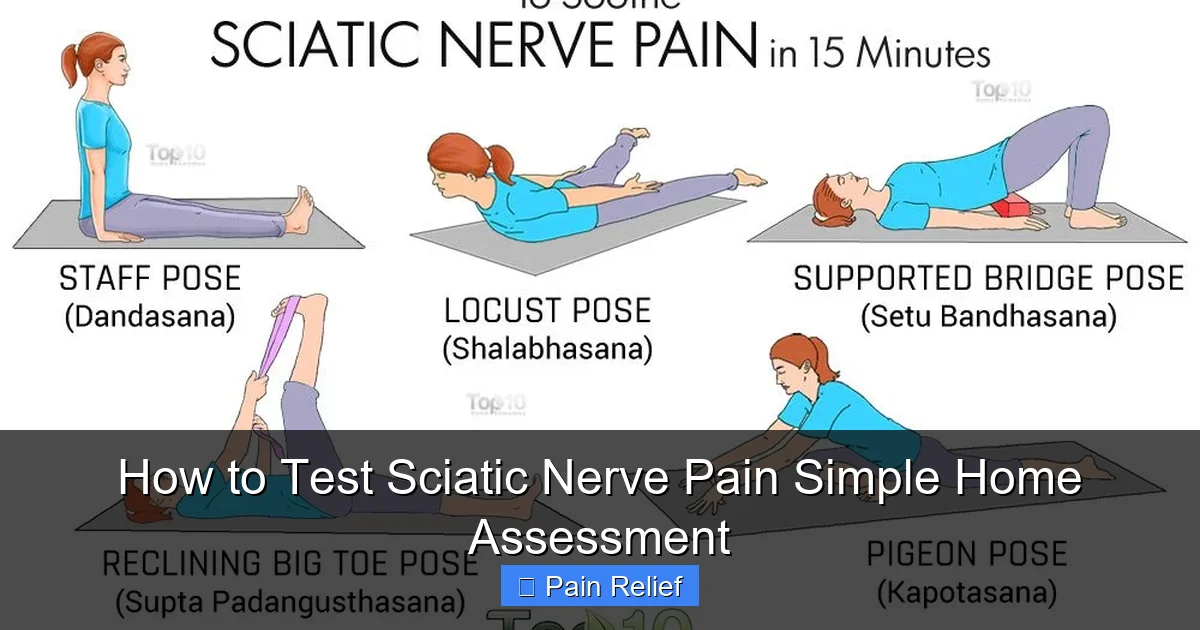
Visual guide about How to Test Sciatic Nerve Pain Simple Home Assessment
Image source: top10homeremedies.com
1. The Straight Leg Raise Test (SLRT)
The Straight Leg Raise Test is one of the most well-known and effective methods to test sciatic nerve pain and identify nerve root irritation.
H3. How to Perform the SLRT:
- Lie Down: Lie flat on your back on a firm surface. Keep your head relaxed and your back neutral.
- Position Your Legs: Keep both legs straight.
- Lift One Leg: Slowly and gently lift one leg straight up towards the ceiling. Keep your knee as straight as possible. Do not bend your knee.
- Observe for Pain: Lift your leg until you start to feel pain, stretching, or tingling down the back of your leg. Note the angle at which the symptoms appear. If you don’t feel anything, continue lifting until you reach about a 70-degree angle or as far as comfortable.
- Lower Your Leg: Slowly lower your leg back down.
- Repeat on the Other Side: Perform the test on your other leg, even if you don’t have symptoms there, to compare.
H3. What the SLRT Indicates:
If you experience sharp, radiating pain, numbness, or tingling that travels below your knee (often into the calf or foot) between a 30 and 70-degree angle of leg elevation, this is considered a “positive” Straight Leg Raise Test. This suggests a strong likelihood of sciatic nerve compression or irritation, often due to a herniated disc in the lower back. Pain felt only in the hamstring or buttock area at higher angles might indicate hamstring tightness or piriformis issues rather than direct sciatic nerve root compression.
2. The Slump Test (Seated Sciatic Nerve Assessment)
The Slump Test is another excellent way to test sciatic nerve pain, especially if you find lying down difficult. It’s designed to put the sciatic nerve under tension in a seated position.
H3. How to Perform the Slump Test:
- Sit Upright: Sit on a firm chair with your feet flat on the floor, about hip-width apart.
- Slump Your Back: Slowly “slump” your upper back, allowing your shoulders to round and your chin to tuck towards your chest. Imagine you’re trying to touch your chin to your sternum.
- Extend One Leg: While maintaining the slumped position, slowly straighten one leg out in front of you as much as comfortable.
- Dorsiflex Your Foot: Gently pull your toes back towards your shin (dorsiflexion) on the extended leg.
- Observe for Symptoms: Pay attention to any pain, tingling, or numbness that radiates down your leg. Note where the symptoms occur and at what stage of the movement.
- Return to Start: Slowly reverse the steps, returning to the upright sitting position.
- Repeat on the Other Side: Test the other leg for comparison.
H3. What the Slump Test Indicates:
If performing these steps reproduces your typical sciatic symptoms (pain, tingling, numbness) down your leg, especially when you straighten your leg or dorsiflex your foot, it suggests potential sciatic nerve irritation. The slump test is a good way to confirm the findings from the straight leg raise or to offer an alternative method to test sciatic nerve pain.
3. The Piriformis Stretch Test (FAIR Test)
Sometimes, sciatic-like pain isn’t caused by a problem in your spine but by the piriformis muscle compressing the sciatic nerve (Piriformis Syndrome). This test helps differentiate.
H3. How to Perform the Piriformis Stretch Test:
- Lie Down: Lie on your back with your knees bent and feet flat on the floor.
- Cross One Leg: Cross the leg of your painful side over the other leg, resting your ankle on the opposite knee (like making a “figure-four” shape).
- Pull Knee Towards Chest: Gently use your hands to pull the knee of the crossed leg towards your opposite shoulder.
- Observe for Pain: Hold the stretch for about 20-30 seconds, or until you feel discomfort. Note if the pain is deep in your buttock, radiating down your leg, or both.
- Release and Repeat: Slowly release the stretch and repeat on the other side for comparison.
H3. What the Piriformis Test Indicates:
If you feel deep buttock pain, potentially radiating down the back of your leg, during this stretch, it could indicate piriformis syndrome. This is because the piriformis muscle, when tight or spasming, can irritate the sciatic nerve as it passes through or beneath it. This specific test helps in understanding how to test sciatic nerve pain when it might be related to muscular issues rather than spinal ones.
4. Standing Sciatic Nerve Stretch
This is a simpler, gentle stretch that can sometimes reproduce sciatic symptoms.
H3. How to Perform the Standing Sciatic Nerve Stretch:
- Stand Upright: Stand tall with your feet hip-width apart.
- Cross Legs: Cross your affected leg behind your unaffected leg (e.g., if right leg hurts, cross it behind your left leg).
- Bend Forward: Keeping both legs as straight as possible, slowly bend forward at your hips, reaching your hands towards your toes or the floor.
- Observe for Symptoms: Feel for any reproduction of your typical sciatic pain, tingling, or numbness down the affected leg.
- Return and Repeat: Slowly return to the starting position and try the other side for comparison.
H3. What the Standing Stretch Indicates:
If bending forward in this crossed-leg position reproduces your sciatic symptoms, it indicates a stretch or tension on the sciatic nerve. It’s a less specific test than the SLRT, but it can be a quick indicator when you’re trying to figure out how to test sciatic nerve pain with a simple movement.
5. Deep Palpation Along the Sciatic Nerve Path
Sometimes, simply pressing along the path of the sciatic nerve can reveal tender points or reproduce symptoms.
H3. How to Perform Deep Palpation:
- Locate the Path: The sciatic nerve typically runs from the lower back, through the center of the buttock, down the back of the thigh, and into the calf.
- Gentle Pressure: With your fingertips, gently but firmly press along this path. Start from the buttock, move down the middle of the back of your thigh, and then into the calf muscle.
- Observe for Tenderness/Pain: Note any areas of significant tenderness, sharp pain, or if pressing reproduces your radiating symptoms.
H3. What Deep Palpation Indicates:
Localized tenderness or the reproduction of radiating pain when you press along the sciatic nerve path can indicate inflammation or irritation of the nerve. This is a good complementary method when you test sciatic nerve pain, as it helps pinpoint specific areas of sensitivity.
Interpreting Your Home Assessment Results
After performing these tests, it’s time to put the pieces together. Here’s how to interpret what you’ve found when learning how to test sciatic nerve pain:

Visual guide about How to Test Sciatic Nerve Pain Simple Home Assessment
Image source: joggo.run
- Consistent Symptoms: If multiple tests consistently reproduce your specific sciatic symptoms (radiating pain, numbness, tingling down your leg), it strongly suggests that your sciatic nerve is involved.
- Symptom Location and Type: Pay attention to whether the pain is primarily in your buttock (possibly piriformis syndrome), or if it clearly radiates below the knee into your calf or foot (more indicative of nerve root compression).
- Unilateral Pain: Sciatica almost always affects only one leg. If you have similar radiating pain down both legs, it could indicate a more serious condition or a different issue entirely.
Remember, a positive result from these home tests is not a definitive diagnosis. It means there’s a good chance your symptoms are related to your sciatic nerve and that you should seek a professional medical opinion. These tests are powerful tools to help you understand your body better and prepare for your doctor’s visit, making it easier to explain your experiences and get the right help for how to test sciatic nerve pain thoroughly.
When to See a Doctor (Red Flags)
While learning how to test sciatic nerve pain at home can be very informative, it’s crucial to know when to seek immediate medical attention. Some symptoms are red flags that indicate a potentially serious condition:
- Sudden, Severe Pain: If your pain comes on suddenly and is excruciating, especially after an injury.
- Progressive Weakness or Numbness: If you notice increasing weakness in your leg or foot, or if numbness is spreading.
- Foot Drop: Difficulty lifting the front part of your foot, causing your toes to drag when you walk. This indicates significant nerve damage.
- Loss of Bowel or Bladder Control: This is a medical emergency known as Cauda Equina Syndrome and requires immediate medical attention.
- Bilateral Sciatica: Sciatic pain in both legs is uncommon and may indicate a more severe spinal issue.
- Pain After Trauma: If your symptoms started after a fall, car accident, or other injury.
- Pain That Worsens or Doesn’t Improve: If your pain isn’t getting better after a week or two, or if it’s getting progressively worse.
If you experience any of these red flag symptoms, stop any self-assessment immediately and contact your doctor or emergency services right away. Knowing how to test sciatic nerve pain also means knowing its limits and when professional intervention is critical.
Practical Tips for Managing Sciatic Pain (Short-Term)
While you await a professional diagnosis, here are a few general tips that might help manage discomfort:
- Gentle Movement: Avoid prolonged sitting or standing. Short walks and gentle stretches can often help.
- Heat and Cold Packs: Apply ice packs for acute pain/inflammation (first 48-72 hours) and then switch to heat for muscle relaxation.
- Maintain Good Posture: Be mindful of your sitting and standing posture to minimize pressure on your spine.
- Avoid Heavy Lifting: Especially avoid lifting with a rounded back.
- Over-the-Counter Pain Relievers: NSAIDs like ibuprofen or naproxen can help reduce pain and inflammation. Always follow dosage instructions.
These are temporary measures and not a substitute for a comprehensive treatment plan from a healthcare professional, especially once you’ve utilized your knowledge of how to test sciatic nerve pain.
Troubleshooting Your Home Assessment
Sometimes, self-assessment can present challenges. Here are a few troubleshooting tips:
- Difficulty Performing a Test: If a test is too painful or physically challenging, don’t force it. Try a modified version or focus on the tests that you can perform comfortably. For example, if you can’t straighten your leg completely during the SLRT, just go as far as you can without significant pain.
- Inconclusive Results: If your symptoms are mild or inconsistent, you might not get clear-cut results. Try performing the tests again on a different day, perhaps when your pain is more noticeable. Sometimes, recording your observations over a few days can reveal patterns.
- Pain Worsens During a Test: If at any point a test significantly increases your pain or causes new, alarming symptoms, stop immediately. Rest, and if the pain persists or worsens, consult your doctor.
- Can’t Tell If It’s Sciatica: Sciatica can sometimes mimic other conditions like hamstring strain, gluteal pain, or even sacroiliac joint dysfunction. The key difference with sciatica is the radiating nature of the pain down the nerve path. If you’re still unsure, that’s perfectly normal, and it highlights the importance of a professional diagnosis.
Remember that the purpose of learning how to test sciatic nerve pain at home is to gain insight, not to replace medical expertise. Your observations are valuable, but a doctor can provide the definitive answers.
Conclusion
Understanding how to test sciatic nerve pain through simple home assessments can be an empowering first step in addressing your discomfort. By carefully performing tests like the Straight Leg Raise, Slump Test, and Piriformis Stretch, you can gather crucial information about your symptoms and identify potential sciatic nerve involvement. This knowledge will not only help you understand your body better but also enable you to have a more informed discussion with your healthcare provider.
While these assessments are powerful tools for self-exploration, it’s vital to remember that they are not diagnostic. Sciatic nerve pain can have various underlying causes, and an accurate diagnosis from a doctor, physiotherapist, or chiropractor is essential for developing an effective treatment plan. Always prioritize your safety, listen to your body, and never hesitate to seek professional medical advice, especially if you experience any red flag symptoms.
Taking proactive steps to understand your pain is commendable. Use the insights gained from learning how to test sciatic nerve pain as a springboard to professional care, guiding you towards relief and a better quality of life.
🎥 Related Video: Do you have Sciatica? Try this easy self test called the Slump test. #sciatica#
📺 Apex Orthopedic Rehabilitation