You feel tension melt as warm, smooth stones glide over tight muscles and soothe stress. Hot stone massage uses heated basalt or other smooth stones placed on key body points and moved by the therapist to warm tissue, ease pain, and boost circulation.
Hot stone massage combines steady heat and skilled touch to relax muscles more deeply than hands alone, helping reduce pain and promote calm. It works for people seeking relief from muscle tightness, stress, or a deeper relaxation experience, though certain health conditions mean it’s not for everyone.
Key Takeaways
- Hot stone massage uses heated stones and massage to target muscle tension and stress.
- The heat helps muscles relax, which can improve circulation and ease pain.
- Not everyone should get hot stone massage; check health needs and choose a trained therapist.
What Is Hot Stone Massage?
Hot stone massage uses smooth, heated stones together with hands-on massage to ease muscle tension, improve circulation, and promote relaxation. It combines heat, pressure, and targeted placement of stones to reach tight areas more effectively than hands alone.
Definition and Overview
Hot stone massage uses flat, heated stones—usually basalt—placed on the body and used as massage tools. The stones are warmed to a safe temperature, then set on areas like the back, shoulders, legs, and feet to deliver steady heat.
Therapists also hold stones and use them to make long, gliding strokes and deeper pressure. The heat helps muscles relax so the therapist can work deeper with less force. Typical sessions last 60–90 minutes and may include light oil or lotion for smoother strokes.
History of Hot Stone Therapy
Heated stone use goes back thousands of years in many cultures. Indigenous groups, early Chinese practitioners, and Native American healers used warmed stones for warmth and pain relief.
Modern spa-style hot stone massage developed in the 1990s when therapists adapted ancient techniques with safety standards and massage training. Today’s practice blends traditional ideas with clinical knowledge about heat’s effects on tissue and circulation.
How It Differs From Other Massage Techniques
Hot stone massage adds sustained, direct heat to a treatment rather than relying only on hands. That heat increases blood flow and relaxes tight muscle fibers, allowing deeper pressure without causing extra pain.
Compared with Swedish massage, it uses more thermal input and often slower, heavier strokes. Compared with deep tissue work, it uses heat to soften tissue before applying stronger pressure. Contraindications differ too; people with certain conditions (e.g., uncontrolled diabetes, open wounds, or impaired temperature sensation) should avoid heated stones or consult a clinician first.
- Typical stones: basalt (retains heat)
- Common placements: back, spine base, shoulders, legs
- Session length: 60–90 minutes
How Hot Stone Massage Works
Heat and pressure combine to loosen tight muscle fibers, ease stiffness, and boost blood flow to the treated areas. The therapist selects specific stones, warms them to a safe temperature, and uses both stone placement and hand techniques to reach deeper muscle layers.
Types of Stones Used
Therapists most often choose basalt stones because they hold heat well. Basalt is a dark volcanic rock with a smooth surface after polishing. Stones come in various sizes: small stones for face and hands, medium for limbs, and large for the back and thighs.
Some practitioners use marble or jade for cool-stone techniques. Marble stays cooler and may be used after heat to reduce inflammation. Jade stones are valued for smoothness and feel but do not retain heat as long as basalt.
Typical stone properties table:
| Stone type | Key trait | Common use |
|---|---|---|
| Basalt | High heat retention | Main heated stones for major muscle groups |
| Marble | Stays cool | Cooling or contrast therapy |
| Jade | Smooth feel | Facial or lighter work |
Heating and Placement Methods
Therapists heat stones in a professional electric warmer that keeps water between about 43°C and 54°C (110°F–130°F). They check temperature with a thermometer and by hand to avoid burns. Towels or oil often separate the stone from skin to control direct heat.
Placement follows muscle anatomy. Stones go along the spine, on the stomach, in the palms, or over tight shoulders. Small stones fit into the arches of the feet or along the scalp. Therapists leave stones in place for a few minutes until heat eases tension, then remove or reposition them.
Massage Techniques Applied
Practitioners blend stone-assisted strokes with standard massage moves like effleurage, petrissage, and kneading. They may hold a warm stone in one hand to maintain heat while stroking with the other hand. The warmth lets therapists apply slightly deeper pressure without causing extra pain.
Techniques often include:
- Long gliding strokes to improve circulation.
- Circular motions to break scar tissue and adhesions.
- Direct pressure with a heated stone on trigger points for brief releases.
Therapists adapt pressure and timing to the client’s comfort and any medical limits. They continually check skin response and adjust heat, placement, or technique during the session.
Benefits of Hot Stone Massage
Hot stone massage combines heat and pressure to target tight muscles, calm the nervous system, and improve blood flow. It can ease stiffness, lower stress, and reduce pain when performed by a trained therapist.
Physical Health Benefits
Hot stones warm muscle tissue and skin, which helps blood vessels widen. This increased circulation brings more oxygen and nutrients to tissues and can speed recovery after exercise or minor strains.
Therapists place stones on the back, shoulders, and legs to warm deep muscle layers. The heat allows firmer strokes with less discomfort, so therapists can work more effectively on tight knots and adhesions.
People with poor circulation, muscle stiffness, or limited range of motion may notice better flexibility after sessions. Those with certain conditions (like active infections or open wounds) should avoid this therapy or consult a clinician first.
Mental and Emotional Advantages
The steady warmth and rhythmic strokes trigger the parasympathetic nervous system. This response lowers heart rate and breathing, which helps reduce anxiety and promotes calm.
Clients often report improved sleep after a session. The combination of reduced tension and relaxed breathing supports falling asleep faster and staying asleep longer.
A quiet, focused session can also give mental space to process emotions. This therapy can be part of a broader self-care routine for stress management when used alongside counseling or relaxation techniques.
Pain Relief and Relaxation
Heat from basalt stones penetrates muscle tissue to decrease stiffness and pain sensitivity. Applying heated stones directly to sore spots can reduce muscle spasms and make manual massage less painful.
Therapists use stones to target trigger points and chronic tension in the neck, shoulders, and lower back. Many clients report immediate relief in range of motion and a measurable drop in pain after treatment.
Hot stone massage is not a cure for structural injuries, but it can be an effective tool for short-term pain control and comfort. Always consult a health professional for persistent or worsening pain.
Who Should Consider Hot Stone Massage?
Hot stone massage suits people who need deep muscle relaxation, better circulation, or stress relief. It works best when tailored to specific goals like easing chronic back tension, reducing muscle stiffness, or improving sleep quality.
Ideal Candidates

People with chronic muscle tightness or tension often get the most benefit. The heat from basalt stones helps muscles loosen, allowing the therapist to work deeper without extra pressure. Athletes with tight shoulders or lower-back soreness may use it to speed recovery after training.
Those with high stress or poor sleep can find the warm, rhythmic touch soothing. Pregnant people in the second trimester may get a modified session if cleared by their care provider. Older adults with stiff joints or limited mobility might enjoy improved circulation, but therapists should adjust pressure and stone temperature.
If someone has sensitive skin, a low pain threshold, or is new to massage, they should ask for milder heat and lighter pressure. Always tell the therapist about medications, recent injuries, or specific pain areas so they can customize the session.
Contraindications and Precautions
Hot stone massage is not safe for people with certain medical conditions. Those with diabetes, neuropathy, circulatory problems, or deep vein thrombosis should avoid heated stones unless cleared by a doctor. People with active infections, open wounds, skin conditions like severe eczema, or recent surgery must skip hot stone work until fully healed.
Pregnant people in the first trimester, anyone with uncontrolled high blood pressure, or people on blood-thinning medication should get medical approval first. Cancer patients should consult their oncology team before booking. Therapists must always check for allergies to oils and confirm stone temperatures before use.
For safety, certified therapists should use stones warmed to a controlled range and test heat on themselves or a protected area. If the client feels numbness, burning, or unusual pain during the session, they must speak up immediately.
Sources: American Massage Therapy Association (AMTA), Mayo Clinic.
What to Expect During a Hot Stone Massage Session
The session includes a short health check, placement and movement of heated stones, and brief aftercare steps. Temperatures, pressure, and stone placement are adjusted for comfort and safety.
Arrival and Consultation
They check medical history and current health first. The therapist asks about blood pressure, skin sensitivity, recent injuries, and any areas of pain. This helps decide stone temperature and whether to use stones at all.
They ask about comfort with heat and preferred pressure. Clients should mention pregnancy, diabetes, or circulatory issues. These conditions can change the method or rule out hot stones.
They explain what will happen and where stones will be placed. The therapist confirms modesty preferences and whether the client wants music, lighting, or aromatherapy.
Step-By-Step Process
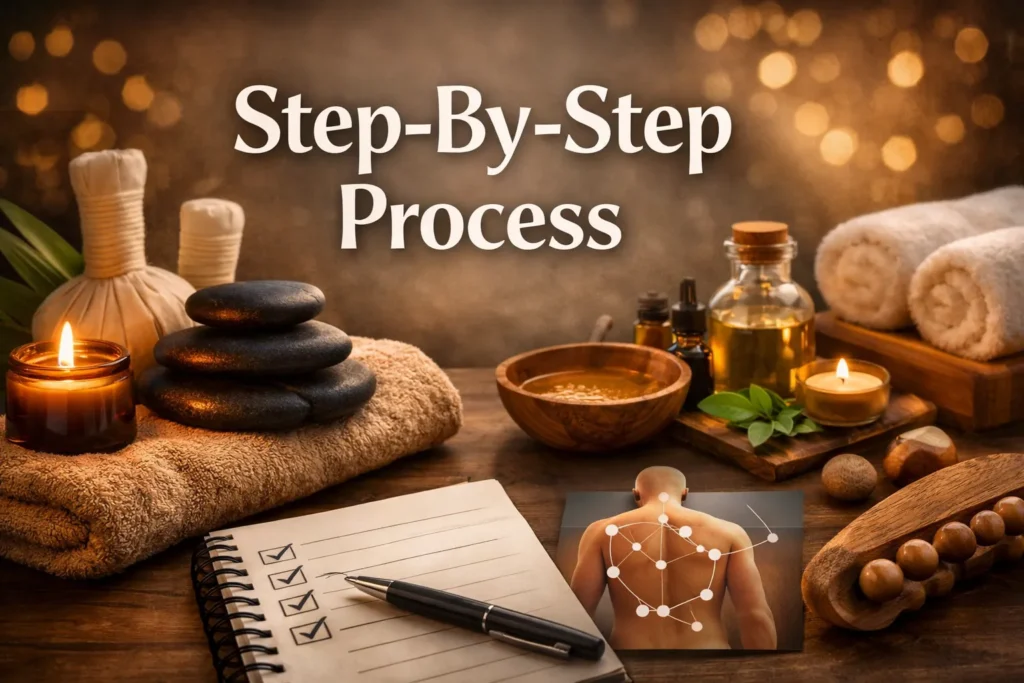
The therapist warms smooth basalt stones in a heater to about 130–145°F (54–63°C). They test a stone on their own forearm first, then on the client’s skin briefly to check comfort.
Light oil or lotion is used so stones and hands glide. Stones are placed along the spine, shoulders, abdomen, palms, or feet, and some are held while the therapist performs normal massage strokes.
Pressure varies from light to firm based on the client’s feedback. Stones may be swapped for cooler ones or removed if any burning or redness appears. Sessions last 60–90 minutes; stone contact is intermittent to avoid overheating.
Aftercare Tips
They advise drinking water to help flush toxins and rehydrate skin. Mild redness or warmth can last an hour; applying cool water or a damp cloth eases any lingering heat.
Avoid hot tubs or steam rooms for a few hours after, since skin and circulation are still sensitive. If soreness develops, gentle stretching and over-the-counter pain relievers can help.
They recommend noting what felt good or uncomfortable for future sessions. Scheduling follow-up treatments depends on pain level and goals; many clients book every 2–4 weeks for chronic tension.
Choosing a Qualified Hot Stone Massage Therapist
Look for a therapist who has formal hot stone training, hands-on experience, and clear communication about health and safety. Confirm their credentials, ask specific questions about equipment and techniques, and make sure they adapt the session to any medical needs.
Certifications and Training
Therapists should hold a state or national massage license plus a specific hot stone certificate. The certificate shows they learned temperature control, stone placement, and sanitation for basalt or other stone types.
Check whether the training included anatomy, contraindications, and practical hours. Workshops of 10–20 hours with supervised practice are common. Courses tied to recognized schools or professional associations add credibility.
Also verify continuing education. Therapists who update skills yearly are likelier to follow safety changes and new techniques. Ask for the instructor’s name or school if documentation is unclear.
Questions to Ask Before Booking
Ask about stone heating equipment and temperature settings. Safe units have thermostats and digital controls; therapists should test stones on their forearm before use.
Request details on sanitation: how stones and heaters are cleaned between clients and whether single-use or covered towels are used. Proper cleaning reduces infection risk.
Inquire about experience with your needs. For example, ask: “Have you worked with pregnant clients?” or “Can you modify pressure for fibromyalgia?” A good therapist will explain adjustments.
Finally, ask about session structure and pricing. Confirm how long heated stones are used, whether they stay on the body or are used for massage, and if the full session includes Swedish or deep-tissue work.
Safety and Risks of Hot Stone Massage
Hot stone massage can help relax muscles and ease pain, but it also brings specific risks. Clients and therapists must check health history, stone temperature, and skin condition before starting.
Common Side Effects
Mild redness and temporary warmth are common after a hot stone session. Skin may look flushed where stones rested, and this usually fades within an hour.
Some people feel lightheaded or tired after treatment. That can happen from heat, deep relaxation, or lowered blood pressure. Drinking water and sitting up slowly helps.
Less common effects include blisters, burns, or increased pain if stones are too hot or left in one spot too long. People with thin skin, reduced feeling, or circulatory problems face higher risk. Therapists should ask about diabetes, neuropathy, recent surgery, or skin conditions first.
Preventing Burns and Injuries
Therapists must heat stones in a proper heater with a thermostat and check each stone’s temperature on their own skin before use. Ideal stone temperature usually ranges between 120–130°F (49–54°C), but individual tolerance varies.
Use barriers like towels or cloth between stones and bare skin when needed. Move stones frequently and avoid holding a stone on one spot for more than a few seconds. Watch for client cues and re-check skin often.
Clients should tell the therapist about medications, pregnancy, or medical conditions. If a client has reduced sensation, open wounds, or circulatory issues, the therapist should skip hot stones or use safer alternatives.
FAQS
What is a hot stone massage?
It uses smooth, heated stones placed on the body and used by the therapist to warm and relax muscles. The heat helps muscles loosen so the therapist can work deeper with less pressure.
Is it safe for everyone?
Most healthy adults can have it, but people who are pregnant, have diabetes, high blood pressure, skin conditions, or circulation problems should check with a doctor first. The therapist should always ask about medical history before starting.
Does it hurt?
It should not hurt. The stones are warm, not scalding, and the therapist adjusts pressure and temperature to comfort. If a client feels any burning or pain, they should tell the therapist right away.
How long does a session last?
Sessions usually run 60 to 90 minutes. Time can vary based on client needs and whether stones are used on the whole body or specific areas.
What are common benefits?
Clients often report reduced muscle tension, better circulation, and deep relaxation. It may also help relieve stress and ease mild aches.
Are there any side effects?
Some people feel mild soreness or redness that fades in a day. Properly trained therapists minimize risks by using correct stone temperatures and techniques.
How should one prepare?
They should wear comfortable clothing and share health concerns with the therapist in advance. Hydrating before and after the session helps circulation and recovery.
Conclusion
Hot stone massage uses heated stones and hands-on techniques to ease muscle tension and promote relaxation. It can boost circulation and help people feel calmer after a session.
People with certain health issues should talk to a doctor or therapist before trying it. Conditions like skin problems, burns, diabetes, or circulatory disorders can make the treatment unsafe.
A good therapist adjusts stone temperature and pressure to match each client’s comfort and health needs. Clear communication during the massage helps prevent burns and other problems.
Benefits often include reduced muscle tightness and a sense of deep relaxation. Results vary by person and by the skill of the therapist.
To prepare, clients should drink water and share health history and current medications. Aftercare like gentle stretching and hydration can help extend the effects.
Key points to remember:
- Stones + heat = deeper muscle warmth.
- Not for everyone; check health risks first.
- Therapist skill and client communication matter most.