
By Alex Turner
Quick Answer: Percussion massagers may temporarily make cellulite look smoother by changing local blood flow and soft-tissue appearance, but they do not remove cellulite or permanently change the connective bands that create dimpling. Evidence for percussion massage specifically is limited, so realistic expectations matter.
A closer look at cellulite and percussion massage
If you have been wondering do percussion massagers help with cellulite, the most useful answer is not a simple yes or no. A percussion device can affect the feel and short-term appearance of soft tissue, but cellulite is more than a surface problem.
Cellulite involves the relationship between fat beneath the skin, connective tissue bands, and the skin itself. That is why a massage gun can make an area look different for a while without actually removing the underlying dimples. :contentReference[oaicite:0]{index=0}
Trust & Safety: This article is for general educational information only. It does not diagnose, treat, cure, or prevent any condition. It does not replace advice from a licensed healthcare professional. Readers should seek professional help for severe, worsening, unusual, or persistent symptoms.
What cellulite actually is
Cellulite is a very common pattern of skin dimpling, most often seen around the thighs, hips, buttocks, and sometimes the abdomen or upper arms. It is not simply the same thing as having excess body fat. The American Academy of Dermatology explains that cellulite is related to fat pushing upward while tough connective bands pull the skin downward, creating the familiar uneven surface. :contentReference[oaicite:1]{index=1}
That structure explains why a massage tool has limits. Pressing or vibrating the skin may temporarily change circulation, tissue fluid, muscle tension, or the way light catches the skin. It does not mean the connective bands have been permanently released.
Cellulite is also not a reliable measure of fitness or health. People with different body sizes and activity levels can have it. Genetics, skin structure, hormones, body composition, and tissue arrangement can all influence how visible it becomes. :contentReference[oaicite:2]{index=2}
Myth vs fact: what is really changing?
The biggest mistake is treating a temporary cosmetic change as proof that cellulite itself has been removed. The table below separates the effect you may notice from the structural change you should not expect from an ordinary handheld percussion massager.
Swipe left/right to see the full table →
| Claim | What is more realistic |
|---|---|
| Breaks up cellulite | Not established for handheld percussion |
| Changes blood flow | Massage can increase local circulation temporarily |
| Smooths skin forever | Any visual change may be short-lived |
| Removes body fat | Percussion is not a fat-removal procedure |
Note: FDA records include certain specialized massage systems with indications for temporary improvement in the appearance of cellulite. That does not mean every consumer percussion massager has the same indication, design, evidence, or intended use. :contentReference[oaicite:3]{index=3}
Why a massage gun can make cellulite look different
Percussion devices deliver rapid mechanical pulses to soft tissue. Massage-gun guidance from Cleveland Clinic describes percussive therapy as a way to warm tissue and increase blood flow in the targeted area. That is useful context, but circulation is not the same thing as changing the connective structure that creates cellulite. :contentReference[oaicite:4]{index=4}
After massage, the skin may look a little fuller or smoother because the tissue has been mechanically stimulated. If puffiness or fluid distribution changes, the surface can also look different. These effects should be viewed as temporary appearance changes rather than evidence that the cellulite has been removed.
Practical-effect guide
Temporary tissue stimulation Typical routine priority
Short-term cosmetic smoothing Practical guide
Permanent cellulite change Practical guide
The bars above are not research measurements. They are a practical way to show the difference between an immediate massage sensation, a possible temporary cosmetic effect, and the much stronger claim of permanently changing cellulite.
What the evidence says about massage
Evidence on massage-based cellulite treatments is mixed. The American Academy of Dermatology reports that studies of endermologie, a specialized deep-massage and suction treatment, have produced varying results and that observed improvements were temporary. Mayo Clinic likewise notes that massage-based cellulite treatments may produce slight improvement after several sessions, but the results are short-lived. :contentReference[oaicite:5]{index=5}
Those findings should not be transferred directly to a handheld percussion gun. A specialized device and a consumer massage gun can differ in pressure, movement, suction, vibration pattern, treatment area, and intended use. Current information therefore supports cautious wording: percussion may temporarily change the appearance of treated skin, but strong evidence that handheld percussion reduces cellulite itself is lacking.
What a percussion massager may and may not do
A simple way to think about it is to separate surface appearance from underlying structure. The first can sometimes change quickly. The second is much harder to change and is the reason established cellulite procedures use approaches that specifically target the connective bands or deeper tissue.
Swipe left/right to see the full table →
| Possible effect | Expectation | Why |
|---|---|---|
| Warmth | Likely temporary | Local stimulation |
| Softer tissue feel | Possible | Mechanical massage |
| Less visible dimpling | May be temporary | Surface appearance can change |
| Release of cellulite bands | Not expected | Requires a different approach |
Can percussion massage be part of a cellulite routine?
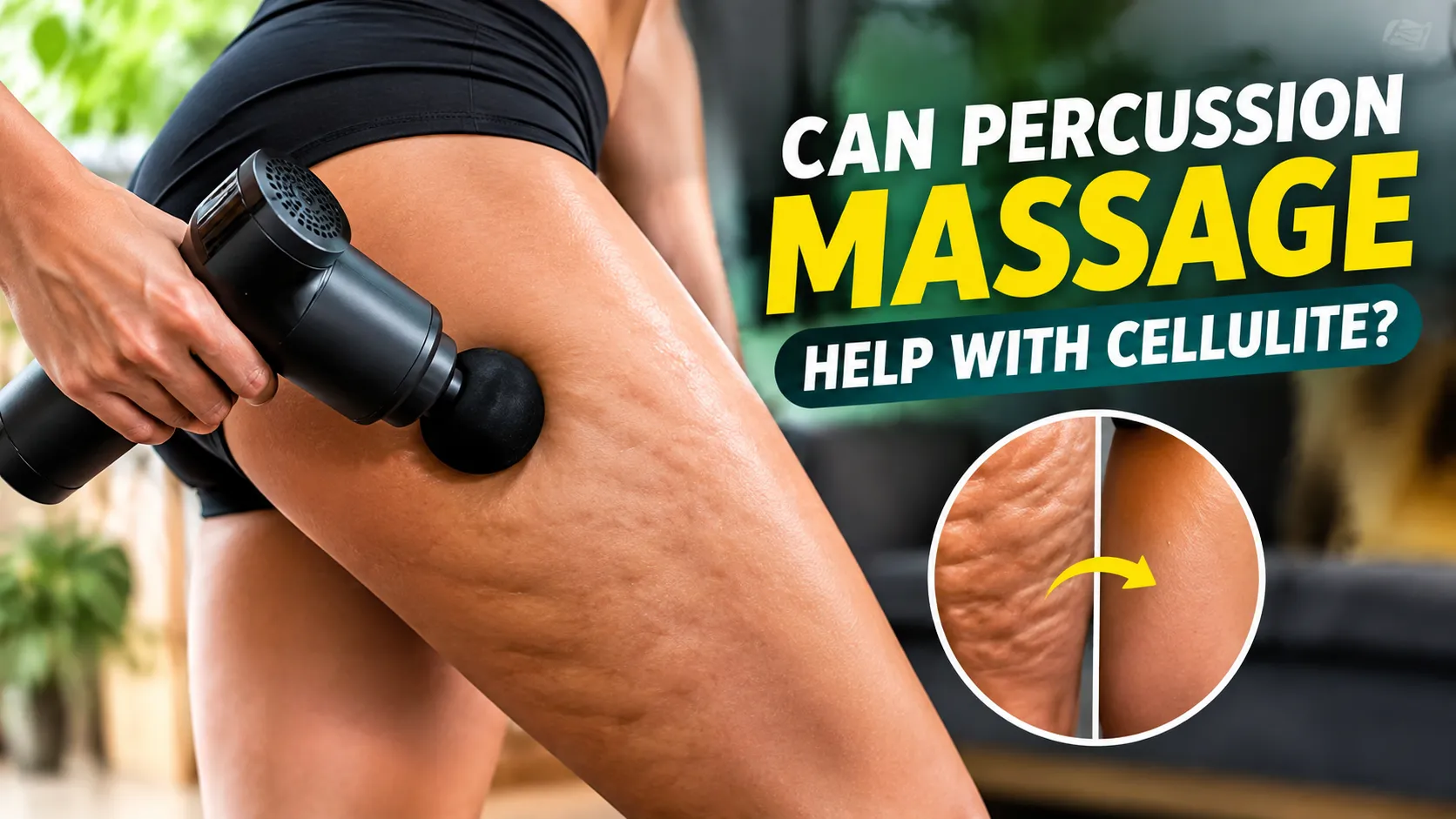
If your goal is simply to enjoy massage and see whether the skin looks temporarily smoother, a gentle routine may be reasonable for many healthy adults. The goal should be comfort and realistic cosmetic expectations, not aggressive pressure intended to “break up” cellulite.
Start with a clean, intact area of skin. Use a comfortable setting and a broad, softer attachment when available. Keep the device moving instead of holding it on one spot. There is no good reason to chase redness, bruising, soreness, or pain as proof that the session worked.
Tip: Treat the massage as a short comfort routine rather than a cellulite-removal treatment. If your skin becomes painful, unusually tender, bruised, swollen, or irritated, stop instead of increasing the pressure.
A practical routine path
Skip areas that are injured, irritated, infected, or unusually painful.
Start low and use only enough pressure to feel comfortable.
Use smooth passes rather than prolonged pressure on one point.
Stop if discomfort, bruising, swelling, or skin irritation develops.
This routine is a comfort-oriented guide, not a proven cellulite treatment protocol. Follow your device’s own instructions if they are more specific or restrictive.
Safe use versus risky use
The most common mistake is assuming stronger percussion must produce a stronger cosmetic result. There is no need to deliberately bruise or hurt the skin.
Swipe left/right to see the full table →
| Better choice | Riskier choice |
|---|---|
| Low comfortable setting | Maximum intensity immediately |
| Keep the device moving | Holding it on one spot |
| Intact skin | Broken or irritated skin |
| Stop at pain | Pushing through pain |
Warning: Do not use percussion as a way to deliberately create bruising or intense soreness. Be especially cautious around areas with significant swelling, unexplained pain, recent injury, or other medical concerns. Device instructions may list additional situations in which use should be avoided.
Who should be more cautious?
Not every uncomfortable or lumpy-looking area is simply ordinary cellulite. If an area is newly painful, rapidly changing, markedly swollen, warm, red, or associated with other unusual symptoms, a massage gun is not a substitute for figuring out what is happening.
People recovering from an injury or procedure, people with significant skin problems, and people with medical conditions that affect circulation or bleeding should ask a qualified healthcare professional whether percussion is appropriate for them. The correct advice can depend on the person’s health history and the exact device.
When to self-care and when to ask for help
Swipe left/right to see the full table →
| Situation | Practical next step |
|---|---|
| Stable, painless cellulite | Gentle self-care may be reasonable |
| New unexplained pain | Ask a healthcare professional |
| Skin infection or open wound | Avoid massage over the area |
| Severe or worsening symptoms | Seek prompt professional evaluation |
Safety decision path
Looks and feels like your usual cellulite?
If the skin is intact and there are no unusual symptoms, gentle use may be considered for comfort.
Something feels different?
Stop and reassess if there is new pain, swelling, warmth, redness, bruising, or another unusual change.
Symptoms are severe or worsening?
Skip the device and seek appropriate professional medical guidance.
Using it for cosmetic goals?
Keep expectations modest because any smoothing effect from massage may not last.
This decision path is intentionally conservative. The goal is to prevent a cosmetic goal from encouraging unnecessarily forceful massage when the treated area may need professional assessment.
What may help the appearance of cellulite?
If your main goal is improving how cellulite looks, regular movement and muscle-building activity may help some people make dimpling less noticeable. Mayo Clinic notes that physical activity and muscle toning can improve the appearance of dimpled skin. The American Academy of Dermatology similarly notes that more muscle can make skin look smoother and firmer. :contentReference[oaicite:6]{index=6}
That does not mean exercise “cures” cellulite. It simply means body composition, muscle tone, and skin appearance can interact. Cellulite can still be visible in fit and active people.
For people seeking a larger cosmetic change, dermatology-based options include procedures that specifically target the tissue structures involved in dimpling. The AAD describes approaches such as acoustic wave therapy, certain laser treatments, subcision, and vacuum-assisted tissue release, while also noting that results, risks, durability, and evidence differ by procedure. :contentReference[oaicite:7]{index=7}
Massage can still have a place in a personal-care routine if you enjoy the sensation. The important distinction is between using it for temporary appearance or comfort and expecting it to permanently remove cellulite.
Which approach fits which goal?
Swipe left/right to see the full table →
| Your goal | Reasonable focus | Expectation |
|---|---|---|
| Relaxation | Gentle massage | Short-term comfort |
| Muscle recovery | Appropriate percussion use | Focus on soft tissue |
| General skin appearance | Movement and healthy routines | Gradual, variable changes |
| Significant cellulite reduction | Discuss options with a dermatologist | Procedure-specific results and risks |
The evidence reality dashboard
Handheld percussion
Evidence for cellulite-specific benefit is limited. Any cosmetic smoothing should be considered temporary unless stronger evidence shows otherwise.
Specialized massage systems
Some massage-based cellulite systems have been studied, but results can be modest and temporary.
Exercise
Muscle tone and regular activity may make dimpling less noticeable for some people.
Medical procedures
Some procedures target cellulite structures more directly and should be discussed with an appropriately qualified clinician.
The dashboard is a practical summary, not a ranking. The right choice depends on whether your priority is relaxation, routine consistency, general appearance, or a larger cosmetic change.
Common mistakes when using percussion for cellulite
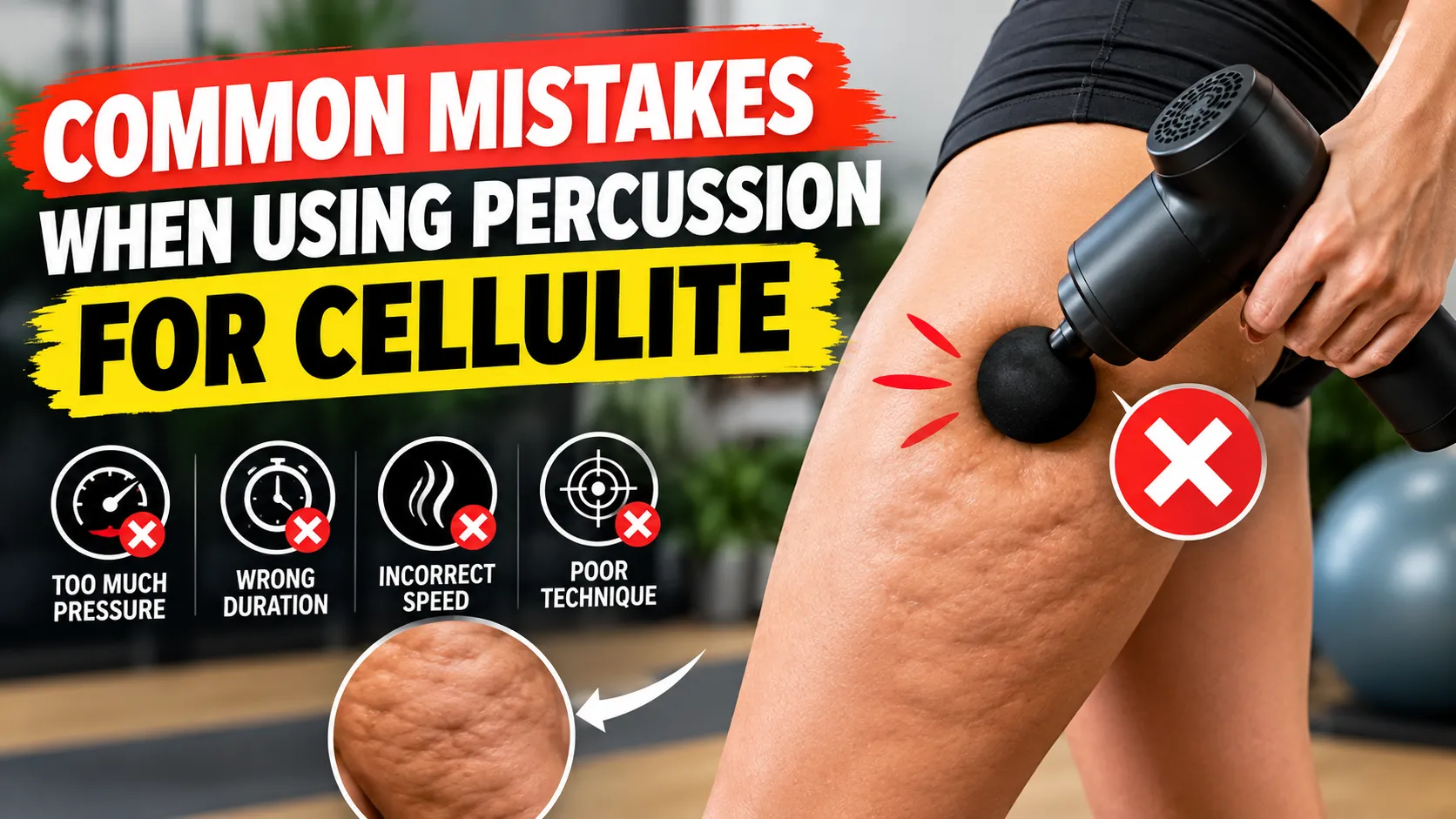
One mistake is assuming that a more aggressive attachment is automatically better. Concentrated heads can feel much stronger than broad heads, and stronger sensation does not prove a stronger cellulite effect.
Another mistake is treating redness as a treatment marker. Temporary redness can occur after mechanical stimulation, but intentionally creating irritation or bruising is not a useful measure of success.
A third mistake is comparing a consumer massage gun with a specialized cellulite procedure as though they work in exactly the same way. FDA records show that certain specialized devices combine massage with other technologies or have specific temporary cellulite-related indications. That does not establish the same result for an ordinary handheld percussion device. :contentReference[oaicite:8]{index=8}
A final mistake is judging the result immediately after a session and assuming it will remain unchanged. If the skin looks smoother shortly afterward, take that observation for what it is: a short-term appearance change unless longer-term evidence demonstrates otherwise.
Do’s and don’ts
Do
Use comfortable pressure.
Keep the device moving and follow the manufacturer’s instructions.
Don’t
Chase pain or bruising.
Do not assume intense percussion will remove cellulite faster.
When to contact a professional
Ordinary cellulite usually does not require medical treatment. However, a healthcare professional can help if you are unsure whether a new or unusual skin change is actually cellulite, or if the area is painful, rapidly changing, swollen, warm, red, or otherwise concerning. Mayo Clinic recommends discussing cosmetic concerns and treatment options with a primary care clinician, dermatologist, or appropriate specialist. :contentReference[oaicite:9]{index=9}
When to contact a professional: Seek professional guidance for severe, worsening, unusual, or persistent symptoms, especially significant pain, numbness, weakness, fever, substantial swelling, signs of infection, or changes following an injury or procedure. If symptoms feel urgent or severe, seek prompt medical care rather than using a massage device.
Frequently asked questions
Do percussion massagers help with cellulite?
They may temporarily change how cellulite looks by stimulating soft tissue and local circulation, but there is not strong evidence that handheld percussion permanently reduces cellulite.
Can a massage gun break up cellulite?
There is no good basis for assuming that an ordinary massage gun breaks apart the connective bands responsible for cellulite dimpling.
Why can cellulite look better after massage?
Massage can temporarily change blood flow and soft-tissue appearance, which may make the skin look smoother for a while.
How hard should I use a percussion massager on cellulite?
Use a comfortable setting and avoid forceful pressure, pain, or deliberate bruising. Follow the device manufacturer’s instructions.
Does exercise help make cellulite less visible?
It may. Muscle-building activity can make skin appear smoother or firmer for some people, although exercise does not guarantee that cellulite will disappear.
Is percussion massage a permanent cellulite treatment?
No established evidence supports ordinary handheld percussion as a permanent cellulite treatment. Massage-based effects, when noticed, may be temporary. :contentReference[oaicite:10]{index=10}
When should I stop using a massage gun on cellulite?
Stop if the area becomes painful, unusually tender, swollen, bruised, irritated, or otherwise abnormal, and seek professional advice when symptoms are severe, worsening, unusual, or persistent.
Final Thoughts
So, do percussion massagers help with cellulite? They may make the skin look or feel smoother temporarily, but that is different from removing the structural causes of cellulite. If you enjoy percussion massage, keep the routine gentle, follow the device instructions, and avoid treating pain or bruising as proof that it is working.
For a larger or longer-lasting cosmetic change, a dermatologist can explain which options have evidence, what results are realistic, and what risks apply to your situation. Seek professional help if the skin change is unusual, painful, worsening, or persistent.
Author
-

I’m Alex Turner, a massage product reviewer and wellness writer at RemedyTip. I specialize in researching, evaluating, and comparing massage and recovery products to help readers make informed purchasing decisions. My focus is on practical, evidence-informed product guidance covering muscle recovery, relaxation, everyday comfort, and wellness.
I take a research-driven approach to every product I review. I examine product specifications, features, materials, performance claims, user feedback, durability, comfort, ease of use, and overall value. When appropriate, I also consult trusted industry and health-related sources to verify important information and provide readers with a more complete and balanced view.
I cover a wide range of products, including massage guns, handheld massagers, neck and shoulder massagers, foot massagers, massage chairs, foam rollers, and other recovery tools. Rather than focusing only on marketing claims, I look at how products compare in real-world use and who they are actually suitable for. I also consider different budgets, use cases, and user needs when making recommendations.
At RemedyTip, I’m committed to accuracy, transparency, and unbiased product information. I clearly distinguish between manufacturer claims, available evidence, and my own product analysis so readers can understand the basis of each recommendation. I continuously research new products, technologies, and developments in the massage and recovery space to keep my content current and useful.
My goal is simple: to provide trustworthy, easy-to-understand information that helps readers choose massage and recovery products with greater confidence.

