Written by Alex Turner
Quick Answer: Percussion massagers may provide short-term comfort for some types of muscular lower-back discomfort, but they are not a cure for the underlying cause. Use light-to-moderate pressure on surrounding muscles, avoid the spine and injured areas, and stop if symptoms worsen.
A Practical Look at Percussion Massage for Back Discomfort
A percussion massager can feel useful when lower-back discomfort seems related to tight or overworked muscles. The device delivers repeated pulses through a soft attachment, which can create a massage-like sensation without requiring another person.
But stronger is not automatically better. Lower-back pain can have many causes, and a massage gun cannot determine whether pain is coming from muscle, a joint, a nerve, an injury, or another problem. The safest approach is to treat percussion massage as a comfort tool rather than a diagnostic or curative treatment.
Safety & Trust: This article is for general educational information only. It does not diagnose, treat, cure, or prevent any condition. It does not replace advice from a licensed healthcare professional. Readers should seek professional help for severe, worsening, unusual, or persistent symptoms.
Can Percussion Massage Help Lower-Back Discomfort?
Massage in general has been studied for nonspecific lower-back pain. A Cochrane review found that massage could provide short-term improvements in pain in some groups, although the certainty of evidence was limited and results varied. Importantly, some studies included mechanical massage devices, but the evidence does not mean every modern percussion massager has been proven to work for every type of back pain.
That distinction matters. A percussion massager is one form of mechanical soft-tissue stimulation. It may make tight muscles feel more relaxed or temporarily change how discomfort feels. It should not be treated as proof that the painful area is simply “tight” or that repeated deep pressure will fix the problem.
So, are percussion massagers good for lower back pain? They may be useful for short-term comfort when the discomfort appears muscular and there are no warning signs. They are less appropriate when pain follows an injury, travels down the leg with neurological symptoms, or comes with other concerning symptoms.
Research on massage for lower-back pain has generally focused on massage therapy as a broader category rather than today’s consumer percussion devices. One Cochrane review included trials in which massage was delivered with a mechanical device, but only a small portion of the included studies used mechanical massage. This means the broader massage evidence should not be presented as direct proof for every massage gun.
Note: “Massage may help” and “a percussion massager will fix back pain” are very different claims. The first can describe possible short-term comfort; the second goes beyond what the evidence supports.
What the evidence actually tells us
Systematic reviews have found that massage may improve pain and, in some situations, function over the short term. However, the quality of evidence has varied, and comparisons with other treatments have produced mixed findings. That is why percussion massage is better viewed as one optional comfort strategy rather than a stand-alone answer for persistent lower-back pain.
For a person with ordinary muscle soreness after sitting, lifting, exercise, or a long day, gentle massage may feel reasonable. For unexplained or persistent pain, the more important question is why the pain is happening and whether professional assessment is appropriate.
Myth vs. fact: what should you expect?
The following distinctions help prevent common mistakes when using a percussion device around the lower back.
Swipe left/right to see the full table →
| Myth | More accurate view |
|---|---|
| More pressure works better | Comfortable pressure is the safer starting point. |
| Pain means tight muscle | Pain can have many possible causes. |
| The spine is a target | Work around muscles rather than directly over the spine. |
| It replaces evaluation | Persistent or unusual symptoms deserve appropriate evaluation. |
These points are especially important because a percussion device can make an area feel temporarily different even when the underlying reason for the pain has not changed.
Practical fit dashboard
Muscular-feeling soreness, stiffness, or post-activity tension without warning signs.
Persistent pain, recent injury, significant tenderness, or symptoms that are difficult to explain.
Numbness, weakness, bladder or bowel changes, fever, or serious trauma.
If the device causes sharp pain, increasing symptoms, unusual sensations, or significant soreness.
This dashboard is a practical guide, not a diagnosis. The presence or absence of one feature cannot determine the cause of back pain.
Where Should You Use a Percussion Massager?
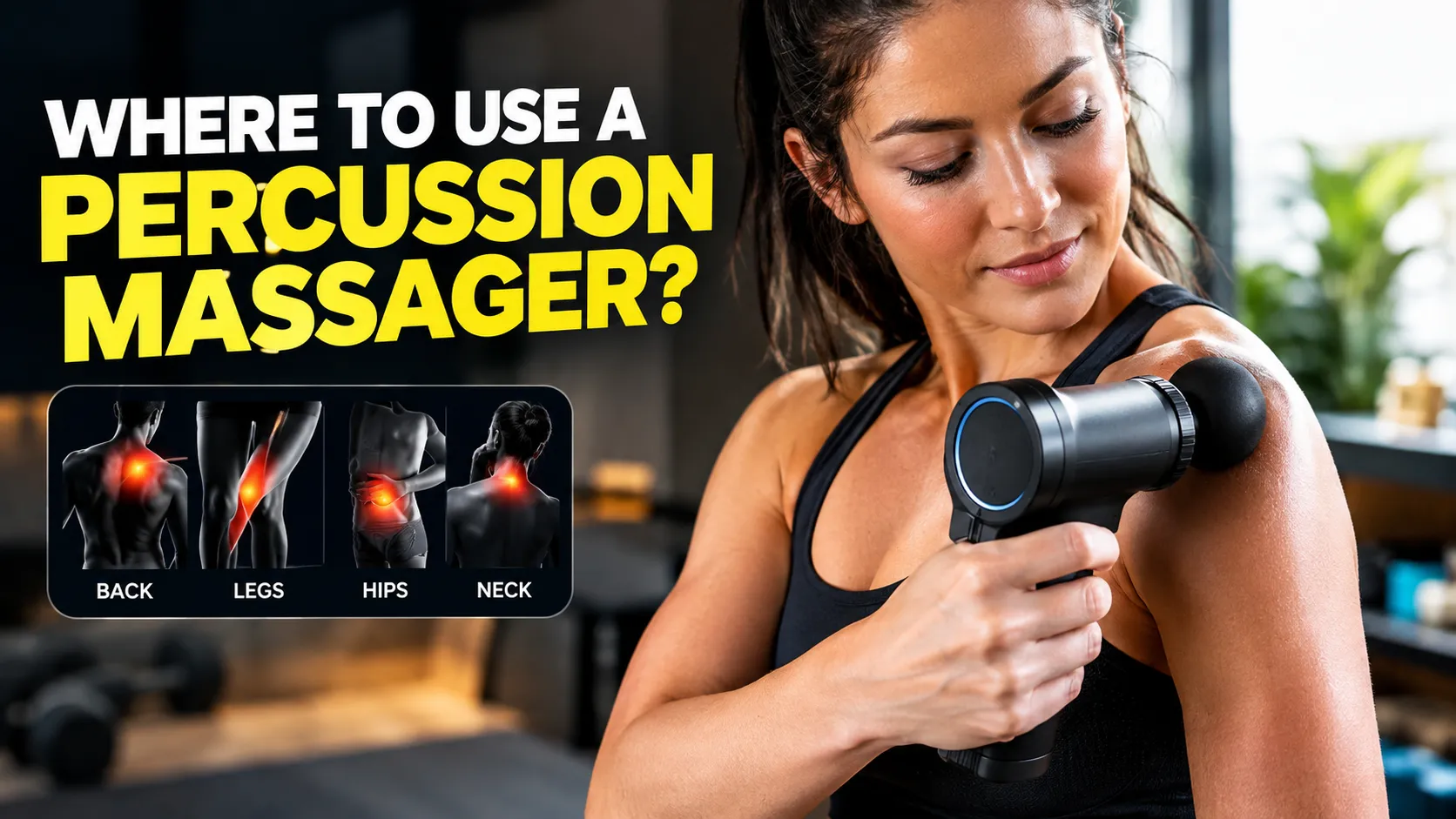
The lower back contains muscles alongside the spine, but the spine itself is not a massage target. For general comfort, a device is better directed toward broad areas of muscle rather than bony structures, the centerline of the spine, or an area that is acutely injured.
Commonly targeted surrounding areas include the larger muscles beside the lower back and the upper part of the buttock area. Even there, the goal should be gentle, controlled stimulation rather than forcing the attachment into a painful spot.
Avoid using the device on open wounds, irritated skin, significant bruising, areas with reduced sensation, or directly over prominent bones. If you have been told to avoid massage because of a medical condition, follow that professional advice instead of using a general internet routine.
Which type of discomfort may respond better?
Muscle soreness or a feeling of stiffness after prolonged sitting or physical activity may be more compatible with gentle massage than pain accompanied by neurological or systemic symptoms. That does not establish a cause, but it helps define when a comfort tool is more reasonable to consider.
If discomfort travels from the back into the buttock or leg, especially with numbness, tingling, or weakness, do not assume that deeper percussion is the answer. Such symptoms can require a different approach and may warrant professional evaluation.
A simple tool-fit table
Swipe left/right to see the full table →
| Situation | Practical approach | Reason |
|---|---|---|
| Mild muscle soreness | Gentle use around muscles | May provide comfort |
| Sharp or unexplained pain | Pause self-massage | Cause is unclear |
| Numbness or weakness | Seek professional guidance | Needs assessment |
| Recent major injury | Get medical advice | Massage may be inappropriate |
How to Use One More Carefully
If you have chosen to try percussion massage for ordinary muscular discomfort, a conservative routine is easier to control than an aggressive session.
1
2
3
4
5
Tip: A massage session does not need to leave the area bruised or very sore to be useful. If a routine repeatedly makes the next few hours or the following day worse, reduce the intensity or stop using the device.
Simple safety path
If symptoms become sharper, spread, or develop with numbness or weakness, stop self-massage and consider professional evaluation.
Common mistakes to avoid
Swipe left/right to see the full table →
| Mistake | Better choice |
|---|---|
| Highest setting first | Begin gently and adjust only if comfortable. |
| Directly over spine | Target surrounding muscle instead. |
| Chasing pain | Stop when discomfort becomes sharp or unusual. |
| Ignoring symptoms elsewhere | Consider the whole symptom pattern. |
When Percussion Massage May Not Be Appropriate
A percussion device should not be used as a way to push through serious or unexplained symptoms. A lower-back problem deserves more caution when it follows substantial trauma, is getting worse rather than better, or occurs with symptoms outside ordinary muscle soreness.
Red-flag checklist
These warning signs do not identify a specific diagnosis. They are reasons not to rely on self-massage alone and to seek appropriate medical advice.
Warning: Do not use a percussion massager to mask symptoms that are severe, unexplained, or rapidly changing. Temporary relief can make it tempting to continue an activity that may not be appropriate.
Self-care or professional help?
Swipe left/right to see the full table →
| Situation | General direction |
|---|---|
| Mild, familiar muscle soreness | Gentle self-care may be reasonable. |
| Pain keeps returning | Consider professional assessment. |
| Numbness, weakness, or bladder/bowel changes | Seek urgent medical attention. |
| Pain after major trauma | Get medical advice rather than self-massage. |
Does More Percussion Mean More Relief?
Not necessarily. A percussion massager creates a strong physical sensation, but a stronger sensation is not the same thing as a better outcome. Heavy pressure can leave already-irritated tissue feeling worse, especially when the user keeps increasing the intensity because the first setting does not feel dramatic enough.
A better goal is controlled comfort. The device should be easy to tolerate, should not create sharp pain, and should not become the only strategy used for recurring lower-back problems.
Do vs. don’t panel
Do
Use comfortable pressure, work on surrounding muscles, keep the device moving, and pay attention to how you feel afterward.
Don’t
Do not hammer the spine, press aggressively into painful tissue, or use the device to ignore worsening or neurological symptoms.
The practical aim is not to find the most intense setting. It is to find whether gentle stimulation provides useful comfort without creating a new problem.
What Else Can Support Lower-Back Comfort?
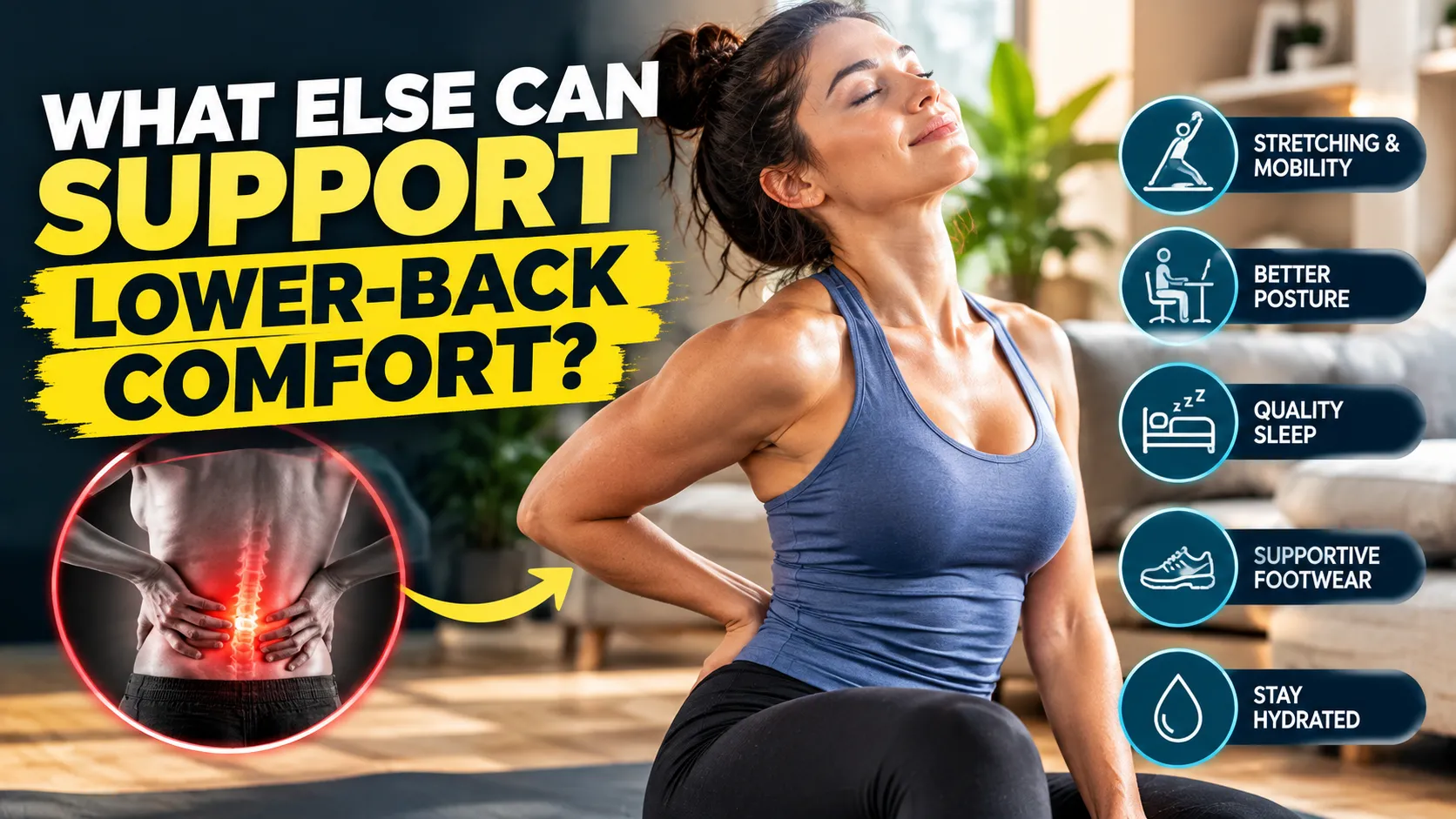
A percussion massager is only one possible comfort strategy. Depending on the situation, regular gentle movement, changing prolonged positions, appropriate stretching, and gradually returning to normal activity may be more useful than repeatedly focusing on one painful spot.
For recurring pain, the bigger goal is to understand the pattern. Notice whether symptoms appear after long periods of sitting, certain movements, exercise, lifting, or other activities. That information can be useful when discussing the problem with a qualified healthcare professional.
Massage research also suggests that massage may work better as part of a broader approach that includes exercise and education rather than being treated as the entire plan. The evidence does not establish that a consumer percussion device itself is necessary for these benefits.
A balanced routine
A practical routine might combine comfortable movement with short periods of gentle soft-tissue work if the latter feels helpful. The purpose is to support normal activity, not to create dependence on increasingly intense massage.
Typical routine priority — practical guide
These bars show typical routine priority, not scientific measurements or treatment effectiveness.
The key takeaway is that a percussion device should fit into a sensible self-care routine, not replace attention to persistent symptoms or professional guidance when needed.
When to contact a professional: Seek professional help for severe, worsening, unusual, or persistent lower-back symptoms. Prompt medical attention is especially important with significant weakness or numbness, loss of bladder or bowel control, fever with back pain, chest symptoms, or pain following serious trauma.
Frequently Asked Questions
Are percussion massagers good for lower back pain?
Can you use a massage gun directly on the spine?
Can a percussion massager help tight lower-back muscles?
Is a stronger massage setting better for back pain?
Can I use a massage gun if back pain travels down my leg?
How long should I use a percussion massager on my lower back?
When should I stop using a percussion massager?
Final Thoughts
Percussion massage can be a reasonable comfort option for some people with muscular-feeling lower-back soreness, especially when used gently around—not directly on—the spine. The evidence for massage supports possible short-term benefits, but it does not prove that every percussion device will work for every type of back pain.
If pain is severe, worsening, unusual, persistent, associated with neurological symptoms, or follows significant injury, seek professional help rather than relying on percussion massage alone.
Author
-

I’m Alex Turner, a massage product reviewer and wellness writer at RemedyTip. I specialize in researching, evaluating, and comparing massage and recovery products to help readers make informed purchasing decisions. My focus is on practical, evidence-informed product guidance covering muscle recovery, relaxation, everyday comfort, and wellness.
I take a research-driven approach to every product I review. I examine product specifications, features, materials, performance claims, user feedback, durability, comfort, ease of use, and overall value. When appropriate, I also consult trusted industry and health-related sources to verify important information and provide readers with a more complete and balanced view.
I cover a wide range of products, including massage guns, handheld massagers, neck and shoulder massagers, foot massagers, massage chairs, foam rollers, and other recovery tools. Rather than focusing only on marketing claims, I look at how products compare in real-world use and who they are actually suitable for. I also consider different budgets, use cases, and user needs when making recommendations.
At RemedyTip, I’m committed to accuracy, transparency, and unbiased product information. I clearly distinguish between manufacturer claims, available evidence, and my own product analysis so readers can understand the basis of each recommendation. I continuously research new products, technologies, and developments in the massage and recovery space to keep my content current and useful.
My goal is simple: to provide trustworthy, easy-to-understand information that helps readers choose massage and recovery products with greater confidence.