By Alex Turner
Quick Answer: Percussion massagers may help with short-term flexibility, range of motion, and some recovery-related outcomes, but the evidence does not show that they reliably improve every aspect of exercise recovery or performance. They are better viewed as a comfort and mobility tool than a cure-all.
What to Know Before You Try One
Percussion massagers are handheld devices that deliver rapid mechanical pressure to soft tissue. They are often used before activity, after exercise, or during a general recovery routine. Research suggests that some effects are real, but the size and consistency of those effects vary by outcome, timing, and the way the device is used.
Trust & Safety: This article is for general educational information only. It does not diagnose, treat, cure, or prevent any condition. It does not replace advice from a licensed healthcare professional. Readers should seek professional help for severe, worsening, unusual, or persistent symptoms.
What Does the Research Actually Say?
Current evidence gives a more measured answer than many product claims suggest. A 2023 systematic review of massage-gun research found possible short-term improvements in range of motion, flexibility, stiffness, and some recovery-related outcomes. However, the review included only 11 studies, most had at least some risk of bias, and researchers noted that treatment settings were not standardized. :contentReference[oaicite:0]{index=0}
A separate systematic literature review of percussive therapy found evidence of acute improvements in flexibility and some strength-related measures, while repeated treatments were associated with reductions in reported musculoskeletal pain. Importantly, the authors also reported limitations in study quality and reporting. :contentReference[oaicite:1]{index=1}
More recent research adds another layer. A 2026 systematic review and meta-analysis found that percussive therapy may improve some measures of explosive-performance recovery after exercise, but it did not show clear benefits for maximum voluntary contraction recovery or delayed-onset muscle soreness. The authors described several dosage findings as preliminary rather than firm treatment rules. :contentReference[oaicite:2]{index=2}
So, do percussion massagers work? The evidence supports some specific short-term effects, but not the broad promise that a massage gun will automatically speed every kind of recovery, prevent injury, or improve athletic performance.
Myth vs. Fact: The Short Version
The easiest way to interpret the evidence is to separate reasonable expectations from claims that go beyond the research.
Swipe left/right to see the full table →
| Claim | What evidence supports | Practical takeaway |
|---|---|---|
| Improves flexibility | Some short-term support | Reasonable expectation |
| Guarantees faster recovery | Not established | Avoid absolute claims |
| Replaces professional care | No | Do not use it for unexplained symptoms |
| Works for everyone | Not established | Individual response varies |
Evidence Reality Dashboard
Short-term flexibility
Practical evidence signal: relatively promising
General recovery
Practical evidence signal: mixed
Performance improvement
Practical evidence signal: limited or outcome-dependent
These are practical evidence-guide labels, not scientific measurements.
This dashboard is a simple way to avoid overpromising. The strongest practical case is usually short-term mobility or comfort, while claims about broad athletic performance or guaranteed recovery need more caution.
Where a Percussion Massager May Help
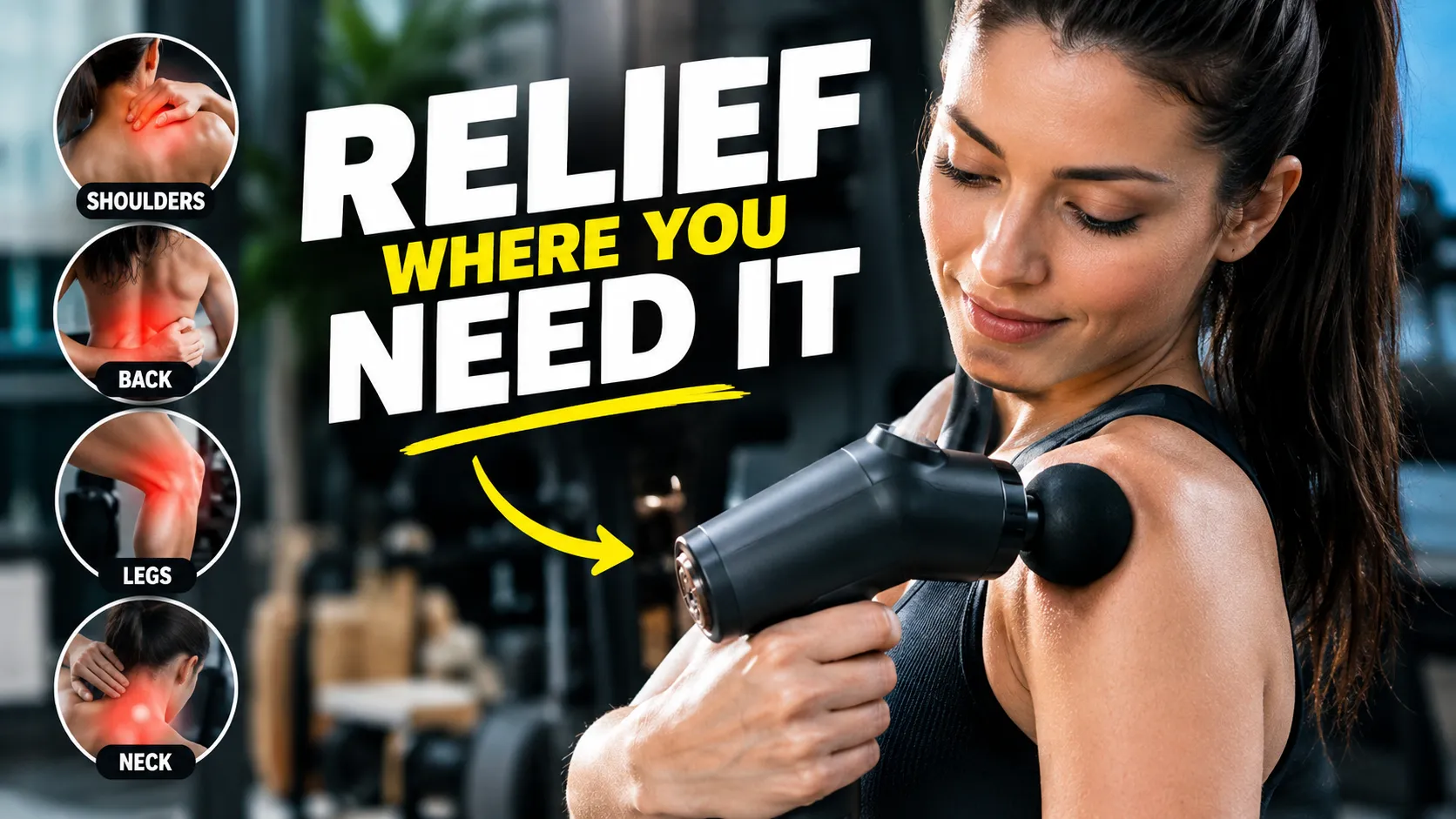
One reason do percussion massagers work is difficult to answer with a single yes or no is that different outcomes respond differently. A device can produce a noticeable short-term change in movement without proving that it changes the underlying cause of a persistent problem.
Range of Motion and Flexibility
Research suggests that percussive therapy can temporarily improve range of motion and flexibility in some settings. That can make the device useful as part of a warm-up or mobility routine when the goal is simply to move more comfortably. :contentReference[oaicite:3]{index=3}
Stiffness and General Muscle Comfort
Some studies report improvements in perceived stiffness or musculoskeletal discomfort. This does not mean the device has corrected an injury or underlying medical condition. It means the experience of tightness or discomfort may change for some people after use.
Exercise Recovery
Recovery is more complicated. Recent evidence suggests that percussive therapy may influence certain recovery measures, but findings are not consistent across soreness, strength, and other outcomes. The latest meta-analysis specifically found no clear benefit for delayed-onset muscle soreness or maximum voluntary contraction recovery. :contentReference[oaicite:4]{index=4}
That means a massage gun may feel useful after activity without being a guaranteed method for faster biological recovery.
What It May Not Do
It is risky to treat a percussion massager as a universal performance enhancer. A broader review of sports massage found no evidence that manual massage improves strength, jumping, sprinting, endurance, or fatigue, although small benefits were observed for flexibility and delayed-onset muscle soreness. Manual massage is not identical to a massage gun, but the findings reinforce the need to keep recovery claims modest. :contentReference[oaicite:5]{index=5}
Benefits vs. Limitations
Swipe left/right to see the full table →
| Potential use | What it may offer | Main limitation |
|---|---|---|
| Mobility | Short-term movement support | Effect may be temporary |
| Muscle comfort | May reduce perceived tightness | Does not identify the cause |
| Post-workout routine | Can be convenient | Recovery results vary |
| Athletic performance | Evidence is mixed | Not a guaranteed performance aid |
When It Makes Sense—and When It Does Not
The practical question is not simply do percussion massagers work, but whether the expected benefit matches the reason you want to use one. For a healthy person seeking a short mobility routine or general post-exercise comfort, the device may be reasonable. Persistent, unexplained, severe, or worsening symptoms require a different approach.
Good-Fit Dashboard
Good fit
You want a short mobility or comfort routine and have no concerning symptoms.
Use caution
You have an existing injury, unusual symptoms, or a health condition that could make pressure or vibration unsuitable.
Not a substitute
You need an explanation for persistent pain or a problem that is affecting normal function.
Stop and reassess
The device causes significant pain, unusual symptoms, or a clear worsening of how you feel.
The dashboard is a practical decision aid rather than a medical screening tool. If your reason for using a device is an unexplained symptom rather than ordinary muscle tightness after activity, professional evaluation is more appropriate.
Use It as a Comfort Tool, Not a Cure-All
A sensible approach is to keep the routine conservative and follow the device manufacturer’s instructions. Avoid turning a comfortable massage into a high-pressure endurance test. More pressure or longer use is not automatically better, and recent research has not established one universal massage-gun dose for everyone. :contentReference[oaicite:6]{index=6}
Do’s and Don’ts
Do
Use a comfortable setting, follow product directions, and reassess how your body responds.
Don’t
Use increasing pressure simply because a stronger sensation feels more effective.
Do
Think of it as one optional part of a broader recovery routine.
Don’t
Use it to ignore persistent or unexplained symptoms.
Common Mistakes and Better Choices
Swipe left/right to see the full table →
| Mistake | Better choice |
|---|---|
| Chasing pain | Keep the sensation comfortable |
| Expecting instant healing | Use it for optional comfort or mobility support |
| Ignoring worsening symptoms | Stop and consider professional advice |
| Assuming longer is better | Follow product directions and your comfort level |
Who Should Be More Careful?
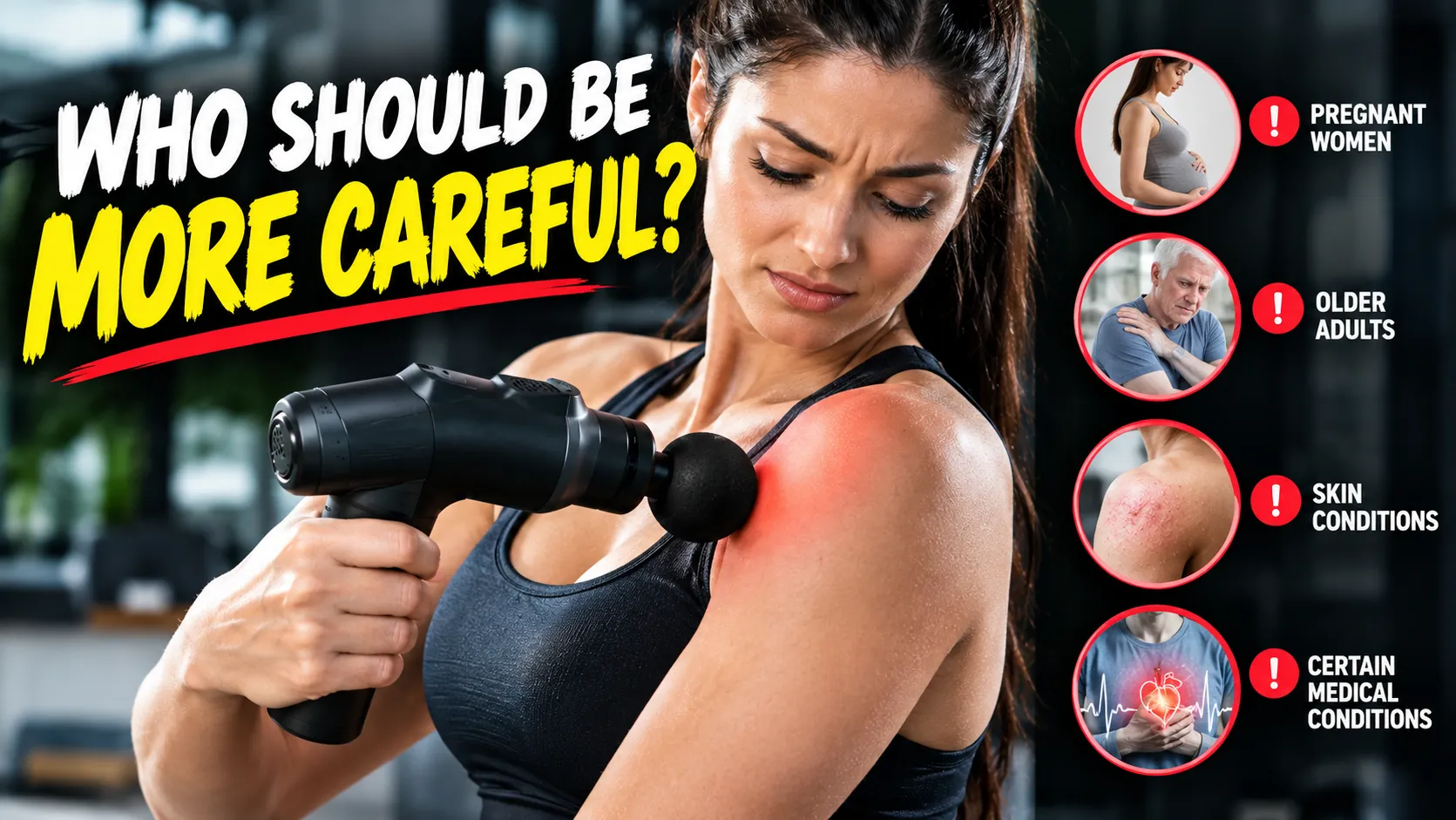
Massage and pressure-based techniques are not appropriate for every situation. Mayo Clinic advises people to discuss massage with their healthcare team when they have certain health circumstances, including a recent heart attack, a bleeding disorder, use of blood-thinning medicine, a recent blood clot in the leg, burns, broken bones, or severe osteoporosis. Pressure should also be avoided over healing wounds or areas of nerve damage. :contentReference[oaicite:7]{index=7}
A handheld percussion device is not identical to professional massage, so these precautions should not be treated as a complete list of device-specific contraindications. If you have a medical condition, recent injury, or uncertainty about whether vibration or pressure is appropriate for you, ask a qualified healthcare professional before using one.
Safety Considerations
Swipe left/right to see the full table →
| Situation | Practical response | Why |
|---|---|---|
| Healthy muscle tightness | May be reasonable | Common comfort use |
| Recent injury | Ask a professional first | Cause and tissue status matter |
| Healing wound | Avoid the area | Pressure may be inappropriate |
| Unexplained severe symptoms | Seek professional evaluation | The cause needs assessment |
Safety Decision Path
1. Is this ordinary post-activity tightness?
→ If yes, a gentle comfort routine may be reasonable.
2. Is there a recent injury, wound, unusual symptom, or relevant health condition?
→ Pause and ask a healthcare professional whether pressure or vibration is appropriate.
3. Does use cause significant pain or worsening symptoms?
→ Stop using the device and reassess rather than increasing pressure.
4. Are symptoms severe, persistent, unusual, or getting worse?
→ Seek professional evaluation rather than relying on self-massage.
When to Contact a Professional
Consider professional care instead of self-massage if you have:
- Severe or worsening pain.
- Numbness or weakness.
- A significant recent injury.
- Fever or other signs of illness.
- Chest pain or other urgent symptoms.
- Loss of bladder or bowel control.
- Symptoms that remain persistent or unexplained.
These signs do not tell you what condition you have. They simply mean that a massage device should not be used as a substitute for appropriate assessment.
Practical Recovery Priority
Comfort and mobility routine
Consistent movement and recovery habits
Massage gun as an optional add-on
These widths show typical routine priority, not clinical effectiveness or scientific measurements.
The main lesson is that a percussion massager can be useful without being essential. If it makes a normal mobility or recovery routine more comfortable and you have no reason to avoid pressure or vibration, it can be one optional tool among many. The evidence does not justify treating it as a replacement for sleep, sensible activity, appropriate recovery, or professional evaluation when needed.
Frequently Asked Questions
Do percussion massagers work for muscle recovery?
Can a percussion massager improve flexibility?
Do percussion massagers reduce soreness?
Can a massage gun replace professional treatment?
Is stronger pressure better?
Who should ask a healthcare professional before massage?
What is the main takeaway about percussion massagers?
Final Thoughts
So, do percussion massagers work? The evidence supports some short-term benefits, particularly for flexibility, range of motion, and selected recovery outcomes, but results are not universal. Treat a percussion massager as an optional comfort and mobility tool rather than a cure-all, and seek professional help when symptoms are severe, worsening, unusual, persistent, or not improving.
Author
-

I’m Alex Turner, a massage product reviewer and wellness writer at RemedyTip. I specialize in researching, evaluating, and comparing massage and recovery products to help readers make informed purchasing decisions. My focus is on practical, evidence-informed product guidance covering muscle recovery, relaxation, everyday comfort, and wellness.
I take a research-driven approach to every product I review. I examine product specifications, features, materials, performance claims, user feedback, durability, comfort, ease of use, and overall value. When appropriate, I also consult trusted industry and health-related sources to verify important information and provide readers with a more complete and balanced view.
I cover a wide range of products, including massage guns, handheld massagers, neck and shoulder massagers, foot massagers, massage chairs, foam rollers, and other recovery tools. Rather than focusing only on marketing claims, I look at how products compare in real-world use and who they are actually suitable for. I also consider different budgets, use cases, and user needs when making recommendations.
At RemedyTip, I’m committed to accuracy, transparency, and unbiased product information. I clearly distinguish between manufacturer claims, available evidence, and my own product analysis so readers can understand the basis of each recommendation. I continuously research new products, technologies, and developments in the massage and recovery space to keep my content current and useful.
My goal is simple: to provide trustworthy, easy-to-understand information that helps readers choose massage and recovery products with greater confidence.