
Written by Alex Turner
Quick Answer: Trigger point massage may help some people with fibromyalgia feel less muscle discomfort, but the evidence is stronger for some forms of myofascial release than for trigger-point massage specifically. Because fibromyalgia can involve increased pain sensitivity, gentle, individualized pressure is usually more appropriate than aggressive pressure.
A gentler way to think about trigger points
Fibromyalgia can make ordinary pressure feel unusually uncomfortable. That matters when deciding whether focused massage is appropriate. The goal should not be to “break up” painful areas with force. Instead, massage should be adjusted around the person’s response, comfort, and overall symptom pattern.
Important: This article is for general educational information only. It does not diagnose, treat, cure, or prevent any condition. It does not replace advice from a licensed healthcare professional. Readers should seek professional help for severe, worsening, unusual, or persistent symptoms.
What trigger point massage means in this context
Trigger point massage focuses attention on small areas of muscle that feel especially tender or tight. A practitioner may use sustained pressure, kneading, or other manual techniques around a sensitive area. The approach is different from simply giving the whole body a general massage.
For someone with fibromyalgia, however, a very tender spot does not automatically mean it needs stronger pressure. Fibromyalgia involves widespread pain and altered pain processing, so a technique that feels useful to one person may feel excessive to another. The practical question is not whether a therapist can tolerateably press harder, but whether the approach fits the person’s response.
Research on massage for fibromyalgia has found possible benefits for pain and other symptoms, but the studies have used several different massage techniques. A 2015 systematic review found moderate evidence for myofascial release and more limited evidence for some other approaches. A newer 2026 systematic review also reported pain reduction with myofascial release, while emphasizing that technique intensity and duration need to be adapted to the individual. :contentReference[oaicite:0]{index=0}
Trigger points are not the whole story
It is easy to assume that every painful area in fibromyalgia is simply a tight muscle or a trigger point. That can lead to overly aggressive self-massage. A better approach is to treat the location as a clue about where discomfort is being experienced, rather than proof that forceful pressure is needed.
Note: Evidence for massage in fibromyalgia does not automatically prove that traditional trigger-point techniques are effective for every person. Much of the research concerns broader massage or myofascial-release approaches, so it is reasonable to treat trigger-point work as an individualized option rather than a guaranteed solution.
What the evidence suggests about massage
Studies of massage therapy in fibromyalgia have produced mixed but potentially useful findings. One systematic review and meta-analysis found that massage lasting at least five weeks was associated with improvements in pain, anxiety, and depression, although the researchers noted limitations in the available studies and a lack of evidence about longer-term effects. :contentReference[oaicite:1]{index=1}
Another review found that myofascial release was associated with improvements in pain and some quality-of-life measures. The evidence does not mean every massage style works equally well, and it does not establish that pressing directly on every painful point is necessary. :contentReference[oaicite:2]{index=2}
This distinction is important. Massage may be useful as one part of a broader symptom-management plan, but it should not be presented as a cure for fibromyalgia. Mayo Clinic also advises people with fibromyalgia to discuss new complementary treatments with their healthcare team. :contentReference[oaicite:3]{index=3}
What type of pressure makes more sense?
There is no single pressure level that works for everyone. A useful starting point is pressure that feels tolerable during the session and does not create a major symptom flare afterward. If a therapist has to repeatedly tell you that discomfort is “part of the process,” that is a reason to reassess the technique rather than automatically pushing through it.
Pressure-response guide — practical guide
Often easier to tolerate
Adjust to response
Use caution
Stop and reassess
This is a practical comfort guide, not a clinical pressure scale. The important signal is how your body responds during and after the session.
How massage approaches compare
Different techniques place different demands on sensitive tissues. The comparison below is about general fit, not a guarantee that one method will work better for every person.
Swipe left/right to see the full table →
| Approach | Typical focus | Fibromyalgia consideration |
|---|---|---|
| Trigger-point work | Specific tender areas | May need lighter pressure |
| Myofascial release | Fascia and soft tissue | Has specific research support |
| Gentle massage | Broad relaxation | Often easier to modify |
| Aggressive deep work | Strong tissue pressure | Higher discomfort risk |
When trigger-point work may be a poor fit

Fibromyalgia symptoms can fluctuate. A technique that feels acceptable on one day may feel excessive during a flare, after poor sleep, or when the body is already highly sensitive. That is why the same routine should not be treated as mandatory every time.
Extra caution is appropriate if you have an unexplained new pain, a recent injury, significant swelling, fever, unusual weakness, numbness, or symptoms that are changing quickly. Those features deserve attention beyond a massage session.
Safety decision path — practical guide
The path is meant to keep massage within a comfort-based role. It does not determine the cause of pain or replace an assessment when symptoms are unusual.
Who should use extra caution?
Talk with a healthcare professional before trying a new massage approach if you have a significant medical condition, unexplained symptoms, a recent injury, or concerns about whether massage is appropriate for you. A qualified massage therapist should also know that you have fibromyalgia before beginning the session.
Swipe left/right to see the full table →
| Situation | Practical approach | Reason for caution |
|---|---|---|
| Active symptom flare | Consider gentler care or postpone | Sensitivity may be higher |
| Recent injury | Get appropriate guidance first | Pain may have another cause |
| New numbness or weakness | Seek medical evaluation | Not a routine massage issue |
| Stable, familiar discomfort | Discuss gentle options | Still needs individual adjustment |
Warning: Do not use severe pain during massage as a measure of whether the technique is “working.” Strong pressure can make an already sensitive area feel worse, and pain that is new, unusual, or rapidly worsening should not simply be massaged away.
How to make a session more comfortable
A good session starts with communication. Tell the therapist that you have fibromyalgia and explain which areas are especially sensitive. Ask them to begin conservatively and check in about pressure instead of assuming that more intensity is better.
It can also help to focus on the response of the whole body rather than one tender spot. If concentrating on a single area causes guarding, increased discomfort, or a broader flare, moving to lighter, wider contact may make more sense than repeatedly pressing the same point.
Typical routine priority
Communication
Comfort-based pressure
Gradual adjustment
Maximum pressure
These widths are a practical routine-priority guide, not scientific measurements. The pattern emphasizes factors that can make massage easier to individualize.
Common mistakes and better choices
Swipe left/right to see the full table →
| Common mistake | Better choice |
|---|---|
| Pressing until it hurts | Use tolerable pressure |
| Treating every tender spot | Choose a small area and reassess |
| Ignoring post-session symptoms | Track how you feel afterward |
| Assuming more is better | Adjust intensity to the person |
Tip: Before a session, decide on a simple pressure signal such as “lighter,” “same,” or “stop.” This gives you an easy way to communicate before discomfort becomes excessive.
Self-massage and tools: what to consider
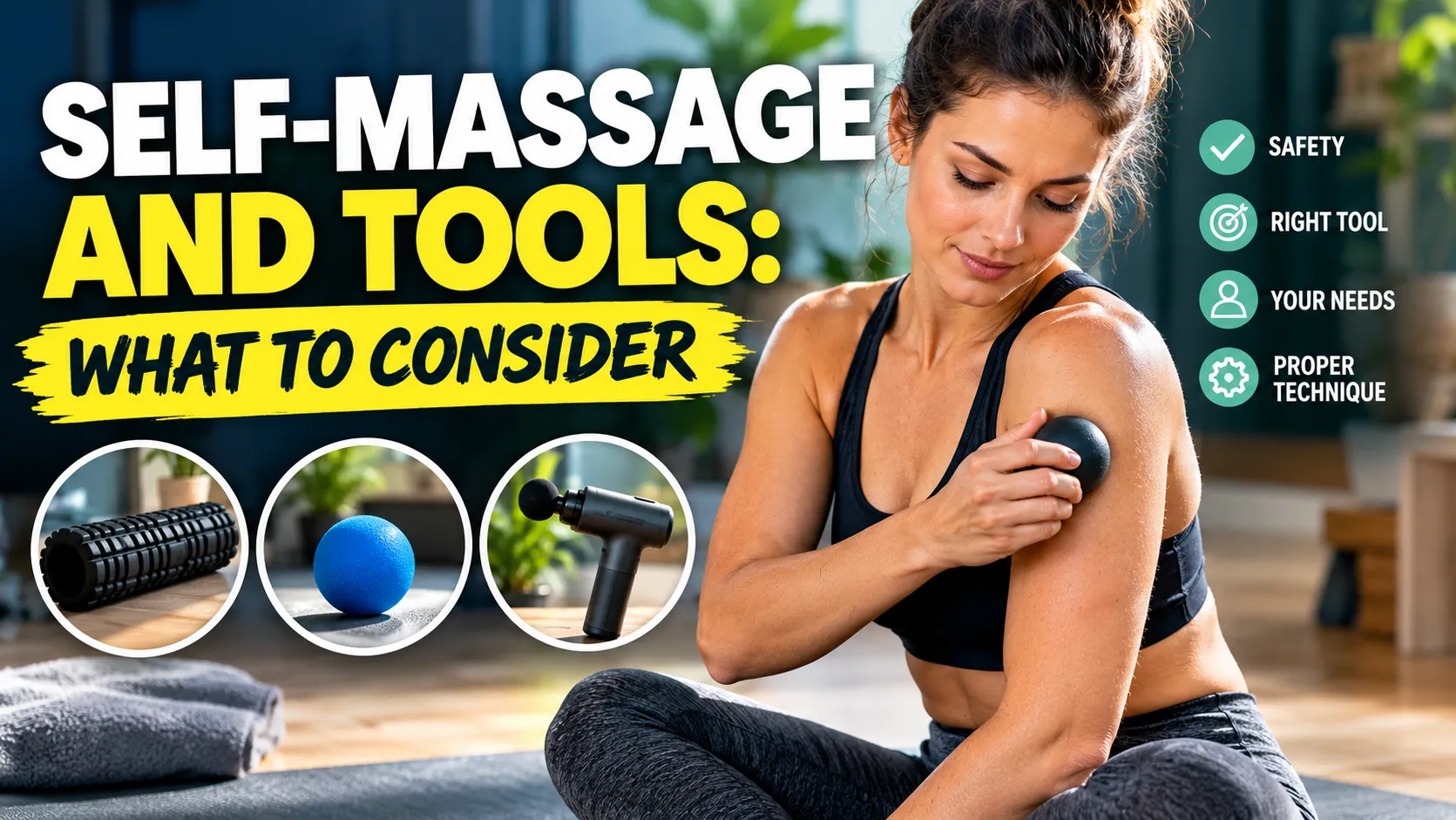
Self-massage can feel convenient, but it also removes some of the feedback that comes from working with a trained practitioner. A person may unintentionally stay on one painful spot too long or use more pressure than intended.
If you use a massage ball or another simple tool, keep the pressure easy to control. Avoid forcing a painful area against a hard surface simply because the sensation feels intense. Stop if symptoms become sharp, unusual, or progressively worse.
The evidence base is stronger for myofascial-release approaches than for a specific consumer tool or a particular trigger-point device. The 2026 review included therapist-administered myofascial release and self-myofascial-release techniques, while also noting that techniques should be adapted to individual characteristics. :contentReference[oaicite:4]{index=4}
Choosing a massage approach
Swipe left/right to see the full table →
| Your goal | Option to discuss | Key question |
|---|---|---|
| Relaxation | Gentle massage | Does it feel calming? |
| Localized muscle discomfort | Targeted manual work | Is pressure tolerable? |
| Broader soft-tissue focus | Myofascial approach | Can it be individualized? |
| New or unexplained pain | Professional evaluation | What is causing it? |
Red-flag checklist dashboard
Do not rely on massage alone.
Needs appropriate evaluation.
Seek professional guidance.
Get the cause assessed.
Do not assume it is muscle pain.
Seek urgent medical help.
Seek urgent evaluation.
Get medical advice.
This dashboard is a safety screen, not a way to diagnose the cause of symptoms. Any concerning symptom should be considered in the context of the person’s overall health.
When self-care may be reasonable
Gentle massage may be reasonable to discuss when the discomfort is familiar, stable, and not accompanied by warning signs. The technique should remain comfortable enough that you can communicate clearly and stop easily if your symptoms change.
It is also useful to judge the entire response rather than just the immediate sensation. If a short, gentle session leaves you feeling comfortable, that information can help guide future choices. If repeated sessions cause prolonged worsening, the approach deserves reconsideration.
Self-care versus professional help
Swipe left/right to see the full table →
| Situation | Possible next step |
|---|---|
| Familiar mild discomfort | Gentle comfort measures |
| Symptoms repeatedly worsen after massage | Stop or modify and seek guidance |
| New persistent pain | Professional evaluation |
| Severe or alarming symptoms | Prompt or urgent medical help |
When to contact a professional: Seek medical advice for severe, worsening, unusual, or persistent pain, or for numbness, weakness, fever, chest pain, a recent significant injury, or loss of bladder or bowel control. If symptoms are urgent or severe, seek urgent medical care rather than attempting to manage them with massage.
The bottom line on trigger-point massage
The evidence suggests that some massage and myofascial-release approaches may help people with fibromyalgia, particularly for pain and some quality-of-life measures. However, research on massage is not the same as proof that traditional trigger-point pressure works for everyone.
For someone with fibromyalgia, the safest practical approach is individualized: start gently, communicate clearly, avoid treating pain intensity as proof of effectiveness, and pay attention to how symptoms respond afterward. If the pain pattern is new, severe, unusual, or persistent, finding the cause matters more than trying a stronger massage.
Frequently asked questions
Is trigger point massage good for fibromyalgia?
It may help some people, but direct evidence for trigger-point massage specifically is limited. Research is stronger for some broader massage and myofascial-release approaches.
Can massage make fibromyalgia pain worse?
Yes. Excessive pressure may be poorly tolerated, especially during a symptom flare. Pressure should be adjusted to comfort and stopped if symptoms become significantly worse.
Is deep tissue massage safe with fibromyalgia?
There is no single pressure level that is safe or appropriate for everyone. Discuss the technique with a qualified practitioner and favor an approach that remains tolerable.
What massage technique has evidence for fibromyalgia?
Research has examined several techniques. Myofascial release has shown potentially useful effects in systematic reviews, but more high-quality research is needed and results may vary between individuals.
Should you massage fibromyalgia tender areas?
A tender area does not automatically need strong pressure. If you try massage, use a gentle approach and stop if the area becomes more painful or symptoms spread.
Can I use a massage ball for fibromyalgia pain?
A massage ball can be used as a controllable self-massage tool, but pressure should remain gentle and easy to stop. Avoid forcing painful areas against hard surfaces.
When should I avoid massage and seek medical advice?
Seek professional help for severe, worsening, unusual, or persistent symptoms, especially with numbness, weakness, fever, chest pain, significant injury, or loss of bladder or bowel control.
Final Thoughts
Massage may be a useful comfort-focused option for some people with fibromyalgia, but trigger-point work should not be approached as a test of how much pain you can tolerate. Gentle, individualized pressure and clear communication are more practical than aggressive treatment. Seek professional help when symptoms are severe, unusual, worsening, persistent, or not improving.
Author
-

I’m Alex Turner, a massage product reviewer and wellness writer at RemedyTip. I specialize in researching, evaluating, and comparing massage and recovery products to help readers make informed purchasing decisions. My focus is on practical, evidence-informed product guidance covering muscle recovery, relaxation, everyday comfort, and wellness.
I take a research-driven approach to every product I review. I examine product specifications, features, materials, performance claims, user feedback, durability, comfort, ease of use, and overall value. When appropriate, I also consult trusted industry and health-related sources to verify important information and provide readers with a more complete and balanced view.
I cover a wide range of products, including massage guns, handheld massagers, neck and shoulder massagers, foot massagers, massage chairs, foam rollers, and other recovery tools. Rather than focusing only on marketing claims, I look at how products compare in real-world use and who they are actually suitable for. I also consider different budgets, use cases, and user needs when making recommendations.
At RemedyTip, I’m committed to accuracy, transparency, and unbiased product information. I clearly distinguish between manufacturer claims, available evidence, and my own product analysis so readers can understand the basis of each recommendation. I continuously research new products, technologies, and developments in the massage and recovery space to keep my content current and useful.
My goal is simple: to provide trustworthy, easy-to-understand information that helps readers choose massage and recovery products with greater confidence.

