
Written by Alex Turner · Recovery & Rehabilitation
Quick Answer: Trigger point massage can hurt because direct pressure is being applied to an already-sensitive area. Mild tenderness or a deep ache can happen, but sharp pain, tingling, numbness, worsening symptoms, or pain that feels clearly wrong is a reason to stop rather than press harder.
A painful spot does not automatically mean you should push through it. Trigger point work uses focused pressure, so a tender muscle can feel more noticeable while it is being pressed. The useful question is not simply whether you feel something, but what the sensation feels like and what happens afterward.
Health information notice: This article is for general educational information only. It does not diagnose, treat, cure, or prevent any condition. It does not replace advice from a licensed healthcare professional. Readers should seek professional help for severe, worsening, unusual, or persistent symptoms.
Why Can Trigger Point Massage Feel Painful?
Trigger point massage focuses pressure on a small area of muscle or surrounding tissue that feels tight or tender. Because the target area is already sensitive, pressing directly on it can make the sensation temporarily stronger. Cleveland Clinic describes trigger points as localized tight spots that can produce tenderness and sometimes pain that is felt beyond the spot being pressed.
That helps explain why a technique intended to promote comfort can initially feel uncomfortable. Pressure, muscle sensitivity, recent activity, prolonged posture, and individual pain tolerance can all affect how the massage feels.
The important distinction is between manageable discomfort and warning-type pain. A dull, tolerable ache is different from a sharp pinch, electric sensation, numbness, or pain that keeps escalating.
For additional background on trigger point massage and general massage safety, see Cleveland Clinic’s trigger point massage guide and Kaiser Permanente’s massage therapy safety information.
The pressure is landing on a sensitive area
A trigger point can be more sensitive than the surrounding muscle. When a thumb, massage ball, or therapist’s fingers apply direct pressure, the nervous system receives a stronger mechanical signal from that small area. That can feel like tenderness, pressure, aching, or a spreading sensation.
The muscle may already be irritated
Recent exercise, repetitive movement, long periods at a desk, awkward positioning, or simply doing more activity than usual may leave an area sore before massage begins. Pressing firmly on already-irritated tissue can make the discomfort more noticeable.
Too much pressure can turn useful pressure into excessive pressure
More force is not automatically better. If you have to tense your body, hold your breath, grimace, or brace against the pressure, the technique may be too aggressive for you. A massage should not become a contest to tolerate the highest possible pain level.
Trigger / Cause Map
Already-tender tissue may react strongly to direct pressure.
More force can increase discomfort instead of improving the routine.
Exercise or repetitive activity may leave the area more reactive.
Not every painful spot is appropriate for self-massage.
This map is a practical way to think about discomfort before increasing pressure. If the reason for the pain is unclear, repeatedly pressing the same spot is not a reliable way to identify the cause.
What Does Normal Massage Discomfort Feel Like?
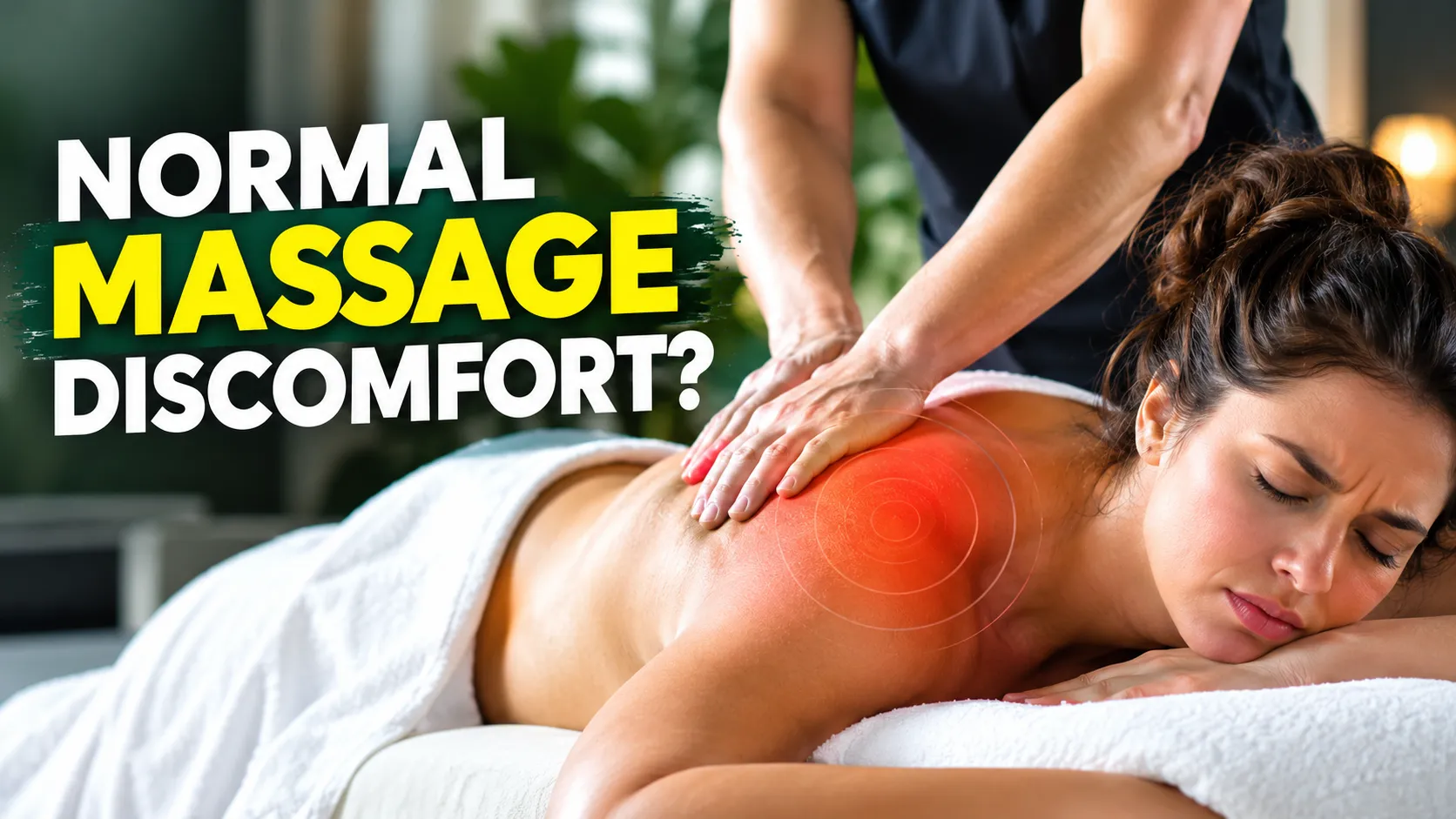
There is no single sensation that every person will experience. Still, the quality of the sensation matters. A manageable sensation may feel like pressure, tenderness, a dull ache, or mild soreness that settles when pressure is reduced.
By contrast, sharp, burning, electric, or strongly radiating pain deserves more caution. Tingling or numbness is also not something to deliberately push through. Cleveland Clinic specifically cautions that intense pain, sharp pinching, or tingling during trigger point work can signal that the problem may involve more than ordinary muscle tension.
Symptom vs. possible reason
Use this table as a practical guide rather than a way to diagnose yourself.
Swipe left/right to see the full table →
| Sensation | Possible explanation | Practical response |
|---|---|---|
| Mild tenderness | Sensitive muscle area | Use lighter pressure |
| Deep dull ache | Direct pressure on tense tissue | Stay within a tolerable range |
| Sharp pinch | Pressure may be too strong | Stop and reassess |
| Tingling or numbness | Possible nerve-related warning | Stop rather than push through |
| Steadily worsening pain | Area may not tolerate the technique | Stop and consider professional advice |
The goal is not to eliminate every sensation. The goal is to avoid turning a tolerable massage sensation into escalating or concerning pain.
Note: Pain during pressure work is not a reliable measure of whether the technique is “working.” Feeling more pain does not automatically mean a deeper release is happening.
How Much Pressure Should You Use?
A useful starting point is gentle-to-moderate pressure that you can relax into without bracing. If a massage ball is being used, start with body weight only lightly applied and change position rather than forcing the ball deeper.
Think of pressure as adjustable rather than fixed. You can always reduce it, move slightly away from the most tender spot, shorten the session, or stop altogether. A qualified massage therapist can also adjust pressure based on your response instead of expecting you to tolerate a preset intensity.
Practical Pressure Guide
Practical guide, not a scientific pain scale. The correct level depends on the area, your sensitivity, and the reason for the discomfort.
In general, start at the lowest effective level and adjust based on how the area responds. If pressure produces sharp pain, tingling, numbness, or steadily worsening symptoms, increasing force is not the next step.
Tip: Exhale slowly while applying light pressure and avoid holding your breath. Relaxing the surrounding muscles can make it easier to judge whether the pressure feels tolerable.
Safe routine vs. risky routine
A simple comparison can help prevent the common mistake of assuming that harder always means better.
Swipe left/right to see the full table →
| Safer approach | Riskier approach |
|---|---|
| Start gently | Start with maximum pressure |
| Relax surrounding muscles | Brace or hold your breath |
| Stop if warning sensations appear | Push through sharp or electric pain |
| Reassess afterward | Repeat an aggravating technique |
What Can Make Trigger Point Massage Hurt More?
Several everyday factors can make a session feel worse than expected. These do not automatically identify the cause of your pain, but they can help explain why the same technique feels different from one day to another.
Typical Trigger Map
Recently worked muscles may already feel tender.
One position for hours can contribute to muscle tightness.
General fatigue can change how a routine feels, even though it does not identify the cause.
Repeatedly working a sore area may leave less room for comfort.
These are practical considerations, not diagnostic clues. If a painful area keeps returning, becomes more severe, or affects normal movement, consider discussing it with a healthcare professional instead of repeatedly treating the same spot yourself.
Common mistakes that can increase discomfort
One mistake is spending too long on one tender point because the area feels as though it needs to be “broken up.” Another is using a hard ball against a surface that does not allow pressure to be controlled. A third is ignoring what happens after the session.
If you finish feeling mildly worked-over but otherwise comfortable, the response is different from pain that keeps increasing during the next several hours. Your response should guide the next session rather than a belief that soreness proves the technique was effective.
Mistake vs. better choice
Swipe left/right to see the full table →
| Common mistake | Better choice |
|---|---|
| Chasing intense pain | Stay within tolerable pressure |
| Staying on one spot too long | Use shorter, controlled passes |
| Ignoring tingling | Stop and reassess |
| Repeating an aggravating routine | Change the approach or seek advice |
Warning: Do not use trigger point massage to deliberately create severe pain, bruising, numbness, or a strong electric sensation. If a technique consistently makes symptoms worse, stop using it.
When Should You Stop Trigger Point Massage?
Stop the massage when the sensation changes from tolerable pressure into sharp, severe, burning, or electric pain. Also stop if you develop tingling or numbness, weakness, unusual swelling, or symptoms that are clearly worsening.
Massage should also be avoided over areas that are injured, bruised, infected, or otherwise medically concerning. Kaiser Permanente notes that massage may not be appropriate in situations such as fever, contagious illness, recent surgery, broken bones, certain bleeding problems, or blood clots. If any of these situations apply to you, professional guidance is more appropriate than experimenting with deeper pressure.
Red-Flag Checklist
Stop rather than attempting to massage through it.
Do not keep applying pressure to reproduce the sensation.
New or significant weakness deserves professional assessment.
Massage is not a substitute for evaluating the underlying problem.
Seek urgent medical help rather than attempting massage.
Loss of control requires prompt medical attention.
This checklist is intentionally cautious. A painful muscle spot is not always a simple muscle issue, so symptoms outside the usual pattern should not be explained away as a “knot.”
A simple safety decision path
Use light-to-moderate pressure and reassess how you feel afterward.
Reduce pressure or stop. Do not force the technique.
If yes, seek appropriate professional or urgent medical help rather than continuing massage.
When Can Self-Massage Be Reasonable?
For a familiar area of ordinary muscle tightness without warning symptoms, gentle self-massage may be a reasonable comfort routine. The purpose should be relaxation and manageable pressure, not proving how much discomfort you can tolerate.
Start with a short session. Use your hands first if possible because they give you better feedback than a hard tool. If you use a massage ball or roller, keep the pressure controlled and avoid sensitive areas where you cannot easily judge what is happening.
Heat, gentle movement, posture changes, and breaks from prolonged sitting may also be useful parts of a broader comfort routine. They can be especially practical when tightness seems connected with repetitive positioning or daily activity.
Self-care or professional help?
Swipe left/right to see the full table →
| Self-care may be reasonable | Seek professional guidance |
|---|---|
| Mild, familiar muscle tightness | Severe or unexplained pain |
| Comfort improves with lighter pressure | Symptoms worsen with massage |
| No warning symptoms | Numbness, weakness, fever, or injury |
| Short, controlled sessions | Persistent or recurring symptoms |
How to Make a Trigger Point Routine More Comfortable
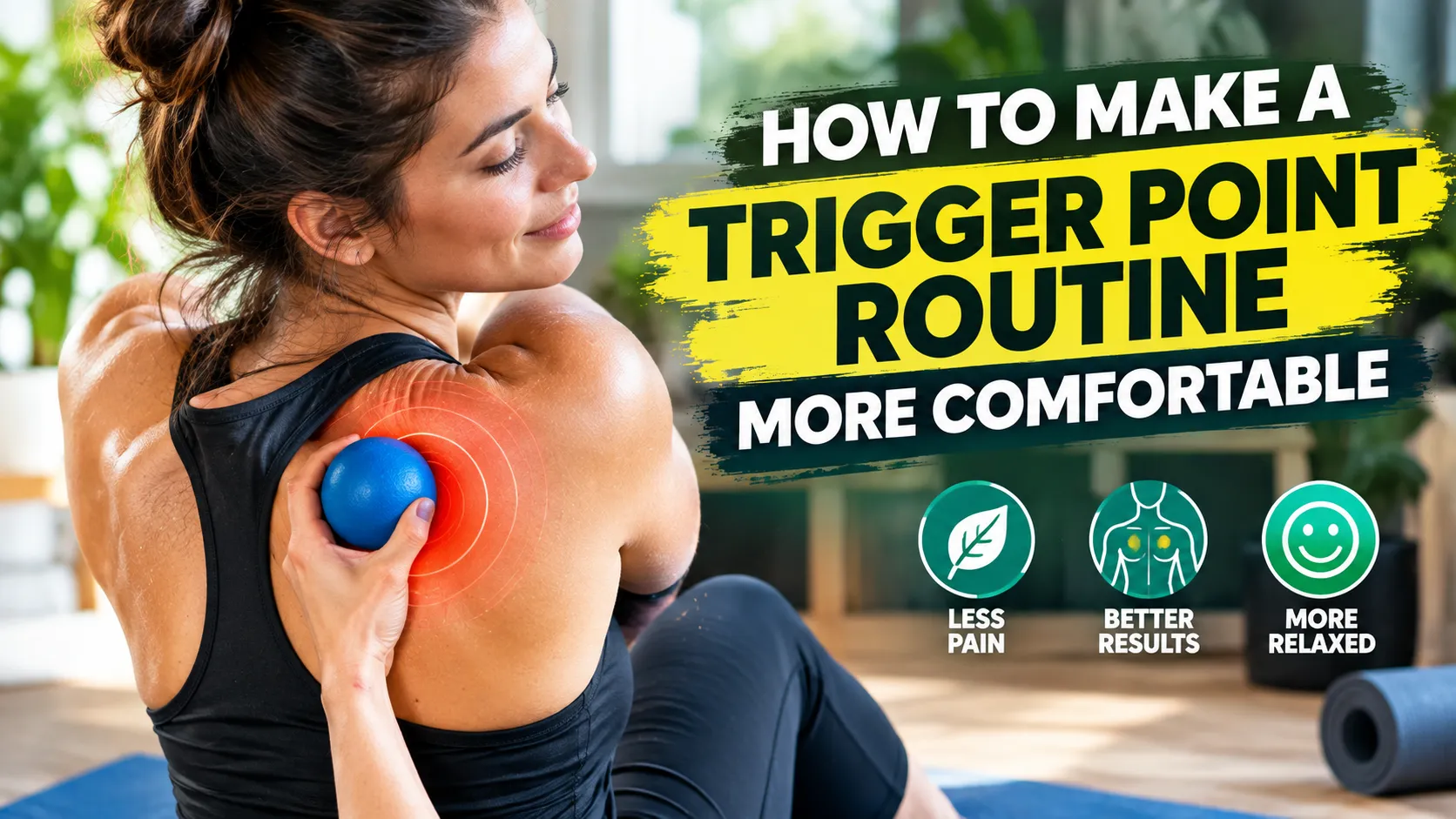
If you want to experiment with gentle self-massage, keep the routine simple. You do not need to attack every tender spot in one session.
1
Support the body so you are not straining another muscle while trying to relax one area.
2
Give the area time to show you how it responds before increasing force.
3
Relax the surrounding muscles instead of bracing against the pressure.
4
Sharp pain, tingling, numbness, weakness, or worsening symptoms are not goals of the routine.
5
If symptoms are worse rather than settling, reconsider the technique and seek guidance if the problem persists.
Do’s and Don’ts
Start gently.
Keep breathing.
Adjust pressure.
Stop when symptoms become concerning.
Chase severe pain.
Ignore numbness.
Massage an injured area without guidance.
Assume every knot is harmless.
The goal of a comfort routine is to leave you feeling at least as comfortable as when you started, not to create a new problem in pursuit of a deeper sensation.
When to Contact a Professional
Consider professional evaluation if the pain is severe, keeps getting worse, repeatedly returns, limits normal movement, or does not improve as expected. It is also important to seek guidance when you cannot tell whether the painful spot is simply muscle tightness or something else.
Seek urgent medical help for concerning symptoms such as chest pain, significant weakness, loss of bladder or bowel control, or severe symptoms following a significant injury. Fever with a painful area, new numbness, or other unusual neurological symptoms also deserve prompt attention.
When to contact a professional: If your pain is severe, worsening, unusual, persistent, associated with numbness or weakness, follows an injury, or keeps returning despite gentle self-care, stop trying to solve it with increasingly firm massage and speak with an appropriate healthcare professional.
Frequently Asked Questions
Is it normal for trigger point massage to hurt?
Some tenderness or a deep ache can occur when pressure is applied to a sensitive area. Sharp, severe, tingling, numb, or steadily worsening pain is a reason to stop.
Why does trigger point massage hurt more on some days?
Muscle sensitivity can change with recent exercise, repetitive activity, prolonged positioning, fatigue, or other factors. The same pressure may therefore feel different from one day to another.
Should I push through the pain during trigger point massage?
No. A massage should not require you to push through sharp or concerning pain. Reduce pressure or stop when the sensation becomes more than tolerable discomfort.
Why does trigger point massage hurt when I use a massage ball?
A massage ball concentrates pressure into a small area, so it can feel more intense than using your hands. Start with light pressure and avoid increasing force when the sensation becomes sharp or concerning.
Is soreness after trigger point massage a problem?
Mild temporary soreness can happen after massage, but worsening pain or unusual symptoms should not be ignored. If soreness is severe, persistent, or accompanied by warning signs, seek professional advice.
Can trigger point massage cause nerve-like sensations?
Pressure can sometimes produce unusual sensations, but tingling or numbness should not be treated as a target sensation. Stop the massage and seek appropriate guidance if these symptoms occur.
When should I stop trigger point massage?
Stop when you experience severe or sharp pain, numbness, tingling, weakness, worsening symptoms, or pain that feels unusual for you. Seek professional help when symptoms are persistent or concerning.
Final Thoughts
Trigger point massage can feel uncomfortable because it applies focused pressure to an already-sensitive area, but more pain is not automatically better. Use gentle, controlled pressure, pay attention to the type of sensation you experience, and stop when symptoms become sharp, unusual, or progressively worse. If pain is severe, persistent, worsening, or accompanied by warning signs, seek professional help rather than relying on self-massage.
Author
-

I’m Alex Turner, a massage product reviewer and wellness writer at RemedyTip. I specialize in researching, evaluating, and comparing massage and recovery products to help readers make informed purchasing decisions. My focus is on practical, evidence-informed product guidance covering muscle recovery, relaxation, everyday comfort, and wellness.
I take a research-driven approach to every product I review. I examine product specifications, features, materials, performance claims, user feedback, durability, comfort, ease of use, and overall value. When appropriate, I also consult trusted industry and health-related sources to verify important information and provide readers with a more complete and balanced view.
I cover a wide range of products, including massage guns, handheld massagers, neck and shoulder massagers, foot massagers, massage chairs, foam rollers, and other recovery tools. Rather than focusing only on marketing claims, I look at how products compare in real-world use and who they are actually suitable for. I also consider different budgets, use cases, and user needs when making recommendations.
At RemedyTip, I’m committed to accuracy, transparency, and unbiased product information. I clearly distinguish between manufacturer claims, available evidence, and my own product analysis so readers can understand the basis of each recommendation. I continuously research new products, technologies, and developments in the massage and recovery space to keep my content current and useful.
My goal is simple: to provide trustworthy, easy-to-understand information that helps readers choose massage and recovery products with greater confidence.

