
Written by Alex Turner · General educational health information
Quick Answer: Some people notice changes during or shortly after a trigger point massage, while others need several sessions before they notice a meaningful difference. Timing depends on the source and duration of discomfort, the area treated, pressure used, and what you do between sessions.
What to Expect From Trigger Point Massage
When a tight or tender muscle area is worked directly, the goal is usually to make movement and daily activity feel easier rather than to force a painful spot to “release.” A response can be immediate, gradual, temporary, or difficult to notice at first.
The evidence also does not support one guaranteed timeline. A 2025 systematic review found short-term improvements in pain and pressure sensitivity in some studies of friction massage for myofascial trigger points, while comparisons with control treatments were less conclusive. Read the PubMed review.
Trust & Safety: This article is for general educational information only. It does not diagnose, treat, cure, or prevent any condition. It does not replace advice from a licensed healthcare professional. Readers should seek professional help for severe, worsening, unusual, or persistent symptoms.
Why the Timing Can Vary
There is no single answer to how long does trigger point massage take to work because people use the term “work” to mean different things. One person may mean feeling less tender immediately after pressure is removed. Another may mean moving more comfortably for the rest of the day. Someone with recurring discomfort may be asking whether several sessions can change a longer-lasting pattern.
The starting point matters. Muscle discomfort after an unusual workout may behave differently from pain that has been present for weeks. The location matters too. A small, accessible muscle can be easier to work than an area that is difficult to reach without awkward positioning.
Pressure is another variable. More pressure is not automatically better. A session that leaves an area extremely sore may make it harder to judge whether the massage was useful. A comfortable, controlled approach can make it easier to notice how the body responds afterward.
Note: Research on trigger-point massage uses different techniques, treatment durations, body areas, and outcome measures. Results from one study should not be treated as a guaranteed timeline for every person.
Common Timing Factors
Think about four questions: How long has the discomfort been present? How sensitive is the area? How much pressure was used? And does normal movement support or repeatedly irritate the area afterward?
Swipe left/right to see the full table →
| Starting situation | Possible response | Useful focus |
|---|---|---|
| Recent muscle tension | May feel easier soon | Gentle follow-up movement |
| Long-standing tenderness | May take repeated care | Look for gradual trends |
| Very sensitive area | May become more sore | Reduce pressure |
| Repeated aggravation | Relief may not last | Address the activity pattern |
What You May Notice During and After a Session
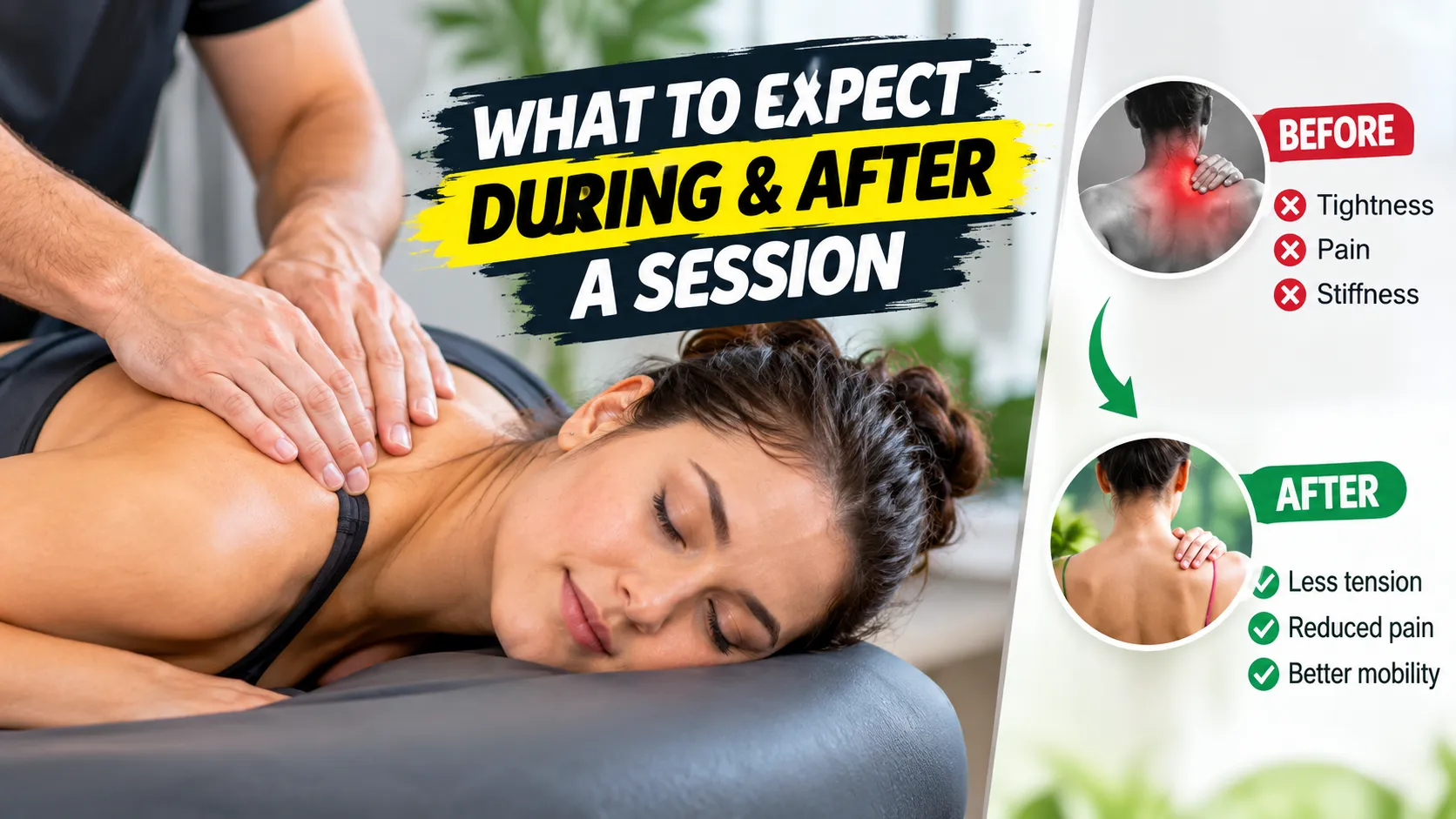
A useful response does not have to feel dramatic. You might notice that a movement feels smoother, that an area feels less guarded, or that pressure is easier to tolerate. These changes can happen during a session or after you get up and move normally.
You can also feel temporarily tender. That does not automatically mean the massage was harmful, but increasing pressure simply to chase soreness is not a reliable way to improve results. The aim should be a tolerable session followed by a reasonable return to everyday movement.
Research on friction massage for myofascial trigger points has reported short-term changes in pain intensity and pressure-pain sensitivity in some studies. However, the 2025 systematic review concluded that evidence quality and between-group results were limited, so a specific duration cannot be promised. PubMed: systematic review of friction massage.
General timeline guide — not a guarantee
Response may be noticeable
Movement may feel different
Notice the overall trend
Assess consistency, not one session
The visual above is a practical guide, not a research-based timetable. If you feel no useful change after reasonable self-care, or if symptoms keep returning, the next step may be understanding the underlying cause rather than simply adding more massage.
How Long Does Trigger Point Massage Take to Work for Different Goals?
The answer depends partly on what outcome you are watching. Relief from tenderness is different from improved movement, and both are different from a lasting change in recurring discomfort.
Short-Term Comfort
If your goal is simply to make a tight area feel more comfortable, you may notice a response during or soon after a session. Keep the pressure controlled and compare how you feel during ordinary movement afterward.
Movement
If the goal is easier movement, check the motion that was bothering you before and after the session without forcing it. A small, comfortable change can be more useful than a dramatic sensation that disappears quickly.
Recurring Discomfort
If the same area repeatedly becomes painful, massage alone may not explain why it keeps happening. Work demands, training load, posture, sleep position, recent injury, and other factors can influence muscle discomfort.
Timing by Goal
Swipe left/right to see the full table →
| Goal | What to watch | Better question |
|---|---|---|
| Comfort | Less tenderness | Does normal movement feel easier? |
| Mobility | Comfortable range | Can you move without forcing it? |
| Daily function | Easier tasks | Is the improvement useful outside massage? |
| Recurring pain | Pattern over time | Why does it keep returning? |
What Can Make Results Feel Faster or Slower?
Several practical factors can change your experience. These do not create a guaranteed treatment schedule, but they can help explain why two people may respond differently.
Trigger map: factors that can affect the experience
Recent tension and long-standing discomfort may behave differently.
Too much pressure can increase soreness instead of improving comfort.
Repeating the same aggravating movement can limit how long relief lasts.
Gentle movement and reasonable rest can affect how the area feels afterward.
The most useful approach is to look for a trend instead of judging the entire process from one session. If the area feels better briefly and then repeatedly returns to the same level of discomfort, that pattern deserves attention.
Common Causes of a Slow or Unclear Response
Swipe left/right to see the full table →
| Pattern | Possible reason | Practical response |
|---|---|---|
| Brief relief | Ongoing trigger | Review daily activity |
| More soreness | Pressure may be excessive | Use less pressure |
| No clear change | Cause may need assessment | Consider professional advice |
| Symptoms worsen | Massage may not fit | Stop and seek guidance |
Use a Gentle Routine Between Sessions
If massage feels comfortable, the period between sessions can matter as much as the massage itself. Normal, gentle movement can help you judge whether the area is becoming easier to use. Avoid turning recovery into a cycle of intense pressure followed by prolonged soreness.
A Simple Four-Step Check
Tip: If you are tracking progress, use the same simple activity each time. For example, notice how comfortable a normal walk, desk task, or gentle range-of-motion movement feels instead of repeatedly pressing the tender point.
Safe Routine vs. Risky Routine
Swipe left/right to see the full table →
| Safer approach | Riskier approach | Why it matters |
|---|---|---|
| Moderate pressure | Chasing sharp pain | Pain is not a score of effectiveness |
| Short, focused work | Repeated long sessions | More is not always better |
| Normal movement | Complete inactivity | Movement helps assess function |
| Pause if symptoms worsen | Pushing through worsening pain | Worsening symptoms need attention |
Practical priority meter
Comfortable pressure
Typical routine priority: high
Normal movement
Typical routine priority: high
Tracking the trend
Typical routine priority: moderate
Increasing pressure
Typical routine priority: low
These meters are practical priorities, not scientific measurements. The main idea is to favor tolerable pressure, ordinary movement, and trend tracking over intensity.
When Massage May Not Be the Right Next Step
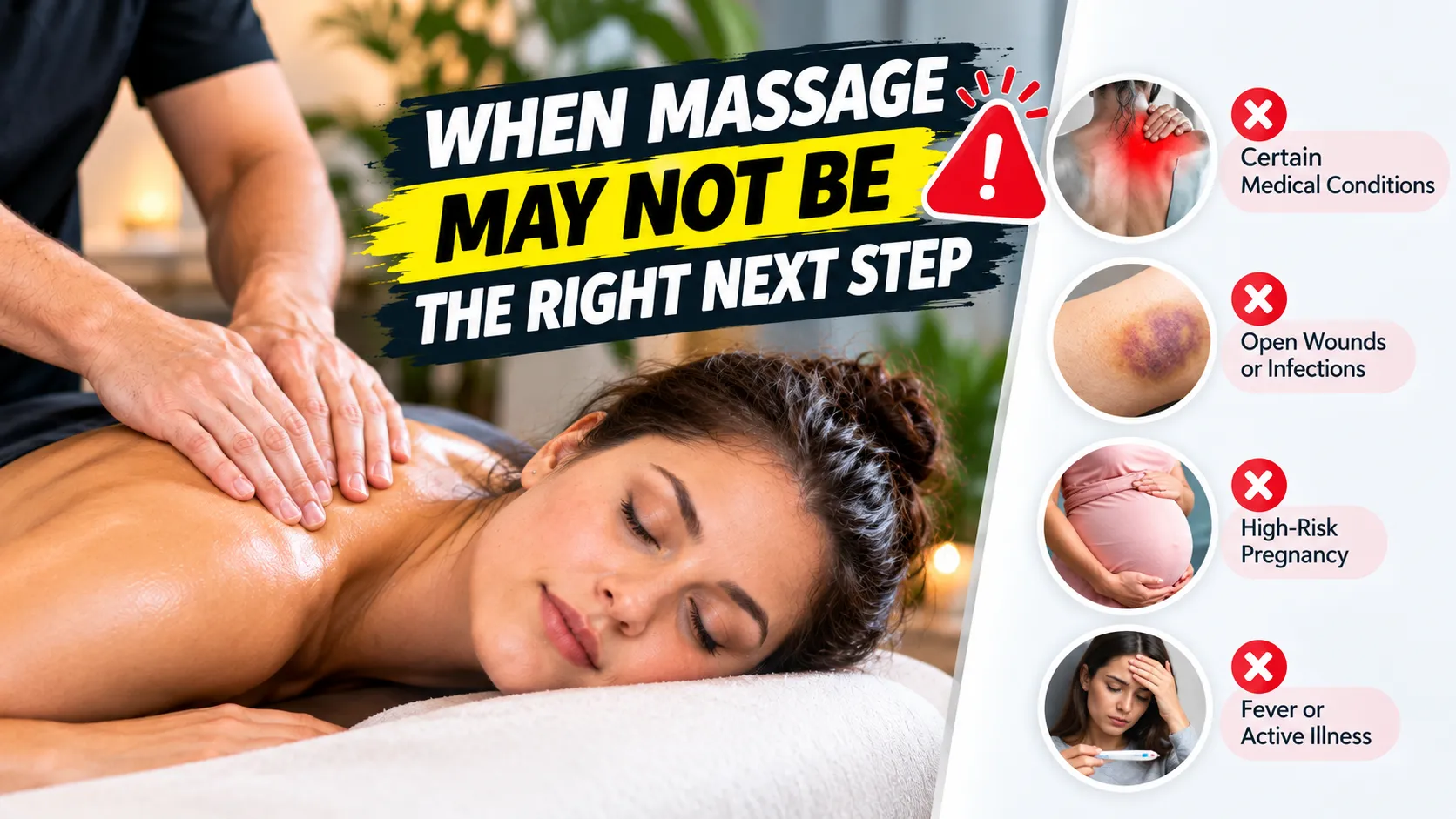
Massage is not a universal answer for every painful or tender area. Muscle aches can have many causes, including overuse, tension, injury, infection, medication effects, and other medical conditions. MedlinePlus advises contacting a healthcare professional for severe unexplained muscle pain, signs of infection, or pain that persists rather than simply continuing self-care. See MedlinePlus guidance on muscle aches.
A particular concern is pain accompanied by neurological symptoms. Numbness, tingling, weakness, difficulty moving, or loss of bladder or bowel control should not be treated as ordinary muscle tightness. These symptoms can require prompt medical assessment.
Safety decision path
If discomfort is mild and there are no warning signs, gentle self-care may be reasonable.
If symptoms persist, recur often, or do not respond to reasonable self-care, consider professional advice.
Numbness, weakness, fever, significant injury, or worsening unusual symptoms need medical attention.
New bowel or bladder control problems or sudden significant weakness require urgent medical evaluation.
Mayo Clinic similarly advises prompt or emergency evaluation for certain back-pain patterns involving trauma, fever, new bowel or bladder problems, weakness, numbness, or tingling. The exact response depends on the location and symptoms. Mayo Clinic: when to seek care for back pain.
Warning: Do not use increasing massage pressure as a way to test whether severe, unexplained, worsening, numb, weak, or injured areas will “release.” Those symptoms call for a different type of assessment.
Self-Care or Professional Evaluation?
Swipe left/right to see the full table →
| Situation | Reasonable next step | Urgency |
|---|---|---|
| Mild muscle tension | Gentle self-care | Routine monitoring |
| Persistent discomfort | Talk with a professional | Timely assessment |
| Numbness or weakness | Seek medical advice | Prompt |
| Bowel/bladder changes | Urgent medical evaluation | Urgent |
When to contact a professional: Seek professional help for severe, worsening, unusual, or persistent symptoms. Prompt or urgent care is especially important for pain with numbness, weakness, fever, significant injury, chest pain, or loss of bladder or bowel control.
How Long Does Trigger Point Massage Take to Work? A Practical Rule
Instead of expecting a fixed number of minutes, use a response-based rule. After a comfortable session, ask whether normal movement feels easier and whether the change remains useful later. If the answer is yes, you have a practical sign that the approach may be useful as part of your routine.
If the only noticeable result is intense soreness, repeated pressing may not be the answer. Give the area time to settle, return to comfortable activity, and consider whether another factor is contributing to the discomfort.
Three-question progress check
Look for a useful change rather than a dramatic sensation.
Check whether ordinary movement or a daily task feels easier.
Repeated improvement is more informative than one unusually good session.
This framework keeps the focus on function and comfort rather than chasing a particular sensation. It also gives you a clear point at which to stop experimenting and ask a healthcare professional for help.
Frequently Asked Questions
How long does trigger point massage take to work?
Some people notice a change during or shortly after a session, while others may need repeated sessions or a broader approach. There is no guaranteed timeline.
Can trigger point massage work immediately?
A short-term change in pain or pressure sensitivity can occur in some people, but research does not establish an immediate response for everyone.
Why am I sore after trigger point massage?
The area may feel tender after being worked, especially when pressure is high. Increasing pressure to chase soreness is not a reliable way to improve results.
How often should trigger point massage be used?
There is no single schedule that fits everyone. Use a tolerable routine and judge it by comfort, function, and the overall symptom trend.
What if massage helps but the pain keeps returning?
Recurring symptoms can have contributing factors beyond muscle tenderness. Consider discussing persistent or recurring pain with a qualified healthcare professional.
Should massage hurt for a trigger point to release?
No. Stronger pressure is not automatically more effective, and deliberately creating significant pain can make it harder to judge your response.
When should I stop using massage for muscle pain?
Stop if symptoms worsen or unusual symptoms appear, and seek professional help for severe, persistent, or concerning symptoms such as weakness, numbness, fever, significant injury, or bowel or bladder changes.
Final Thoughts
There is no universal clock for trigger point massage. A person may notice a short-term change quickly, while recurring discomfort may require a broader routine and a closer look at contributing factors.
Focus on comfortable pressure, useful movement, and the trend over time rather than chasing soreness. Seek professional help if symptoms are severe, worsening, unusual, persistent, or not improving.
Author
-

I’m Alex Turner, a massage product reviewer and wellness writer at RemedyTip. I specialize in researching, evaluating, and comparing massage and recovery products to help readers make informed purchasing decisions. My focus is on practical, evidence-informed product guidance covering muscle recovery, relaxation, everyday comfort, and wellness.
I take a research-driven approach to every product I review. I examine product specifications, features, materials, performance claims, user feedback, durability, comfort, ease of use, and overall value. When appropriate, I also consult trusted industry and health-related sources to verify important information and provide readers with a more complete and balanced view.
I cover a wide range of products, including massage guns, handheld massagers, neck and shoulder massagers, foot massagers, massage chairs, foam rollers, and other recovery tools. Rather than focusing only on marketing claims, I look at how products compare in real-world use and who they are actually suitable for. I also consider different budgets, use cases, and user needs when making recommendations.
At RemedyTip, I’m committed to accuracy, transparency, and unbiased product information. I clearly distinguish between manufacturer claims, available evidence, and my own product analysis so readers can understand the basis of each recommendation. I continuously research new products, technologies, and developments in the massage and recovery space to keep my content current and useful.
My goal is simple: to provide trustworthy, easy-to-understand information that helps readers choose massage and recovery products with greater confidence.

