
Written by Michael Hayes · Health & Personal Care
Does Massage Oil Affect Tanning, Spray Tan or Sunburn?
Massage oils can change how skin feels and behaves during tanning, self-tanning, and recovery from sun exposure. The main concerns are UV protection, ingredient sensitivity, uneven spray tan results, and irritation on damaged skin. This guide explains what to consider before using massage oil.
Massage Oil Tanning Safety Spray Tan Sunburn Care
Important Safety Information
This article is for general educational information only. It does not diagnose, treat, cure, or prevent any condition. It does not replace advice from a licensed healthcare professional. Readers should seek professional help for severe, worsening, unusual, or persistent symptoms.
How Massage Oil Interacts With Tanning
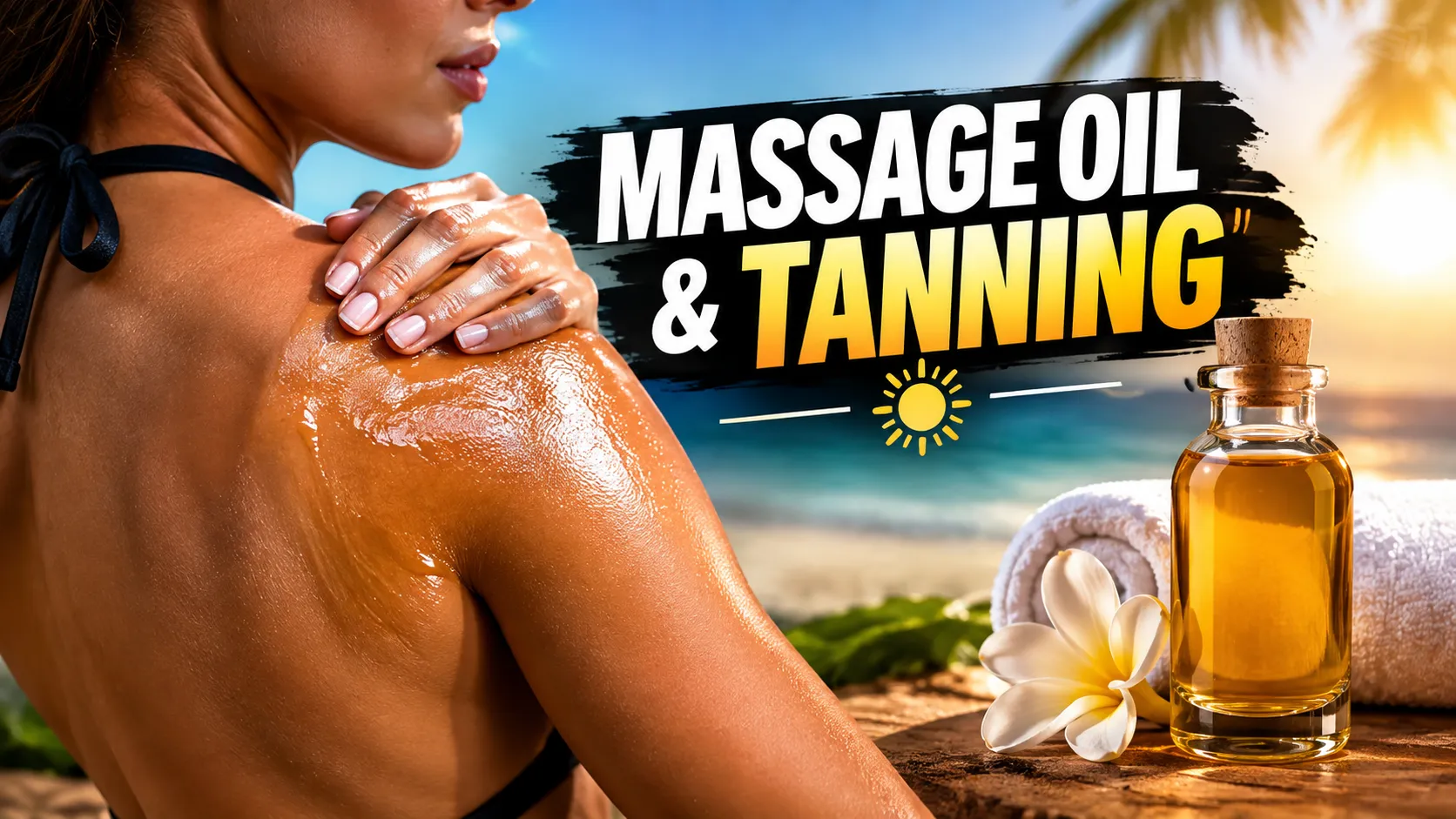
Massage oil creates a layer on the surface of the skin. Depending on the formula, that layer can reduce friction, slow moisture loss, or leave a noticeable film. These qualities are useful during massage but do not automatically make an oil suitable for sun exposure or tanning preparation.
It is important to separate three different situations: natural tanning under ultraviolet light, spray tanning with a self-tanning solution, and skin that has already been irritated by sun exposure. Each situation has different concerns.
Massage oil is not sunscreen. Even if an oil feels rich, smooth, or protective, it should never replace a broad-spectrum sunscreen labeled with an appropriate SPF. Oils without verified sun protection can leave skin exposed while creating a false sense of safety.
Natural Tanning and UV Exposure
Some people use oil before sunbathing because they want a deeper or faster tan. This is not a safe reason to apply massage oil. The presence of oil does not make UV exposure safer, and it does not prevent sunburn or long-term skin damage.
Certain essential oils and plant extracts may also cause skin reactions when combined with sunlight. Citrus oils, including some bergamot, lemon, lime, and grapefruit preparations, deserve particular caution because some photoreactive compounds can increase sensitivity to UV exposure.
Routine Flow: Before Going Outdoors
Look for fragrance, citrus extracts, and essential oils.
Use a properly labeled sunscreen instead.
Follow sunscreen label directions and seek shade when possible.
This flow is a practical safety guide, not a guarantee of protection. If a product causes burning, redness, or unusual sensitivity, stop using it and seek professional advice when symptoms persist.
Comparison: Massage Oil, Sunscreen, and Self-Tanner
Swipe left/right to see the full table →
| Product | Main purpose | UV protection? | Tanning use |
|---|---|---|---|
| Massage oil | Reduce friction | No | Not a tanning protector |
| Sunscreen | Reduce UV exposure | Yes, if labeled | For outdoor protection |
| Self-tanner | Temporary skin color | Usually no | Follow product directions |
Can Massage Oil Affect a Spray Tan?
Yes. Massage oil can affect the preparation, application, and appearance of a spray tan. Most spray tanning products work best when the skin is clean, dry, and free from heavy oils, lotions, or other barriers unless the tanning professional gives different instructions.
Oil can make it harder for a tanning solution to spread evenly. It may also cause patchy color, streaking, or areas where the product does not develop as expected. This is especially important on elbows, knees, ankles, hands, and other areas where product buildup is common.
If you have a spray tan appointment, ask the salon whether massage oil should be avoided before the session. Their instructions may vary based on the formula and preparation process.
Note: Timing Matters
A massage oil applied several hours before a spray tan may still leave residue. When preparing for tanning, follow the specific instructions from the tanning provider rather than assuming ordinary showering removes every product.
What to Avoid Before a Spray Tan
Heavy body oils, greasy moisturizers, and strongly fragranced products can interfere with even application. Some people also exfoliate too aggressively immediately before tanning, which may leave skin sensitive or uneven.
A simple preparation routine is usually easier: shower according to salon instructions, avoid heavy oil immediately beforehand, and wear loose clothing after the appointment if advised.
Product and Routine Fit
Swipe left/right to see the full table →
| Situation | Better choice | Avoid or check first |
|---|---|---|
| Before outdoor exposure | Labeled sunscreen | Massage oil as protection |
| Before spray tan | Clean, dry skin | Heavy oil residue |
| After spray tan | Follow salon aftercare | Oil before advised time |
| Massage at home | Simple skin-compatible formula | Known irritants |
This table offers a practical starting point. Product labels and professional tanning instructions should always take priority because formulas differ.
What Happens If You Use Massage Oil on Sunburn?
Sunburned skin is already irritated and more vulnerable to friction, heat, and additional product reactions. Applying massage oil over a sunburn may feel soothing for some people because of its texture, but it is not a reliable way to manage damaged skin.
Heavy oils can create an occlusive layer that holds heat against the skin. This may be uncomfortable when the skin is hot or tender. Fragrance and essential oils may also sting or trigger additional irritation.
For mild sunburn discomfort, general skin care guidance commonly emphasizes cooling the skin, drinking enough fluids, avoiding further sun exposure, and using gentle products that do not irritate. Avoid rubbing or massaging actively burned skin.
Warning: Do Not Massage Freshly Sunburned Skin
Avoid deep massage, vigorous rubbing, or fragranced oils on skin that is hot, painful, blistered, peeling severely, or visibly damaged. Additional friction can increase discomfort.
Sunburn Symptoms Versus Possible Product Issues
Swipe left/right to see the full table →
| Problem | Possible reason | Safer next step |
|---|---|---|
| Hot, tender skin | Sun exposure irritation | Cool gently and avoid friction |
| Stinging after oil | Fragrance or irritation | Stop the product |
| Blistering | More significant skin damage | Seek medical guidance |
| New rash | Product sensitivity possible | Stop use and monitor |
Safety Decision Path
Yes → Consider a gentle massage routine.
Yes → Avoid massage oil until the cause is clearer.
Yes → Seek professional medical advice.
The decision path is intentionally cautious. Massage oil is best used on healthy, intact skin rather than skin that is actively injured or reacting.
Safe Massage Oil Choices Around Tanning
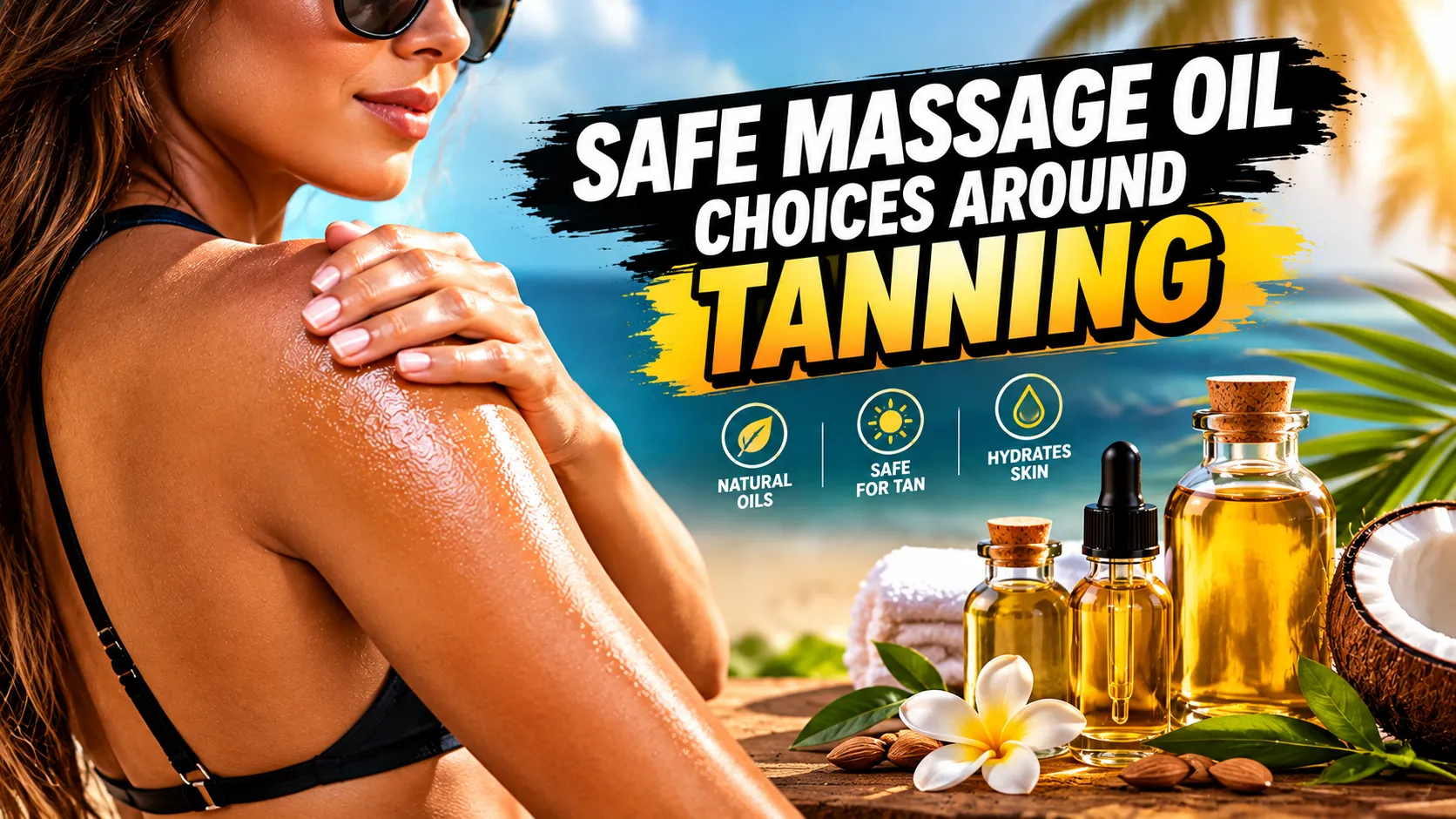
Choosing an oil depends on what your skin will experience next. A plain, fragrance-free product may be easier to tolerate than a complex blend containing multiple essential oils or botanical extracts. However, even gentle ingredients can cause reactions in some individuals.
Read the ingredient list before use. If your skin is sensitive, consider a small patch test on an unaffected area according to general product-testing guidance. A patch test cannot guarantee that a product will never cause irritation elsewhere.
Ingredient and Routine Fit
Swipe left/right to see the full table →
| Ingredient type | Potential benefit | Use caution when |
|---|---|---|
| Simple carrier oil | Smooth massage glide | Known allergies |
| Fragranced oil | Pleasant scent | Sensitive or irritated skin |
| Essential oil blend | Added fragrance | Sun exposure or reactive skin |
| Heavy oil balm | Long-lasting moisture | Before spray tanning |
A Simple Pre-Tan and Post-Tan Routine
Separate massage from tanning appointments when possible so oils do not interfere with preparation.
Follow the spray tan provider’s preparation and aftercare instructions.
Massage oil should never replace a labeled broad-spectrum sunscreen.
Do not massage or apply fragranced oils over fresh sunburn or damaged skin.
Stop using any product that causes persistent burning, rash, swelling, or unusual discomfort.
Tip: Keep Your Routine Simple
The fewer unnecessary products used before tanning, the easier it is to identify what caused a reaction or uneven result. Simple routines also make salon instructions easier to follow.
Common Mistakes With Massage Oil and Tanning
Many tanning problems happen because products are used for purposes they were not designed to serve. Massage oil is intended to improve glide and reduce friction. It is not formulated as a sunscreen, tanning accelerator, or medical treatment for sunburn.
Another common mistake is assuming that natural ingredients are always safer. Essential oils and botanical extracts can still irritate skin or react differently under sunlight. “Natural” does not automatically mean suitable for every person or situation.
It is also easy to overlook timing. Applying a thick oil shortly before a spray tan can create a barrier. Applying a scented oil to sunburned skin can increase discomfort. Checking the label and following professional instructions helps reduce these avoidable issues.
Mistake Versus Better Choice
Swipe left/right to see the full table →
| Mistake | Better choice |
|---|---|
| Using oil as sunscreen | Use labeled sunscreen |
| Applying oil before spray tan | Follow provider preparation |
| Massaging fresh sunburn | Avoid friction and seek guidance if needed |
| Ignoring ingredients | Check fragrance and essential oils |
Red-Flag Checklist Dashboard
Professional assessment may be needed.
Do not massage damaged skin.
Stop suspected irritating products.
Seek qualified medical advice.
This checklist is not a diagnostic tool. It highlights situations where self-care decisions may not be enough.
What Experienced Users Often Check First
Someone familiar with massage oils and tanning routines usually checks three things before applying a product: the skin condition, the ingredient list, and the timing of the next activity.
Healthy skin may tolerate a simple massage oil well, but that does not mean the same product belongs in a tanning preparation routine. A person with sensitive skin may need a fragrance-free option, while someone attending a spray tan appointment should prioritize the salon’s instructions over personal preference.
Experienced users also recognize that a product can be suitable for one purpose but unsuitable for another. A moisturizing oil may work well during a massage and still interfere with an even spray tan or create discomfort on sunburned skin.
Practical Priority Meter
Typical Routine Priorities
These percentages are illustrative routine priorities, not scientific measurements.
The highest priorities are preventing unnecessary UV exposure, following tanning instructions, and avoiding products on damaged skin. Ingredient awareness adds another layer of practical safety.
When to Contact a Professional
Most ordinary product questions can be handled by reading labels and following the instructions from a tanning professional. However, some skin symptoms deserve medical attention rather than continued experimentation with oils or other personal care products.
When to Contact a Professional
Seek advice from a qualified healthcare professional if you experience severe or worsening sunburn pain, extensive blistering, unusual swelling, signs of infection, a spreading rash, or symptoms that do not improve. Urgent medical help may be appropriate for serious or rapidly worsening symptoms.
If you are unsure whether a massage oil ingredient is appropriate for your skin, a dermatologist or other qualified healthcare professional can help assess the concern. For tanning appointments, the salon technician can also explain product-specific preparation rules.
Final Thoughts
Massage oil can affect tanning routines, especially when used before a spray tan or applied to sun-exposed skin. It should never replace sunscreen or be used as a shortcut for achieving a darker tan.
Keep products simple, check ingredients, follow professional tanning instructions, and avoid massage on fresh sunburn. If symptoms are severe, unusual, persistent, or worsening, seek professional medical guidance.
Frequently Asked Questions
Does massage oil make you tan faster?
Massage oil does not provide a safe or reliable way to tan faster. It should not be used instead of sunscreen during UV exposure.
Can I use massage oil before a spray tan?
Heavy oils may interfere with an even spray tan. Follow the tanning provider’s preparation instructions and avoid unnecessary oil residue before the appointment.
Does massage oil protect skin from the sun?
No. Massage oil should not be considered sun protection. Use a broad-spectrum sunscreen with an appropriate SPF and follow its label directions.
Can I apply massage oil to sunburned skin?
It is generally better to avoid massage and potentially irritating oils on fresh sunburn. Cool the skin gently and seek professional advice if symptoms are severe or worsening.
Which massage oil ingredients should I be cautious about before sunlight?
Use extra caution with fragranced formulas and certain essential oils, including some citrus-based preparations. Check the ingredient list and avoid products that cause irritation.
How long should I wait between massage oil and a spray tan?
There is no universal waiting period because products and tanning formulas differ. Ask your tanning provider and follow their exact preparation instructions.
When should I see a doctor about a reaction after using massage oil?
Seek professional medical advice for severe, spreading, unusual, persistent, or worsening redness, swelling, rash, pain, blistering, or other concerning symptoms.
Author
-

I’m Alex Turner, a massage product reviewer and wellness writer at RemedyTip. I specialize in researching, evaluating, and comparing massage and recovery products to help readers make informed purchasing decisions. My focus is on practical, evidence-informed product guidance covering muscle recovery, relaxation, everyday comfort, and wellness.
I take a research-driven approach to every product I review. I examine product specifications, features, materials, performance claims, user feedback, durability, comfort, ease of use, and overall value. When appropriate, I also consult trusted industry and health-related sources to verify important information and provide readers with a more complete and balanced view.
I cover a wide range of products, including massage guns, handheld massagers, neck and shoulder massagers, foot massagers, massage chairs, foam rollers, and other recovery tools. Rather than focusing only on marketing claims, I look at how products compare in real-world use and who they are actually suitable for. I also consider different budgets, use cases, and user needs when making recommendations.
At RemedyTip, I’m committed to accuracy, transparency, and unbiased product information. I clearly distinguish between manufacturer claims, available evidence, and my own product analysis so readers can understand the basis of each recommendation. I continuously research new products, technologies, and developments in the massage and recovery space to keep my content current and useful.
My goal is simple: to provide trustworthy, easy-to-understand information that helps readers choose massage and recovery products with greater confidence.

