
Written by Alex Turner
Quick Answer:
Can massage oil be used as lube or lubricant? It may provide slip for external massage, but it is usually a poor substitute for a personal lubricant, especially with latex or polyisoprene condoms. A purpose-made water- or silicone-based lube is generally the simpler, safer choice for sexual activity.
Massage Oil and Personal Lubricant Are Not the Same
Massage oil is designed mainly to help hands glide over skin. Personal lubricant is formulated for sexual activity, where friction, sensitive genital tissue, condoms, and sometimes sex toys all matter. That difference is easy to overlook when a bottle of massage oil already happens to be nearby.
Can massage oil be used as lube or lubricant? The answer depends on what you are using it for, what is in the product, and whether a barrier such as a condom is involved. The safest general rule is simple: keep massage oil for massage unless the manufacturer specifically states that it is intended and suitable for intimate lubrication.
Safety note: This article is for general educational information only. It does not diagnose, treat, cure, or prevent any condition. It does not replace advice from a licensed healthcare professional. Readers should seek professional help for severe, worsening, unusual, or persistent symptoms.
The First Question: What Kind of Oil Is It?
“Massage oil” is a broad product category rather than one specific ingredient. A bottle may contain a single plant oil, a blend of oils, mineral oil, fragrance, essential oils, botanical extracts, preservatives, or other ingredients. Two products sold for massage can therefore behave very differently on sensitive skin.
The label matters because genital tissue can be more sensitive than ordinary body skin. Planned Parenthood notes that certain lubricants and other products can cause irritation for some people, and scented or fragranced products may be more likely to cause problems in sensitive areas. :contentReference[oaicite:0]{index=0}
Can massage oil be used as lube or lubricant if the bottle contains only a simple oil? It may be possible for some people in some circumstances, but that does not make every massage oil a good sexual lubricant. The more additives a product contains, the more important it is to avoid assuming that it belongs inside the vagina, anus, or other sensitive tissue.
Quick product-fit check
Use the label as your first filter rather than relying on how slippery the oil feels on your hands.
Swipe left/right to see the full table →
| Product type | Best use | Main concern |
|---|---|---|
| Massage oil | Body massage | Ingredients and condoms |
| Water-based lube | Most sexual activity | May need reapplication |
| Silicone-based lube | Longer-lasting glide | Check toy compatibility |
| Oil-based personal lube | Selected oil-compatible uses | Barrier compatibility |
Note: “Natural,” “organic,” or “plant-based” does not automatically mean a massage oil is suitable as a personal lubricant. The intended use and complete ingredient label matter more than the marketing description.
The Biggest Issue: Massage Oil and Condoms
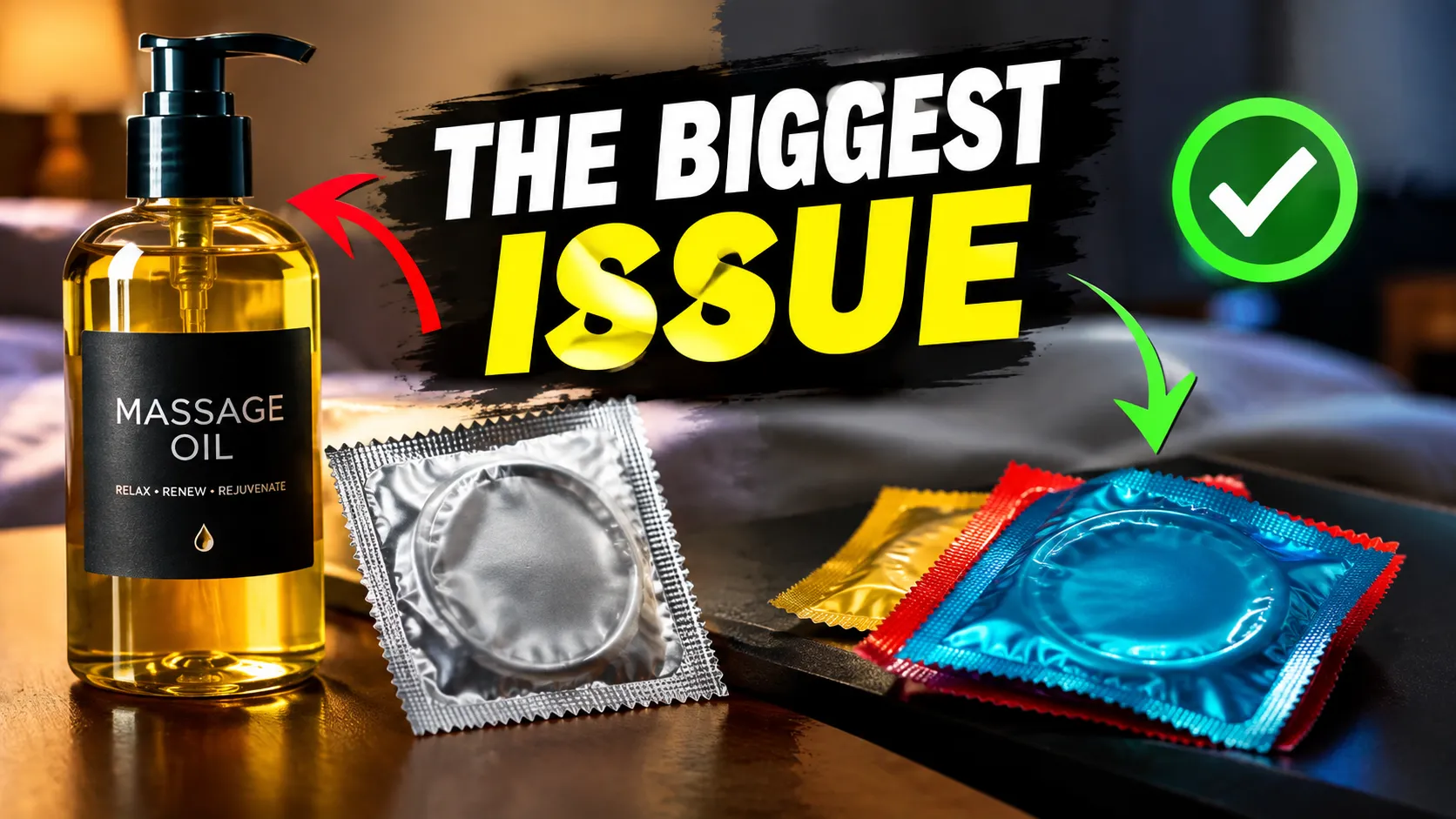
If you use condoms, this is the most important part of the answer. Oil-based products can weaken latex and increase the chance that a latex condom will break. The CDC specifically lists massage oils among oil-based products that should not be used with latex condoms. :contentReference[oaicite:1]{index=1}
Planned Parenthood likewise advises using water- or silicone-based lubricant with latex condoms and warns that oil can damage latex. It also notes that some non-latex condoms have different compatibility rules, so the package instructions should be checked rather than guessing from the phrase “latex-free.” :contentReference[oaicite:2]{index=2}
Safety decision path
Choose water-based or silicone-based lube instead of massage oil.
Check the condom manufacturer’s instructions before using any oil.
Consider whether the product is actually intended for intimate use and whether its ingredients may irritate sensitive tissue.
This practical path is more reliable than deciding based only on how slippery an oil feels. If condom protection matters, choosing a compatible personal lubricant removes an avoidable source of uncertainty.
Condom material compatibility at a glance
Always follow the instructions for the specific condom you have. The general pattern below helps explain why one lubricant can be appropriate in one situation and unsuitable in another.
Swipe left/right to see the full table →
| Barrier | Water-based | Silicone-based | Oil-based |
|---|---|---|---|
| Latex | Compatible | Compatible | Avoid |
| Polyisoprene | Compatible | Compatible | Avoid |
| Polyurethane or other synthetic | Generally compatible | Generally compatible | Check product directions |
The CDC states that water- or silicone-based lubricants are appropriate with latex condoms and that oil-based products can weaken latex. Planned Parenthood similarly recommends checking the specific condom instructions when using non-latex products. :contentReference[oaicite:3]{index=3}
Warning: If you accidentally used massage oil with a latex condom, do not assume the condom still provides the same protection. If the condom broke, slipped, or you are concerned about pregnancy or STI exposure, seek timely advice from an appropriate healthcare or sexual-health service.
Can Massage Oil Irritate Sensitive Areas?
Yes, it can. That does not mean every massage oil will cause irritation, but massage products may contain ingredients chosen for scent, texture, preservation, or cosmetic feel rather than intimate use. Fragrance and other additives can be a concern for people with sensitive skin.
Planned Parenthood advises stopping a lubricant or similar product if it causes a reaction and notes that sensitivity to certain lubricants, condoms, or other products can contribute to genital irritation. :contentReference[oaicite:4]{index=4}
Can massage oil be used as lube or lubricant without causing irritation? There is no universal yes-or-no answer for every formula or every person. A product that feels comfortable on an arm or shoulder is not automatically appropriate for genital or anal tissue.
Practical risk gauge
These bars are a practical guide, not scientific risk measurements.
Ingredients worth checking
Before putting a massage oil near sensitive tissue, look for fragrance, essential oils, warming or cooling additives, and other ingredients that may be irritating for you. A plain-looking ingredient list still does not guarantee compatibility, so intended use remains important.
Swipe left/right to see the full table →
| Label clue | Better approach | Why |
|---|---|---|
| Fragrance added | Prefer purpose-made lube | Less uncertainty |
| Essential oils | Avoid internal use | Potential sensitivity |
| Cooling or warming | Use a simpler formula | Sensory additives can irritate |
| No intimate-use guidance | Choose labeled personal lube | Designed for the purpose |
Product-fit dashboard
Good all-around starting point when condom compatibility and easy cleanup matter.
Useful when longer-lasting glide is desired, while checking sex-toy compatibility.
Best treated as a massage product unless its label clearly supports intimate lubrication.
Do not guess; use a purpose-made lubricant instead.
The dashboard is meant to make the choice easier: match the lubricant to the activity and barrier rather than trying to make one household product do every job.
What Is Safer to Use Instead?
For most people looking for an easy general-purpose option, a water-based personal lubricant is a straightforward choice. It is widely available, designed for sexual activity, and compatible with latex condoms. Silicone-based personal lubricant is another option when longer-lasting glide is preferred; compatibility with specific sex toys should still be checked.
Can massage oil be used as lube or lubricant when no condom is involved? Some oils can be used as sexual lubricants in certain circumstances, but that is different from saying that any massage oil is appropriate. A purpose-made personal lubricant reduces the guesswork around intended use, ingredients, and compatibility.
For anal sex, adequate lubrication is especially important because the anus does not provide its own lubrication. Planned Parenthood notes that insufficient lubrication can contribute to irritation and small tears, which can also increase vulnerability to STI transmission. :contentReference[oaicite:5]{index=5}
Swipe left/right to see the full table →
| Situation | Better choice | Reason |
|---|---|---|
| Latex condom | Water or silicone lube | Avoids oil damage |
| Longer-lasting glide | Silicone-based lube | Usually lasts longer |
| Easy cleanup | Water-based lube | Washes away more easily |
| Body massage | Massage oil | Designed for skin massage |
Tip: If you already know you will use a condom, choose the lubricant after checking the condom material. This is easier than choosing an oil first and discovering later that it is incompatible with the barrier.
Common Mistakes to Avoid
The biggest mistake is treating “slippery” as the only requirement. Sexual lubricant has to work with the body, activity, barrier, and sometimes the toy being used. A product can feel excellent during a massage and still be a poor choice for intimate use.
Another common mistake is assuming that a small amount of oil cannot affect a condom. The concern is not simply the quantity you can see. Oil-based products can weaken latex, which is why major sexual-health guidance recommends water- or silicone-based lubricant with latex condoms. :contentReference[oaicite:6]{index=6}
Mistake versus better choice
Swipe left/right to see the full table →
| Mistake | Better choice |
|---|---|
| Using oil with latex | Use water or silicone lube |
| Ignoring the ingredient list | Choose a simple, purpose-made formula |
| Assuming natural means safe | Check intended use and ingredients |
| Continuing after burning | Stop and assess the reaction |
Do’s and don’ts
Check the condom material, read the lubricant label, and stop using a product that causes irritation.
Use massage oil with a latex condom or assume a scented massage product is suitable for internal use.
When Should You Stop Using a Product?
Stop using the product if you develop burning, itching, swelling, unusual discomfort, or a noticeable skin reaction. Do not keep applying more product in an attempt to overcome discomfort. Planned Parenthood recommends stopping a lubricant when it causes a reaction and trying a different option or discussing persistent symptoms with a healthcare professional. :contentReference[oaicite:7]{index=7}
Red-flag checklist dashboard
When self-care is reasonable versus when to seek help
Swipe left/right to see the full table →
| Situation | Next step |
|---|---|
| No reaction | Switch to a purpose-made lube if uncertain |
| Mild irritation | Stop the product and monitor |
| Persistent or worsening symptoms | Talk with a healthcare professional |
| Condom breaks or slips | Seek timely pregnancy/STI advice as appropriate |
When to contact a professional: Seek professional advice for severe, unusual, persistent, or worsening genital pain, swelling, sores, bleeding, unusual discharge, significant burning, or symptoms that do not settle after stopping the suspected irritant. If a condom fails and pregnancy or STI exposure is a concern, seek timely sexual-health guidance.
The Bottom Line
Can massage oil be used as lube or lubricant? Sometimes an oil may provide enough slip for certain external uses, but massage oil should not be treated as a universal personal lubricant. The biggest practical concerns are condom compatibility, product ingredients, and whether the formula is intended for intimate use.
For the simplest choice, use a purpose-made water-based or silicone-based personal lubricant, especially when condoms are involved. If you are considering an oil-based product without a barrier, read the complete label, avoid products with ingredients that irritate you, and stop if discomfort develops.
Final Thoughts
Massage oil can be useful for massage, but it is not automatically interchangeable with personal lubricant. If condom protection matters, choose a water- or silicone-based lubricant that matches the condom material, and avoid products that cause irritation.
When pain, burning, swelling, unusual discharge, or other symptoms are severe, persistent, unusual, or worsening, seek professional medical advice rather than continuing to experiment with products.
Frequently Asked Questions
Can massage oil be used as lube or lubricant?
It can provide lubrication for some external uses, but massage oil is not automatically suitable as a personal lubricant. Check the ingredients, intended use, and condom compatibility first.
Can I use massage oil with a latex condom?
No. Oil-based products, including massage oils, can weaken latex and increase the chance of condom breakage. Use water- or silicone-based lubricant instead. :contentReference[oaicite:8]{index=8}
Is massage oil safe for vaginal use?
Not every massage oil is suitable for vaginal use. Fragrance, essential oils, and other additives may irritate sensitive tissue, so a purpose-made personal lubricant is generally the less uncertain option.
Is massage oil okay for anal lubrication?
Massage oil is not the default choice. Adequate lubrication is important for anal sex, and a purpose-made personal lubricant makes compatibility and intended use easier to manage. :contentReference[oaicite:9]{index=9}
What is safer than massage oil for sex?
Water-based or silicone-based personal lubricant is usually the simplest option, particularly when condoms are involved. Check the product and condom instructions for compatibility.
What should I do if massage oil causes burning or itching?
Stop using the product and avoid repeatedly applying it to the irritated area. Seek professional advice if symptoms are severe, persistent, unusual, or worsening.
Can oil-based lubricant be used with non-latex condoms?
Some synthetic condoms are compatible with oil-based lubricants, but compatibility varies by material. Check the specific condom manufacturer’s instructions rather than assuming every non-latex condom is oil-safe. :contentReference[oaicite:10]{index=10}
Author
-

I’m Alex Turner, a massage product reviewer and wellness writer at RemedyTip. I specialize in researching, evaluating, and comparing massage and recovery products to help readers make informed purchasing decisions. My focus is on practical, evidence-informed product guidance covering muscle recovery, relaxation, everyday comfort, and wellness.
I take a research-driven approach to every product I review. I examine product specifications, features, materials, performance claims, user feedback, durability, comfort, ease of use, and overall value. When appropriate, I also consult trusted industry and health-related sources to verify important information and provide readers with a more complete and balanced view.
I cover a wide range of products, including massage guns, handheld massagers, neck and shoulder massagers, foot massagers, massage chairs, foam rollers, and other recovery tools. Rather than focusing only on marketing claims, I look at how products compare in real-world use and who they are actually suitable for. I also consider different budgets, use cases, and user needs when making recommendations.
At RemedyTip, I’m committed to accuracy, transparency, and unbiased product information. I clearly distinguish between manufacturer claims, available evidence, and my own product analysis so readers can understand the basis of each recommendation. I continuously research new products, technologies, and developments in the massage and recovery space to keep my content current and useful.
My goal is simple: to provide trustworthy, easy-to-understand information that helps readers choose massage and recovery products with greater confidence.

