
Shiatsu often surprises people because it does not follow the usual spa massage routine. Instead of bare skin and slippery oils, a practitioner typically applies steady pressure through loose, comfortable clothing.
Traditional shiatsu usually does not use oil, although some practitioners may offer an oil-based variation. Understanding this difference can help someone choose the right service, prepare properly, and know what to expect during the session. Michael Hayes of RemedyTip.com emphasizes checking the practitioner’s methods before booking.
Key Takeaways
- Traditional shiatsu usually uses no oil.
- Clients typically wear loose, comfortable clothing.
- Some practitioners offer oil-based adaptations.
Traditional Shiatsu Techniques
Traditional shiatsu usually uses steady pressure over loose, comfortable clothing, so the therapist does not need massage oil. The method relies on body positioning, controlled pressure, and direct contact through fabric rather than long, slippery strokes on bare skin.
Pressure Applied Through Clothing
The client typically wears loose clothing made from thin, flexible fabric, such as cotton. The clothing should allow the therapist to feel changes in muscle tension while letting the client move into different positions.
The therapist may work with the client lying on a padded mat, futon, or massage table. They apply pressure gradually and hold it for several seconds before releasing it. This approach helps the therapist adjust force based on the client’s comfort and the area being treated.
| Traditional shiatsu | Oil-based massage |
|---|---|
| Usually performed through clothing | Usually performed on exposed skin |
| Uses steady pressure and stretches | Uses gliding strokes and kneading |
| Does not normally require oil | Often uses oil or lotion |
Because oil makes fabric slippery, using it can interfere with the grip and pressure control needed for traditional shiatsu. Some practitioners may offer a modified oil treatment, but that service differs from classic shiatsu.
Use of Palms, Thumbs, and Fingers
Shiatsu therapists use their thumbs, palms, fingers, and sometimes elbows or knees to apply pressure. They select the body part based on the area’s size, the amount of force needed, and the client’s position.
Thumbs and fingers can provide focused pressure in smaller areas, such as the hands, feet, neck, and points along the back. Palms spread pressure across broader areas, including the shoulders, hips, and thighs. The therapist may also combine pressure with gentle stretches or joint movements.
The pressure should feel firm but controlled, not sharp or painful. Clients can ask the therapist to reduce the force, change the position, or stop work on a sensitive area at any time.
When Oil May Be Used
Traditional shiatsu usually takes place through loose clothing without oil. Some practitioners add oil when they combine shiatsu pressure with Western massage methods or need direct access to a small area of skin.
Western-Style Shiatsu Adaptations
Some massage therapists offer a blended treatment that combines shiatsu pressure with oil-based massage techniques. They may use oil for gliding strokes, then apply thumb, palm, or finger pressure to selected areas.
This approach differs from traditional shiatsu. The client may remove some clothing, and the therapist should explain which areas will remain covered. The client can request unscented oil or decline oil if the skin feels sensitive.
| Treatment style | Clothing | Oil use |
|---|---|---|
| Traditional shiatsu | Loose, comfortable clothing | Usually none |
| Blended shiatsu massage | Partial clothing removal may be needed | Often used |
| Swedish-style massage with shiatsu pressure | Draping protects private areas | Usually used |
Essential oils may appear in some blended treatments, but they can irritate sensitive skin or trigger allergies. The therapist should identify the ingredients and perform a patch test when appropriate.
Targeted Work on Bare Skin
A practitioner may use a small amount of oil on bare skin when treating a specific muscle, joint, or area with dryness or friction. This can help the hands move smoothly during techniques that include rubbing or gliding.
The rest of the session may still follow traditional shiatsu methods. For example, the client may remain clothed while the therapist applies oil only to the lower leg or shoulder.
The client should tell the therapist about allergies, eczema, broken skin, or fragrance sensitivity before treatment. Oil should not cover wounds, rashes, or irritated skin unless a qualified health professional advises it. The therapist should also explain the draping and obtain consent before exposing or treating any area.
How Shiatsu Differs From Oil Massage
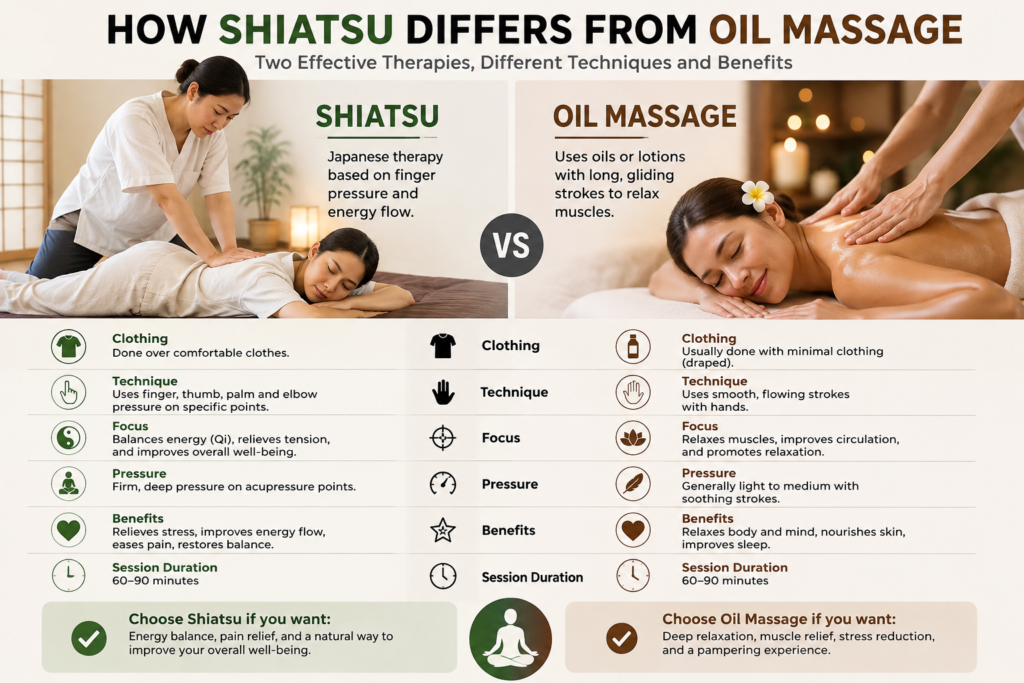
Shiatsu usually takes place without oil and with the client fully clothed. It uses pressure, body movement, and stretching rather than the long gliding strokes common in oil-based massage.
Movement and Stretching Methods
Shiatsu practitioners apply pressure with their thumbs, fingers, palms, and sometimes elbows or knees. They often work through loose clothing while the client lies on a mat or firm surface. Without oil, the practitioner can keep a steady grip and direct pressure to specific areas.
Shiatsu may also include gentle joint rotations, assisted stretches, rocking, and changes in body position. These movements support mobility and help the practitioner assess how the body responds. Oil massage, such as Swedish massage, usually focuses on smooth strokes across bare skin. The oil reduces friction, allowing longer gliding movements and techniques such as kneading.
| Feature | Shiatsu | Oil massage |
|---|---|---|
| Clothing | Loose, comfortable clothing | Usually performed on bare skin |
| Lubricant | Usually no oil | Massage oil or lotion |
| Main movements | Pressure, stretching, rocking | Gliding, kneading, rubbing |
| Usual surface | Mat or firm table | Massage table |
Focus on Energy Pathways
Shiatsu follows traditional Japanese concepts of meridians, which practitioners describe as pathways connected with the body’s energy. They apply pressure along selected points and lines, often called acupressure points. The practitioner may also consider muscle tension, posture, breathing, and movement during the session.
Oil massage generally focuses on muscles, soft tissue, circulation, and relaxation through hands-on techniques. It does not usually follow meridian pathways as its main framework. Shiatsu’s firm, targeted pressure can feel different from the broad, flowing contact of an oil massage, so clients should tell the practitioner about pain, injuries, numbness, or pressure preferences before treatment.
What to Wear to a Shiatsu Session
Shiatsu is usually performed through loose clothing and without oil, so the fabric should allow easy movement and steady pressure. Breathable layers, simple designs, and a comfortable fit help the client stay relaxed during the session.
Comfortable Clothing Choices
The client should wear loose, flexible clothing that does not restrict the hips, shoulders, knees, or arms. Suitable options include a soft T-shirt, sweatshirt, yoga pants, sweatpants, or loose athletic clothing. Cotton and other breathable fabrics can help prevent overheating.
Tight jeans, stiff shirts, belts, skirts, and clothing with thick seams may make lying, sitting, or turning uncomfortable. Large buttons, zippers, buckles, and heavy decorations can also press into the body during treatment.
| Recommended | Better to avoid |
|---|---|
| Soft T-shirt or long-sleeved top | Tight or stiff shirts |
| Yoga pants or sweatpants | Jeans or restrictive trousers |
| Clean socks | Bulky shoes or heavy boots |
| Simple, flexible layers | Belts, large buttons, and thick accessories |
The client should choose clean clothing that the practitioner can work through easily. Since classic shiatsu does not require oil or lotion, the clothes usually do not need special protection from stains.
Preparing for Your Appointment
The client should arrive in comfortable clothes and remove watches, bracelets, necklaces, and other items that could interfere with pressure or movement. Hair ties, phones, keys, and bulky items should also be taken out of pockets before the session begins.
A light meal is usually more comfortable than a heavy one immediately before treatment. The client should also tell the practitioner about injuries, skin problems, pregnancy, recent surgery, or areas that need special care.
Some practitioners perform shiatsu on a floor mat, while others use a low table. The client should wear clothing that allows safe movement in either setting and should mention any difficulty kneeling, lying down, or getting up. If the appointment uses a different technique, the practitioner can explain whether clothing or oil requirements will change.
Benefits of a Dry Massage Approach
Shiatsu usually takes place through loose clothing, without oil or lotion. This setup helps the practitioner apply focused pressure and leaves the client without a slippery layer on the skin or stains on clothing.
Greater Control During Pressure Work
Dry skin and fabric give the practitioner better grip during shiatsu techniques. The practitioner can use the thumbs, fingers, palms, and sometimes forearms to apply steady pressure to selected areas without sliding across the body.
This control matters when the session includes compression, stretching, or pressure-point work. Clothing also allows the practitioner to work around sensitive areas while the client remains covered. The client can tell the practitioner if the pressure feels too strong, too light, or uncomfortable.
Because shiatsu does not depend on oil, the practitioner can change pressure quickly. A session may include sustained thumb pressure, gentle joint movement, and assisted stretches without needing to adjust the amount of product on the skin. People who prefer a clothed treatment may find this approach more comfortable. For background on shiatsu’s Japanese roots, readers can consult this overview of shiatsu.
No Residue on Skin or Clothing
A dry shiatsu session does not leave massage oil, lotion, or cream on the client’s skin. The client usually wears loose, comfortable clothing, such as lightweight trousers and a soft shirt, so they can get dressed and leave without wiping off product.
This feature can help people who dislike greasy textures, have product sensitivities, or need to return to work after the appointment. It also avoids oil marks on clothing, bedding, and massage equipment. Clients should still tell the practitioner about skin conditions, allergies, or discomfort before treatment.
Some providers may offer oil-based work alongside shiatsu, but that changes the technique and clothing setup. Clients should confirm the treatment style when booking if they want a fully dry session.
Choosing the Right Practitioner
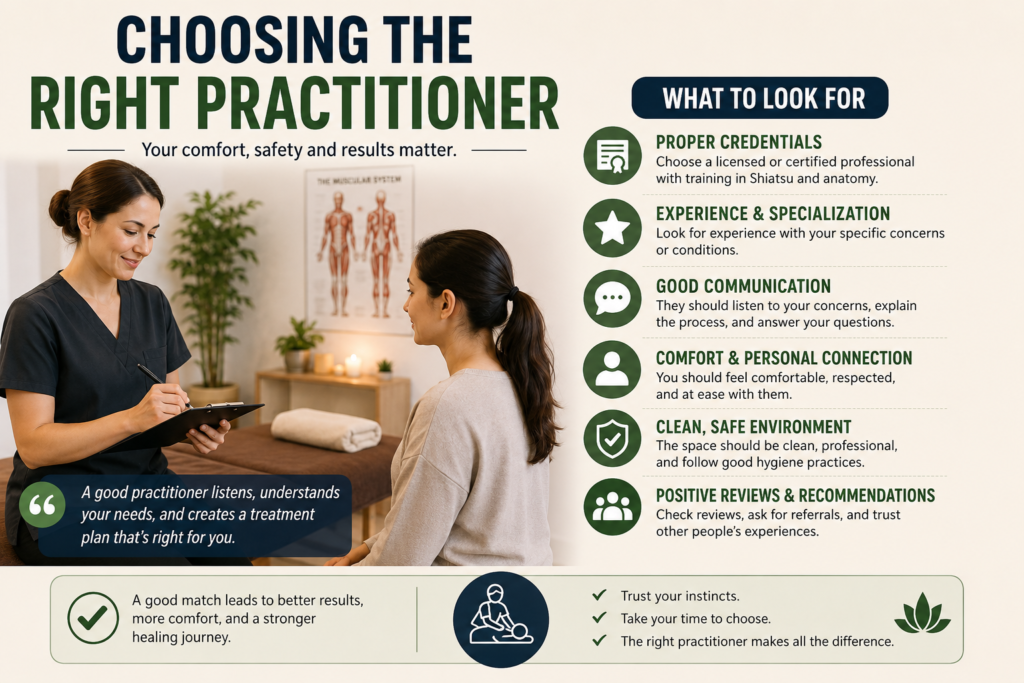
A qualified practitioner should explain whether the session uses oil, clothing, pressure, and stretching. Clients should also share health concerns, allergies, pain levels, and personal boundaries before treatment begins.
Questions to Ask Before Booking
Clients can ask these questions when contacting a practitioner:
- Is the treatment traditional shiatsu or an oil-based variation?
- Will the client remain fully clothed?
- What type of clothing should the client wear?
- Does the session take place on a mat, futon, or massage table?
- What training, certification, or professional registration does the practitioner have?
- How does the practitioner adjust pressure for injuries or health conditions?
- What happens if the client feels pain or wants to stop?
Traditional shiatsu usually takes place through loose, comfortable clothing and does not require massage oil. Some practitioners offer oil-based treatments, but these may use techniques closer to Swedish or general massage than traditional shiatsu.
Clients should verify the practitioner’s training and read current reviews from reliable sources. Information about shiatsu’s history and methods is also available through Wikipedia’s shiatsu overview.
Communicating Preferences and Sensitivities
Clients should state their preferences before the session starts. They can request no oil, lighter pressure, specific areas to avoid, or extra attention to areas such as the shoulders and lower back. A practitioner should accept these requests without pressure.
Clients should also mention allergies, sensitive skin, recent surgery, fractures, pregnancy, blood-clotting problems, or ongoing medical treatment. These conditions may affect whether shiatsu is suitable or require changes to the session.
Clear communication should continue during treatment. The client can ask the practitioner to reduce pressure, stop stretching, change position, or end the session at any time. Sharp pain, numbness, dizziness, or unusual discomfort requires immediate attention, not endurance.
FAQs
Does shiatsu massage use oil?
Traditional shiatsu usually does not use oil or lotion. The practitioner applies pressure through loose, comfortable clothing.
Why does shiatsu avoid oil?
Shiatsu relies on firm pressure, finger or thumb work, stretching, and joint movement. Dry skin and clothing help the practitioner maintain control without slipping.
What should a client wear?
Clients should wear clean, loose clothing made from light, flexible fabric. Athletic wear or soft cotton clothing usually works well.
Can a practitioner use oil during shiatsu?
Some practitioners may offer an oil-based treatment or combine shiatsu with another massage style. This is not traditional shiatsu, so clients should confirm the session details before booking.
Does shiatsu involve removing clothing?
Clients typically remain fully clothed. The practitioner should explain the process and respect the client’s comfort and privacy.
How does shiatsu differ from an oil massage?
| Shiatsu | Oil massage |
|---|---|
| Usually performed through clothing | Usually performed on uncovered skin |
| Uses focused pressure and stretching | Often uses gliding strokes |
| Normally avoids oils and lotions | Uses oil or lotion to reduce friction |
Conclusion
Traditional shiatsu massage usually does not use oil. The client typically remains fully clothed in loose, comfortable clothing while the practitioner applies pressure with the fingers, thumbs, palms, and sometimes elbows.
This dry approach allows the practitioner to maintain steady contact through clothing and use techniques such as stretching, joint movement, and pressure along the body. It also makes shiatsu different from many spa massages that use oil to help the hands glide over bare skin.
Some clinics may offer an oil-based treatment inspired by shiatsu. That service may combine shiatsu pressure with techniques from other massage styles, so the client should check the treatment details before booking.
| Traditional shiatsu | Oil-based massage |
|---|---|
| Uses little or no oil | Uses massage oil |
| Performed through clothing | Usually performed on bare skin |
| Focuses on pressure, stretching, and movement | Uses more gliding strokes |
Clients should wear loose clothing and tell the practitioner about any health concerns before the session. If they prefer an oil-free treatment, they should confirm that the provider offers traditional shiatsu.

