
Shiatsu massage can feel intense, but it should not cause sharp or lasting pain. Most people feel firm pressure, stretching, or mild tenderness during treatment, while any soreness afterward usually fades within a day or two.
Comfort depends on the person’s sensitivity, muscle tension, and the practitioner’s technique. A qualified practitioner should adjust the pressure when discomfort feels painful, and warning signs such as numbness, dizziness, or severe pain require stopping the session and seeking medical advice.
Key Takeaways
- Shiatsu should feel firm but not painfully sharp.
- Mild soreness can occur and usually passes quickly.
- Clear communication helps keep treatment safe and comfortable.
What Shiatsu Feels Like
Shiatsu often feels firm, focused, and controlled rather than light or flowing. The pressure can create mild tenderness while also helping the body relax, but the practitioner should adjust it if it becomes painful.
Typical Pressure Sensations
During shiatsu, the practitioner uses thumbs, fingers, palms, or elbows to apply steady pressure to specific areas. The pressure may feel deep, warm, or slightly sore, especially around tight muscles or sensitive points. Some people describe it as intense but manageable.
The sensation should not feel sharp, burning, or damaging. If a client feels sudden pain, numbness, tingling, or pressure that continues to worsen, they should tell the practitioner immediately. The practitioner can reduce the force, change position, or avoid that area.
| Sensation | What it may mean |
|---|---|
| Mild tenderness | Tight or sensitive tissue |
| Firm pressure | Focused work on muscles or pressure points |
| Sharp or burning pain | Pressure may be too strong |
| Numbness or tingling | The practitioner should stop and reassess |
Loose clothing usually allows the practitioner to work without massage oil. The client can also request lighter pressure at any time.
Relaxation During a Session
Shiatsu usually takes place on a mat or table while the client remains fully clothed. The practitioner may combine pressure with gentle stretching or movement, which can create a steady rhythm and help reduce muscle tension.
As the session continues, the client may notice slower breathing, heavier limbs, warmth, or a quieter mind. Some people feel deeply relaxed, while others remain aware of the pressure throughout the treatment. Both responses can occur during a normal session.
The client should communicate clearly about comfort, room temperature, positioning, and pressure. A relaxed session should leave the body feeling calm or gently worked, not injured or distressed.
Why Discomfort Can Occur

Shiatsu may feel tender when pressure reaches sensitive muscles, trigger points, or areas with limited movement. Stress can also cause muscles to tighten, making pressure feel stronger until the therapist adjusts the technique.
Sensitive Muscles and Trigger Points
Sensitive muscles may hurt when they carry extra strain from poor posture, repetitive movement, exercise, or an old injury. A therapist may find firmer areas that feel tender when pressed. These areas are often called trigger points, though their exact cause can vary.
The sensation should stay within a manageable range. A client may feel pressure, aching, or brief tenderness, but sharp, burning, electric, or spreading pain signals that the pressure or position needs to change. The client should tell the therapist immediately so they can use less force, move to another area, or stop.
Mild soreness can occur after treatment, similar to the feeling after gentle exercise. It often improves within a day or two. Strong or lasting pain, marked swelling, bruising, numbness, or weakness requires medical advice.
Tension, Stress, and Restricted Areas
Stress can cause the shoulders, jaw, neck, and back to remain partly tightened. When a therapist applies pressure to these areas or stretches a stiff joint, the client may feel more discomfort because the tissues resist movement.
Restricted areas can also result from long periods of sitting, limited activity, or repetitive work. Shiatsu may use pressure, rocking, and gentle stretching, so a stiff region can feel intense when it begins to move. The therapist should work gradually rather than forcing a joint or muscle.
| Sensation | Appropriate response |
|---|---|
| Mild, steady pressure | The therapist may continue if the client feels comfortable |
| Sharp or burning pain | The therapist should stop or reduce pressure |
| Numbness or tingling | The position or technique should change promptly |
| Pain that continues after treatment | The client should seek medical advice if it does not improve |
Normal Sensations Versus Warning Signs
Shiatsu can create firm, focused sensations without causing harm. Mild tenderness may occur after treatment, but sharp, spreading, or worsening pain requires the practitioner to reduce pressure or stop.
Temporary Tenderness
During shiatsu, a person may feel pressure, stretching, warmth, or mild soreness as the practitioner works on tight muscles. Some areas may feel tender for several hours, especially if they received firm, sustained pressure. The sensation should remain tolerable and should not feel sharp, burning, or electric.
Mild soreness often improves within a day or two. Gentle movement, rest, and drinking water may help, but a person should not force painful stretches or schedule another intense session before the area feels normal.
| Usually acceptable | Needs attention |
| Mild, dull tenderness that improves | Sharp, burning, or electric pain |
| Pressure that feels strong but tolerable | Soreness that worsens or lasts several days |
Pain That Requires Immediate Feedback
A person should tell the practitioner immediately if the pressure becomes painful, overwhelming, or difficult to tolerate. The practitioner can use less pressure, change position, avoid a sensitive area, or end the technique. Staying silent does not help the practitioner judge what feels safe.
Sharp pain, numbness, tingling, dizziness, nausea, weakness, or pain that travels down an arm or leg signals a need to stop. A person should seek medical care for severe symptoms, trouble breathing, new weakness, loss of bladder or bowel control, or pain that continues to worsen after the session. Bruising, swelling, or significant pain also deserves medical advice, especially when it does not improve.
Factors That Influence Comfort
Shiatsu comfort depends mainly on the pressure used, the practitioner’s technique, and the person’s health history. Clear communication helps the practitioner adjust treatment and avoid areas that may react badly to pressure.
Pressure Level and Practitioner Technique
A shiatsu practitioner may use fingers, thumbs, palms, elbows, or gentle stretching. Firm pressure can feel intense over tight muscles, but it should not cause sharp, burning, or worsening pain. The person receiving treatment should tell the practitioner when pressure feels too strong.
Practitioners can change the pressure, speed, body position, and treatment area. Slow, steady pressure often feels more comfortable than sudden force. A skilled practitioner also avoids pressing directly on bones, open wounds, swollen areas, varicose veins, or irritated skin.
| Sensation during treatment | Recommended action |
|---|---|
| Mild tenderness or pressure | Continue if it remains comfortable |
| Sharp, burning, or electric pain | Ask the practitioner to stop or move |
| Numbness, tingling, or weakness | Stop treatment and report it |
| Pain that worsens after treatment | Contact a health professional if it persists |
Health Conditions and Injury History
A person’s medical history can strongly affect comfort. Recent sprains, fractures, surgery, bruising, skin infections, or inflamed joints may make pressure unsafe or painful. A practitioner should avoid injured areas until a qualified health professional confirms that massage is appropriate.
People with osteoporosis, bleeding disorders, blood clots, nerve problems, or serious heart conditions should seek medical advice before receiving shiatsu. Pregnancy may also require modified positions and pressure, especially around the abdomen and lower back.
The person should tell the practitioner about chronic pain, past injuries, medicines that increase bleeding risk, and any new symptoms before treatment begins. Shiatsu should not replace medical care for unexplained or severe pain.
How to Communicate During Treatment
Clear communication helps the therapist adjust pressure and avoid unsafe areas. The client should describe pain, health conditions, medicines, and other concerns before and during the session.
Requesting Lighter Pressure
A client should speak up as soon as the pressure feels painful, sharp, or too strong. Shiatsu can feel intense when the therapist presses tight muscles or specific points, but it should not cause severe pain, numbness, tingling, or a burning feeling.
The client can use direct phrases such as:
- “Please use less pressure.”
- “That area feels too tender.”
- “Please stop and move to another area.”
- “The pressure feels comfortable now.”
The therapist can then change finger pressure, body position, or the treatment area. The client should not stay silent to avoid seeming difficult. Pain may signal that the technique needs adjustment, especially around injured, swollen, or bruised tissue.
After treatment, mild tenderness can occur, but strong or lasting pain should be reported. The therapist may recommend rest, fluids, or medical advice when symptoms seem unusual.
Sharing Relevant Health Information
Before treatment, the client should tell the therapist about injuries, recent surgery, skin problems, nerve symptoms, and areas of ongoing pain. They should also mention pregnancy, blood-clotting problems, severe osteoporosis, certain heart conditions, and medicines that increase bleeding risk.
This information helps the therapist avoid unsafe pressure and decide whether treatment needs changes or medical approval. A pregnant client, especially during the first trimester, should use a practitioner trained in prenatal care because some pressure points require special caution.
The client should also report numbness, dizziness, unusual weakness, or changes in pain during the session. They should explain any comfort limits, such as avoiding the abdomen, neck, or a surgical scar. A therapist may pause or decline treatment when a health problem makes Shiatsu unsafe.
What to Expect After a Session
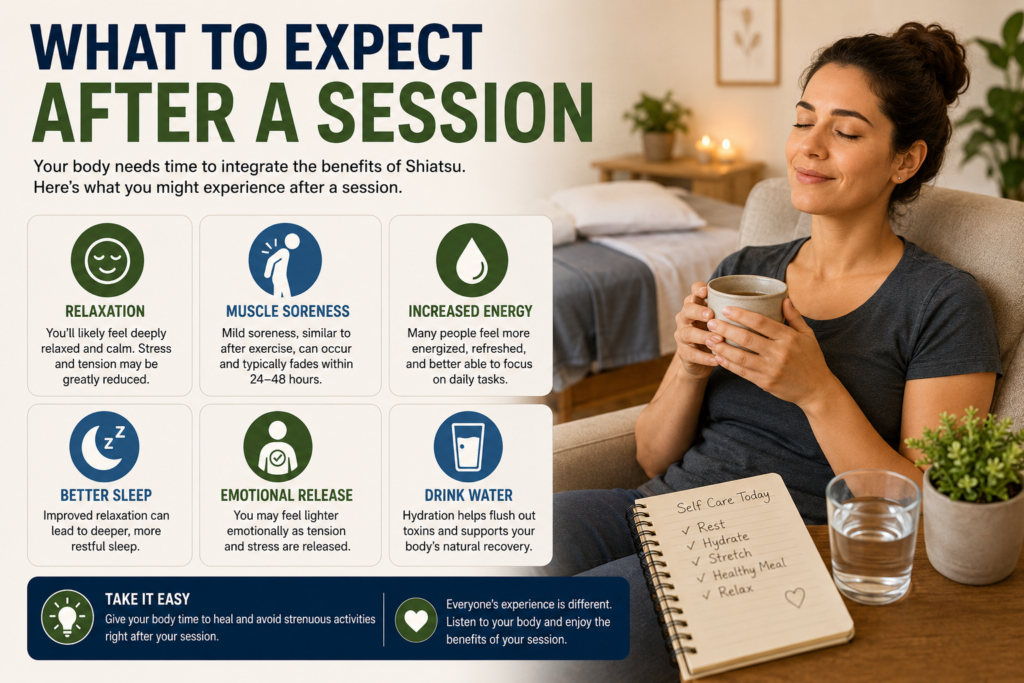
Mild tenderness, tiredness, or heaviness can occur after shiatsu, especially after firm pressure. Symptoms should stay mild and improve with rest, fluids, and gentle movement.
Short-Term Muscle Soreness
Muscles may feel tender for several hours or up to a day or two. This response is more likely when the practitioner uses strong pressure on tight areas. The discomfort should resemble mild post-exercise soreness, not sharp, burning, or worsening pain.
The person can help the body recover by drinking water, taking a warm shower, and avoiding intense exercise until the soreness settles. Gentle walking and light stretching may help, but stretching should stop if it increases pain. Rest also helps if the session causes sleepiness or fatigue.
During future sessions, the client should tell the practitioner when pressure feels too strong. Shiatsu should not cause damaging pain, and the practitioner can adjust the pressure, location, or technique.
When to Seek Medical Advice
A person should contact a healthcare professional if pain becomes severe, keeps increasing, or does not improve within a few days. Medical advice is also important for new numbness, weakness, severe swelling, trouble walking, or pain that spreads down an arm or leg.
Urgent care may be needed for trouble breathing, fainting, chest pain, sudden confusion, or a serious allergic reaction. These symptoms do not represent typical post-massage soreness.
A person should also seek medical help for redness, warmth, swelling, drainage, or fever near an area treated during the session. People with bleeding disorders, recent surgery, fragile bones, or serious medical conditions should discuss shiatsu with a healthcare professional before booking a session.
Choosing a Qualified Practitioner
A trained practitioner can adjust pressure, stretching, and positioning to reduce discomfort. Patients should check credentials, ask about safety, and choose someone who welcomes clear feedback during the session.
Training and Professional Credentials
Shiatsu training standards vary by country, so patients should verify the practitioner’s education and professional registration. A qualified practitioner should have completed formal shiatsu training that covers anatomy, safe pressure, stretching, hygiene, and common health conditions.
Professional membership can provide another useful check. For example, patients can review guidance from the Wikipedia overview of shiatsu, then confirm local licensing or registration through a recognized complementary therapy organization.
The practitioner should also ask about medical history before starting. This includes injuries, recent surgery, osteoporosis, blood-clotting problems, cancer treatment, pregnancy, fever, and medicines that increase bleeding risk. A practitioner who ignores these details may not provide safe care.
Questions to Ask Before Booking
Patients can ask the following questions before booking:
- What training and certification do you have?
- How long have you practiced shiatsu?
- Do you have experience with the patient’s health condition or injury?
- How will pressure be adjusted if the treatment hurts?
- Can the patient stop the session at any time?
- What clothing and positioning does the session require?
The practitioner should explain that shiatsu may feel firm or tender but should not cause sharp, burning, or severe pain. The patient should be able to request less pressure, avoid a painful area, or end the session without pressure to continue. A clean, professional setting and clear consent process also matter.
FAQs
Does shiatsu massage hurt?
Shiatsu should not cause sharp or severe pain. Firm pressure may feel intense, especially over tight muscles, but the sensation should remain manageable and begin to ease as the area relaxes.
Can soreness occur afterward?
Some people develop mild muscle soreness or tenderness after a session. This usually improves within 24 to 48 hours. Drinking water, resting, and using gentle movement may help.
What should someone do if the pressure hurts?
The client should tell the therapist immediately. The therapist can reduce the pressure, change the technique, or avoid a sensitive area. A client should not stay silent or try to tolerate severe pain.
Does shiatsu use massage oil?
Shiatsu usually takes place with the client fully clothed and does not require oil. The therapist uses steady finger, thumb, palm, or elbow pressure, along with stretches and movement.
Who should seek medical advice first?
People with a fever, recent surgery, serious illness, a blood-clotting disorder, or an injury should speak with a health professional before receiving shiatsu. Pregnant clients should choose a therapist trained in prenatal care and discuss treatment with their medical provider.
Conclusion
Shiatsu massage should feel like firm, controlled pressure rather than sharp or severe pain. Some areas may feel tender, especially when muscles are tight, but the pressure should remain manageable throughout the session.
Clients should tell the practitioner if the pressure feels too strong, causes sharp pain, or creates numbness or tingling. The practitioner can adjust the technique, change the position, or avoid sensitive areas.
Mild muscle soreness may occur after treatment and often improves within 24 to 48 hours. Bruising or lasting pain is less typical and may require medical advice, especially after an injury or in people with certain health conditions.
Shiatsu may support relaxation, mobility, and relief from some muscle discomfort. It should complement medical care rather than replace it.

