A leg massager can make a long flight more comfortable, but travelers must follow baggage and battery rules. Most leg massagers are allowed on planes, and carrying one in hand luggage is usually the simplest option.
Security officers may inspect the device, while airline limits can affect larger models. Battery type, removable power packs, size, and the airline’s own policies all matter, especially on international trips.
Key Takeaways
- Most leg massagers can travel in carry-on baggage.
- Protect lithium batteries and check airline limits.
- Pack the device so security staff can inspect it easily.
Air Travel Rules for Leg Massagers
Most leg massagers can travel in either carry-on or checked baggage. Battery type, loose batteries, device size, and airline policies can affect how the device should be packed.
Carry-On Eligibility
TSA rules generally allow leg massagers in carry-on bags. Carry-on storage often works best for models with built-in or removable lithium-ion batteries because the device remains accessible during screening and the flight.
The traveler should turn off the massager and protect its power button from accidental activation. Any removable battery should stay installed in the device unless the airline or security officer gives different instructions. Spare lithium batteries and power banks must remain in carry-on baggage, with their terminals protected from contact with metal objects.
Keep the device easy to remove if security staff request an inspection. A large compression unit, foot massager, or model with air pumps may need to fit within the airline’s carry-on size and weight limits.
Checked Baggage Considerations
TSA generally permits many leg massagers in checked baggage, but battery rules still apply. A device containing a lithium battery should usually travel in the cabin when possible, especially if the battery can be removed.
| Device or battery type | Preferred packing location |
|---|---|
| Massager with a built-in lithium battery | Carry-on bag |
| Massager with a removable lithium battery | Carry-on bag, with the battery secured |
| Spare lithium battery or power bank | Carry-on bag only |
| Corded massager without a battery | Carry-on or checked bag |
When checking the device, the traveler should switch it off, prevent pressure on the controls, and cushion it against impact. The airline may apply stricter limits than TSA, so the traveler should check the carrier’s battery and baggage rules before departure.
Battery and Power Requirements
A leg massager’s battery type and watt-hour rating affect how travelers pack it. Carry-on storage usually offers the safest option for devices with lithium-ion batteries, while corded models avoid battery limits but still need to meet airline and security rules.
Lithium-Ion Battery Limits
Most portable leg massagers use rechargeable lithium-ion batteries. The battery should remain installed in the device or stay protected from damage and accidental activation. Spare lithium batteries and power banks must travel in carry-on baggage, not checked baggage.
Airlines commonly allow lithium-ion batteries rated up to 100 watt-hours (Wh) without approval. Devices with batteries from 101 to 160 Wh may require airline approval, and batteries above 160 Wh generally cannot travel on passenger aircraft. The watt-hour rating should appear on the battery, device, or manual.
| Battery rating | Typical rule |
|---|---|
| Up to 100 Wh | Usually allowed in carry-on baggage |
| 101–160 Wh | Airline approval may be required |
| Over 160 Wh | Generally not allowed |
The traveler should check the airline’s policy before departure, especially for international flights. Security staff may inspect the device, so keeping it easy to remove can reduce delays.
Corded and Rechargeable Models
A corded leg massager has no built-in battery and avoids lithium-battery limits. It can usually travel in carry-on or checked baggage, but the traveler should pack the power cord neatly and protect the controls from damage. The device must also fit within the airline’s size and weight limits.
A rechargeable model should travel in carry-on baggage when possible. The traveler should switch it off completely, prevent the controls from being pressed, and avoid packing it with loose metal objects. A protective case can help prevent damage during screening and handling.
The traveler should not assume that a USB cable removes battery concerns. If the massager contains a lithium-ion battery, its watt-hour rating still matters even when it charges through USB-C. A power bank used with the device must also stay in the carry-on bag.
Security Screening Expectations
A leg massager may need extra screening because it contains electronics, a motor, or a lithium battery. Travelers can reduce delays by keeping the device easy to access and knowing its battery details.
Removing the Device at Checkpoint
The traveler should place the leg massager where security officers can inspect it quickly. If the screening officer asks, the traveler may need to remove the device from the carry-on bag and place it in a separate bin.
A battery-powered model should be turned off and protected from accidental activation. Spare lithium batteries and power banks must stay in carry-on baggage, with their terminals protected from contact with metal objects. The device should not block the officer’s view of other items.
| Device feature | Practical screening step |
|---|---|
| Built-in battery | Keep the massager accessible for inspection |
| Removable battery | Follow the airline’s battery-packing rules |
| Spare battery or power bank | Pack it in carry-on baggage and protect the terminals |
| Large or unusual design | Allow extra time for manual inspection |
Security officers can inspect any item and make the final decision at the checkpoint. Airline rules may also limit battery size or the use of certain devices during the flight.
Medical Device Questions
A traveler carrying a leg massager for a medical condition should explain its purpose clearly if an officer asks. The traveler can carry a doctor’s note or prescription information, although screening officers may not require it for a standard personal massager.
The note should state the traveler’s name, the medical need, and the device’s purpose. It should not replace the airport’s screening process. The traveler may still need to remove the massager, show its battery label, or allow a physical inspection.
If the device uses a lithium-ion battery, the traveler should check its watt-hour rating before flying. Batteries under 100 watt-hours generally do not need airline approval, but the airline may apply stricter rules. A traveler with a larger battery should contact the airline before departure.
Airline Size and Weight Restrictions
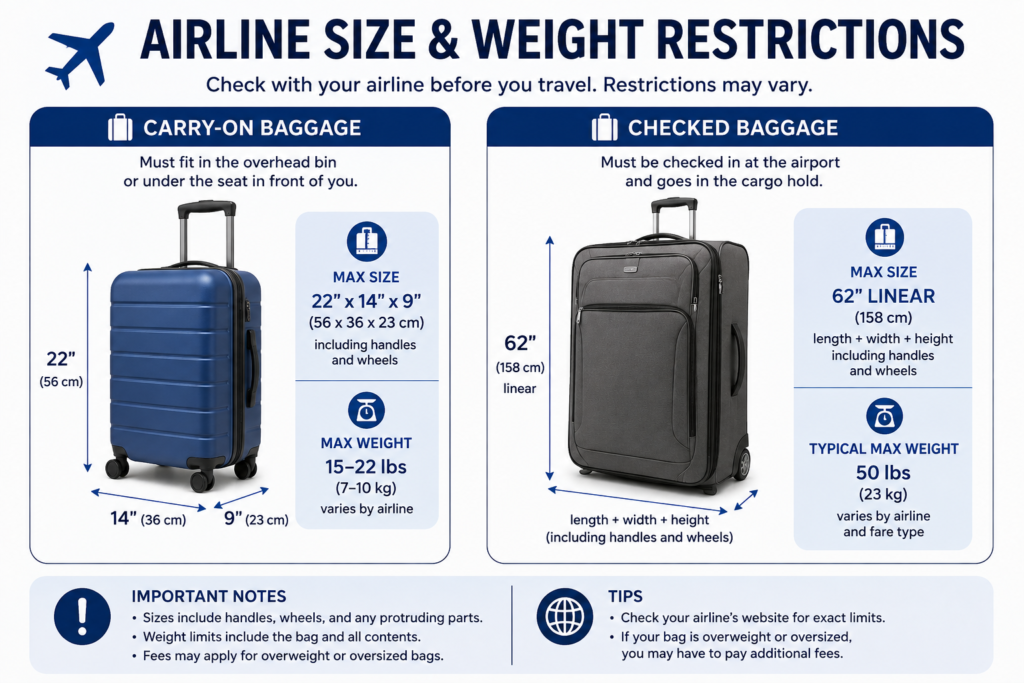
A leg massager must fit within the airline’s personal-item or carry-on limits, and its battery must meet airline and safety rules. Travelers should check the carrier’s exact dimensions and weight limits before packing.
Personal Item and Carry-On Dimensions
Airlines set their own size limits. A compact leg massager may fit under the seat as a personal item, but larger models often require a standard carry-on bag. The device should fit completely inside the bag without forcing the zipper closed or blocking other items.
| Packing option | Main requirement |
|---|---|
| Personal item | Must fit under the seat and stay within the airline’s listed dimensions |
| Carry-on bag | Must fit in the overhead bin and meet the airline’s size and weight limits |
| Oversized device | May need to travel as checked baggage, subject to battery rules |
Travelers should measure the packed massager, including its case, cords, charger, and attachments. A massage boot or compression device can take more space than its motor unit, so the full packed size matters.
Overhead Bin Storage
A leg massager stored in an overhead bin should remain inside a closed, protective bag. The bag prevents buttons from being pressed and protects the device from damage when other passengers place luggage nearby.
Weight limits vary by airline. Some carriers publish a maximum carry-on weight, while others mainly enforce size and the traveler’s ability to lift the bag safely. A heavy massager may make the entire bag exceed the limit.
If the device contains a lithium battery, keeping it in the cabin is usually the safest choice. Spare batteries and loose power banks generally must remain in carry-on baggage, with their terminals protected. The traveler should check the airline’s policy and the battery’s watt-hour rating before departure.
Using a Leg Massager During a Flight
A leg massager may be allowed in carry-on baggage, but using it onboard depends on the device, cabin space, noise level, and airline rules. Passengers should keep the device stored during boarding, takeoff, landing, and any period when the crew gives different instructions.
Cabin Crew Approval
The passenger should ask a flight attendant before turning on a leg massager. Airlines may restrict electronic devices during parts of the flight, and crew members can require the device to remain off at any time. A massager that uses a lithium battery should stay safely stored when not in use.
The passenger should follow the airline’s battery rules. Spare lithium batteries and power banks generally belong in carry-on baggage, while batteries installed in the device must remain protected from accidental activation. The passenger should also check the airline’s current rules and the TSA guidance for massagers before traveling.
A medical need does not automatically allow use during the flight. If the device supports treatment for a health condition, the passenger should carry any needed medical information and contact the airline before departure.
Noise, Space, and Passenger Comfort
The passenger should use a leg massager only if it fits fully within the assigned seating area. It should not block the aisle, reduce access to emergency equipment, extend into another passenger’s space, or interfere with the seat in front. Compact models work better than large boots, rollers, or inflating units.
Noise can disturb nearby passengers, especially in a quiet cabin. The passenger should choose the lowest effective setting and stop using the device if another passenger or crew member raises a concern. Vibration can also travel through the seat, so placing a thin layer of clothing beneath the device may reduce contact noise.
The passenger should keep cables secured and avoid connecting the device to an onboard outlet unless the airline permits it. A fully charged battery reduces the need for cords and helps the passenger pack the massager quickly if the crew requests it.
International Travel Considerations
International travelers should check both the destination country’s customs rules and the airline’s battery policy. They should also confirm that the device works with the local voltage and plug type before packing it.
Destination Country Rules
Most countries allow a personal leg massager for personal use, but customs officers may inspect it. A traveler should keep the device clean, pack it with its charger, and avoid carrying several identical units, which could suggest commercial use.
If the massager contains a lithium-ion battery, the traveler should check the airline’s rules before departure. Spare batteries and power banks usually must stay in carry-on baggage, with terminals protected against short circuits. A built-in battery may have different packing rules, so the device manual and airline policy should be checked.
The traveler should also review the destination country’s customs website for restrictions on electrical devices, medical equipment, or radio-enabled products. The TSA personal-item guidance can help with the departure flight, but it does not replace the rules of the destination country or connecting airports.
Voltage and Plug Compatibility
A leg massager made for one electrical system may not work safely in another. The traveler should read the label or manual for its input range:
- 100–240V, 50/60Hz: Usually works worldwide with a plug adapter.
- Single-voltage device: Needs a suitable voltage converter or transformer.
- USB-powered device: Usually works with a compatible travel adapter and charger.
A plug adapter changes the plug shape, but it does not change voltage. A voltage converter changes voltage, yet it may not support the massager’s motor or power rating. The traveler should compare the device’s wattage with the converter’s rating before use.
The safest option is often a dual-voltage massager with the correct plug adapter. The traveler should not use a damaged charger, force a plug into an outlet, or charge the device unattended.
Packing Tips for Safe Transport
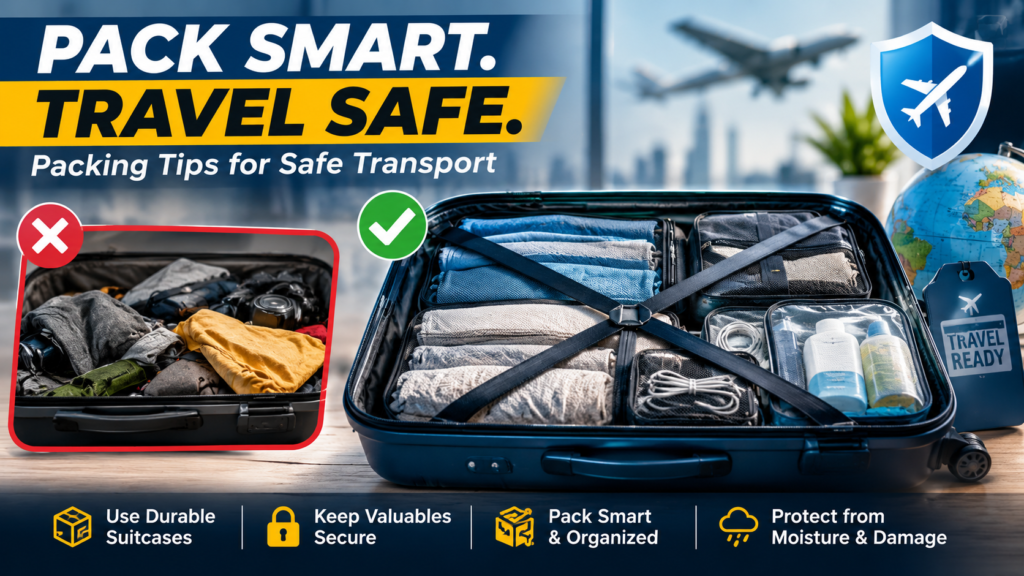
Travelers should pack a leg massager in their carry-on bag when possible. This keeps the device accessible if security officers need to inspect it and protects it from rough handling.
If the massager uses a removable lithium-ion battery, the battery should stay in the carry-on bag. The traveler should remove it if the device allows and protect the terminals from contact with metal objects.
| Part | Packing advice |
|---|---|
| Massager | Turn it off and place it in a protective case |
| Battery | Keep spare batteries in carry-on baggage |
| Charger | Coil the cable neatly and prevent damage |
| Attachments | Pack them together so they do not get lost |
The traveler should prevent the device from turning on during transport. A case, sleeve, or soft clothing can protect the controls and reduce damage.
Airlines may apply stricter rules, especially for large devices or batteries above standard limits. The traveler should check the airline’s baggage policy before departure and confirm current requirements with the relevant aviation authority.
FAQs
Can a traveler bring a leg massager on a plane?
Yes. TSA generally allows electric leg massagers in both carry-on and checked baggage. The airline may apply additional size, weight, or packing rules.
Should it go in a carry-on bag?
A carry-on bag is usually the safest choice, especially if the massager contains a lithium-ion battery. It stays accessible for inspection and avoids the risks linked to checked baggage.
What battery rules apply?
Spare lithium batteries and power banks must travel in carry-on baggage. Devices with installed batteries should remain switched off and protected from accidental activation. Batteries rated up to 100 watt-hours are generally allowed; larger batteries may need airline approval.
Can the battery be removed?
If the battery is removable, the traveler should check the airline’s instructions. A removed lithium battery must travel in carry-on baggage, with its terminals protected from contact with metal objects.
Can security inspect the massager?
Yes. Security officers may ask the traveler to remove it from the bag or turn it on. Keeping the device clean, charged, and packed where it can be reached may make screening easier.
Do international flights follow the same rules?
Not always. The traveler should check the departure airport, destination country, and airline before flying. Their rules may differ from U.S. TSA requirements.
Conclusion
Travelers can generally bring a leg massager in either carry-on or checked baggage. The device must pass security screening, and TSA officers can inspect or restrict any item when necessary.
If the massager contains a lithium battery, the traveler should follow airline and FAA battery rules. Carry-on baggage is usually the safer choice for spare or removable lithium batteries. The battery should remain protected from damage and accidental activation.
Before traveling, the passenger should:
- Check the airline’s baggage policy.
- Confirm the battery’s watt-hour rating.
- Pack removable batteries in carry-on baggage.
- Keep the device easy to remove for screening.
- Avoid using a noisy massager during the flight out of consideration for other passengers.
Airlines may apply stricter limits than general security rules. Checking the airline’s current guidance before departure can help prevent delays or a rejected item at the airport.