
Compression-based leg massagers can support recovery after hard training by promoting comfort and helping reduce the feeling of heavy, tired legs. They may suit runners, cyclists, strength athletes, and anyone who spends long hours on their feet.
Recovery leg massagers can help athletes manage soreness and improve comfort, but they do not replace sleep, nutrition, proper training, or medical care. Research suggests that these devices may support short-term recovery, while their effect on performance varies.
This guide explains how compression works, when athletes may benefit, how to choose a device, and how to use one safely. It also covers important limits and practical ways to add compression to a balanced recovery plan.
Key Takeaways
- Compression may ease soreness and leg fatigue after training.
- Research does not confirm major or lasting performance gains.
- Safe use requires proper fit and attention to warning signs.
How Compression-Based Recovery Works
Recovery leg massagers use controlled air pressure to squeeze the legs in timed patterns. This can support short-term comfort, reduce the feeling of heaviness, and help move fluid after training, but it does not replace sleep, food, hydration, or medical care.
Air Pressure Cycles
Most devices use inflatable chambers that fill and release in sequence. The chambers usually start around the foot or ankle and move upward toward the calf and thigh. This pattern creates gentle, repeated pressure rather than the direct kneading used in manual massage.
Athletes can usually adjust the pressure, timing, and treatment length. A lower setting may suit first-time users or people with post-workout tenderness. Higher pressure does not automatically produce better recovery and may cause pain, numbness, tingling, or skin irritation.
| Setting | Common use |
|---|---|
| Low pressure | First sessions or sensitive muscles |
| Moderate pressure | General post-training comfort |
| Short session | Testing tolerance |
| Longer session | Use only if the device instructions allow it |
The devices mainly affect how the legs feel. Research suggests they may provide small benefits for soreness and perceived recovery, while improvements in strength or performance remain less consistent.
Effects on Circulation and Fluid Movement
The squeezing action may help push venous blood and excess tissue fluid upward toward the torso. This process can temporarily reduce swelling and make tired legs feel lighter, especially after long periods of standing, travel, or intense exercise.
Compression does not “flush” all waste from muscles or guarantee faster healing. Its effects depend on pressure, fit, treatment time, and the athlete’s health. A properly fitted device should feel firm but not painful, and the skin should return to its normal color after use.
Athletes with known circulation problems, blood clots, uncontrolled heart failure, or unexplained leg swelling should seek medical advice before using compression equipment. They should stop treatment if they develop chest pain, sudden shortness of breath, severe pain, numbness, or unusual discoloration.
Potential Benefits for Athletic Recovery
Recovery leg massagers may help athletes manage soreness, reduce the feeling of heavy legs, and prepare the muscles for movement. Most devices use sequential air compression, which applies pressure from the feet upward and then releases it in cycles.
Post-Training Soreness
Compression devices may reduce perceived muscle soreness after hard training, especially when athletes use them during the first 24 to 48 hours after exercise. They may also help athletes feel less stiff after running, cycling, strength training, or long periods of competition.
The benefit likely comes from gentle pressure, relaxation, and improved movement of fluid in the limbs. However, these devices do not repair muscle damage or prevent delayed-onset muscle soreness. Athletes should treat them as a comfort and recovery aid, not as a replacement for sleep, food, hydration, or a planned training schedule.
A typical session lasts 15 to 30 minutes at a comfortable pressure. Stronger pressure does not guarantee better results and may cause numbness, pain, or skin irritation.
Perceived Leg Heaviness
Athletes may experience heavy, tired, or swollen legs after long training sessions, travel, or repeated events. Compression can make the legs feel lighter by applying rhythmic pressure and supporting the return of blood and fluid from the lower limbs.
This effect may matter most for endurance athletes, tournament players, and people who stand or sit for long periods. Some users report easier movement after a session, but the device does not directly increase strength or endurance.
Athletes should stop using the massager if they notice pain, tingling, unusual swelling, skin color changes, or worsening symptoms. Anyone with a history of blood clots, poor circulation, heart problems, or unexplained leg swelling should ask a health professional before using compression equipment.
Warm-Up and Cool-Down Support
A leg massager may support a cool-down by helping an athlete relax after exercise and reducing the sensation of tightness. It can fit into a broader routine that includes light walking, gentle mobility work, hydration, and adequate nutrition.
Some athletes also use low-pressure compression before training to increase comfort and awareness in the legs. It should not replace an active warm-up, which raises body temperature and prepares the joints and muscles for sport-specific movement.
Compression is most useful when the pressure feels even and comfortable. Athletes should follow the device instructions, avoid using it over open wounds or irritated skin, and choose a setting that allows normal sensation throughout the session.
What Research Says About Performance Outcomes
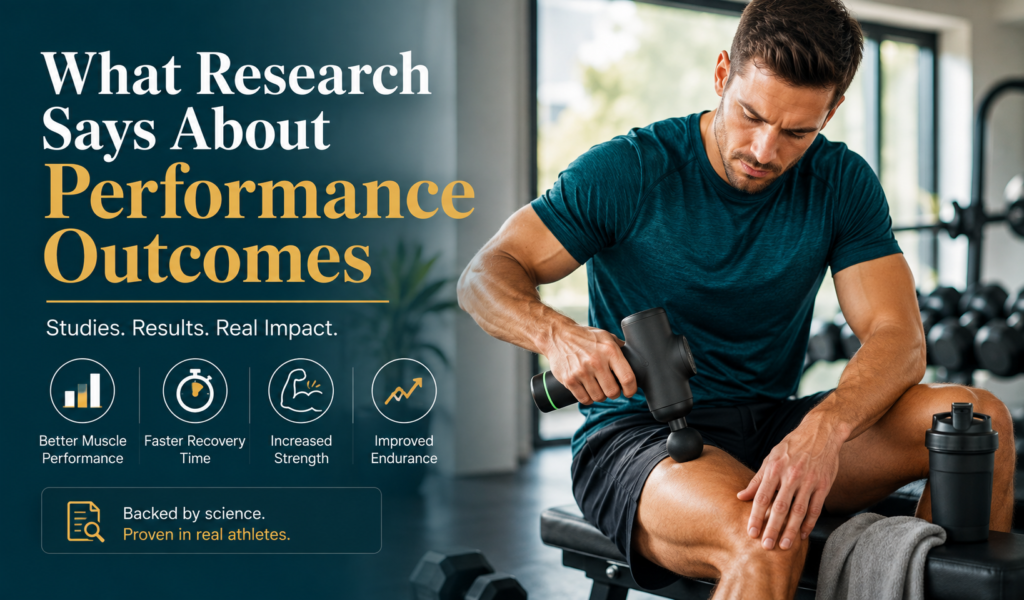
Leg massagers may improve how athletes feel after exercise, but evidence for direct performance gains remains limited. Research most consistently supports short-term changes in soreness, fatigue, and perceived recovery rather than large improvements in strength or endurance.
Recovery Markers
Studies of sports massage suggest that massage can reduce delayed muscle soreness and feelings of fatigue after demanding exercise. It may also improve an athlete’s sense of readiness by increasing comfort and reducing muscle tightness. These effects can help athletes return to training with less discomfort.
Leg massagers that use compression or rhythmic pressure may support fluid movement in the limbs and reduce the feeling of heavy legs. However, research does not show that these devices consistently speed muscle repair or restore full performance. Results also depend on the device, pressure, session length, and type of exercise.
| Outcome | Evidence for leg massagers |
|---|---|
| Perceived soreness | May improve in the short term |
| Feelings of fatigue | May decrease after exercise |
| Muscle damage and repair | No consistent improvement shown |
| Return to training | May help comfort, but does not replace rest |
Strength and Endurance Effects
Research has not found reliable evidence that massage directly increases strength, power, or endurance. Reviews of sports massage report little or no meaningful improvement in measures such as maximal strength, sprint performance, or repeated-effort ability immediately after treatment.
A leg massager may still support performance indirectly. If it reduces soreness, an athlete may move more comfortably during the next training session and maintain a more consistent schedule. Some promotional claims report specific gains in sprint ability, but those claims require careful review because results may come from small studies, different devices, or factors unrelated to the massager.
Athletes should treat these devices as recovery aids, not performance-enhancing tools. Sleep, adequate food, hydration, planned rest, and progressive training have stronger support for improving performance.
Best Uses by Training Situation
Recovery leg massagers can support short-term relief from muscle soreness, heaviness, and mild swelling after demanding exercise. They work best as an added recovery tool, alongside sleep, food, fluids, mobility work, and a suitable training plan.
After High-Volume Sessions
Athletes may use sequential compression after long runs, rides, tournaments, or high-repetition strength sessions. Air chambers inflate from the foot upward, creating gentle pressure that can reduce the feeling of heavy, tired legs. Some athletes also report less muscle soreness during the hours after training.
A typical session lasts 15 to 30 minutes at a comfortable setting. Higher pressure does not automatically produce better results. The athlete should stop if the device causes pain, numbness, tingling, skin color changes, or increased swelling.
Compression can help an athlete feel ready for light movement, but it does not repair damaged tissue or replace rest. Athletes with severe soreness, a suspected injury, or unusual swelling should seek medical advice rather than rely on a massager.
Between Competitions
During multi-day events, a leg massager may help athletes manage fatigue between races or matches. A short, low-to-moderate pressure session can provide relaxation and reduce the sensation of tight, congested legs without adding more physical stress.
Athletes should avoid using the device immediately after a serious injury or when swelling has no clear cause. They should also check the manual for correct placement and pressure, especially when using full-leg sleeves or boots.
The best timing depends on the sport and schedule. A 15-minute session after cooling down may suit one athlete, while another may prefer it later in the evening. Athletes should test the routine during training, not for the first time before an important event.
During Travel
Long periods of sitting can make the legs feel stiff and swollen. A compression massager used before or after travel may offer temporary comfort by applying rhythmic pressure to the legs. It cannot replace walking, ankle movement, or regular changes in position.
Athletes should stand and walk when possible, flex the ankles, and drink fluids according to their needs. They should pack a compact device only if they can use it safely and have access to a suitable power source.
People with a history of blood clots, circulation problems, uncontrolled high blood pressure, or certain heart conditions should ask a clinician before using compression equipment. Sudden one-sided swelling, warmth, redness, or leg pain requires prompt medical care rather than massage.
Choosing a Recovery Leg Massager
Athletes should match a leg massager to their recovery goals, body size, and training routine. Pressure control, full-leg coverage, easy transport, and noise levels can affect comfort and regular use.
Compression Settings
Most recovery leg massagers use air chambers that inflate and deflate in sequence. This action creates gentle pressure around the legs and may help reduce the feeling of heaviness after training. Athletes should choose a model with adjustable pressure rather than a device with one fixed level.
A useful unit should offer several pressure levels, massage patterns, and session times. Lower pressure may suit first-time users or athletes with sensitive legs, while higher pressure can feel more effective after hard workouts. More pressure is not always better. The device should feel firm but should not cause pain, numbness, tingling, or skin discoloration.
Athletes should also check whether the device targets the feet, calves, knees, and thighs. Full-leg models provide broader coverage, while calf-only models may work better for runners who want a smaller and simpler device.
Fit and Coverage
A proper fit helps the air chambers apply even pressure. Athletes should measure their legs and compare those measurements with the manufacturer’s size chart. A loose wrap may provide uneven compression, while a tight wrap can feel uncomfortable and restrict movement.
Adjustable straps, wide openings, and separate left and right sleeves make fitting easier. Some models fit only a narrow range of leg sizes, so athletes with larger thighs or strong calf muscles should check the maximum circumference before buying.
| Coverage | Best suited for | Key consideration |
|---|---|---|
| Calf only | Runners and cyclists | Lightweight and easy to position |
| Calf and thigh | Athletes seeking wider coverage | Needs careful sizing |
| Full leg with foot sections | Post-training recovery routines | Usually larger and less portable |
Portability and Noise
Athletes who travel should look for compact sleeves, a small control unit, and a rechargeable battery. A battery-powered model can work at competitions, gyms, or hotels without requiring a nearby outlet. The battery should last through several sessions, and the unit should charge with a common cable when possible.
Noise also affects where the device can be used. Some pumps produce a steady hum that may disturb others in shared spaces. Athletes should check independent noise tests or user reviews if they plan to use the massager at work, while traveling, or near sleeping family members.
The total weight matters as well. A full-leg system with multiple sleeves may offer more coverage but take up more space. A simpler calf model may provide easier daily use for athletes who value quick setup and storage.
Safe Use and Important Limitations
Recovery leg massagers may ease temporary soreness, swelling, and feelings of heavy legs, but they do not replace sleep, fluids, food, or medical care. Safe use depends on choosing suitable pressure, limiting session time, and stopping when pain or unusual symptoms occur.
Who Should Seek Medical Advice
People with possible blood-flow problems should ask a health professional before using an air-compression device. This includes anyone with a history of deep vein thrombosis, blood clots, pulmonary embolism, or severe peripheral artery disease. A clinician should also review use after recent surgery, a serious injury, or a long period of immobility.
Medical advice is important for people with uncontrolled high blood pressure, heart failure, severe diabetes-related nerve damage, or conditions that cause unexplained leg swelling. Reduced sensation can make it difficult to notice excessive pressure or skin injury.
Users should not place the boots over open wounds, infected skin, or a suspected fracture. They should stop immediately if they develop sharp pain, numbness, tingling, skin color changes, dizziness, chest pain, or sudden shortness of breath. Sudden one-sided swelling or calf pain needs urgent medical assessment, not massage.
Appropriate Session Length
Athletes should start with the device’s lowest comfortable setting and follow the manufacturer’s instructions. A first session of 10 to 15 minutes can show whether the pressure causes discomfort or skin irritation. If the body responds well, many users can use sessions of about 20 to 30 minutes.
Longer sessions do not necessarily improve recovery. Repeated high-pressure use may cause pain, bruising, numbness, or skin irritation, especially when the boots fit poorly. The legs should feel supported rather than painfully tight.
The device should be removed if the feet become cold, pale, blue, numb, or unusually painful. Athletes should check the skin after each session and avoid sleeping while wearing the boots unless a qualified clinician specifically recommends it. Recovery basics, including adequate sleep, hydration, nutrition, and rest, remain essential.
How to Integrate Compression Into a Recovery Plan
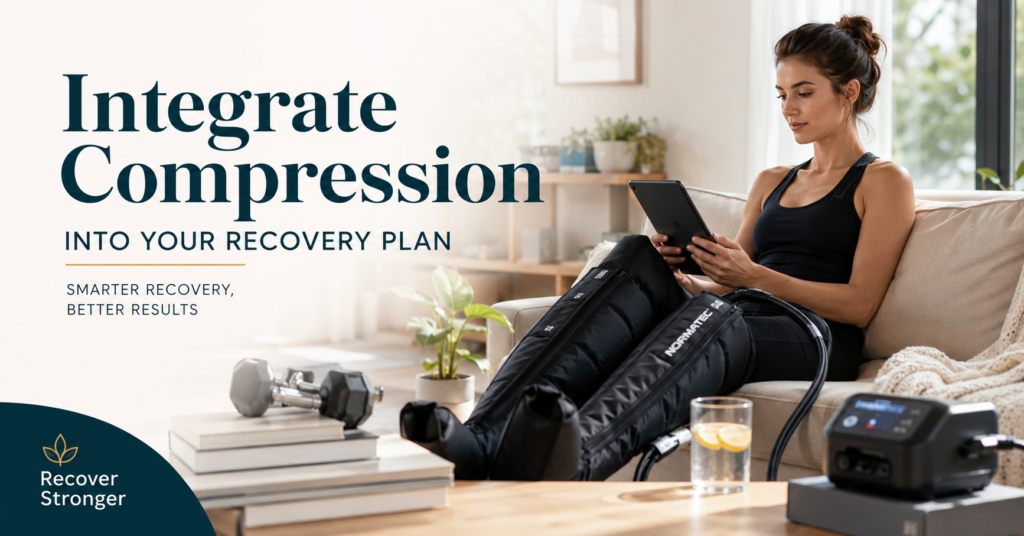
Compression works best as one part of a broader recovery routine. Athletes should pair it with adequate sleep, enough food and fluids, and realistic goals for soreness and performance.
Combining With Sleep and Nutrition
A recovery leg massager cannot replace sleep. Most adult athletes need at least seven hours per night, while heavy training may increase the need for longer or more consistent sleep. Using compression for about 20–30 minutes after training can support comfort, but it should not delay bedtime or reduce sleep time.
Nutrition also supports the repair process. Athletes should eat enough total calories and include protein throughout the day. A meal or snack with protein and carbohydrates after training can help restore energy and support muscle repair. Fluids replace water lost through sweat, while electrolytes may help after long or intense sessions.
A simple routine might include:
- After training: fluids, food, and a comfortable compression session
- Later in the day: light movement and normal meals
- At night: a regular sleep schedule without relying on the device
Athletes with medical conditions should seek advice from a qualified clinician before using strong compression.
Setting Realistic Expectations
Compression may reduce the feeling of heavy, tired, or sore legs for some athletes. Research also suggests possible short-term benefits for delayed-onset muscle soreness and perceived recovery, but results vary. A leg massager does not directly repair damaged tissue, prevent every injury, or replace proper training management.
Athletes should start with the manufacturer’s lowest comfortable setting and use the device for a short session. They can track soreness, swelling, mobility, and training quality over several weeks. This approach helps determine whether the device provides a useful benefit rather than relying on a single session.
The device should feel firm but not painful. Numbness, tingling, skin color changes, sharp pain, or increased swelling signals that the athlete should stop using it. Persistent swelling or one-sided leg pain requires medical evaluation, since those symptoms may have causes that compression cannot safely treat.
FAQs
Do recovery leg massagers help athletes?
They may help reduce the feeling of tired, tight, or swollen legs after training. Compression models use timed air pressure, while vibration or massage models target muscle comfort. They support recovery but do not replace sleep, hydration, nutrition, or proper training.
Can they reduce delayed-onset muscle soreness?
They may ease soreness and improve comfort, but they do not remove muscle damage or speed healing in every athlete. Results vary by device, workout, and user.
When should an athlete use one?
Many athletes use a massager after exercise or later the same day. Starting with a low setting for 10 to 20 minutes can help the user judge comfort and tolerance.
Are compression boots better than handheld massagers?
| Device | Common use |
|---|---|
| Compression boots | Full-leg pressure and swelling relief |
| Leg sleeves | Portable compression |
| Massage devices | Focused work on specific muscles |
The best choice depends on the athlete’s symptoms, budget, and recovery routine.
Can athletes use them every day?
Healthy adults can often use them as directed, but longer or stronger sessions do not always provide better results. The user should follow the manufacturer’s instructions and stop if pain, numbness, skin changes, or increased swelling occurs.
Who should avoid them?
People with suspected blood clots, serious circulation problems, uncontrolled heart conditions, or unexplained leg swelling should ask a health professional before use. An athlete with sudden pain, warmth, redness, or one-sided swelling needs medical care rather than massage.
Conclusion
Recovery leg massagers can support athletes after training by applying gentle, sequential compression to the legs. They may improve comfort, reduce the feeling of heaviness, and ease some delayed muscle soreness. The benefits vary by person and device.
These tools work best as part of a broader recovery plan that includes sleep, hydration, balanced nutrition, and rest. They do not replace medical care, proper training, or time needed for muscles to heal.
Athletes should choose a device that fits their needs, such as full-leg coverage for general recovery or targeted compression for specific areas. They should follow the manufacturer’s pressure and timing guidance.
People with circulation problems, blood clots, unexplained swelling, nerve damage, or recent surgery should ask a health professional before using compression equipment. Pain, numbness, skin color changes, or worsening swelling signals the need to stop use and seek medical advice.

