Neck massagers can ease muscle tension, but using them too often or at high intensity may increase soreness. Most healthy adults can use a neck massager once or twice daily for 10 to 15 minutes at a comfortable setting.
People who choose stronger massage should use it less often, such as three to five times per week, and allow rest between sessions. The full guide explains safe settings, warning signs, health conditions that require caution, and when professional care makes more sense.
Key Takeaways
- Short, gentle sessions usually offer the safest routine.
- Soreness, bruising, or numbness may signal overuse.
- Certain health conditions require medical advice before use.
Recommended Session Frequency
Most healthy adults can use a neck massager once or twice daily for 10–15 minutes. Shorter sessions, moderate pressure, and the device’s instructions help reduce the risk of soreness or irritation.
General Use Guidelines
A new user should begin with 5–10 minutes once a day on the lowest comfortable setting. If the neck feels normal afterward, the user can gradually increase the session to 10–15 minutes.
Many devices allow one or two sessions per day. A morning session may help with stiffness, while an evening session may ease muscle tension. The user should follow the manufacturer’s time limit, especially when the device includes heat.
The massager should move over the muscles beside the neck rather than directly over the spine, throat, or bony areas. The user should stop if they notice sharp pain, numbness, tingling, dizziness, skin irritation, or worsening symptoms.
Frequency By Massage Intensity
Session frequency should match the device’s pressure and the user’s response.
| Massage intensity | Suggested frequency | Session length |
|---|---|---|
| Low pressure or vibration | Once or twice daily | 5–15 minutes |
| Moderate kneading or compression | Once daily or 3–5 days per week | 10–15 minutes |
| High pressure or deep massage | 3–5 days per week | About 10 minutes |
Higher intensity does not require longer use. Rest days can help the muscles recover, particularly after deep massage or when mild soreness develops.
Adjusting For Individual Comfort
The user should reduce the session length or intensity if the neck feels tender later that day or the next morning. Mild, temporary muscle soreness can occur, but persistent pain indicates that the device may be too strong or used too often.
People with a recent neck injury, nerve symptoms, circulation problems, or other medical conditions should ask a health professional before regular use. The same applies to anyone taking blood-thinning medicine or experiencing unexplained neck pain.
Heat requires extra care because reduced sensation can make skin injury harder to notice. The user should check the skin during and after use, keep the temperature comfortable, and avoid sleeping while the heated massager is operating.
Session Length And Daily Limits
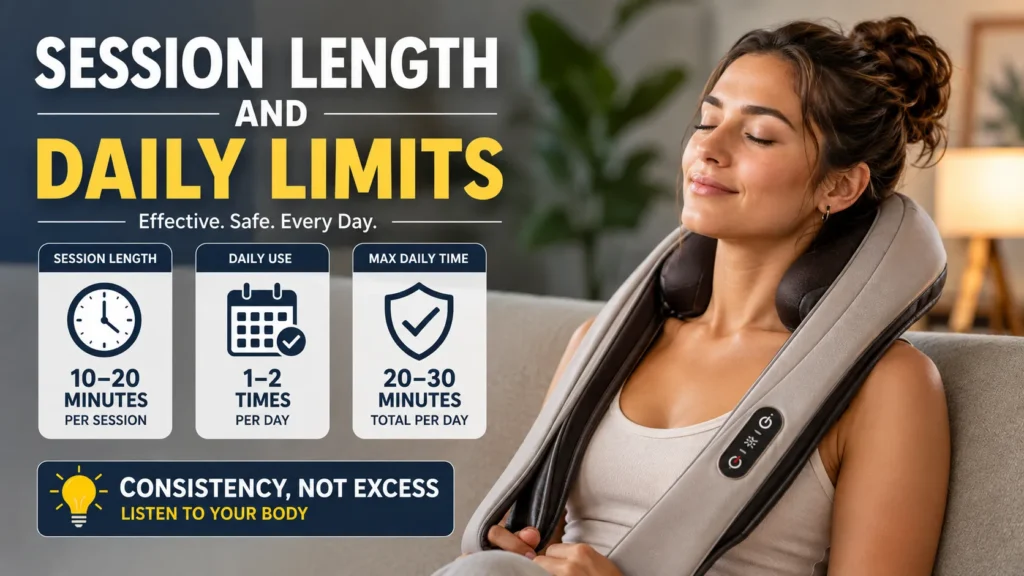
Short sessions usually provide enough time to ease muscle tension without irritating the skin or muscles. Most healthy adults can use a neck massager once or twice daily, while stronger settings require shorter sessions and more recovery time.
Typical Treatment Duration
Most neck massagers work best for 5 to 15 minutes per session. New users should start with 5 minutes on a low setting and increase the duration only if the neck feels comfortable afterward.
Many devices include an automatic shutoff at 10, 15, or 20 minutes. Users should follow the manufacturer’s limit rather than extending the session. Longer use can cause soreness, bruising, skin irritation, or muscle inflammation.
| Use case | Suggested duration |
|---|---|
| First use or sensitive muscles | 5–10 minutes |
| Typical low- or medium-intensity use | 10–15 minutes |
| Strong pressure or heat | 5–10 minutes |
A daily total of about 15 to 30 minutes suits many healthy adults. The user should stop sooner if pain, numbness, tingling, dizziness, or unusual tenderness develops.
Rest Periods Between Sessions
For gentle sessions, a person can usually wait several hours before using the device again. Two short sessions, such as one in the morning and one later in the day, place less stress on the tissues than one long session.
A stronger shiatsu, percussion, or heated setting may need more recovery time. Users should leave at least a full day between intense sessions, especially when the neck remains tender. They should not massage directly over the front of the neck, the spine, swollen areas, or injured skin.
If soreness lasts beyond a day, the user should reduce pressure, shorten the next session, or pause use until the area feels normal. Persistent pain, weakness, numbness, or headaches requires medical advice rather than more massage.
Matching Use To Your Needs
The right schedule depends on the type of discomfort, the device’s intensity, and how the neck responds afterward. Short, gentle sessions often suit regular tension, while stronger massage may require more recovery time.
Everyday Muscle Tension
People with mild, recurring neck tension can usually use a massager once or twice daily for 10 to 15 minutes. A low or moderate setting may help relax tight muscles after desk work, driving, or long periods of screen use.
The massager should move over the muscles beside the spine and across the shoulders. It should not press directly on the front or sides of the neck, where important blood vessels and other sensitive structures are located.
They should stop if the device causes sharp pain, numbness, tingling, dizziness, bruising, or a headache. If soreness lasts into the next day, they should reduce the pressure, shorten the session, or take a rest day.
Post-Workout Recovery
After exercise, a gentle session of 5 to 10 minutes may help ease tight shoulder and upper-back muscles. The user should wait until breathing and heart rate return to normal, especially after intense activity.
A low setting works better than forceful pressure on muscles that already feel sore. The massager should not be used over a fresh strain, swelling, bruising, or an area with sharp pain.
For deeper settings, three to five sessions per week may provide enough time for the muscles to recover. Drinking water and using light stretching can support recovery, but a massager cannot treat a serious injury.
Occasional Stiffness
Someone who develops stiffness only after travel, poor sleep, or a long workday may need a massager only when symptoms appear. One session of 10 to 15 minutes at a low setting is a reasonable starting point.
If the neck still feels tight, a second short session later that day may be appropriate. The user should avoid repeated treatments every few hours because extra pressure can cause temporary soreness or irritation.
Stiffness with weakness, arm numbness, severe headache, fever, or pain after an accident needs medical evaluation. People with a recent neck injury, nerve problems, circulation conditions, or blood-thinning medicine should ask a clinician before regular use.
Signs You May Be Overusing the Device
Mild muscle warmth or brief tenderness can occur after massage, but symptoms that last or worsen may signal excessive pressure, heat, or session length. Stopping use and allowing recovery can help prevent minor irritation from becoming a more serious problem.
Soreness And Skin Irritation
A neck massager may be applying too much pressure if soreness lasts more than a day, affects normal movement, or feels worse after each session. Bruising, swelling, numbness, tingling, or sharp pain also indicates that the device should be stopped.
Skin changes can result from prolonged contact, strong pressure, or heat. Redness that does not fade soon after use, burning, itching, blisters, or broken skin requires a break from the device. The user should avoid placing the massager over rashes, wounds, or irritated skin.
To reduce irritation, the user should lower the intensity, keep heated sessions short, and follow the device’s time limit. A typical session should last about 10 to 15 minutes, unless the manufacturer gives different instructions. Persistent pain, swelling, weakness, or loss of sensation warrants medical advice.
Headaches Or Increased Pain
A new headache during or after use may mean the device is pressing too hard, sitting too high on the neck, or irritating already tense muscles. The user should stop the session, remove heat, and rest if a headache develops. Repeated headaches after use require avoiding the device until a health professional provides guidance.
Increased neck pain, pain spreading into the shoulder or arm, dizziness, nausea, or changes in vision are not normal signs of effective massage. These symptoms may require prompt medical assessment, especially after a neck injury or when numbness and weakness occur.
The user should not try to push through worsening symptoms or increase the device’s pressure to treat them. A lower setting, shorter sessions, and at least one recovery day may help with mild muscle tenderness, but persistent or severe symptoms need professional care.
Safety Considerations And Contraindications
A neck massager may ease muscle tension, but pressure and heat can worsen some conditions. People with certain medical problems should seek professional advice, while anyone with warning symptoms should stop using the device.
Medical Conditions That Require Advice
People with arthritis, osteoporosis, spinal problems, nerve disorders, or recent neck injuries should ask a clinician before using a neck massager. The same applies to anyone recovering from surgery or physical trauma.
Medical advice also matters for people who have:
- A blood-clotting disorder or take blood thinners
- A pacemaker or other implanted device, especially with electrical stimulation
- Poor circulation or reduced skin sensation
- Severe migraines or unexplained dizziness
- Cancer, infection, or an inflammatory condition affecting the neck
- Pregnancy, particularly when the device uses strong pressure or heat
People with diabetes or nerve damage may not feel excessive pressure or heat. They should use extra caution and check their skin after each session. A clinician can advise whether a specific device, setting, and session length are appropriate.
When To Avoid Neck Massage
A person should not use a neck massager over open wounds, rashes, bruises, swelling, burns, or areas with reduced sensation. They should also avoid the front and sides of the neck, where forceful pressure may affect sensitive structures. The device should never cause sharp pain, numbness, tingling, weakness, nausea, or dizziness.
Use should stop immediately if symptoms develop during a session. Medical care may be needed for severe headache, fainting, trouble speaking, vision changes, chest pain, breathing difficulty, or sudden weakness. These symptoms can signal a serious problem and should not be treated with massage.
People with a fever or active infection should wait until they recover. A massager should not replace medical evaluation for ongoing neck pain, pain after an accident, or symptoms that spread into an arm.
Choosing Settings And Techniques
A neck massager works best when it uses gentle pressure, a low speed, and correct placement. Short sessions can reduce muscle tension without irritating the skin, muscles, or nerves.
Pressure And Speed Selection
The user should start with the lowest pressure and slowest speed for the first few minutes. The setting should feel comfortable, warm, or mildly soothing—not sharp, painful, or deeply bruising. If the device has heat, a low setting can improve comfort, but the user should stop if the skin becomes very hot or red.
Most sessions should last 10 to 15 minutes. The user can increase intensity gradually if the muscles tolerate it, but stronger pressure does not always provide better relief. A massage gun should use a low speed around the neck, and its head should not press on the front or sides of the throat.
The user should stop immediately if the device causes numbness, tingling, dizziness, headache, swelling, or increasing pain. People with neck injuries, nerve problems, blood-clotting conditions, or other health concerns should ask a healthcare professional before use. General information about massage safety is also available through massage therapy guidance.
Proper Placement Around The Neck
A wraparound massager should rest on the muscles beside the cervical spine, not directly on the spinal bones. The massage nodes should sit on the back and upper sides of the neck, where the muscles connect with the shoulders. The user should adjust the straps so the nodes touch the muscles without forcing them inward.
The device should stay away from the front of the neck, throat, jaw, and the area directly over the spine. A massage gun should use a soft attachment and light pressure on the upper shoulders and large muscles at the base of the neck. It should not be used on the bones, joints, or the head.
The user should keep the neck in a neutral position rather than bending it forward during treatment. Checking the skin and muscles after each session can help identify excessive pressure or heat early.
When To Consult A Healthcare Professional
A neck massager may ease simple muscle tension, but it should not replace medical care. A healthcare professional can assess symptoms that persist, spread to other areas, follow an injury, or appear suddenly and severely.
Persistent Or Radiating Symptoms
A person should arrange a medical evaluation if neck pain lasts more than a few days, keeps returning, or worsens despite rest and gentle use. The person should stop using the massager if it causes increasing soreness, numbness, tingling, weakness, or reduced movement.
Pain that travels from the neck into the shoulder, arm, or hand may involve an irritated nerve. Medical care becomes more important when symptoms include:
- Numbness or pins-and-needles
- Arm or hand weakness
- Trouble with balance or walking
- Severe headaches, dizziness, or vision changes
- Loss of bladder or bowel control
People with a recent injury, nerve condition, circulation problem, or chronic spinal disorder should ask a healthcare professional before using a neck massager regularly. They may need a different treatment or should avoid pressure and heat.
Sudden Or Severe Neck Pain
Sudden, severe neck pain requires prompt medical advice, especially after a fall, crash, sports injury, or other impact. A person should not massage the area until a clinician rules out a serious injury.
Emergency care may be needed when neck pain occurs with weakness, numbness, trouble speaking, fainting, confusion, chest pain, or difficulty breathing. A severe headache, fever, stiff neck, or sensitivity to light also needs urgent assessment because it may signal an infection or another serious condition.
Even without these warning signs, intense pain that prevents normal movement or sleep should receive medical attention. Heat and massage can sometimes hide worsening symptoms, so a person should follow professional advice before restarting the device.
FAQs
Can someone use a neck massager every day?
Many healthy adults can use one daily if each session lasts about 10–15 minutes. They should follow the device instructions and stop if pain, bruising, numbness, or lasting soreness occurs.
How many times per day is safe?
One session is often enough. Some people may use a second short session later in the day, but longer or more frequent use can increase soreness and skin irritation.
Should beginners start slowly?
Yes. Beginners should use the lowest comfortable setting for about 5–10 minutes. They can increase the time only if the neck feels normal afterward.
Can a neck massager treat neck pain?
It may ease muscle tension, but it does not treat every cause of neck pain. Someone with severe, sudden, or persistent pain should seek medical advice instead of relying on a massager.
Who should ask a health professional first?
People with recent neck injuries, nerve symptoms, blood-clotting problems, or major medical conditions should ask a health professional before use. They should also avoid placing strong pressure on the front or sides of the neck.
Conclusion
Most healthy adults can use a neck massager once or twice a day for 10–15 minutes. A lower setting and shorter session can help new users assess how their body responds.
People who use stronger pressure or heat may benefit from limiting use to three to five sessions per week. The device should not cause sharp pain, numbness, bruising, dizziness, or lasting soreness. If these symptoms occur, use should stop.
A neck massager should support comfort, not replace medical care. People with neck injuries, nerve problems, blood-clotting conditions, or unexplained pain should ask a health professional before using one.