Neck traction devices gently stretch the cervical spine to reduce pressure and improve mobility. People often use them for short-term relief from neck tension, stiffness, or discomfort linked to prolonged sitting. They do not treat every cause of neck pain, so users should seek medical advice for severe, lasting, or worsening symptoms.
The best neck traction device should provide a controlled stretch, fit securely, and feel comfortable without causing pain, numbness, or dizziness. Key buying factors include adjustability, support, ease of use, and whether the device suits the user’s condition. I also recommend checking medical guidance before using traction, especially after an injury or when symptoms spread into the arms.
I evaluated neck traction devices for comfort, stability, adjustability, and practical daily use to identify the options that provide the most useful support.
Best Neck Traction Devices
I selected these neck traction devices based on their design, comfort, adjustability, and ease of use. My list includes options for different needs and budgets.
ComforTrac Deluxe Cervical Traction Kit

I recommend this adjustable neck traction kit for shoppers who want a sturdy home device with a padded headrest and controlled pressure.
Pros
- Comfortable memory foam headrest
- Three incline settings for different neck positions
- Hand pump and quick-release control feel easy to use
Cons
- Bulky compared with simpler stretchers
- Some users reported damage to the plastic base
- Best used with guidance from a medical professional
I found the headrest comfortable during use, and the frame held my head securely. The three angle settings gave me useful control over the position, while the hand pump let me increase pressure gradually.
The quick-release button made it easy to reduce the traction force with one hand. I also liked the included carrying case, although the unit still feels fairly large for storage or travel.
Customer feedback is generally positive, with a 4.1-star rating from more than 1,500 reviews. However, reports of shipping damage and a broken plastic connection mean I would inspect the unit carefully before use.
Because neck traction may not suit every condition, I would ask a health professional whether this device is appropriate. I would also start with light pressure and stop if I noticed increased pain, numbness, or weakness.
iSTIM WeTrac Neck Traction Device

I recommend the iSTIM WeTrac for buyers who want adjustable neck traction at home and can use it carefully.
Pros
- I could adjust the angle and traction level to suit my comfort.
- The knob offered smooth control during use.
- Its carrying bag made storage and travel easier.
Cons
- Releasing the pressure felt too fast and needed extra care.
- The device may feel uncomfortable during longer sessions.
- Customer feedback is mixed, with a 3.9-star rating.
I found the setup simple because the device required no assembly. After seating my head firmly, I turned the knob slowly and adjusted the support until the stretch felt manageable.
The adjustable wedges helped me change the angle, which made it easier to find a comfortable position. I liked the manual control, but I avoided turning the knob while the device was releasing pressure, as the instructions advise.
This traction device felt useful for short sessions after desk work. However, I would use it cautiously because some buyers reported neck injuries during release, while others found it effective for stiffness and nerve pressure.
At 9.3 pounds, the WeTrac is sturdy but not especially light. The included travel bag helps, and the device may qualify for FSA or HSA spending accounts. Anyone with a neck injury or medical condition should ask a health professional before using it.
Norespnea Electric Neck Traction Device
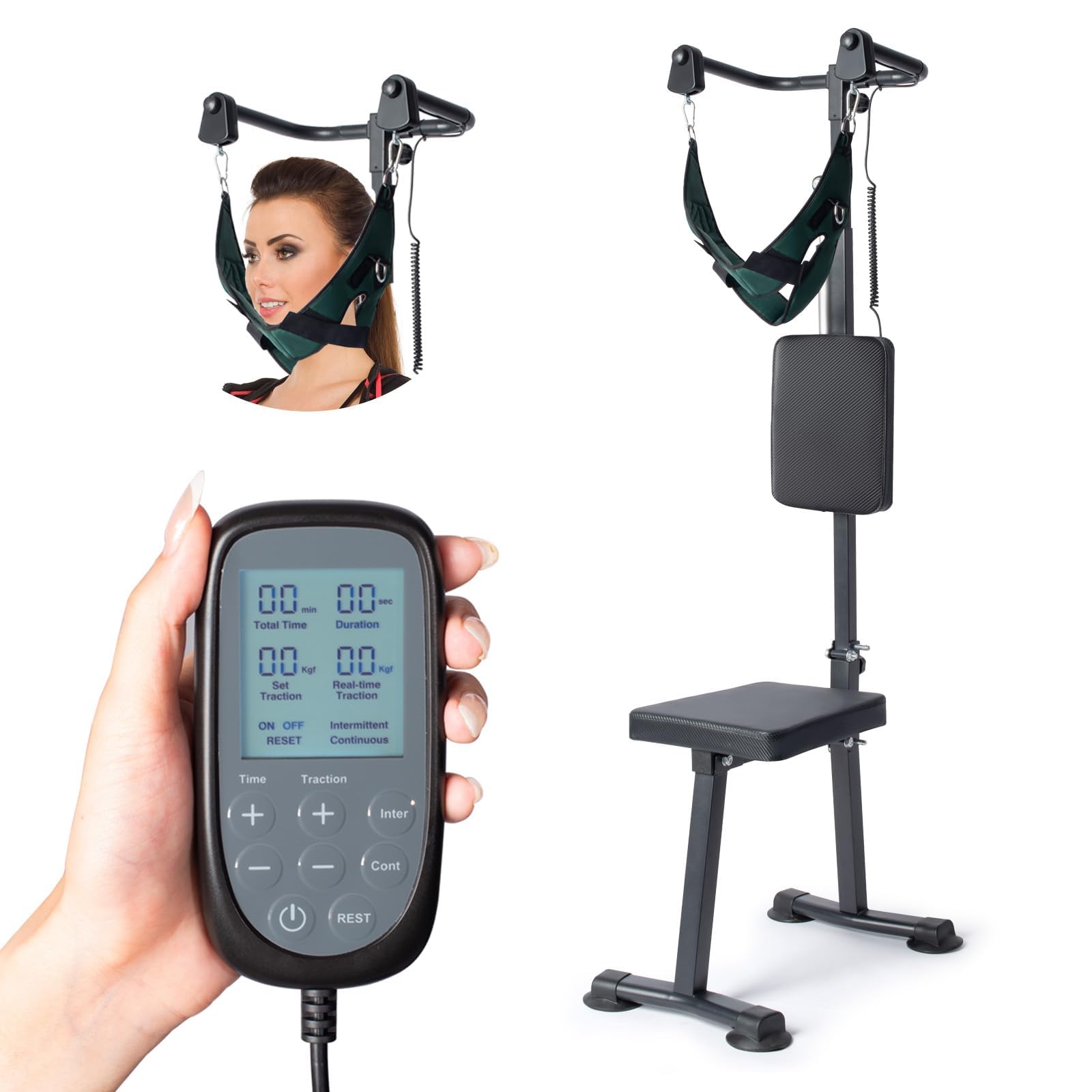
I recommend this device for shoppers who want adjustable, seated neck traction at home and prefer electric controls.
Pros
- I could choose between continuous and intermittent traction.
- The padded seat and back supported me during use.
- The screen made force and time settings easy to monitor.
Cons
- Its large frame requires dedicated floor space.
- The electric design may feel complex at first.
- I would seek medical advice before using it for a neck condition.
The seated design made setup more convenient than traction devices that require lying down. I started with a short, low-force session, as the instructions suggest, and adjusted the settings gradually.
I liked the choice between steady pulling and a cycle that releases pressure briefly. The controls also helped me track the session instead of guessing how long it had run.
The steel frame felt sturdy, but it also made the unit heavy and difficult to move. The cushions added comfort, although the overall size may not suit a small room.
Some buyers said the device helped them continue traction at home after paying for professional treatments. Because neck traction may not suit every condition, I would discuss this product with a health professional before use, especially for spinal stenosis, nerve problems, or recent injury.
Voluart Neck Traction Device
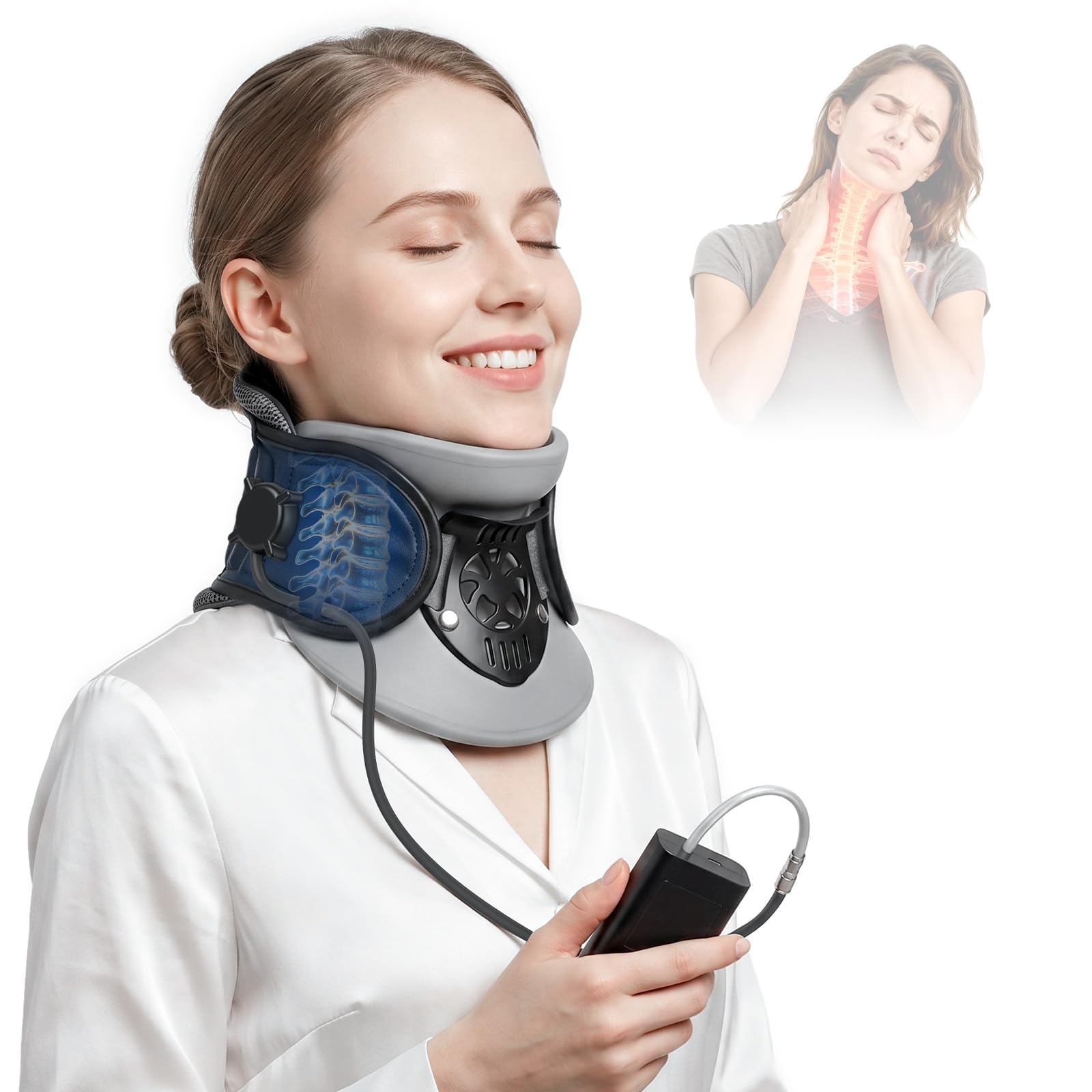
I found this device easy to set up and useful for a gentle neck stretch, but its fit and pump quality may vary between users.
Pros
- Built-in pump makes inflation simple.
- Adjustable design supports different neck sizes.
- Soft, breathable material feels comfortable during short sessions.
Cons
- The stretch may feel too mild for some users.
- People with shorter or smaller necks may struggle to get a good fit.
- Several reviews mention pump or valve problems.
I liked that I could adjust the pressure without manually inflating the device. The support felt gentle rather than forceful, which made it easier to use while resting at home.
The fit was less consistent. Although it has a wide adjustment range, users with smaller or shorter necks may find that it does not sit correctly. I would start with low pressure and short sessions.
Customer feedback is mixed. Some users report reduced stiffness and simple operation, while others received units with faulty pumps or missing parts. Its 3.8-star rating from 18 reviews reflects that uneven experience.
I would consider the Voluart for mild, occasional neck tension, especially if I wanted an air-powered design. I would check the fit carefully and stop using it if it causes pain, numbness, dizziness, or increased discomfort.
ELESIK Inflatable Neck Traction Device
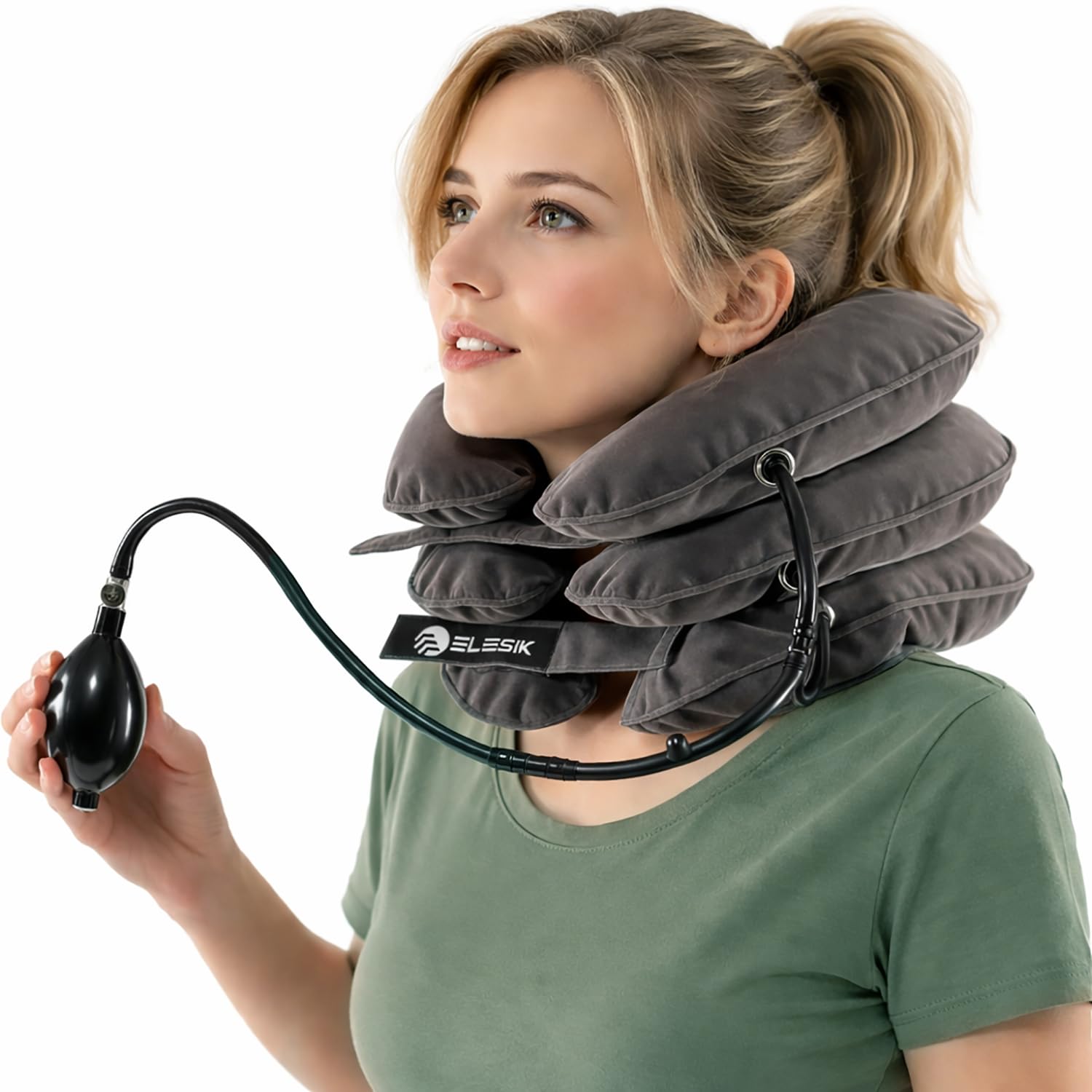
I recommend this device for people who want adjustable, portable neck support for mild stiffness after desk work or travel.
Pros
- I could control the stretch by adding or releasing air.
- The soft collar felt comfortable during short sessions.
- It deflated easily for storage or travel.
Cons
- I needed to adjust the straps carefully for a stable fit.
- The inflatable design may feel less supportive than a rigid stretcher.
- I would not use it without medical guidance for serious neck pain or numbness.
The ELESIK uses an inflatable collar that supports the chin and applies a gentle upward stretch. I found the pressure easier to manage than with fixed-height traction devices, especially when my neck felt tight but sensitive.
Its lightweight design worked well for home, office, and travel use. The material felt smooth against my skin, and the device did not require assembly. I still kept sessions brief and stopped if the stretch felt uncomfortable.
After deflating it, I could place it in a small bag. The adjustable straps helped improve the fit, although I had to reposition them a few times before the collar felt secure.
This device may suit shoppers who prefer portable, user-controlled traction. People with injuries, nerve symptoms, or ongoing neck pain should ask a health professional before using any traction product.
Buying Guide
I look for a neck traction device that fits my needs, comfort level, and treatment plan. I also check with a health care professional before using one, especially if I have an injury, severe pain, numbness, weakness, or a diagnosed neck condition.
| Feature | What I look for |
|---|---|
| Adjustability | I choose settings that let me control the stretch gradually. |
| Fit | I check the size range and ensure the support rests comfortably under my jaw and around my neck. |
| Support | I look for firm, even support without sharp pressure points. |
| Ease of use | I prefer clear instructions and simple adjustments. |
| Materials | I choose soft, skin-friendly padding and durable construction. |
| Portability | I consider a compact design if I plan to use it while traveling. |
I avoid devices that cause pain, dizziness, tingling, numbness, or worsening symptoms. A traction device should not feel forceful or difficult to control.
I also check the cleaning instructions, weight limits, return policy, and warranty. I select a product with clear safety guidance and avoid models that make unsupported medical claims.
FAQS
What does a neck traction device do?
A neck traction device applies a gentle pulling force to stretch the neck. I use this type of device only as directed, since the right amount of pressure varies by person.
Can neck traction relieve pain?
It may provide short-term relief for some people with muscle tightness or certain neck conditions. I do not treat it as a cure, and I stop using it if pain, numbness, or dizziness develops.
How often should I use one?
I follow the product instructions or advice from a health professional. I avoid longer sessions or stronger tension because more force does not necessarily produce better results.
Who should avoid neck traction devices?
I seek medical advice before use if I have a recent injury, osteoporosis, spinal instability, severe arthritis, nerve symptoms, or a history of neck surgery. I also ask a clinician before using one during pregnancy or with uncontrolled high blood pressure.
Can I use a device without medical guidance?
I can use a basic device for a short period only when the instructions clearly explain safe positioning. For ongoing neck pain, weakness, tingling, or pain that spreads into an arm, I consult a qualified health professional.
What features should I check?
I look for adjustable support, stable materials, clear instructions, and a comfortable fit. I also check the return policy and choose a device that lets me control the traction level.
Conclusion
I would choose a neck traction device based on comfort, adjustability, and safety features. A device should fit securely without causing sharp pain, numbness, dizziness, or increased symptoms.
I would follow the product instructions and begin with short sessions at low tension. I would stop using the device if my symptoms worsen and seek medical advice when needed.
People with a recent neck injury, severe pain, nerve symptoms, or a diagnosed spine condition should consult a health professional before using traction. A clinician can help determine whether home traction suits their needs.