To loosen neck muscles, use gentle heat, slow stretches, a posture reset, and light self-massage. This routine can ease stiffness, improve blood flow, and relax tight spots caused by stress, sleep position, or long hours at a desk.
Neck tension often sneaks up on you. It can start after a long desk day, a hard workout, or a rough night of sleep. I’m Ethan Carter, and I’ve spent years testing massage tools, recovery products, and pain-relief methods. Here’s the simple routine, tools, and habits that often help loosen neck muscles at home.
Quick Answer
Start with 5 to 10 minutes of heat. Then do gentle chin tucks, side bends, and slow neck turns. Follow with light self-massage on the upper traps, then a quick posture reset. The full routine takes about 15 to 20 minutes. For most people, this is a safe, practical way to loosen a tight neck at home.
Why Your Neck Feels Tight and Why It Matters
Tight neck muscles usually come from repeated strain, not one big event. The most common triggers are poor posture, stress, sleeping in an awkward position, long hours looking down at a phone, and sore muscles after exercise.
The muscles that often tighten first are the upper trapezius and the levator scapulae. You do not need to memorize those names. What matters is this: when your head drifts forward and your shoulders creep up, the muscles around the neck stay under low-grade tension for hours. That can lead to stiffness, soreness, trigger points, and limited range of motion.
Many people also notice neck tightness with desk job pain, stress at night, or after upper body training. When the area stays tense, normal things like checking blind spots, working on a laptop, or trying to relax before sleep can feel harder than they should.
How Loosening Tight Neck Muscles Works
Heat helps the area relax
Gentle heat often works well because it can support circulation and make stiff soft tissue feel less guarded. I like heat before stretching because the muscles usually respond better once they feel warm.
Movement restores range of motion
Slow stretching tells the body that it is safe to move again. This can help reduce stiffness and improve mobility without forcing the area.
Self massage helps calm trigger points
Light pressure on tight spots can help release some of the tension built up in the upper neck, shoulders, and base of the skull. This is where neck self massage and trigger point self massage can be helpful.
Better posture reduces repeat strain
If you only stretch but keep sitting with your head pushed forward, the tension often comes back fast. A posture reset is what helps the relief last longer. For extra reading, I like these resources from Cleveland Clinic stiff neck remedies, Mayo Clinic neck pain treatment, and Verywell Health neck stretches.
How to Loosen Neck Muscles Step by Step
Step 1: Warm the area first
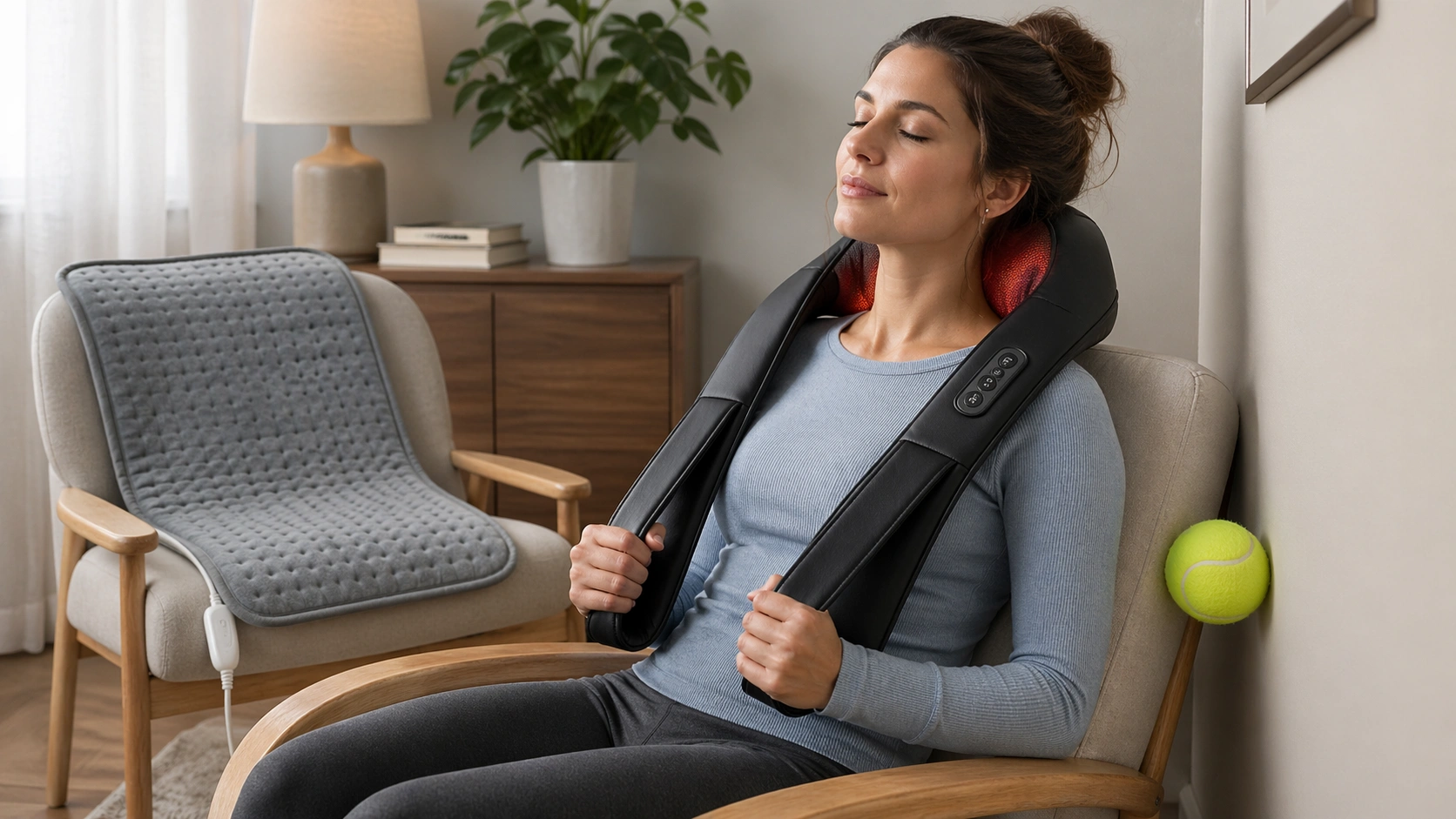
Use a heating pad or warm shower for 5 to 10 minutes. This is my favorite first step for stiff neck muscles from desk work, stress, or sleeping discomfort.
Step 2: Reset your posture and breathing
Sit or stand tall. Let your shoulders drop. Pull your chin back slightly, like you are making a soft double chin. Take 5 slow breaths. This helps relax the shoulders and stop the neck from doing all the work.
Step 3: Do gentle neck stretches
- Chin tuck: Pull your chin straight back. Hold 3 seconds. Repeat 8 times.
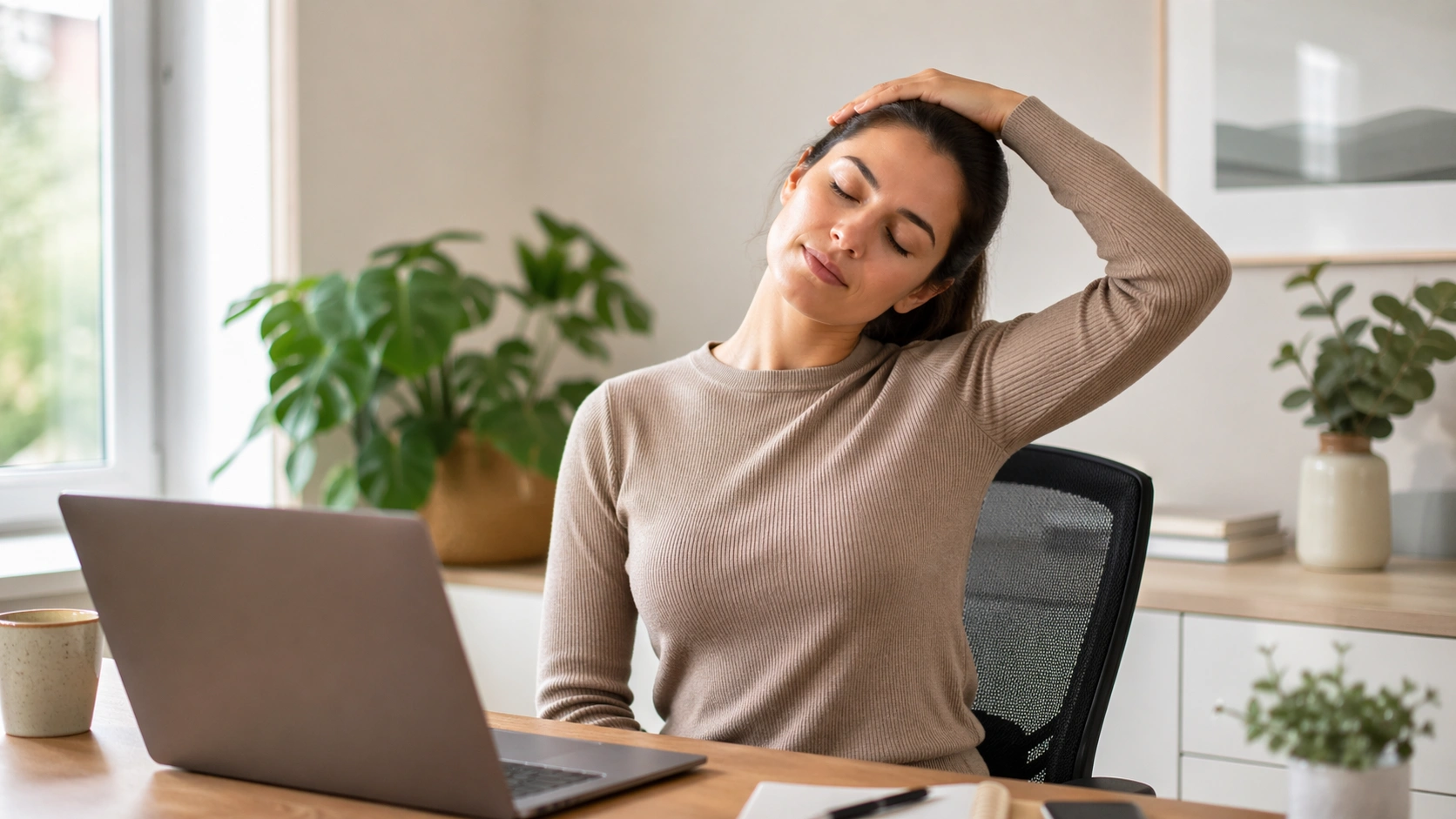
- Side bend stretch: Bring your ear toward your shoulder without lifting the shoulder. Hold 20 to 30 seconds per side.
- Look toward your armpit stretch: Turn your head slightly and look down toward your armpit. This often helps the back-side neck muscles. Hold 20 to 30 seconds per side.
- Slow neck turns: Turn right and left in a pain-free range. Repeat 5 to 8 times each side.
Step 4: Use light self massage
Use your fingers to massage the upper traps and the muscles where the neck meets the shoulders. Work in slow circles for 30 to 60 seconds on tight spots. You can also use a tennis ball against a wall for gentle pressure.
I avoid heavy pressure on the front of the neck or directly on the spine. Gentle pressure around the shoulders and upper traps is usually the safer move.
Step 5: Loosen the shoulders and upper back too
Neck tension rarely lives in the neck alone. Do 10 shoulder rolls, 10 shoulder blade squeezes, and a simple chest stretch in a doorway. This helps open the front of the body and reduce posture-related tightness.
Step 6: Keep the muscles from tightening again
- Raise your screen so you are not looking down all day
- Take a movement break every 30 to 60 minutes
- Keep your pillow from forcing your neck too high or too low
- Use stress relief habits at night, like slow breathing or light heat
Benefits and Best Uses
This kind of routine often works best for everyday neck tension, not serious injury. I find it most helpful in these situations:
- Office workers: Great for neck tightness from long hours at a laptop or phone.
- Stress-related tension: Helpful when your shoulders creep upward without you noticing.
- Post-workout recovery: Useful for soreness after upper body training when the traps and shoulders feel tight.
- Evening relaxation: A short heat-and-stretch routine may help you unwind before bed.
- Older adults needing gentle relief: Light stretching and heat can be a practical home option when done carefully.
Common Problems and Fixes
| Problem | What May Be Causing It | What Usually Helps |
|---|---|---|
| Your neck tightens again by afternoon | Desk posture, no movement breaks, raised shoulders | Do a posture reset every hour and loosen the chest and upper back |
| Stretching feels sharp instead of relieving | You are stretching too hard or too far | Back off and stay in a gentle, pain-free range |
| Only one side stays tight | Mouse use, phone habits, side sleeping, one-sided posture | Check your daily setup and spend extra time on the tighter side |
| You wake up with a stiff neck | Sleep position or pillow height | Use a more neutral pillow setup and do a short morning heat routine |
| Massage helps but the relief does not last | The root issue may be posture, stress, or upper back stiffness | Pair self massage with movement breaks, stretching, and workstation changes |
Common Mistakes to Avoid
- Stretching too hard. Neck muscles respond better to slow, gentle movement than aggressive pulling.
- Using deep pressure on the wrong spots. Avoid heavy pressure on the front of the neck or directly on the spine.
- Ignoring the shoulders and chest. Tight upper traps, chest muscles, and upper back often feed neck tension.
- Using a massage gun directly on the neck. If you use one, keep it on the upper traps and shoulders — never the front of the neck or spine.
- Waiting too long to move. Sitting still for hours keeps the tension cycle going.
Safety Tips and Best Practices
I keep neck relief simple and gentle. That is the safest path for home use. Stop the routine and get medical advice if you notice numbness, tingling, arm weakness, dizziness, severe headache, fever, or pain after a fall or car accident.
Be extra careful with massage if the area is swollen, freshly injured, or highly irritated. If pain keeps getting worse, shoots into the arm, or does not improve after a couple of weeks of self-care, it is smart to get checked.
Tools and Products That May Help at Home
I do not think tools replace movement, but the right one can make your home routine easier and more consistent. For this keyword, I like simple tools that support heat, light massage, and daily use.
Best tools for tight neck muscles
| Tool | Best For | What I Like | Watch Out For |
|---|---|---|---|
| Heating pad | Stiffness, stress tension, bedtime relief | Easy, gentle, beginner-friendly | Do not use excessive heat for too long |
| Shiatsu neck massager | Upper trap tightness and desk-job soreness | Hands-free pressure and relaxing feel | Can feel too intense if you already feel irritated |
| Massage gun | Upper traps and shoulders after workouts | Fast relief for surrounding muscles | Do not use directly on the front of the neck or spine |
Shiatsu Neck and Shoulder Massager
A solid pick for deep, relaxing pressure around the upper traps after long desk days.
Heating Pad for Neck and Shoulders
Great for gentle heat therapy when your neck feels stiff from stress, sleep, or office work.
Heat vs Stretching vs Self Massage vs Neck Massager
People often ask me what works best. The honest answer is that each option helps in a different way. I usually get the best results by combining two or three of them instead of relying on one fix.
| Option | Best When | Main Benefit | Best For |
|---|---|---|---|
| Heat | Your neck feels stiff and guarded | Helps the area relax before movement | Beginners, stress tension, bedtime relief |
| Stretching | You feel limited turning or bending your neck | Improves mobility and range of motion | Desk workers, daily tension |
| Self massage | You feel knots or trigger points | Targets tight spots directly | Upper trap soreness, one-sided tightness |
| Neck massager | You want a hands-free routine at home | Makes consistent relief easier | Office workers, evening relaxation |
For office workers, my favorite combo is heat, chin tucks, shoulder blade squeezes, and a short self massage session. For stress-related tightness at night, heat plus gentle stretching is usually enough. For post-workout soreness, I focus more on the upper traps, shoulders, and chest instead of only the neck.
FAQ
How do you loosen neck muscles fast?
The fastest gentle approach is 10 minutes of heat followed by slow stretching, light self massage, and a posture reset.
Is heat or ice better for tight neck muscles?
Heat is often better for everyday stiffness and muscle tightness, while ice may be more useful right after a fresh strain or flare-up.
Can self massage help a stiff neck?
Yes, light self massage can help loosen tight spots around the upper traps and shoulders when done gently.
How often should I stretch tight neck muscles?
Most people do well with gentle stretching once or twice a day, especially after heat or during work breaks.
Why do my neck muscles keep getting tight?
Neck muscles often keep tightening because of posture habits, stress, poor sleep setup, or too much time sitting without movement.
When should you not massage a stiff neck?
You should avoid massage if you have severe pain, swelling, numbness, tingling, dizziness, fever, or pain after an accident.
Conclusion
If you want to loosen neck muscles, keep it simple: heat, gentle movement, and light pressure. Then fix the habits that let the tension come back. A basic daily routine usually beats chasing one big fix — and the right tool can help you stay consistent.