To relax neck muscles, start with heat, slow breathing, gentle stretching, and light self-massage. Then fix your posture, take screen breaks, and support your neck during sleep. Most people do best with short sessions done daily.
Neck tension can build up fast. A long day at a desk. Stress. A bad pillow. A hard workout. It all adds up. I’m Ethan Carter, and I’ve spent years testing massage tools, recovery products, and pain relief methods. I focus on simple, practical advice that helps people feel better and recover faster at home. In this guide, I’ll show you what usually helps tight neck muscles, what to avoid, and which tools may be worth using.
Quick Answer
If you want a simple plan, use warmth first, breathe slowly, do two or three gentle stretches, and finish with light self-massage around the neck and upper shoulders. Then look at your desk setup and sleep position. That combination often works better than doing just one thing.
Why Your Neck Feels Tight and Why It Matters
Common causes of tight neck muscles
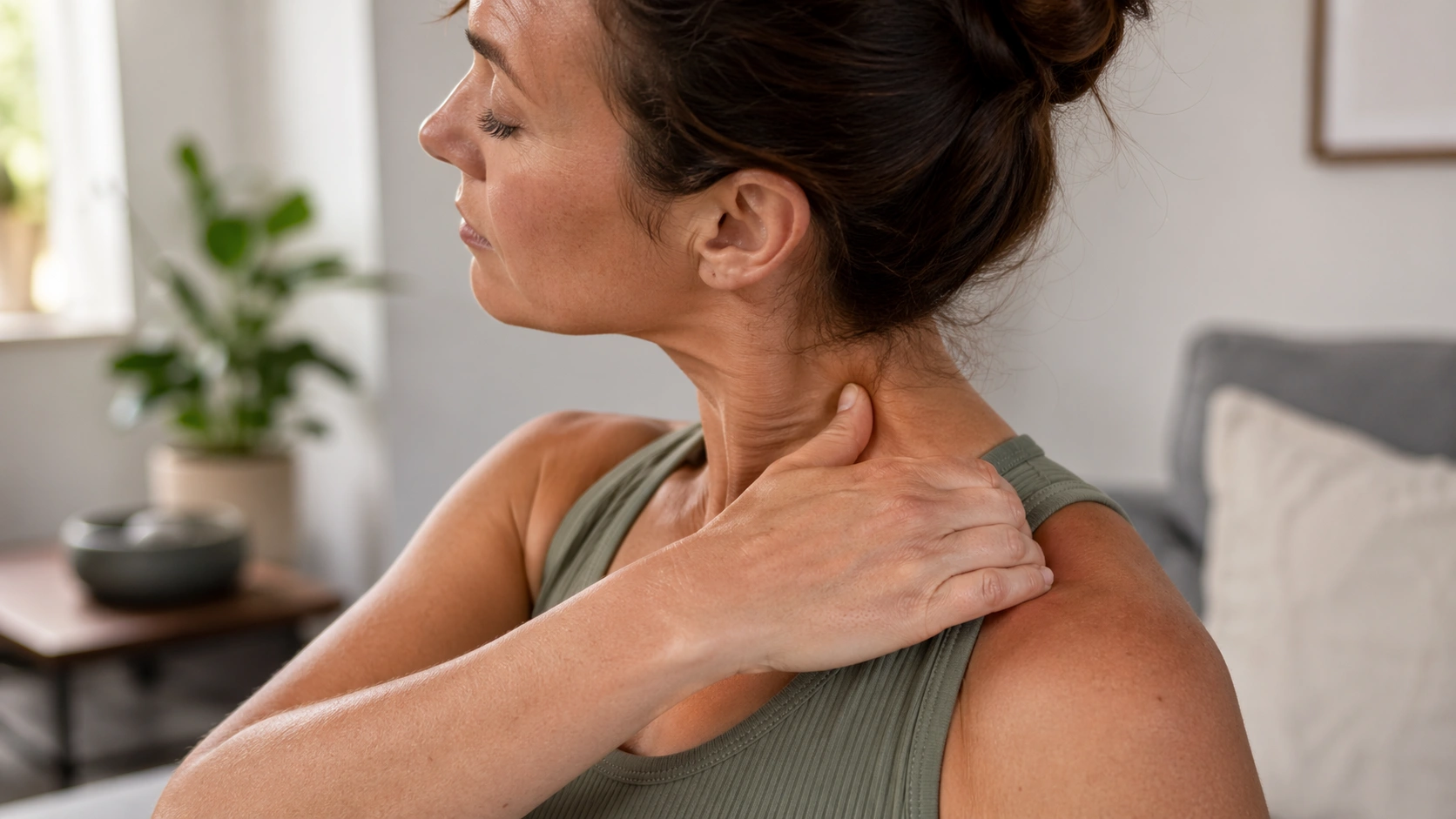
Tight neck muscles usually come from a mix of muscle tension, posture stress, and too much time in the same position. I see this most often in office workers, drivers, people who sleep awkwardly, and anyone who holds stress in the shoulders.
- Looking down at a phone or laptop for hours
- Stress that makes your shoulders creep up
- Sleeping with too much or too little pillow support
- Upper body workouts that leave the traps and shoulders sore
- Long travel days with poor posture
- Overuse strain from repetitive work
Why relaxing neck muscles helps
When your neck muscles stay tight, they can limit range of motion, create soreness, and make daily tasks feel harder. Relaxing them may help improve comfort, support blood flow, and reduce that stiff, guarded feeling many people get after desk work or stress.
For a simple overview of what can cause a stiff neck and when to pay attention to symptoms, I recommend reading Cleveland Clinic’s guide to stiff neck.
How Relaxing Neck Muscles Works
Blood flow and warmth
Heat can help tight muscles feel less guarded. A warm shower, heating pad, or heated wrap may increase comfort and make stretching feel easier. I often use heat first because stiff muscles usually respond better when they are warm, not cold.
Trigger points and soft tissue tension
A lot of neck discomfort actually comes from nearby soft tissue, especially the upper trapezius, base of the skull, and shoulder area. Light pressure or self-massage may help calm trigger points and loosen the fascia around tense muscles.
Range of motion and nervous system downshift
Slow breathing and gentle movement tell your body it is safe to stop bracing. That matters because stress often makes neck muscles stay switched on. If stress is part of your problem, Mayo Clinic’s stress management advice is a useful place to start.
How to Relax Neck Muscles Step by Step
This is the simple routine I use most often when my neck feels tight from screens, bad posture, or travel.
Step 1: Stop the position that is irritating your neck
Before you stretch or massage anything, change the position that is feeding the problem. Sit tall. Bring your screen closer to eye level. Let your shoulders drop. Put both feet flat on the floor. Even one small posture reset can reduce muscle guarding.
Step 2: Use heat for 10 to 15 minutes
Apply gentle heat to the back of the neck and upper shoulders. A warm shower works. A heated neck wrap is even easier when you want relief at night. Heat often works well for stiffness, stress tension, and mild soreness after a long day.
Step 3: Slow breathing for one to two minutes
Take slow breaths in through your nose and long breaths out through your mouth. Try this for six to ten breaths. I like this step because it helps the shoulders settle down before stretching.
Step 4: Do gentle neck stretches
Go slow. Never force the motion. You should feel a light stretch, not sharp pain.
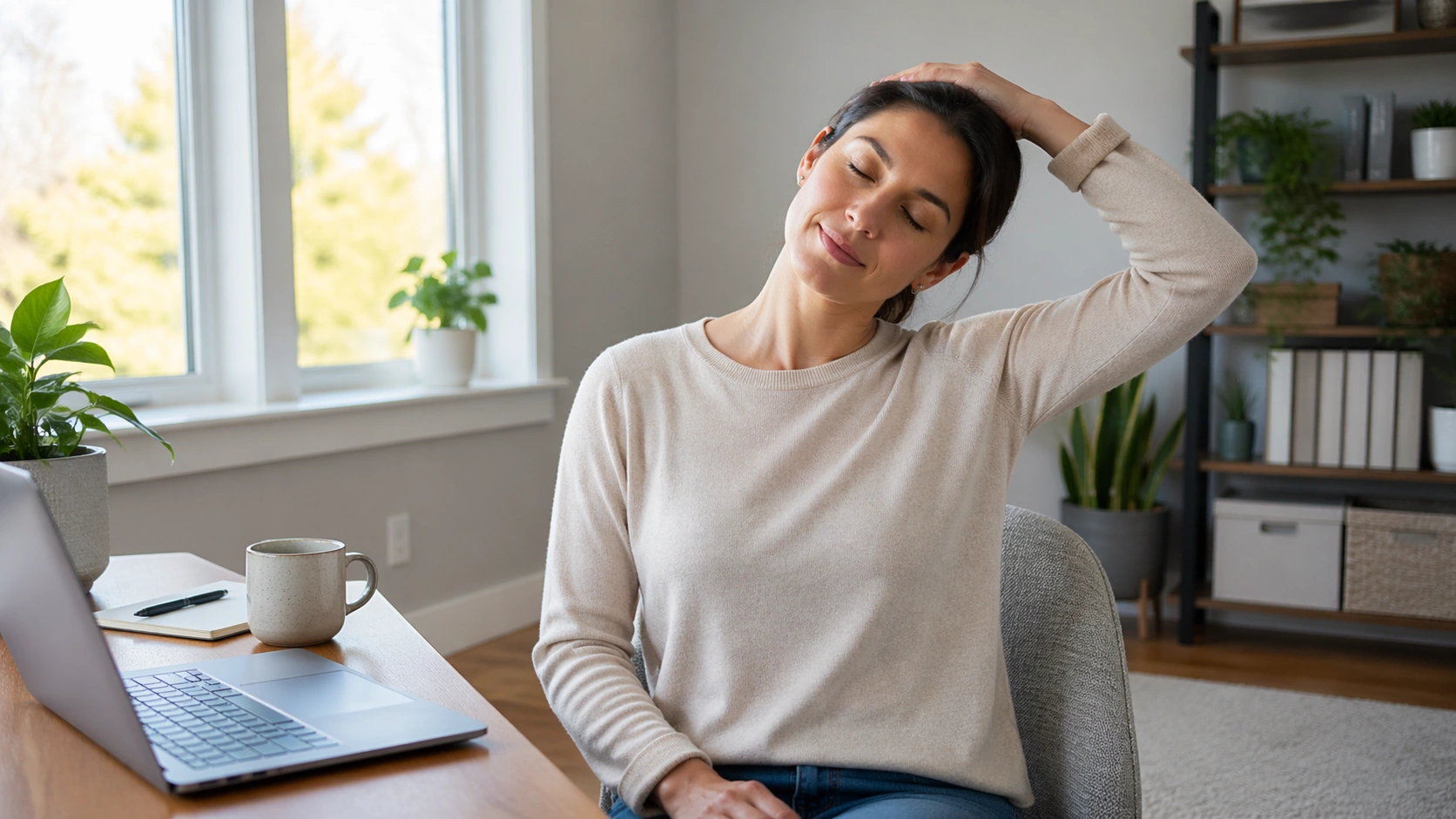
- Side bend stretch: Tilt your ear toward your shoulder. Hold 15 to 20 seconds per side.
- Neck turn: Rotate your head gently left and right. Hold 10 to 15 seconds each way.
- Chin tuck: Pull your chin straight back without tipping your head. Hold 5 seconds and repeat 5 to 8 times.
- Shoulder rolls: Roll shoulders backward slowly for 8 to 10 reps.
If one side feels much tighter, spend a little more time there, but keep the pressure light.
Step 5: Use light self massage on the neck and upper traps
This is where many people finally feel the muscles let go. Use your fingertips to gently knead the upper trapezius, which is the fleshy area between the neck and shoulder. Work in small circles for 30 to 60 seconds per side. You can also use a tennis ball against a wall on the upper shoulder area, not directly on the front of the neck.
I usually tell readers to think light to moderate pressure, not deep digging. More pressure is not always better, especially when the tissue is already irritated.
Step 6: Reset posture and screen height
If you go right back to slouching over a laptop, the tightness usually returns. Raise your screen, support your lower back, and keep your head stacked over your shoulders. Small ergonomics changes matter more than most people expect.
Step 7: Support your neck during sleep
If your neck is worst in the morning, your pillow may be part of the issue. Side sleepers usually do best with a pillow that fills the space between the neck and mattress. Back sleepers often feel better with a pillow that supports the neck without pushing the head too far forward.
Best Benefits and When These Methods Work Best
These simple methods often work best for everyday neck tension, not serious injury care. In my experience, they are most helpful for:
- Desk workers with tech-neck stiffness
- Stress-related neck and shoulder tightness
- Mild soreness after workouts
- Travel stiffness from planes or long drives
- People who need a wind-down routine before sleep
- Older adults who want gentle home relief
| Situation | What Usually Helps Most | Why It Helps |
|---|---|---|
| Desk job neck tension | Chin tucks, screen reset, shoulder rolls | Improves posture support and reduces strain |
| Stress at night | Heat, slow breathing, light self massage | Helps muscles stop guarding |
| Post-workout soreness | Gentle movement, heat, light massage | Supports recovery without overloading tissue |
| Morning stiffness | Pillow check, warm shower, easy stretches | Reduces overnight stiffness and poor sleep-position stress |
| Travel stiffness | Short stretch breaks and a compact heat tool | Keeps muscles from locking up after sitting |
Common Problems and Fixes
Sometimes the first thing you try does not work right away. That does not always mean you picked the wrong method. It may mean you need to adjust pressure, timing, or posture.
| Problem | Likely Reason | What to Try |
|---|---|---|
| Neck still feels tight after stretching | Muscles were cold or you stretched too hard | Use heat first, then shorten the stretch and slow down |
| Soreness after self massage | Too much pressure | Cut the pressure in half and massage for less time |
| Tightness keeps coming back | Posture or sleep setup is still off | Fix screen height, chair support, and pillow height |
| One side is always tighter | Habit posture or one-sided work pattern | Do extra gentle mobility work on that side and check workstation setup |
| Neck gets worse at night | Stress buildup or poor pillow support | Use a short heat routine before bed and reassess sleep position |
If you feel dizzy, get tingling, or notice pain shooting down the arm, stop the routine. Those symptoms call for extra care and should not be pushed through.
Common Mistakes to Avoid
- Pushing into pain: Gentle works better than aggressive for most neck tension.
- Stretching cold muscles: Warm tissue usually responds better.
- Using a massage gun directly on the neck: I do not recommend this on the front or side of the neck. If you use one, keep it on the upper traps and shoulders only.
- Ignoring posture: A great massage will not do much if your screen setup keeps pulling your head forward.
- Holding stress in your shoulders: Many people never notice how much tension they carry there all day.
- Doing too much in one session: Short daily work is often better than one hard session.
Safety Tips and Best Practices
Home care is best for mild muscle tightness and everyday stiffness. Use extra caution if you recently had a fall, car accident, severe strain, or if you have symptoms that feel unusual.
- Stop if you feel sharp pain, numbness, tingling, weakness, or dizziness
- Do not force neck stretches
- Avoid strong pressure on the front of the neck
- Be careful with heated tools if you are sensitive to heat
- Keep massage sessions short at first, around 5 to 10 minutes
- If pain is severe or keeps getting worse, get medical advice
I also suggest being cautious with any tool that promises deep pressure. The neck is an area where gentler pressure is usually the smarter move.
Best Tools and Product Recommendations
You do not need tools to relax neck muscles, but a few can make the process easier. I usually group them into three simple jobs: heat, kneading, and recovery support.
| Tool | Best For | What I Like | Watch Out For |
|---|---|---|---|
| Heated neck wrap | Stress tension and bedtime stiffness | Easy, gentle, relaxing | Do not use excessive heat or fall asleep with unsafe settings |
| Shiatsu neck massager | Deep kneading at home | Good for upper traps and shoulder tension | Can feel too intense if pressure is high |
| Mini massage gun | Upper traps after workouts | Fast, targeted recovery support | Do not use directly on the front or side of the neck |
Heated Neck and Shoulder Wrap
Best for gentle evening relief when your neck feels tight from stress, desk work, or sleeping awkwardly.
Shiatsu Neck and Shoulder Massager
Best for people who want hands-free kneading for the upper shoulders and base of the neck at home.
Mini Massage Gun
Best for workout-related upper trap soreness when you want quick recovery support without a bulky device.
If you are new to tools, I would start with heat first. It is the easiest option, the least intense, and often enough for basic neck tension.
Stretching vs Self Massage vs Heat vs Neck Massager
Each method does something a little different. The best choice depends on why your neck muscles feel tight in the first place.
| Method | Best For | Main Benefit | Possible Downside |
|---|---|---|---|
| Gentle stretching | Stiffness and limited mobility | Helps range of motion | Can irritate the area if forced |
| Self massage | Trigger points and shoulder tension | Targets tight spots directly | Too much pressure can leave you sore |
| Heat therapy | Stress tension and bedtime relief | Comforting and easy to use | Usually not enough by itself if posture is the main issue |
| Neck massager | People who want hands-free relief | Convenient and relaxing | Some models feel too intense for sensitive users |
My simple rule is this: use heat when your neck feels guarded, use stretching when motion feels limited, use self massage when you can feel knots, and use a neck massager when you want easier home relief without using your hands.
FAQ
How long does it take to relax tight neck muscles?
Many people feel some relief in 5 to 15 minutes with heat, slow stretching, and light self-massage, but stubborn tension may need daily work for several days.
Is heat or ice better for tight neck muscles?
Heat usually works better for muscle tightness and stress-related stiffness. Ice may be more useful after a fresh strain or when there is swelling.
Can a neck massager help relax neck muscles?
A neck massager can help relax neck muscles when used gently and for short sessions. It often works best with good posture, stretching, and breaks from screens.
Should I stretch my neck every day?
Gentle neck stretching once or twice a day can help many people, especially desk workers. Keep the motion slow and stop if you feel sharp pain, numbness, or dizziness.
Why do my neck muscles tighten up at night?
Neck muscles often tighten at night because of stress, pillow height, sleep position, or a long day of screen time. A warm shower, breathing work, and better pillow support may help.
When should I not try to relax neck muscles at home?
Skip home care and get medical help if your neck pain follows a fall or crash, comes with fever, severe headache, arm weakness, numbness, or pain that keeps getting worse.
Conclusion
If you want to know how to relax neck muscles, keep it simple. Warm the area, breathe slowly, stretch gently, and use light self-massage. Then fix the habits that keep tightening the area back up, especially posture and sleep setup. In my experience, a short daily routine works better than random relief when the pain has already built up. If you want extra help, a gentle heat wrap or neck massager can make the routine easier without overcomplicating it.