Quick Answer
To reduce neck stiffness, start with gentle range-of-motion moves, apply heat for 10 to 15 minutes, improve posture, and use light self-massage on tight muscles. Short movement breaks, better pillow setup, and the right neck relief tools can also help ease tension and support better mobility.
Neck stiffness can make a normal day feel long. Turning your head hurts. Sleeping feels awkward. Desk work gets worse as the day goes on.
I’m Ethan Carter, and I’ve spent years testing massage tools, recovery products, and pain relief methods. I focus on simple, practical advice that helps people feel better and recover faster at home.
In this guide, I’ll show you what usually causes a stiff neck, what often helps at home, which mistakes make it worse, and when tools like heat wraps or neck massagers may be worth using.
Why Your Neck Feels Tight and Why It Matters
What neck stiffness is
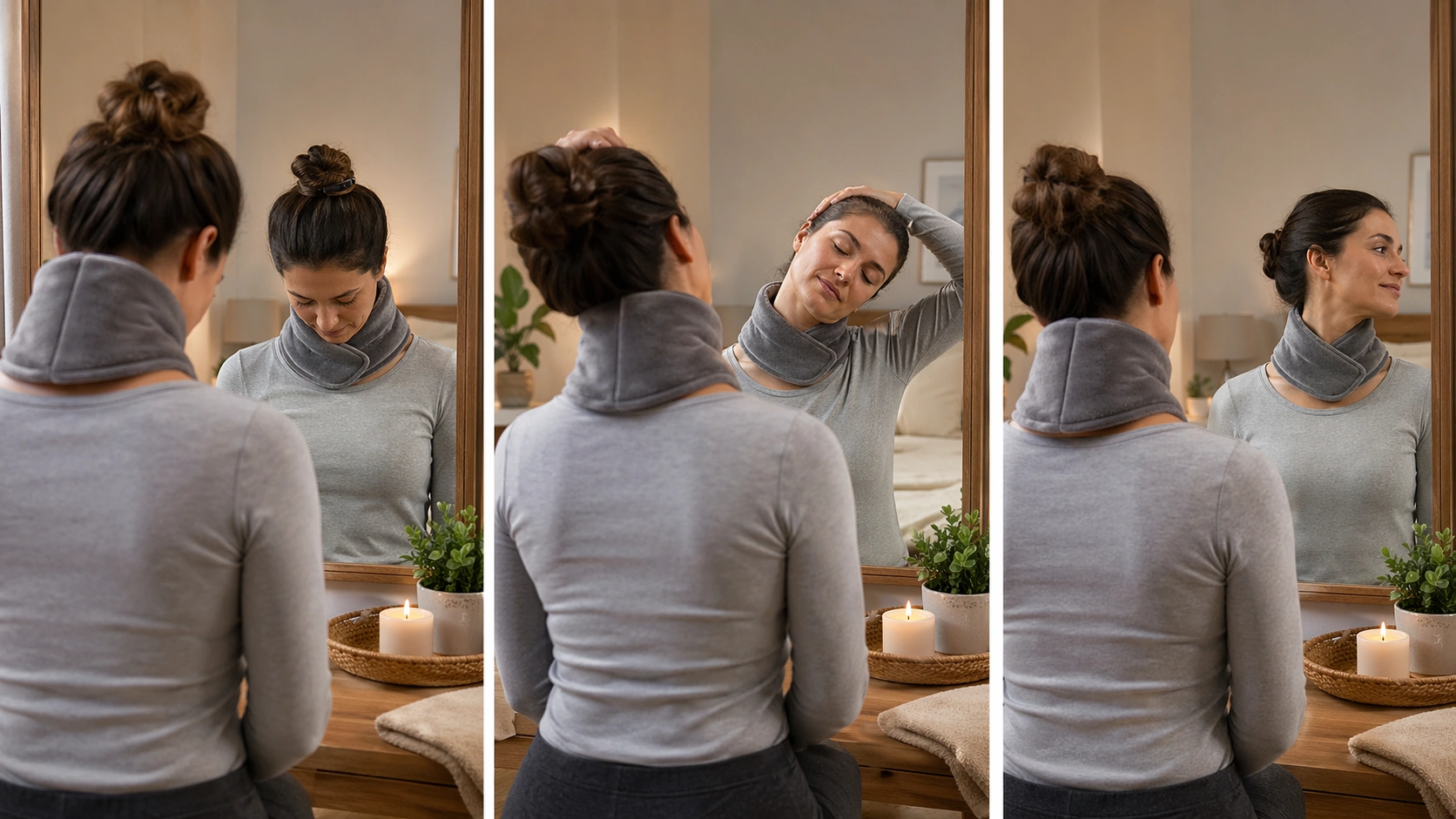
Neck stiffness usually means the muscles and soft tissues around your neck feel tight, sore, guarded, or hard to move. For many people, it shows up as a dull ache, sharp tightness when turning the head, or a knotty feeling near the base of the skull, upper traps, or shoulders.
Common causes of neck stiffness
The most common triggers are simple. You sit at a desk too long. You look down at a phone for hours. You sleep in a twisted position. You clench your jaw when stressed. You train shoulders hard at the gym and do not recover well after.
I also see a lot of neck tension from poor posture, weak movement habits, tight chest muscles, overworked upper traps, and long driving or travel days. Many people do not have one big cause. They have several small habits stacking up.
Why it matters
Even mild stiffness can lower your range of motion, make headaches feel worse, disrupt sleep, and make everyday tasks feel annoying. If your neck keeps tightening up, it usually means your recovery habits need work, not just one quick stretch.
How Reducing Neck Stiffness Works
Muscle tension, fascia, and trigger points
When your neck feels stiff, the muscles are often holding too much tension. The surrounding fascia can also feel tight. Small tender spots called trigger points may form in the upper traps, levator scapulae, and muscles around the shoulder blade.
Heat, movement, and self massage
Gentle heat may help relax tight tissue and make movement feel easier. Easy mobility work helps restore motion without forcing it. Light self massage can support circulation, calm tender knots, and reduce that locked-up feeling many office workers get by late afternoon.
Why posture and recovery habits matter
Temporary relief is useful, but long-term change usually comes from fixing the reason the stiffness keeps returning. Better screen height, short movement breaks, a pillow that matches your sleep position, and less time with your head pushed forward often matter as much as stretching.
If you want a broader overview of common neck pain causes and symptoms, Cleveland Clinic’s neck pain guide is a helpful reference.
How to Reduce Neck Stiffness at Home Step by Step
Step 1: Stop the position that is aggravating it
Before you stretch, stop doing the thing that is feeding the tension. That might mean raising your laptop, bringing your phone to eye level, getting out of the car, or changing a bad sleep setup. You will get better results when you remove the trigger first.
Step 2: Use heat the right way
For everyday muscle tightness, I usually start with heat for 10 to 15 minutes. A heated neck wrap or warm shower often works well. Heat can make the area feel less guarded and easier to move. Keep it comfortably warm, not overly hot.
Step 3: Start gentle range-of-motion moves
Do slow, pain-free movements. Turn your head left and right. Look down slightly, then return to neutral. Tilt one ear toward one shoulder, then switch sides. Move only within a comfortable range. Two or three short rounds are enough to start.
Step 4: Stretch the muscles that usually stay tight
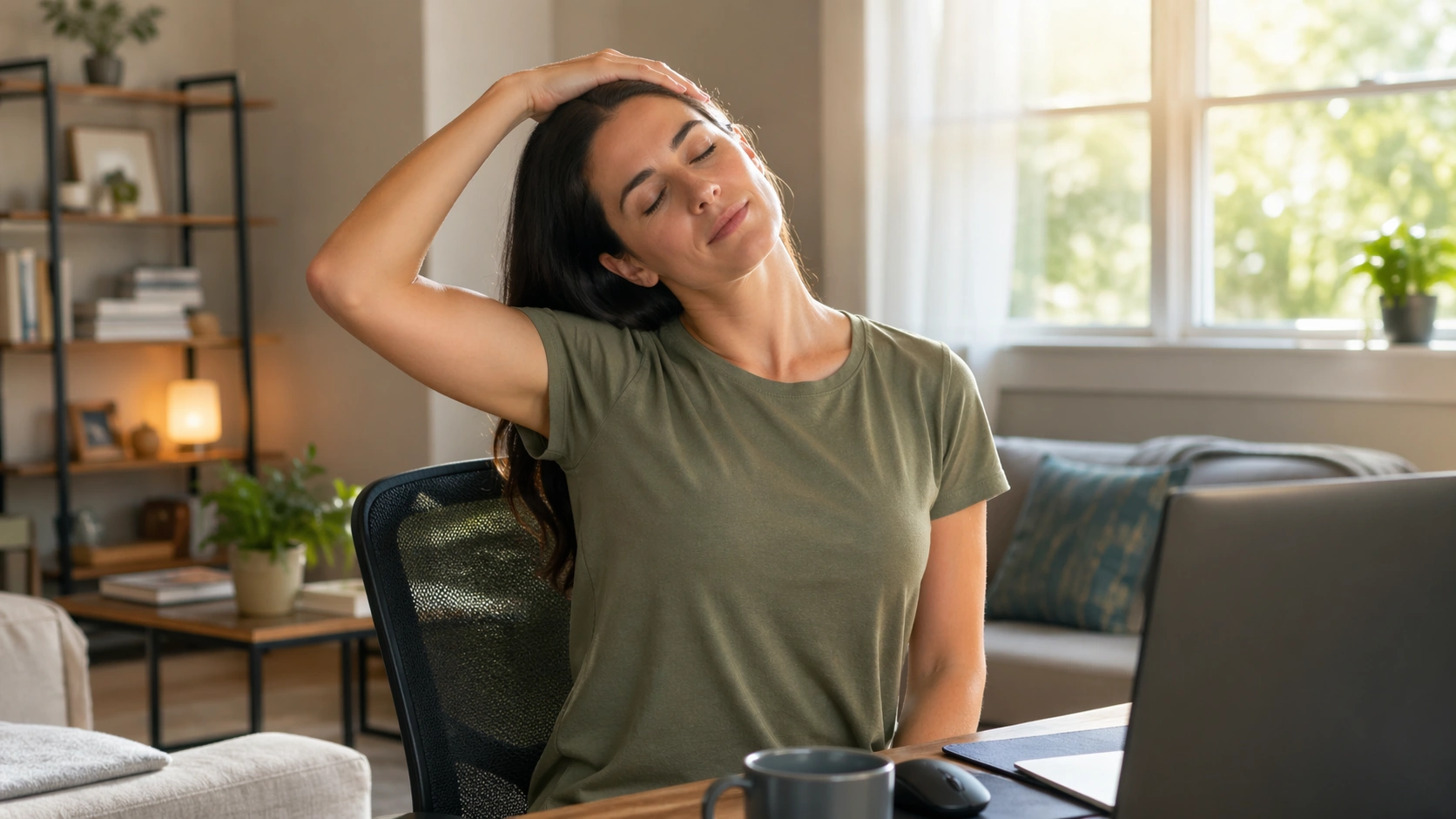
Most people do well with gentle upper trap stretches, levator scapulae stretches, and chest-opening work. Hold each stretch for a short time and keep the pull mild. You should feel a release, not a fight. If you are holding your breath, you are pushing too hard.
Step 5: Use self massage on knots and trigger points
Light self massage can help when the neck feels ropey or knotted. I usually suggest working the upper traps, the area between the neck and shoulder, and the muscles around the shoulder blade. Use your fingers, a massage ball against a wall, or a gentle neck massager. Stay off the front of the neck and avoid pressing directly on bony spots.
Step 6: Reset your desk posture and screen height
If your head lives in front of your shoulders all day, the stiffness will likely come back. Bring your screen up, keep elbows supported, and think about stacking ears over shoulders. A simple chin tuck can also help many desk workers feel less loaded through the back of the neck.
Step 7: Support recovery with better sleep setup and short movement breaks
Your pillow should support your head without pushing your neck too high or letting it collapse too low. During the day, stand up every 30 to 60 minutes for a quick walk, shoulder roll, or posture reset. These tiny breaks often work better than one long stretch session at night.
For a simple symptom overview, Mayo Clinic’s neck pain page is a useful basic reference.
Benefits and Best Uses
Who usually benefits most
This kind of routine often works best for office workers, people under stress, side sleepers with a poor pillow setup, travelers, and people with post-workout upper trap tightness. It can also be helpful for older adults who want gentle home relief without aggressive pressure.
What results people often notice first
The first improvements are usually easier head turning, less soreness near the shoulders, better comfort while working, and a little less tension before bed. In my experience, consistency matters more than intensity. Five minutes done daily often beats one hard recovery session on the weekend.
Common Problems and Fixes
| Problem | Likely Reason | What to Try |
|---|---|---|
| Neck feels stiff in the morning | Pillow height is off or sleep position twists the neck | Use a better pillow fit, add heat, then do gentle neck nods and side bends |
| Neck tightens after desk work | Forward head posture and long sitting | Raise the screen, do chin tucks, and take short movement breaks |
| One side feels knotted | Trigger points in upper trap or levator scapulae | Use light self massage, a wall ball, and gentle stretching |
| Stiff after workouts | Overworked shoulders, traps, or poor recovery | Use heat, easy mobility, and reduce heavy shrugging or overhead volume for a day or two |
| Tension gets worse at night | Stress, jaw clenching, and poor wind-down habits | Use heat, slow breathing, and gentle self massage before bed |
Why one-sided neck knots happen
One side often gets tighter because of how you sit, sleep, carry a bag, or use a mouse. It is common for one upper trap to work harder than the other. That is why one knot keeps coming back even when both sides feel stiff.
Why stiffness keeps coming back
If relief only lasts a few hours, the problem is usually not a lack of stretching. It is usually a daily habit issue. Think posture, screen setup, sleep position, stress, training load, and how often you stay still for long stretches.
Common Mistakes to Avoid
Overstretching a guarded neck
A stiff neck does not usually need aggressive stretching. Too much force can make the area tighten up more.
Using strong pressure on the wrong spots
Do not dig hard into the front of the neck. Avoid direct pressure on the throat, side of the neck, or bony areas.
Ignoring the shoulders and chest
Many people stretch only the neck, but tight chest muscles and shoulders are often part of the problem. If those areas stay locked up, the neck keeps working overtime.
Using a massage gun directly on the neck
Massage guns can be useful around the neck, but they are better on the upper traps and rear shoulder area. I would not use one directly on the front or side of the neck.
Expecting one session to fix a daily pattern
If your stiffness comes from eight hours at a laptop, one five-minute stretch will not fully solve it. The real fix is relief plus better habits.
Safety Tips and Best Practices
Keep pressure light when the area is irritated
If the neck feels freshly strained, extra tender, or easily aggravated, keep pressure light and use slow movement. Heat usually feels better than deep pressure for everyday stiffness.
Know when to stop
Stop the session if you get sharp pain, tingling, dizziness, numbness, sudden weakness, or pain shooting down the arm. If neck stiffness starts after an injury or comes with fever, a severe headache, chest pain, or worsening symptoms, get medical advice.
Best practices for tools and home care
Use heat in short sessions. Keep stretches gentle. Use massage tools for comfort, not punishment. Check your pillow. Move more often. Small daily wins are what usually change neck tension over time.
If you want another general overview focused on stiffness, Healthline’s stiff neck guide is another helpful read.
Best Tools and Products That May Help
What I look for in neck relief tools
For this keyword, I would keep tools simple. The best options are usually the ones that support heat, gentle massage, or better positioning. You do not need a huge setup. You need something easy enough to use consistently.
| Tool Type | Best For | Main Benefit | Watch-Out |
|---|---|---|---|
| Heated neck wrap | Daily tightness, stress, bedtime use | Comforting heat and easy home use | Avoid very high heat or long sessions |
| Shiatsu neck massager | Knotted upper traps and shoulder tension | Hands-free pressure and relaxing feel | Use gentle pressure only |
| Massage gun with soft head | Upper traps and rear shoulders after workouts | Fast relief around the neck area | Do not use on front or bony parts of the neck |
| Cervical pillow | Morning stiffness and sleep-position support | Helps reduce overnight strain | Fit matters more than firmness claims |
Shiatsu Neck and Shoulder Massager
A good fit for people who feel tight knots near the upper traps after desk work or long drives.
Microwavable or Electric Heated Neck Wrap
Often the easiest first tool for everyday stiffness, bedtime tension, and gentle recovery support.
If your stiffness is mostly from stress or desk posture, I would start with a heated wrap. If it feels more like stubborn shoulder knots, a gentle shiatsu neck massager may be the better pick. If you train a lot, a massage gun can help the surrounding muscles, but use it carefully.
Stretching vs Self Massage vs Heat vs Neck Massagers
| Method | Best For | How Fast It Feels Helpful | Comfort Level | Safety Note |
|---|---|---|---|---|
| Gentle stretching | Reduced mobility and daily tightness | Often moderate | Good when kept light | Do not force the end range |
| Self massage | Knots and trigger points around the shoulders | Often fast | Very good with light pressure | Avoid the front of the neck |
| Heat therapy | Stress tension, morning stiffness, bedtime relief | Often fast | Very relaxing | Keep sessions short and comfortable |
| Neck massager | People who want easy, hands-free home relief | Often fast | Good if pressure is adjustable | Start on the lightest setting |
Here is the simple way I look at it. Use heat when the neck feels guarded and tight. Use stretching when movement is limited. Use self massage when knots are the main issue. Use a neck massager when you want convenience and repeatable pressure at home.
For office workers, the best combo is usually heat plus posture fixes plus short daily movement breaks. For post-workout stiffness, I like easy mobility and light work on the upper traps and shoulders. For nighttime tension, heat and gentle self massage usually beat hard stretching.
FAQ
How long can neck stiffness last?
Mild neck stiffness often improves within a few hours to a few days when you use heat, gentle movement, and better posture, but stubborn or worsening pain deserves medical advice.
Is heat or ice better for a stiff neck?
Heat usually works better for everyday muscle tightness, while ice may be more useful during the first day after a strain or if the area feels irritated and inflamed.
Can a neck massager help reduce neck stiffness?
A neck massager may help loosen tight muscles and improve comfort, especially after desk work, but it should feel gentle and never cause sharp, shooting, or dizzy symptoms.
Should I stretch a stiff neck every day?
Yes, light daily stretching and range-of-motion work often help, but the movements should stay slow, pain-free, and short rather than forceful.
Why is my neck stiff after sleeping?
Neck stiffness after sleeping is often linked to pillow height, awkward sleep position, jaw clenching, or staying in one position too long overnight.
When should I get help for neck stiffness?
Get medical help if neck stiffness starts after an injury or comes with numbness, arm weakness, fever, severe headache, chest pain, or pain that keeps getting worse.
Can a massage gun be used on the neck?
A massage gun is best used around the neck on the upper traps and shoulder muscles, not directly on the front or bony parts of the neck.
Conclusion
For most people, the best answer to how to reduce neck stiffness is not one magic tool. It is a simple routine. Use heat, move gently, ease trigger points, improve posture, and fix the habits that keep loading the neck every day.
If you want extra support at home, a heated neck wrap or a gentle neck massager can be a practical next step. Keep it simple, stay consistent, and your neck will usually respond better than it does to force.