A stiff neck often feels better with gentle heat, easy neck movement, light stretching, simple self-massage, and better posture. The goal is to relax tight muscles, improve range of motion, and stop the habits that keep the area irritated.
I’m Ethan Carter, and I’ve spent years testing massage tools, recovery products, and pain relief methods. A stiff neck can ruin your day fast. It makes driving harder, working harder, and even sleeping harder. In this guide, I’ll show you what usually helps most at home, what mistakes to avoid, and which tools may actually be worth using.
Quick Answer
If you want to relieve a stiff neck, start with heat for 10 to 15 minutes, then do slow neck movements, gentle stretches, and light self-massage. After that, fix the posture or sleep setup that likely caused the tightness in the first place.
Why Your Neck Feels Tight and What Actually Helps
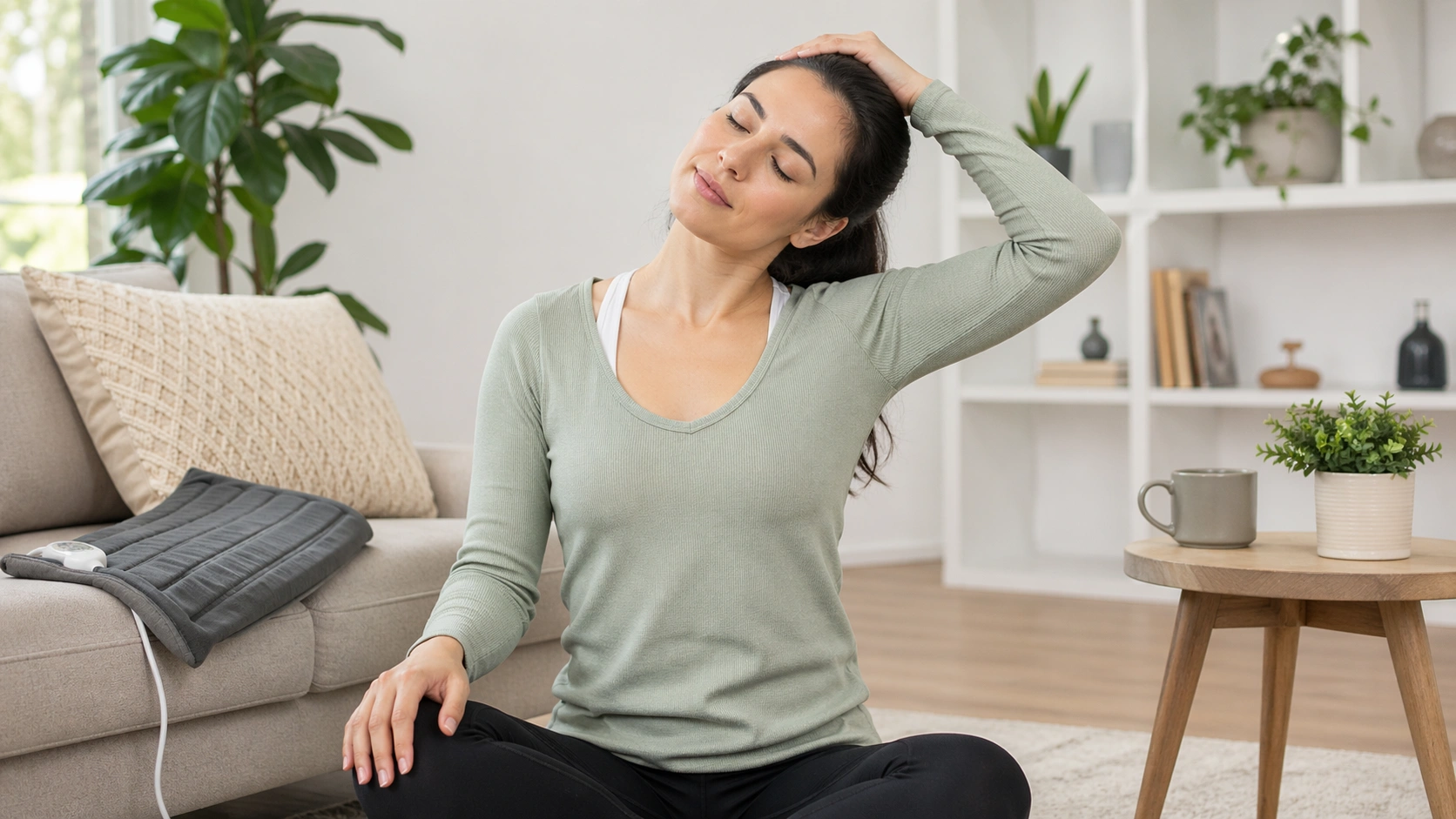
What a stiff neck usually means
A stiff neck usually comes from tight muscles, irritated soft tissue, and reduced mobility around the neck and upper shoulders. In many cases, it is not one big injury. It is a build-up of small things like bad posture, stress, sleeping in an awkward position, or overusing the same muscles for hours.
The neck is small, but it works all day. It holds your head up, helps you turn, and reacts to stress by tightening up. When those muscles stay tense too long, they can feel sore, guarded, and hard to move.
Common causes of neck stiffness at home and at work
- Looking down at a phone for long periods
- Sitting at a laptop without proper screen height
- Sleeping with too much pillow height or a twisted head position
- Stress that keeps the shoulders and upper traps tight
- Hard workouts that overload the upper back and neck
- Long drives or travel days with poor support
- Trigger points in the neck, upper traps, or shoulder blade area
If you want more background on neck symptoms and when they may need more attention, sources like Cleveland Clinic, Mayo Clinic, and Healthline offer helpful general information.
When everyday stiffness may need medical attention
I focus on home relief methods, not diagnosis. Still, there are times when a stiff neck should not be treated like normal tension. Get medical help if the stiffness follows a fall or accident, comes with fever, a severe headache, numbness, tingling, weakness, or pain that keeps getting worse instead of easing up.
How Stiff Neck Relief Works
Muscle tension, fascia, trigger points, and blood flow
Most home relief methods work by doing one or more simple things. They lower muscle guarding. They improve circulation. They reduce the feeling of tight fascia and trigger points. They also help the neck move again without fighting every turn.
Heat often helps because warm tissue tends to relax more easily. Gentle movement helps because stiff muscles hate staying still. Light self-massage can help because it gives tense tissue a reason to let go. Better posture helps because it removes the constant strain that caused the problem.
Why posture, mobility, and recovery habits matter
In my experience, the neck rarely stays loose if the daily habits stay the same. You can stretch for five minutes, feel better, then go right back to a low screen, forward head posture, and shrugged shoulders for eight hours. That is why real stiff neck relief usually needs both short-term relief and a simple daily fix.
How to Relieve a Stiff Neck at Home Step by Step
Step 1: Stop aggravating positions
First, stop doing the thing that is irritating your neck. Raise your phone. Bring your screen to eye level. Sit back instead of leaning your head forward. If the stiffness started after sleep, avoid spending the day slouched on the couch with your head bent down.
Step 2: Use gentle heat
Apply a heating pad or warm compress for 10 to 15 minutes. I like heat first because it helps tight muscles calm down before stretching or massage. Warm tissue usually responds better than cold, stiff tissue.
Use warm, not burning hot. If the area feels freshly strained or inflamed after a workout or sudden tweak, some people prefer a short round of cold first. But for everyday muscle tightness, heat often works better.
Step 3: Restore easy neck movement
Once the area feels warmer, start with very easy range-of-motion work. The goal is not to force a big stretch. The goal is to remind the neck that it can move safely.
- Turn your head slowly left and right.
- Look slightly down, then return to neutral.
- Gently tilt one ear toward one shoulder, then switch sides.
- Roll your shoulders backward 8 to 10 times.
Move slowly. Stay in a comfortable range. If a motion feels sharp, back off.
Step 4: Stretch without forcing it
After a few slow movements, add one or two gentle stretches. I usually keep it simple.
- Sit tall.
- Drop your right ear toward your right shoulder until you feel a light stretch on the other side.
- Hold for 15 to 20 seconds.
- Repeat on the other side.
- Then do 5 to 8 chin tucks to help reset head position.
Do not yank your head with your hand. Do not bounce. Gentle, steady stretching often works best for neck stiffness.
Step 5: Try light self massage
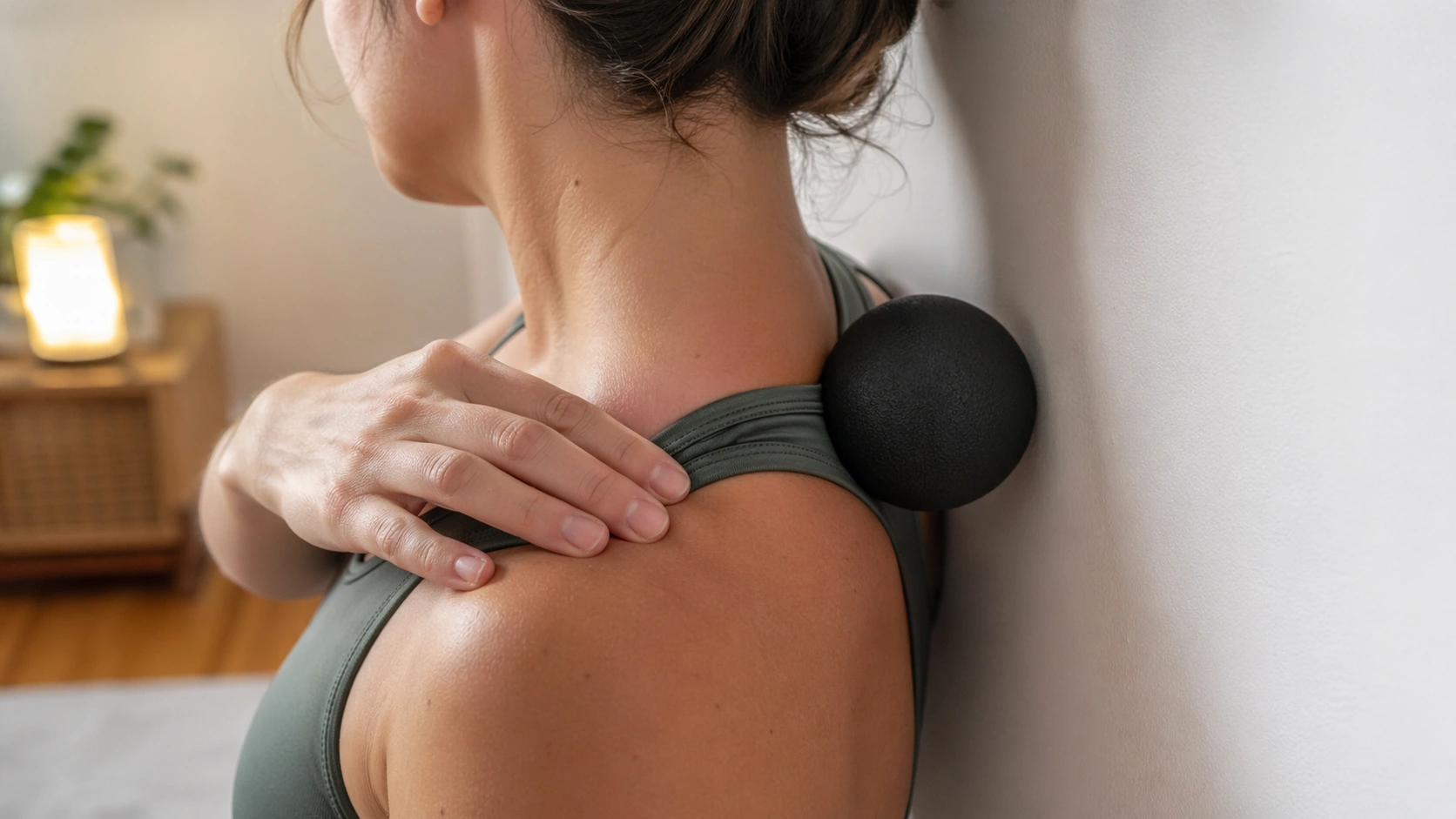
Self-massage can help when the stiffness is mostly muscular. Use your fingers to knead the upper traps, the base of the neck, and the area between the neck and shoulder. Keep the pressure moderate. If it feels like you are attacking the muscle, it is too much.
A massage ball or tennis ball against a wall can also work well. Lean into the ball gently and hold on tight spots for 20 to 30 seconds while breathing slowly. I prefer the wall over the floor for the neck area because it is easier to control pressure.
Step 6: Fix your desk and phone posture
If you sit all day, this step matters as much as the stretch itself. Your screen should be close to eye level. Your shoulders should stay relaxed. Your elbows should not be reaching far forward. Every 30 to 60 minutes, stand up, walk a bit, and reset your posture.
One of the best daily habits is simple: keep your ears stacked more over your shoulders instead of pushing the head forward. That alone can reduce chronic neck tension over time.
Step 7: Set up better sleep support
If your neck is stiff every morning, look at your pillow height and sleep position. A pillow that is too high can keep the neck bent all night. A pillow that is too flat can do the opposite. Side sleepers usually need enough support to keep the head level. Back sleepers usually do better with a pillow that supports the neck without forcing the head forward.
I also tell people to avoid sleeping with the arm overhead or the head turned hard to one side for hours.
Best Benefits and Uses of These Stiff Neck Relief Methods
Best for office workers
If your neck gets tight after laptop time, the best mix is posture reset, chin tucks, shoulder rolls, and short movement breaks during the day. Heat and self-massage work well after work when the muscles feel loaded and sore.
Best for morning neck stiffness
If you wake up stiff, start with a warm shower or heating pad, then use slow movement before stretching. Morning necks usually respond better to warmth and patience than aggressive stretching right away.
Best for post-workout tightness
If the stiffness shows up after training, especially after upper body work, gentle mobility and soft tissue work may help more than trying to stretch hard. The tissue is already irritated. It usually wants calm input, not more stress.
Best for stress-related neck tension
Stress often shows up in the shoulders and neck first. In that case, slow breathing, heat, shoulder relaxation, and light massage before bed can be very helpful. Many people also sleep better when they loosen that area at night.
Symptom vs Solution Table for Stiff Neck Relief
| Symptom | Likely Trigger | What to Try First |
|---|---|---|
| Stiff neck after sleeping | Pillow height or twisted sleep position | Heat, slow neck movement, review pillow support |
| Neck tightness after desk work | Forward head posture and long sitting | Chin tucks, screen height fix, hourly movement breaks |
| Sore neck after workouts | Overuse strain and upper trap tension | Gentle mobility, light self massage, easier recovery day |
| Sharp tight spot near shoulder | Trigger point in upper traps or levator area | Massage ball on wall, gentle hold, then stretch lightly |
| Morning stiffness every day | Sleep setup and ongoing tension | Adjust pillow, add bedtime heat, improve sleep posture |
| Stress-related neck tension | Shoulder shrugging and muscle guarding | Breathing, heat, shoulder rolls, light massage before bed |
Common Problems and Fixes
Stretching is not helping
If stretching is not helping, there is a good chance you are stretching too hard or too early. Warm the area first. Reduce the range. Use easy movement before longer holds. I see better results when people stop trying to force a big stretch.
Pain keeps coming back at the desk
This usually means the real problem is not your stretch routine. It is your setup. Raise the screen, bring the keyboard closer, sit back in the chair, and stop looking down at the phone for long stretches. Relief work helps, but ergonomics keeps the problem from repeating.
Massage feels too intense
That is a sign to reduce pressure. The neck is not the place for hero-level pressure. Use slower, lighter work. A good rule is this: the muscle should feel calmer after massage, not more irritated.
My neck is stiff every morning
Look at your pillow first. Then look at how you sleep. If you curl up tightly or sleep with your head turned too far, your neck may stay loaded all night. A better pillow and a more neutral position can make a big difference.
Common Mistakes to Avoid
- Forcing deep stretches when the neck is still guarding
- Doing fast neck rolls that feel rough or pinchy
- Using too much pressure with massage balls or electric tools
- Ignoring posture after the pain starts to ease
- Stretching once, then sitting in the same bad position all day
- Using a massage gun directly on the front or side of the neck
- Treating warning signs like normal muscle tightness
Safety Tips and Best Practices
When to stop
Stop if the pain gets sharper, travels down the arm, or comes with tingling, numbness, weakness, dizziness, fever, or a severe headache. Home relief methods are for common muscle tightness, not every cause of neck pain.
Who should avoid certain tools or stronger techniques
Be extra careful with strong massage tools around the neck. A gentle neck massager may help some people, but heavy percussion near the neck can be too aggressive. Older adults, people with very sensitive tissue, and anyone with a recent injury should start with the lightest option first.
My rule is simple: start gentle, move slowly, and let the area calm down before trying anything more intense.
Tools and Products That May Help
You do not need a big stack of gear to relieve a stiff neck. In most cases, one or two simple tools are enough. If I were starting from scratch, I would begin with heat and a simple self-massage tool before buying anything more expensive.
| Tool | Best For | Main Benefit | Caution |
|---|---|---|---|
| Heating pad | General neck stiffness and stress tension | Helps relax tight muscles before movement | Do not use excessive heat or fall asleep on it |
| Massage ball or tennis ball | Trigger points near the upper traps and shoulder area | Good for controlled pressure against a wall | Avoid pressing hard on the spine or front of neck |
| Gentle neck massager | People who want easy home relief with minimal effort | Can support relaxation and blood flow | Use light settings and stop if it feels irritating |
| Supportive pillow | Morning stiffness and sleep-related tension | May keep the neck in a more neutral position | Too much height can make stiffness worse |
| Lumbar or posture support | Desk workers with repeat neck tightness | Helps reduce slouching that feeds neck tension | Support works best with regular movement breaks |
For this keyword, I would not force a product purchase. A stiff neck often improves more from good habits than from expensive gear. Still, if you want the most practical options, a heating pad, a massage ball, and a pillow that fits your sleep style are usually the smartest place to start.
Heat vs Stretching vs Self-Massage vs Neck Massager
| Method | Works Best For | How Fast It Feels Helpful | Main Advantage | Watch-Out |
|---|---|---|---|---|
| Heat | General stiffness and stress tension | Fast | Easy first step that helps muscles relax | Not ideal if the area feels freshly inflamed |
| Gentle Stretching | Mild tightness and reduced range of motion | Moderate | Supports mobility and posture reset | Too much force can make the neck more protective |
| Self-Massage | Trigger points and upper trap tightness | Fast to moderate | Good for focused relief at home | Pressure can be too intense if you overdo it |
| Gentle Neck Massager | Relaxation and convenience | Moderate | Simple option for home use or evening relief | Strong settings may irritate sensitive tissue |
If you ask me what works best for most people, I would say this: start with heat, add gentle movement, then use light self-massage if needed. A neck massager can be useful, but it usually works best as a support tool, not the whole plan.
FAQ
How do you get rid of a stiff neck fast?
Start with gentle heat, slow range-of-motion moves, light stretching, and easy self-massage. Stop if pain sharpens or spreads.
Is it better to use heat or ice on a stiff neck?
Heat often works better for muscle tightness and stiffness. Ice may help more after a recent strain or flare-up.
Should I stretch a stiff neck or rest it?
Gentle movement usually helps more than complete rest. Avoid forcing deep stretches or sudden neck rolls.
Can bad posture cause a stiff neck?
Yes. Long hours at a desk, forward head posture, and looking down at a phone can keep neck muscles tense.
Do neck massagers help a stiff neck?
They can help some people by relaxing tight muscles, but gentle settings are best. Avoid strong pressure on painful or irritated areas.
Why is my neck stiff when I wake up?
A stiff neck in the morning often comes from sleep position, pillow height, or sleeping with the head turned too far.
When should I worry about a stiff neck?
Get medical help if stiffness follows an injury, comes with fever, severe headache, numbness, weakness, or pain that keeps worsening.
Conclusion
A stiff neck usually responds best to simple things done well: heat, gentle movement, light self-massage, and better posture or sleep support. You do not need to overcomplicate it. Start gently, stay consistent, and use tools only when they support the basics. If your neck stiffness keeps returning, fixing the daily cause is often what makes the biggest difference.